Last updated November 18, 2026




Free written scope consultation - allowances, timeline, and change-order rules on paper before a single trade is scheduled
Windows & Doors Troubleshooting: Common Problems and How to Fix Them
A sliding glass door that’s hard to operate in July but smooth in January isn’t broken. It’s a correctly manufactured door installed in a frame that wasn’t square, and re-lubricating the track will not solve it. We see this pattern constantly in Las Vegas: homeowners spend $40 on silicone spray and a Saturday afternoon chasing a symptom while the actual cause sits in the rough opening, untouched. This guide separates the three root causes behind nearly every window and door problem we encounter – thermal expansion stress, hard-water mineral buildup on hardware, and failed installation – and shows you which fixes cost $15 and which ones run $1,500. You’ll learn how to test before you treat.
Quick Answer
Most window and door problems in Las Vegas trace to one of three causes: thermal expansion stress from 40-degree daily temperature swings, calcium carbonate buildup from hard water attacking aluminum hardware, or installation failure at the rough opening. Diagnosing the cause correctly determines whether the fix is a $15 cleaner and lubricant or a $1,500 frame repair. Fogged glass means a failed seal and requires replacement; condensation on the glass surface is a humidity issue you can manage.
Styles & brands we work with
- Kitchen remodeling
- Bathroom remodeling
- Home additions & ADU
- Roofing
- Windows & doors
- Driveway & pavers
- Fence
Table of Contents
- Symptom-to-Cause Diagnostic Table
- Fogged Glass vs. Surface Condensation: The $600 Distinction
- How Las Vegas Hard Water Destroys Door Hardware
- Testing Sticking Doors: Hardware Problem or Structural Settling?
- What Voids Your Manufacturer Warranty (and What Doesn’t)
- Why Thermal Expansion Hits Las Vegas Windows Harder
- Tracing Water Intrusion at the Rough Opening
- When to Call a Professional
Symptom-to-Cause Diagnostic Table
Before you buy a single product, identify the symptom precisely. The table below maps the six most common complaints we hear in Las Vegas to their likely cause and the realistic cost to fix each one.
- Drafts around the frame: Usually worn weatherstripping or a gap at the rough opening. Fix: replace weatherstripping ($15 – $40 in materials) or re-seal the perimeter with low-expansion foam and caulk. If the draft persists after re-sealing, the frame has shifted – call a contractor.
- Condensation between panes (fogging): Seal failure in the insulated glass unit, or IGU. The desiccant inside has saturated and the unit is permanently compromised. Fix: replace the IGU, typically $180 – $450 per window depending on size and glass type. No cleaner or coating resolves this.
- Condensation on the glass surface: Interior humidity meeting a cold pane. Fix: manage humidity with ventilation and a dehumidifier; nothing is wrong with the window itself. This costs you $0 in window repair.
- Sticking operation: Two possibilities – corroded or mineral-fouled hardware, or a frame that’s out of square from settling. The feeler gauge test below separates them. Fix ranges from a $12 lubricant to a $1,200 – $1,800 frame adjustment.
- Failed latch or lock: Worn strike plate, misaligned keeper, or mineral buildup in the mechanism. Fix: adjust or replace the latch hardware, $20 – $80 in parts.
- Water intrusion at the sill or corners: Failed sealant, missing weep screed (the angled channel that lets water drain out from behind exterior finishes), or improper flashing at the rough opening. Fix: re-flash and re-seal, $300 – $900 depending on access; structural repair if rot has set in.
- Frame cracking: Thermal stress on vinyl or aluminum frames, or settling movement. Hairline cracks in vinyl can sometimes be sealed; structural cracks in the frame or surrounding stucco signal a rough-opening problem that needs professional assessment.
Print this list or screenshot it. The reason most homeowners overspend on window and door repair in Las Vegas is that they treat the symptom before they’ve named it: they replace an IGU when the problem was surface condensation, or they re-lubricate a door that needs its frame squared.
Fogged Glass vs. Surface Condensation: The $600 Distinction
This is the single most expensive misdiagnosis we correct. Homeowners in Las Vegas call us convinced their windows have failed, and half the time the glass is fine. Here’s how to tell the difference in under a minute.
Seal failure (fogged IGU): Moisture appears between the panes, not on the room-side or exterior surface. You can’t wipe it away. It may look milky, streaky, or have a visible water line at the bottom of the unit. The interior desiccant has absorbed all the moisture it can hold. The unit is permanently compromised and the only fix is IGU replacement. Expect $180 – $450 per window in the Las Vegas market, and note that most manufacturers warranty seal failure for 10 – 20 years on the glass itself – check your paperwork before you assume it’s on you.
Surface condensation: Moisture beads on the room-side glass, wipes away, and returns on cold mornings. This is a humidity problem, not a window problem. Las Vegas homes run tight and dry in summer, but winter cooking, showers, and laundry can push interior humidity past 40 percent, and the glass becomes the cold surface where it condenses. Run your exhaust fans, crack a window for 10 minutes a day, and the problem usually resolves. A $200 dehumidifier solves the stubborn cases.
Getting this distinction wrong costs Las Vegas homeowners several hundred dollars per window they don’t need to spend. If you’re unsure, hold a tissue against the glass: if it comes away dry while the fog remains, the moisture is inside the sealed unit.
How Las Vegas Hard Water Destroys Door Hardware
Las Vegas water is loaded with calcium carbonate, and it attacks aluminum hardware the way salt attacks steel. Every time you operate a sliding door or a casement crank, a trace of water dries on the track or the hinge. The calcium stays behind. Over a few summers, that mineral film thickens into a gritty paste that binds rollers, seizes pivots, and makes the mechanism feel like it’s grinding. This is why so many door problems here get misdiagnosed as mechanical failure when the hardware is simply mineral-fouled.
Matching the cleaner to the hardware matters, because the wrong product damages the finish or the mechanism:
- Aluminum tracks and rollers: A diluted white vinegar solution (one part vinegar to one part water) dissolves calcium carbonate without attacking anodized aluminum. Apply, let it sit five minutes, scrub with a nylon brush, rinse thoroughly. CLR works too, but rinse it completely – leaving it on the metal invites corrosion.
- Vinyl frames and tracks: Vinegar solution is safe. Avoid CLR on vinyl unless the label explicitly says it’s compatible; some formulations dull the surface over repeated use.
- Stainless steel or brass hardware (Grohe and similar fixtures, lever handles, kick plates): A mild vinegar solution is fine for mineral film, but dry immediately with a soft cloth. Never leave standing water on the plating.
- Painted wood frames: Damp cloth only. Vinegar and CLR both attack cured paint and can strip a finish you’ll pay $200 – $400 to restore.
The follow-up matters as much as the cleaning. Once the mineral film is gone, apply a silicone-based lubricant to rollers and tracks – never a petroleum-based product on vinyl or nylon rollers, which will degrade them. A $12 can of silicone spray, applied twice a year, is the cheapest insurance you can buy against a $300 hardware replacement. If you’re already planning exterior upgrades, our guide to Rowan Construction Group Las Vegas home covers how doors and windows fit into a whole-home maintenance plan.
Testing Sticking Doors: Hardware Problem or Structural Settling?
A door that sticks at the top corner in July and frees up in January is telling you something. Before you buy lubricant, run this two-tool test. You’ll need a carpenter’s level (about $3 at any hardware store) and a feeler gauge set ($8 – $12).
- Check the frame for square. Place the level vertically against the door jamb on the hinge side. If the bubble drifts more than a quarter-bubble off center along the full height, the frame is out of plumb. Repeat on the strike side, then lay the level across the head jamb horizontally.
- Check the gap at the top and sides. Slide the feeler gauge into the gap between the door slab and the jamb, top and bottom, on both sides. A healthy installation shows a consistent gap. If the top gap is 1/8 inch on the hinge side and 3/8 inch on the latch side, the frame is racked.
- Test the operation across seasons. If the door is smooth in January (when Las Vegas temperatures drop into the 40s) and binds in July (when they hit 105°F and the frame expands), the binding is thermal expansion against a frame that isn’t square. Lubricant will not fix it.
- Inspect the hardware for mineral film. If the gap is consistent and the level reads plumb, look at the rollers, hinges, and track. A gritty, chalky coating points to hard water, and cleaning plus silicone lubricant is the fix.
- Decide. Consistent gap and plumb frame means hardware – a cleaning and lubrication job. Racked frame, inconsistent gap, or seasonal binding means structural settling at the rough opening – a professional repair, typically $1,200 – $1,800 to re-square and re-anchor the frame. When the settling is part of a broader structural issue, it’s worth understanding how Home Additions & ADU in Las Vegas projects address foundation and framing before the finish work goes in.
That $11 in tools will tell you whether you’re facing a $15 fix or a $1,500 one. Buy them before you buy anything else.
What Voids Your Manufacturer Warranty (and What Doesn’t)
Manufacturers write their warranties assuming standard installation and standard maintenance. Trouble is, most homeowners never read the maintenance clause until they need a claim, and by then they’ve done something that voids it. In our experience handling warranty questions across Las Vegas, these are the actions that trip claims:
Voids the warranty:
- Sanding or refinishing a painted wood frame yourself, especially if you sand past the factory finish. The warranty covers the factory-applied coating; once it’s gone, so is the coverage.
- Applying petroleum-based lubricants (WD-40, grease) to vinyl frames, rollers, or weatherstripping. Petroleum degrades vinyl and nylon. Manufacturers explicitly exclude damage from “improper lubricants.”
- Using abrasive cleaners or high-pressure washing on frames and seals. It scores the weatherstripping and the finish.
- Repainting or re-staining aluminum or vinyl frames a different color. The finish is part of the warranted product.
Does not void the warranty:
- Cleaning tracks with a mild vinegar solution or a manufacturer-approved cleaner. This is recommended maintenance.
- Applying silicone-based lubricant to rollers and hinges. Also recommended.
- Replacing weatherstripping – it’s a wear item and generally excluded from warranty coverage anyway, but replacing it doesn’t affect the glass or frame warranty.
- Adjusting the rollers on a sliding door. That’s routine maintenance, and adjusting them is usually the first thing we check on a hard-sliding door.
Keep your purchase and installation paperwork. If your seal has fogged within the glass warranty period, that claim can cover the full IGU replacement – and IGU warranty periods on brands like CertainTeed and Owens Corning units typically run long enough to matter.
Why Thermal Expansion Hits Las Vegas Windows Harder
Las Vegas swings roughly 40 degrees between a July afternoon and a July night. Windows and doors expand and contract with every swing, and frames anchored rigidly at the rough opening have nowhere to move. That’s what creates the cracking you see at frame corners, the stress lines in stucco around exterior doors, and the seasonal sticking that seems to come and go with the thermometer.
The thermal stress itself isn’t the failure – it’s the installation that doesn’t allow for it. A correctly installed frame has shims at the right points, a perimeter gap sized to the material, and flashing that accommodates movement. When the rough opening was framed out of square, or the installer skipped shims and anchored the frame tight to the studs, the thermal cycle forces the movement into the frame and the glass instead of the joints. That’s how you get a door that’s smooth in January and binds in July – it’s not defective, it’s installed against the movement it was built to absorb.
This matters for replacements, not just repairs. If you’re replacing windows and doors, insist on a level-and-plumb check on the rough opening before the new unit goes in. Our Fence Installation in Las Vegas crews see the same principle at work outdoors, where posts set without room for soil movement heave and lean within two summers. The lesson is the same in both cases: builds that ignore movement fail on a schedule, not at random.
Tracing Water Intrusion at the Rough Opening
Water stains on the interior sill or drywall below a window don’t always mean the window leaked. In Las Vegas, water intrusion almost always traces to one of three places, and only one of them is the window itself.
- The flashing at the rough opening. The most common failure point. The window relies on a properly integrated flashing system – sill pan, jamb flashing, head flashing – that routes water out and away. When it’s missing or laps in the wrong direction, water enters behind the window and shows up inside weeks or months later.
- The weep screed. That angled channel at the bottom of a stucco wall lets water drain from behind the exterior finish. When it’s blocked, buried, or missing on the lower sections of the wall, water backs up behind the stucco and finds the path of least resistance – usually a window corner.
- The sealant at the perimeter. Caulk joints fail on a predictable schedule in this climate – UV exposure and 40-degree swings crack sealant faster than in milder regions. Re-sealing the perimeter every 3-5 years is standard maintenance.
Damp drywall or a musty smell near a door or window needs to be traced before you re-caulk and call it done. Sealant over a flashing problem traps the water and turns a $400 repair into dry rot and framing replacement. In our experience, water intrusion found early costs a few hundred dollars; water intrusion found after a wet season costs several thousand. Exterior drainage around driveways matters too – our team’s work on Driveway & Pavers in Las Vegas covers how paving slope directs water away from the house before it reaches your window and door frames.
Common Mistakes to Avoid
- Lubricating before diagnosing. If the door binds from a racked frame, spray lubricant just coats the problem. Run the level-and-feeler-gauge test first.
- Replacing an IGU for surface condensation. Half the fogged-glass calls we field in Las Vegas are humidity, not seal failure. Confirm the moisture is between the panes before you spend $300 – $450 per window.
- Using CLR on everything. It’s a calcium carbonate remover, not a universal cleaner. Leaving it on aluminum or using it on painted wood does more damage than the mineral buildup it removes.
- Applying petroleum lubricant to vinyl or nylon rollers. It quietens the door for a week and then degrades the rollers for good, voiding the warranty to boot.
- Caulking over flashing failures. The sealant traps water behind the window, and a small repair becomes a framing repair after one wet season.
- Sanding painted wood frames. It voids the factory finish warranty. Clean and re-coat instead of sanding.
- Ignoring the roughed-in check on replacements. A new window installed into a rough opening that’s out of square will have the same problems within a year. Measure twice.
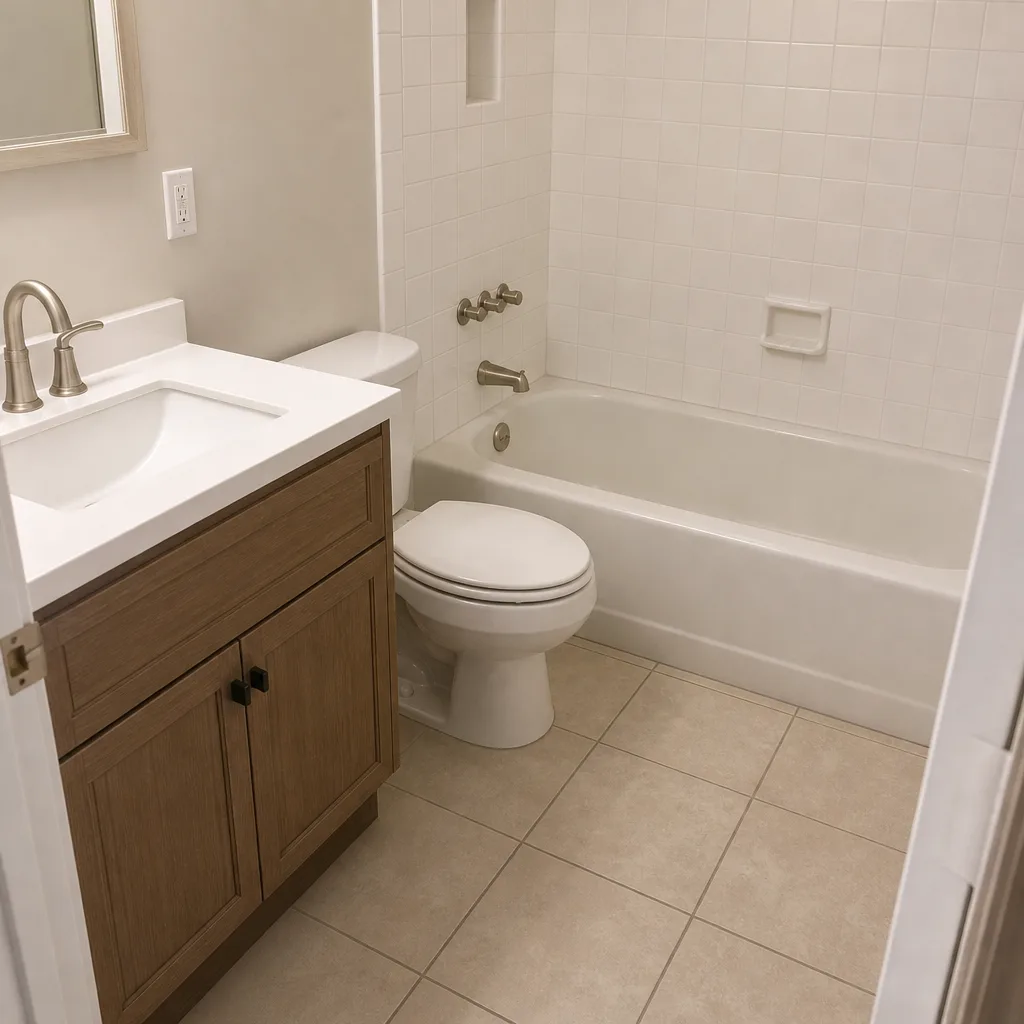
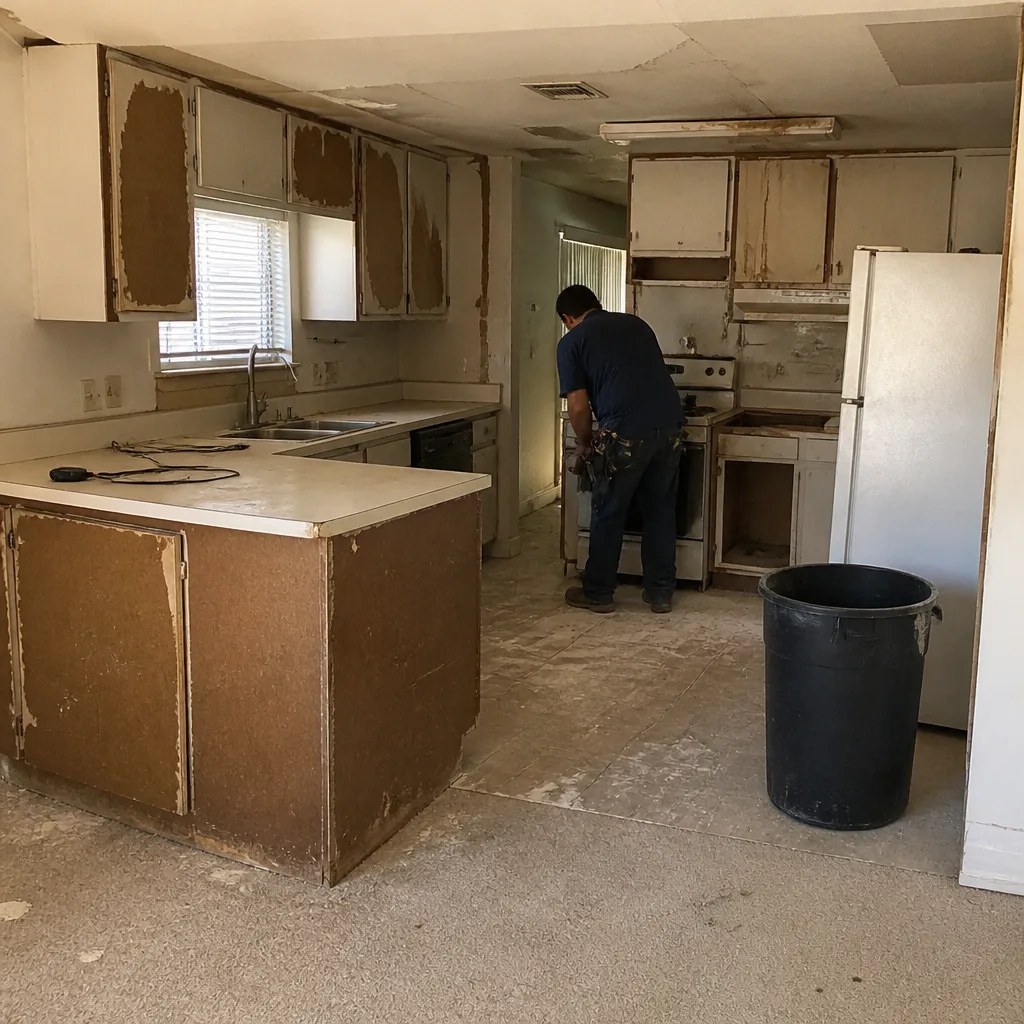
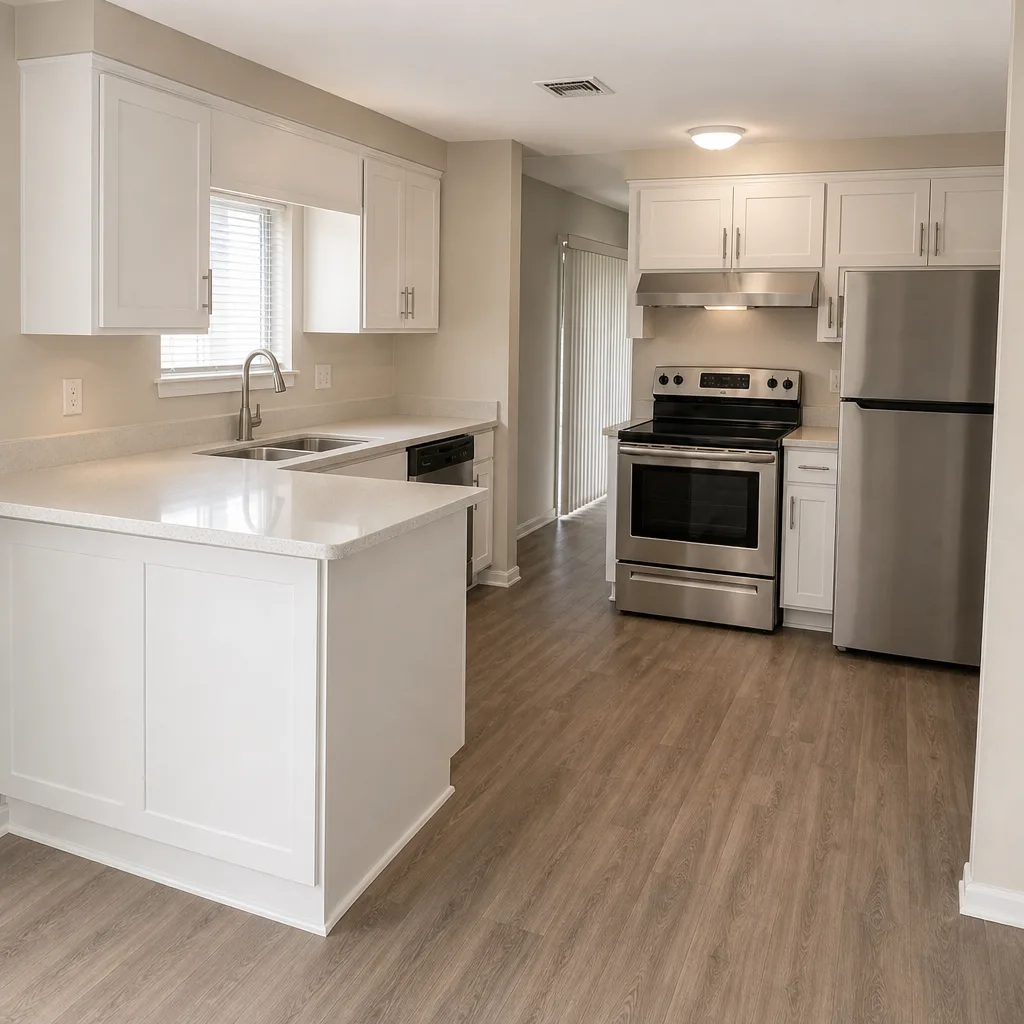
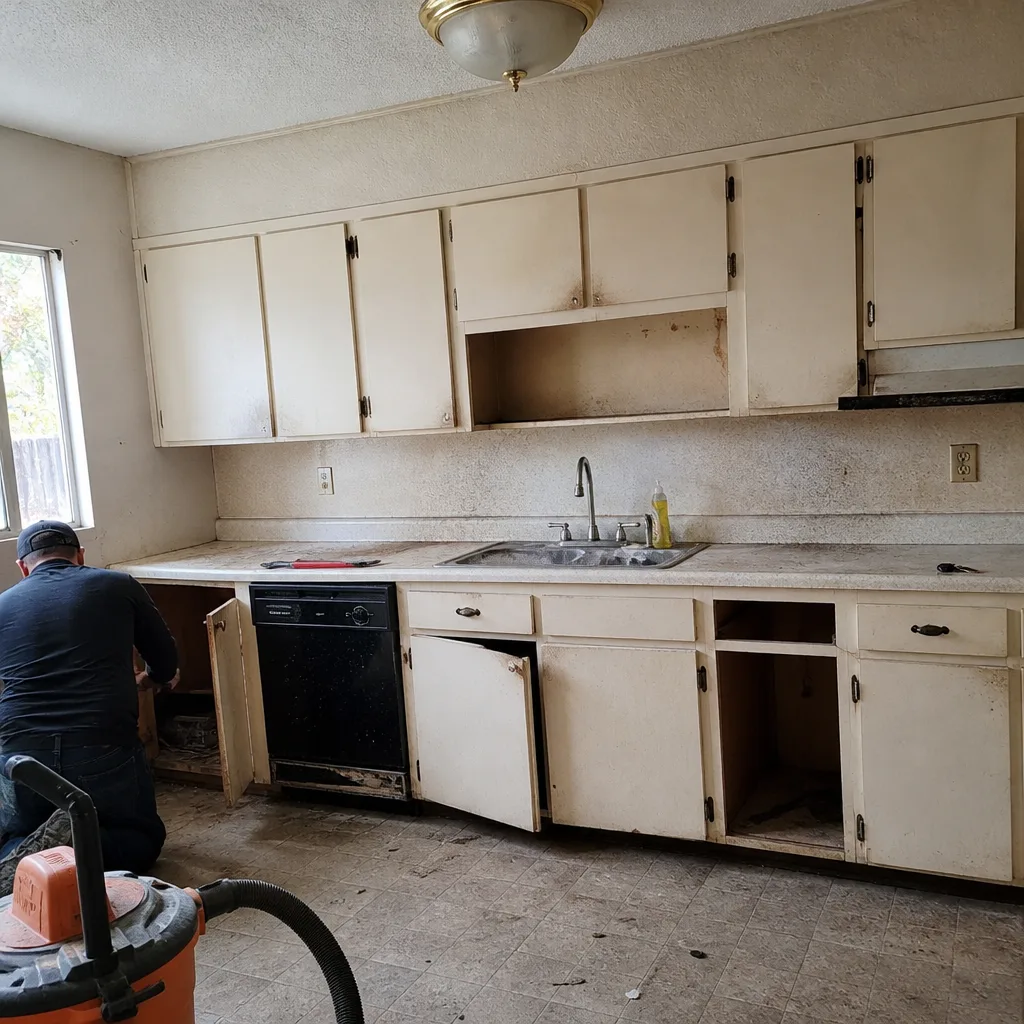
See the difference
 Before
 After
 Before
 After
 Before
 After
When to Call a Professional
Call a professional when the frame is out of square, when water has reached the drywall or sill inside, when frame cracks are structural rather than cosmetic, or when a failed seal falls outside its warranty window but replacement requires a crew. Call when the fix involves re-flashing the rough opening, re-anchoring a frame, or replacing a sliding door panel on a two-story elevation. Call when you’re replacing rather than repairing – the material choices and the rough-opening preparation determine whether the new unit avoids the thermal problems the old one had. Rowan Construction Group Las Vegas offers free estimates in Las Vegas – call (833) 467-9123. A written estimate tells you exactly what needs work and what doesn’t, and under Clause 1 of the Haven Standard, the price is in writing before anyone picks up a tool. Every visit includes a documented photo record of what we found and what was done, so you have evidence to compare against a second opinion – which we’ll review line by line at no charge.
Frequently Asked Questions
Most window and door repairs in Las Vegas fall between $15 and $500 for hardware, seals, and maintenance items, and $1,200 – $1,800 when the frame needs re-squaring or re-anchoring. IGU replacement runs $180 – $450 per window. A written estimate tells you which tier you’re in before work starts. Call (833) 467-9123 for a free estimate.
It’s thermal expansion against a frame that isn’t square. Las Vegas hits 105°F in July, the frame expands, and a racked rough opening forces the movement into the door mechanism. Lubricant won’t fix it; a level-and-feeler-gauge check confirms it, and re-squaring the frame is the actual repair. Call (833) 467-9123 for an assessment.
If the fog is between the panes and won’t wipe away, the seal has failed and the IGU needs replacement. If the moisture beads on the room-side surface and wipes off, it’s humidity condensation and the glass is fine. Check your warranty first – seal failure is often covered. Call (833) 467-9123 with questions.
Surface condensation in winter is common and manageable because Las Vegas interior humidity rises when homes close up for cold weather. Between-pane fogging is not normal and signals a failed seal. Run exhaust fans and crack a window daily to reduce surface condensation. Call (833) 467-9123 if the fog is between the panes.
Not without a signed change order. Under the Haven Standard, no work proceeds on a change until the change order is signed, and the original written price stands for the agreed scope. Projects finish within a few percent of the agreed cost as a result. Call (833) 467-9123 for a written estimate.
Only if the frame is square and the hardware has mineral buildup from Las Vegas hard water. If the level test shows a racked frame or a seasonal sticking pattern, lubricant masks a structural problem. Call (833) 467-9123 for a free estimate on the actual repair.
The Bottom Line
Most window and door problems trace to three root causes – thermal expansion stress, hard-water mineral buildup, or failed installation at the rough opening – and naming the cause before buying a product determines whether the fix runs $15 or $1,500. Test first: level and feeler gauge for sticking doors, a tissue test for fogged glass, careful inspection for water intrusion. Match your cleaner to your hardware. Avoid the warranty-voiding moves. And when the frame is out of square, when water reaches the drywall, or when the fix needs a crew, get a written estimate before you commit. Our technicians have up to 19 years of experience diagnosing these exact failures in Las Vegas homes. Call (833) 467-9123 to schedule your free estimate, and bring a competitor’s quote if you have one – we’ll review it line by line at no charge.
Written by the team at Rowan Construction Group Las Vegas.