Last updated November 18, 2026

Free written scope consultation - allowances, timeline, and change-order rules on paper before a single trade is scheduled
Windows & Doors Warning Signs Every Homeowner Should Know
A $40 jump in your summer NV Energy bill is a better early warning sign of a failing window than any draft you can feel. Before glass ever fogs, the sealed unit has already lost its argon fill and your air conditioner has already started working overtime to compensate. Most Las Vegas homeowners notice the fog first and the bill second. The order should be reversed. This guide walks through the full symptom ladder for windows and doors, from cosmetic paint peeling to a rotted sill plate, so you can tell the difference between a weekend fix and a replacement you should be pricing now.
Quick Answer
The warning signs of failing windows and doors fall into three tiers: cosmetic (peeling paint, minor seasonal condensation), performance (failed seals, air infiltration, rising utility bills), and structural (rot, a failed rough opening, cracked lintels). Fix cosmetic issues as they appear. Investigate any performance sign immediately with a $20 infrared thermometer. Treat structural symptoms as urgent and call a licensed contractor before the damage reaches the framing.
Styles & brands we work with
- Kitchen remodeling
- Bathroom remodeling
- Home additions & ADU
- Roofing
- Windows & doors
- Driveway & pavers
- Fence
Table of Contents
- Why Your NV Energy Bill Is the First Warning Sign
- The Symptom Severity Index: Cosmetic vs. Performance vs. Structural
- The $20 Infrared Thermometer Test
- Las Vegas-Specific Deterioration Patterns
- Contractor Warning Signs in Window & Door Bids
- Pre-Inspection Checklist You Can Do Yourself
- When to Call a Professional
- Frequently Asked Questions
Why Your NV Energy Bill Is the First Warning Sign
Your utility bill is a diagnostic document. A sealed insulating glass unit (IGU) is two panes of glass separated by a spacer and filled with argon or krypton gas, and that gas does most of the insulating work. When the perimeter seal fails, the gas leaks out and the unit’s insulating value drops, sometimes by 30 percent or more. The failure is silent. You can’t see argon leaving. What you can see is your July NV Energy statement climbing $30 to $60 higher than the same month last year, with no change in thermostat habits.
In our experience across Las Vegas homes, that bill-driven window of detection lasts anywhere from one to three summers before the glass actually fogs. Fogging is the last symptom, not the first, because moisture only starts condensing inside the sealed cavity once enough gas has escaped and moisture has found its way in. By the time you see the fog, you’ve been paying to cool the desert through glass that’s been failing for years.
What to do with the bill signal:
- Pull your last three summer NV Energy statements and compare them to the same months a year earlier.
- Note any month where cooling costs rose more than 15 percent with unchanged usage patterns.
- Count how many windows and glass doors face south or west, since those take the biggest solar load in Las Vegas.
- Use that bill history as the opening evidence in any contractor conversation. It’s a written record, not a hunch, and it gives the estimator a starting point to work from.
A rising bill isn’t proof of window failure on its own. But an unexplained $40 increase two summers running, combined with any of the visible signs below, is a strong enough case to get a professional out for a look.
The Symptom Severity Index: Cosmetic vs. Performance vs. Structural
Not every warning sign means replacement. Some point to a $40 repair, some to a $600 sash replacement, and some to a $1,200-per-window full replacement with framing repair. Sorting the symptom into a tier tells you which conversation you’re about to have.
Cosmetic issues (repair)
Peeling paint on frames, seasonal fogging on the interior surface that wipes away, and minor condensation at the bottom of the glass on cold desert mornings are cosmetic or seasonal. They’re worth attention but don’t yet mean the unit has failed. Peeling paint on a wood frame, though, is often the first sign of moisture getting into the joint, so scrape, sand, and repaint with an exterior-grade product before the next monsoon season.
Performance issues (investigate immediately)
Fog or water droplets between the panes means the IGU seal has failed and gas has escaped. That’s a performance failure, not cosmetic. Other performance signs: air you can feel moving past a closed window, doors that stick only in summer heat, and weatherstripping that’s compressed flat or torn. A failed IGU is a real energy-penalty, and in Las Vegas it usually means replacement of the glass unit or the full window within a year or two.
Structural issues (call immediately)
Any of these mean stop and get a licensed contractor out:
- Soft or rotted framing at the sill plate, especially on ground-floor units near irrigation lines.
- A cracked or displaced lintel (the horizontal beam over the opening).
- Windows or doors out of square by more than about a quarter inch, meaning the rough opening has shifted.
- Visible water intrusion at the interior drywall around the opening after a rain.
- Frames that flex or move when you push on them.
Structural issues don’t heal on their own, and neglected ones turn a $600 window job into a $4,000 framing repair. When the conversation moves into structural work, it becomes a broader home assessment. Our Rowan Construction Group Las Vegas home page lays out how we handle the full scope of a project once it grows past a simple swap.
The $20 Infrared Thermometer Test
You can quantify heat loss at a window frame for about $20 with a handheld infrared thermometer, the kind sold at any hardware store. It turns a subjective draft into a number you can compare, month to month and window to window.
- Do the test on a hot Las Vegas afternoon. Interior temperature set to 74 degrees, outdoor temperature above 100, bright sun on the frame.
- Aim the laser at the center of the glass. Record the reading.
- Aim at the frame and the wall next to it. Record both.
- Compare. A healthy window will read within 5 to 8 degrees of the adjacent interior wall. A 15- to 25-degree gap at the frame points to thermal bridging (heat coming straight through the frame material) or a failed seal.
- Test every window and log the readings in a spreadsheet. This is your evidence sheet when you call a contractor.
The number converts to real money. A 20-degree thermal bridge on a 30-square-foot west-facing window in a Las Vegas summer can cost $8 to $20 a month in extra cooling for that one window. Multiply that by six similarly failing units and you’ve explained the $40 to $60 bill jump without ever seeing fog.
This is also how we walk a house: not by asking the homeowner “does it feel drafty” but by reading the number and telling them what it means. A written price should be built on that kind of measured finding, and under Clause 1 of the Haven Standard, our written price is delivered before any work starts.
Las Vegas-Specific Deterioration Patterns
Las Vegas weather breaks windows and doors in ways you won’t find in coastal or northern-climate guides. Three patterns come up again and again on Las Vegas homes.
UV degradation of vinyl frames
Vinyl window frames are usually a strong choice in Las Vegas, but the desert sun is relentless. Over seven to ten years, west- and south-facing vinyl can fade from white to yellow to pale tan. Fading alone is cosmetic. The deterioration becomes structural when the surface feels chalky, hairline cracks appear near corners or screw holes, or the frame flexes when pushed. At that point the vinyl has lost plasticizers to UV exposure and thread-bearing hardware starts working loose. Replacement is the answer, not a repaint.
Oxidation of aluminum frames
Aluminum frames hold up well in most conditions but oxidize faster in the moisture zones around evaporative coolers, where the cooler’s water feed line and drip pattern keep frames damp. Look for white, chalky residue on the frame near the cooler outlet and pitting around the screws. Once pitting starts, the frame loses strength where it’s attached. A unit that reads chalky and pitted in these zones is a candidate for replacement even if the glass is fine.
Sill plate rot near irrigation
Ground-floor windows and patio doors sit close to irrigation lines in many Las Vegas neighborhoods, and a slow leak is enough. A rotted sill plate is a structural issue, not a window issue. Probe the wood sill with a screwdriver – if it sinks in more than a quarter inch without resistance, the wood is compromised. This is common in older units in neighborhoods built out in the 1990s, and it’s the one symptom on this list where delay gets expensive fast.
Windows aren’t the only envelope component watching the same weather. Fence and hardscape deterioration runs on the same UV and monsoon cycles, and you can read about it in our guide to Fence Installation in Las Vegas. If you’re also planning hardscape work around the house, our page on Driveway & Pavers in Las Vegas covers how the same sun that degrades frame plasticizers affects pavers and sealants.
Contractor Warning Signs in Window & Door Bids
A bad bid reads like a good bid until you know what to look for. Window and door work has three specific red flags we see homeowners walk in with, and each one is a conversation stopper if it isn’t fixed before signing.
The bid doesn’t specify NFRC ratings
Every replacement window sold in the U.S. should carry a NFRC label showing U-factor (how fast heat moves through it) and SHGC (solar heat gain coefficient, the fraction of sun heat that passes through the glass). In Las Vegas, a west-facing window with an SHGC above 0.30 means you’re paying to cool the outdoors. A bid that says “energy-efficient glass” or “low-E” without the NFRC figures isn’t a spec, it’s a sales phrase. Ask for the U-factor and SHGC numbers in writing, then compare them against PGT, CGI, CWS, or ES Windows published data sheets.
The installer won’t pull permits
Window and door replacement in Las Vegas triggers a building permit once the project meets local thresholds; the permit protects you if the install leaks or the opening is framed wrong, because an inspector documents the installation. A contractor who says “you don’t need a permit for windows” is a contractor controlling the narrative. Ask which permit they’ll pull and what inspection will follow.
The proposal omits flashing material
The single most common cause of water intrusion on a window is a missed flashing layer (the metal or membrane that sheds water away from the opening behind the frame). A written bid should name the flashing: peel-and-stick membrane type, head flashing material, and sealant. If it just says “install per manufacturer specs,” that’s not a specification.
The contractor discipline that fixes all three is a written scope and a written flat price before anyone starts, which is the foundational promise of the Haven Standard. If you’ve got a competitor’s bid in hand with any of these gaps, we offer a free second opinion: bring it in and we’ll review it line by line at no charge. Once the scope grows past windows into an addition or an ADU, the same documentation standard applies, and our page on Home Additions & ADU in Las Vegas explains how that works across a larger project.
Pre-Inspection Checklist You Can Do Yourself
Before you call anyone for bids, walk the house with this list. It takes about 40 minutes and gives the estimator a documented set of findings to work from rather than impressions.
- Operability. Open and close every window and exterior door. Note any that stick, bind, or fail to latch. Test locks and handles.
- Seal failure. Look for fog, water droplets, or a milky haze between the panes. Photograph each one.
- Weatherstripping. Check frame edges for compressed, torn, or missing strips. Feel for air movement on a breezy day with the interior at rest.
- Frame condition. Look for chalking, cracks at corners, paint peel, and pitting, especially on west- and south-facing frames and near any evaporative cooler.
- Hardware. Test every lock, hinge, and door closer. Note any screw holes that spin freely in the frame, which signals stripped material.
- Sill and lower frame. Probe wood sills with a screwdriver and note any soft spots.
- Utility bill history. Pull 12 months of NV Energy statements and note any season-on-season increase above 15 percent.
- Photo log. Photograph each finding with the window’s location labeled. This is the document you hand the estimator.
This checklist starts the contractor conversation at the evidence stage instead of the sales stage. Every visit under the Haven Standard includes a documented photo record of what was found and what was done, so ask any contractor you interview for the same. If they can’t show you a written photo record, they aren’t building the file you’ll need when a question comes up later.
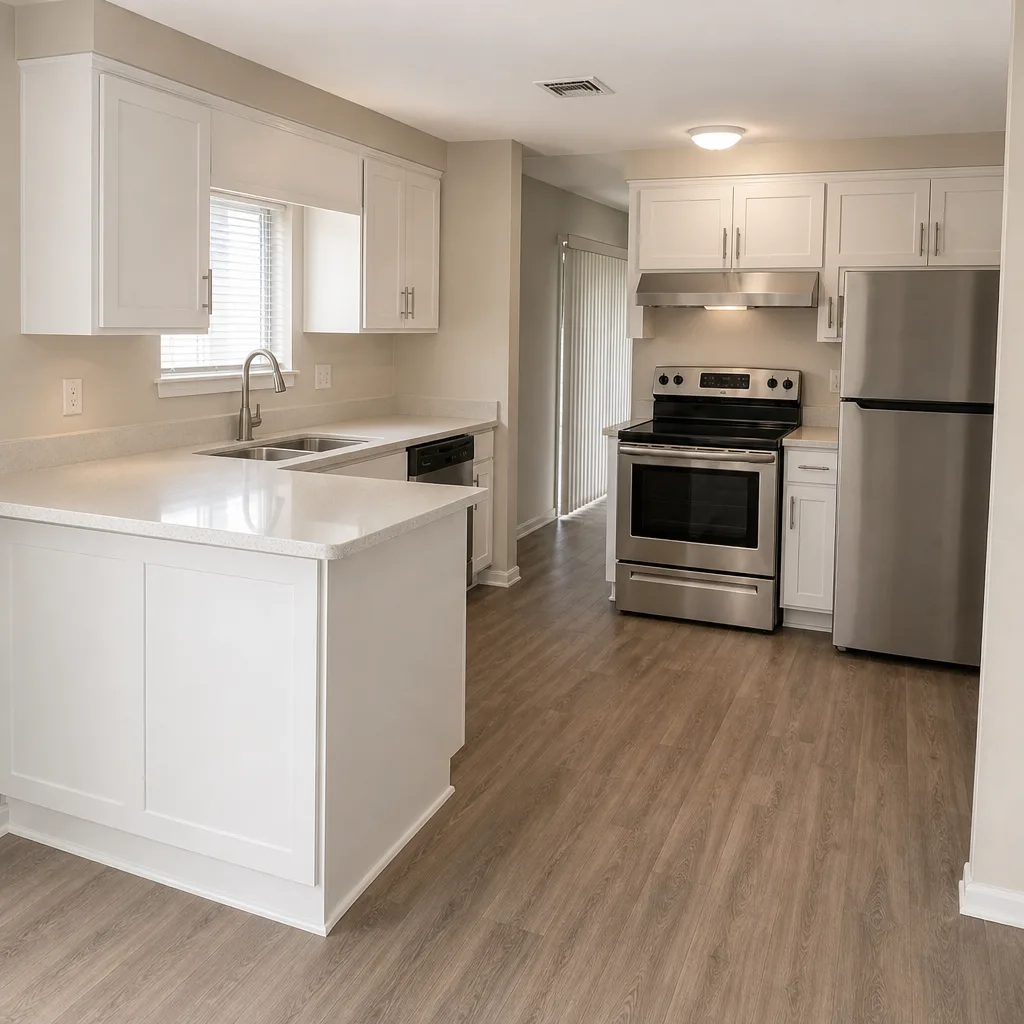
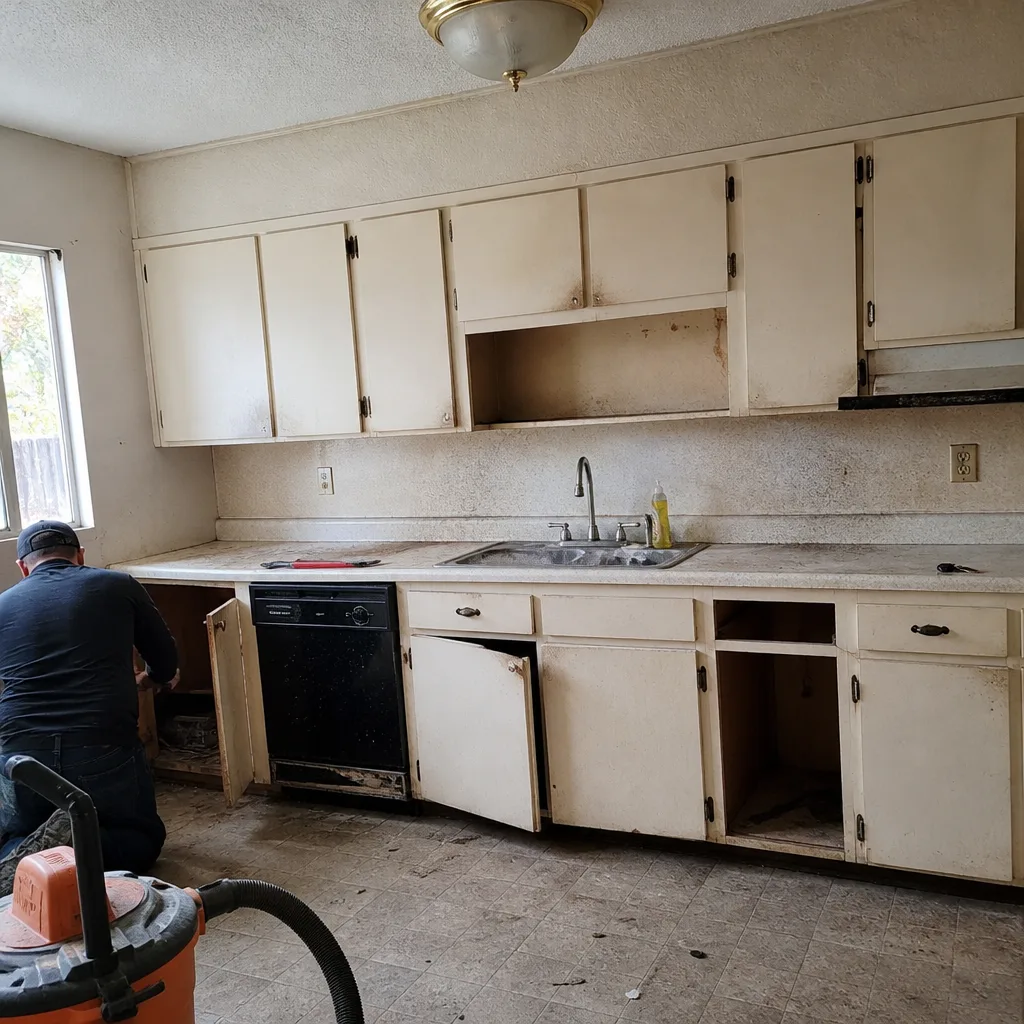
See the difference
 Before
 After
 Before
 After
 Before
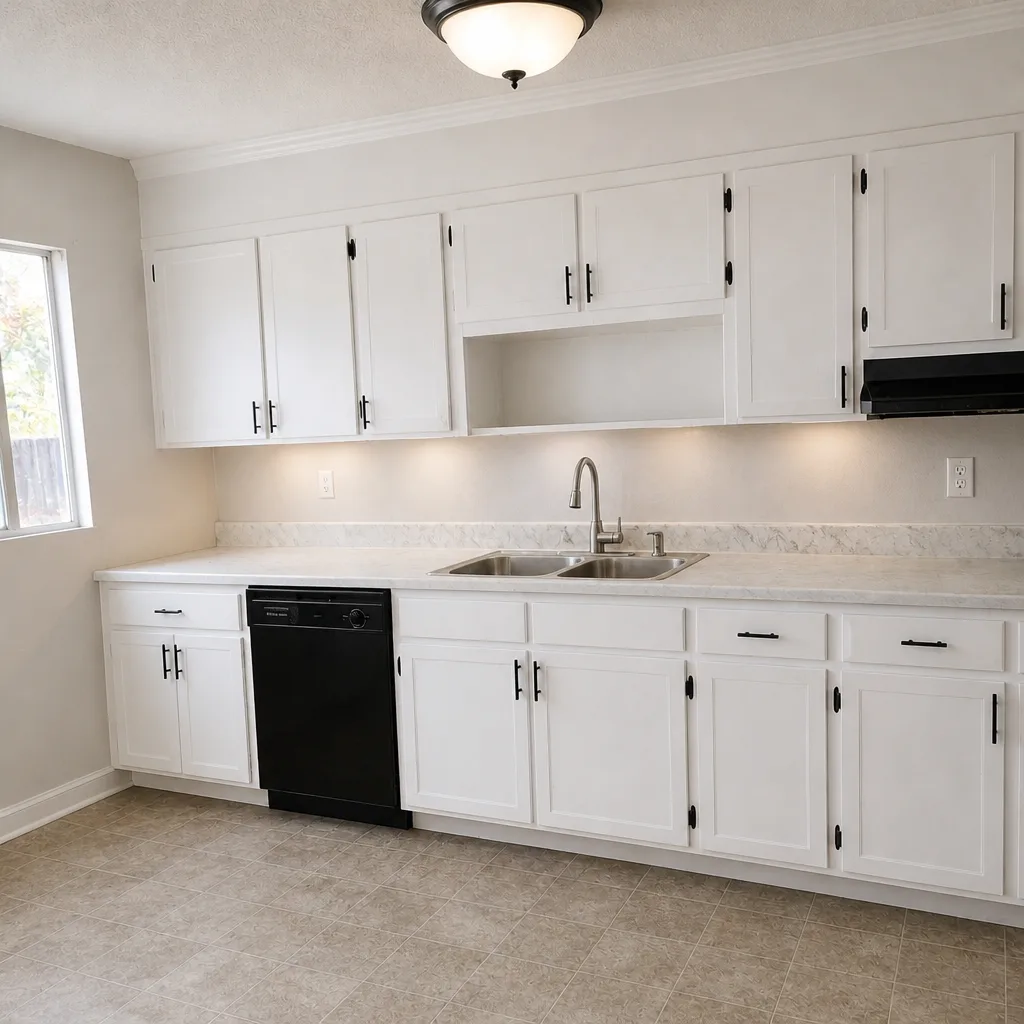 After
Common Mistakes to Avoid
- Repainting a frame instead of testing it. Paint hides surface problems at a vinyl frame that’s already going brittle. Pressure-test a suspect frame before deciding a repaint is enough.
- Replacing glass when the frame is already failing. A shiny new IGU in a UV-chalked frame starts the clock on the next failure. If the frame is chalking, price the whole window.
- Accepting a “three quotes” cycle without writing down the spec. Window quotes aren’t comparable unless you’re matching U-factor, SHGC, and flashing line by line.
- Ignoring a permit because it will slow the project. A permit and inspection is the one document that protects you when the installer has moved on.
- Waiting until you see fog in every window. Fog is the last symptom. By the time it’s visible, the argon has been gone for years and you’ve paid it out in NV Energy bills.
- Letting sill rot go another season. A rotted sill plate reaches the framing faster than most homeowners expect, and it’s the difference between a window job and a framing repair.
- Signing a bid that doesn’t state the flashing material. “Install per manufacturer specifications” is not a specification. A written bid should name the membrane and sealant.
When to Call a Professional
Call a licensed contractor when the symptom is performance-tier or structural-tier: fog between the panes, a 15-degree-plus thermal bridge on your infrared thermometer, a sill that probes soft, or a frame that flexes when you push it. Call sooner if you’ve seen water intrusion at the interior drywall after rain. A written estimate is the only way to compare options honestly, and any contractor worth hiring will give you one before starting. At Rowan Construction Group Las Vegas, licensed and insured, our technicians have up to 19 years of experience with window, door, and envelope work in the desert climate. Our crews are background-checked and uniformed, and every visit includes a documented photo record as a standard deliverable. Call (833) 467-9123 to schedule a free estimate and bring your checklist with you. We’ll review a competitor’s written bid line by line at no charge before you commit.
Frequently Asked Questions
A typical vinyl-framed replacement window for a Las Vegas home runs $500 to $950 installed, depending on size, NFRC rating, and whether any framing repair is needed. A wood or aluminum-clad window runs $800 to $1,400. Glass-only replacement for a failed IGU is $200 to $450 when the frame is sound. Call (833) 467-9123 for a written flat price on your specific windows; estimates are free.
Not always the whole window. Fog between the panes means the IGU seal has failed. If the frame is still solid, we can replace just the glass unit. If the frame is chalking, cracked, or out of square, the right move is the full window. A quick on-site check settles which case you’re in.
Clean the frame with a damp cloth and look again. Surface dirt wipes away. UV degradation looks chalky and doesn’t come off with a wipe, and it usually grows hairline cracks at screw holes and corners. If a finger rub leaves a chalky white residue, the vinyl has lost plasticizers and is on the countdown to structural brittleness. Get it quoted.
Replacement windows and doors typically require a building permit once the project crosses local thresholds, and an inspection often follows. Check with the city or county before work starts. A contractor who tells you a permit isn’t needed for window replacement is one to walk away from. We pull the permit on every job that needs one.
NFRC ratings are third-party certified U-factor and SHGC numbers you can compare across brands. Manufacturer claims like “energy-efficient” or “low-E” are marketing phrases without a number next to them. Every bid should name the NFRC values for the specific window being installed. For Las Vegas west-facing windows, look for an SHGC under 0.30.
Quality vinyl and aluminum-clad windows typically last 15 to 20 years in Las Vegas, with sun-facing west and south exposures often running shorter because of UV load. Sealed-unit failure often arrives before the frame fails, usually in years 8 to 15. A written install with proper flashing and a sound NFRC spec gets you the full lifespan. Call (833) 467-9123 to get a written estimate on your current windows before the next summer season.
The Bottom Line

Your utility bill is the earliest warning of failing windows and doors in Las Vegas, and fogged glass is the last. Tier the symptom you’re seeing: cosmetic issues get a repair, performance issues get priced now, structural issues get a contractor today. Test each window with an infrared thermometer, log the readings, and use the pre-inspection checklist to turn the contractor conversation into an evidence review instead of a sales pitch. Insist on NFRC ratings, a permit, and named flashing material in any bid. Read the signs in the right order, and you’ll replace the windows before the energy penalty outruns the cost of the job.
Ready to get a written price on the windows and doors that are failing? Rowan Construction Group Las Vegas offers free estimates across Las Vegas, with a written flat price and written scope before any work starts. Call (833) 467-9123 to schedule your free estimate.
Written by the team at Rowan Construction Group Las Vegas.