
5 Mistakes to Avoid With Driveway & Pavers
The most expensive driveway paver mistake in Las Vegas costs nothing at the moment it’s made: accepting a quote that doesn’t specify base depth in inches. A 4-inch base and a 6-inch base look identical from the street until the third summer. By then the pavers have shifted, the edges have heaved, and the contractor who saved you $900 on aggregate is nowhere to be found. We’ve pulled failed driveways out of neighborhoods across the valley, and the problems almost always trace back to a decision made before a single paver was set. Here are the five we see most, each one caught at the point where you can still do something about it.
Mistake 1: Accepting a Quote That Doesn’t Name Base Depth in Inches
Ask a Las Vegas paver contractor what base they’ll use and you’ll often hear “industry standard.” That phrase means nothing. It’s a way of not committing to a number. The spec you need is written, in inches, on the quote: compacted aggregate base depth, compaction method, and the class of aggregate.
Here’s what “industry standard” actually translates to in practice. Plenty of installers pour 4 inches of base and call it a day, because that’s the minimum many manufacturers list for pedestrian traffic. A driveway is not pedestrian traffic. It’s a 4,500-pound SUV sitting on the same two square feet of surface every day, in 160-degree summer sun that softens everything underneath it. For a residential driveway in Las Vegas, a written spec should show 6 to 8 inches of compacted base, placed in lifts of 2 to 3 inches and compacted between each lift. One 6-inch pour compacted once is not the same thing.
The quote should also name the compaction equipment, not just say “compacted.” A plate compactor and a vibratory roller leave different densities, and density is what stops settlement.
- Base depth in inches – 6 to 8 for a driveway, written on the quote
- Lift thickness – 2 to 3 inches per layer, compacted between lifts
- Aggregate class – crushed stone base, not fill dirt or caliche scraped from the site
- Compaction method – named equipment, not the word “compacted” alone
- Edge restraint – pinned or glued, specified
If a quote won’t commit to those numbers, that’s your answer about how the job will go. Under Clause 1 of the Haven Standard, the price is written before anyone starts – and so is the scope. A number without a spec is just a guess with a dollar sign on it.
Mistake 2: Regular Sand in the Joints Instead of Polymeric Sand
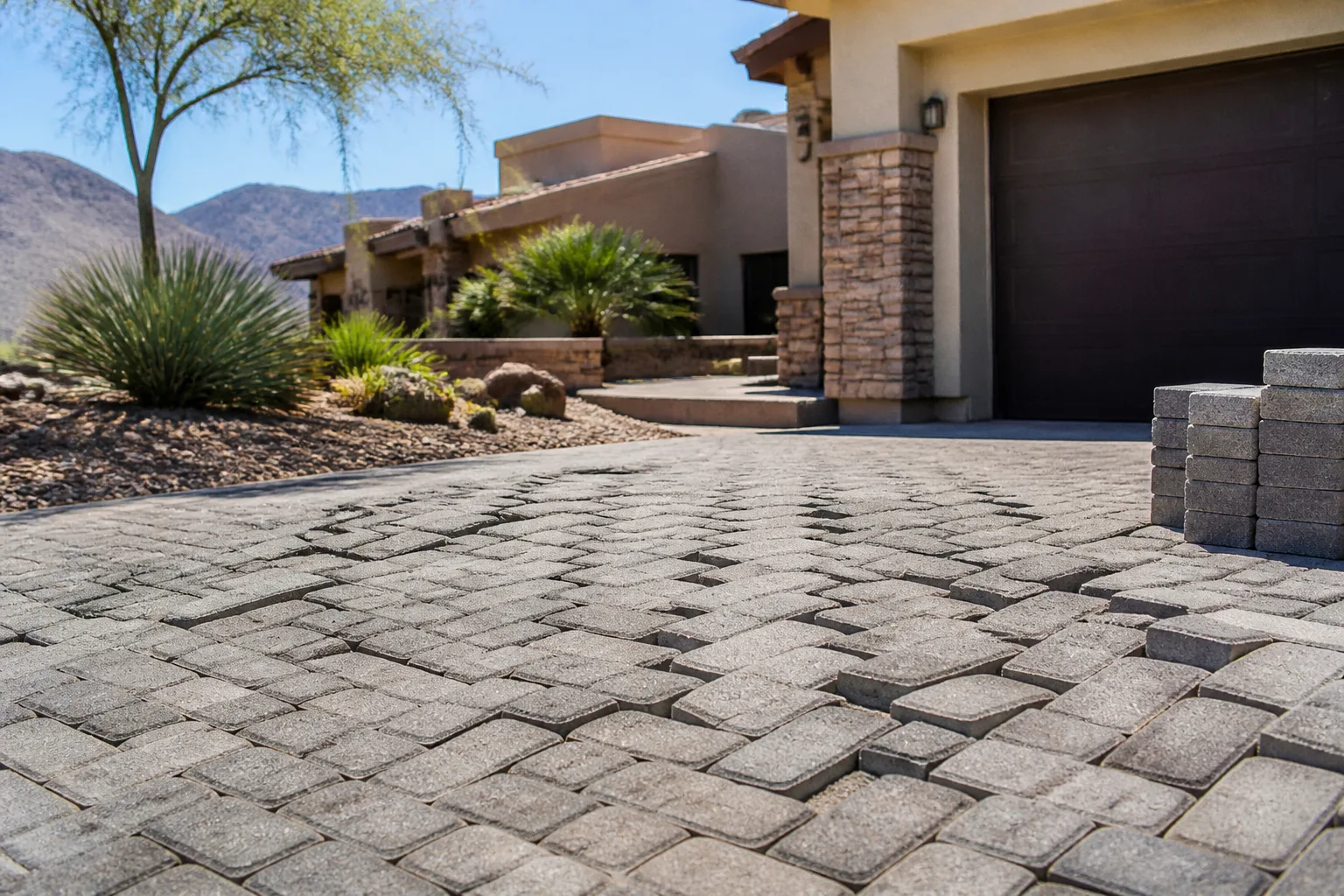
Regular mason’s sand in the joints of a Las Vegas driveway is a slow failure. It looks fine on day one. Then thermal expansion does its work. Pavers in full sun here move through a wide temperature swing between a summer afternoon and a desert night, and every joint opens and closes a little. Loose sand washes out of the joints with the first monsoon rain, blows out with the wind, and gets tracked into the garage.
Polymeric sand has a binder that sets up when it’s wetted, locking the joints and resisting that movement. In this climate there’s a second reason it matters. Ants. Desert ants love a sand-filled joint, and they’ll excavate it from underneath until the pavers lose support. A polymeric joint closes that door.
What to check on the quote:
- The joint material is named as polymeric sand, with the brand if possible.
- The installer plans to fill joints after compaction, not before.
- Joints are 1/8 to 1/4 inch – too tight and the sand can’t get in, too wide and it won’t hold.
- The surface is cleaned before the sand is activated, so the binder doesn’t cure onto the paver faces.
Polymeric sand costs a little more up front than a load of mason’s sand. It’s the cheapest line item on the job and the one most often cut. We’ve seen joints in Las Vegas that hadn’t been re-sanded in four years because the original install used the right material. That’s the difference the binder makes.
Mistake 3: Skipping the Permit on a Driveway Replacement
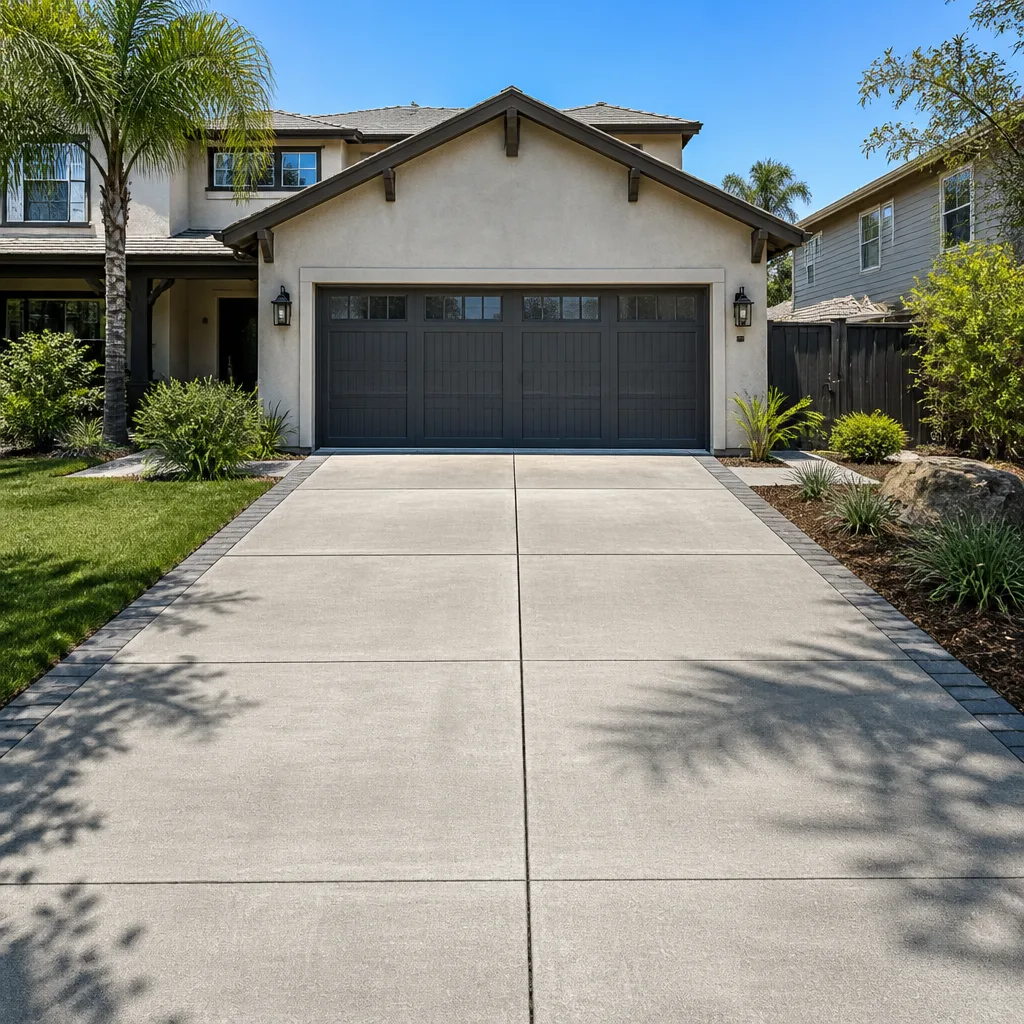
Replacing a driveway is flatwork, and Clark County treats flatwork in the public right-of-way, and often the driveway apron itself, as a permitted activity. If your driveway meets the street and the apron is being torn out and rebuilt, you need to know what the county requires before the first paver comes up. The permit is the homeowner’s responsibility in most contracts, which is exactly why it gets skipped.
Here’s the part that stings: unpermitted flatwork is discovered at resale. An appraiser or buyer’s inspector flags a driveway with no permit record, and now you’re doing the after-the-fact permit process on work that’s already installed. That process can require exposing the base for inspection, which means pulling up pavers you already paid for. The cost of re-opening, re-inspecting, and re-installing can run into the thousands on a job that would have cost a few hundred dollars to permit up front.
Before you sign, confirm in writing who pulls the permit, and get a copy of it. Any contractor who suggests skipping it because “it’s just a driveway” is telling you something about every other shortcut they’ll take on your property.
Mistake 4: Picking Paver Color From a Showroom Sample
A 4-inch sample under showroom lighting tells you almost nothing about how that paver will look on your Las Vegas driveway after 18 months of desert sun. UV exposure shifts paver color, and how much depends on the pigment and the manufacturing process. Some colors fade. Some mellow in a way people like. Some go chalky. You can’t tell from a chip in your hand.
How to evaluate color durability before you buy:
- Ask to see a job the contractor installed two or three years ago, in a comparable exposure. Look at it in direct afternoon sun, not shade.
- Ask which pavers carry a manufacturer’s color warranty and read what it actually covers. “Fade resistance” without a number of years is marketing.
- Prefer pavers with through-body pigment over surface-coated products, which can wear through under regular tire traffic.
- Bring a sample home and leave it on the driveway for a month next to the house. Sun, dust, and brake dust change the read.
Belgard and Techo-Bloc both publish color warranties, and their lines are what we source from because the documentation exists to back the claim. (Caesarstone and Kohler don’t make pavers, but the same principle applies to every surface we spec: if the manufacturer won’t put the performance in writing, it’s decoration.) A driveway is the largest visible surface on the front of your house. Choose the color the way you’d choose anything else you’ll look at every day for fifteen years.
If you want help thinking through the right paver for a Las Vegas frontage, our Driveway & Pavers in Las Vegas page covers the materials and typical installed price ranges by paver type.
Mistake 5: Signing a Contract Without a Written Change Order Clause
This is the one that costs homeowners the most money, and it has nothing to do with pavers. It’s about the paper. A contract without a change order clause is a contract that lets the price grow after you sign it. Any job that runs into unexpected conditions, and every job does, becomes an opportunity for a verbal addition.
The clause should say, in plain language, that no work proceeds on any change until a written change order is signed by the homeowner, and that the change order states the added cost before the work happens. Not after. Not “we’ll settle up at the end.” Before.
That single clause is the discipline behind Rowan’s projects finishing within a few percent of the agreed price across 4,000-plus jobs. It’s not that scope never changes. It’s that scope changes get priced and signed. When a contractor tells you a base problem will “probably run a bit more,” the phrase you’re looking for is: put it in a change order and I’ll sign it when I see the number. A contractor with a written price and a written scope has nothing to fear from that request.
When to Call a Pro
Some driveway work is a weekend project; a paver driveway is not. Base prep, compaction, edge restraint, and the joint material are all decisions that affect how the surface performs five summers from now, and they’re the ones an installer will skip if nobody’s watching. If your driveway is showing shifted pavers, joints that won’t hold sand, or edges that have heaved, those are signs of a base or joint failure that a re-sand won’t fix. That’s a good time to get a written assessment with a photo record of what’s under the surface. While a crew is on site, we’re often asked about matching hardscape to fencing and outbuildings, and the same documentation discipline applies across our Fence Installation in Las Vegas and Home Additions & ADU in Las Vegas work.
The Bottom Line
All five mistakes come down to the same idea: the decisions that determine how your driveway performs are made before the pavers go down, and they live in the paperwork. A written base depth in inches. Polymeric sand in the joints, not mason’s sand. A permit pulled and documented. A color verified on a job, not in a showroom. A change order clause that keeps the price where you agreed it.
Key takeaways:
- Demand the base depth in inches on the quote – 6 to 8 for a Las Vegas driveway.
- Specify polymeric sand in the joints; regular sand fails fast in this climate.
- Confirm in writing who pulls the flatwork permit and get a copy.
- Evaluate paver color on an existing job in direct sun, not on a showroom chip.
- Never sign a contract without a written change order clause.
If you’re in Las Vegas and need help, Rowan Construction Group Las Vegas offers free estimates – call (833) 467-9123. You’ll get a written price with a written scope before any work starts, a free second opinion on any written estimate you already have, and a documented photo record on every visit. Reach our Rowan Construction Group Las Vegas home to see the full range of trades we handle.
Frequently Asked Questions
A paver driveway in Las Vegas should have 6 to 8 inches of compacted aggregate base, placed in 2- to 3-inch lifts and compacted between each lift. Anything less risks settlement under vehicle weight and summer heat. Ask for that number in writing on the quote.
Joints that wash out usually mean regular sand was used instead of polymeric sand, or the joints were never filled and compacted properly. In Las Vegas, thermal swing and ant activity accelerate the loss of loose sand. Polymeric sand sets up and resists both. Call (833) 467-9123 for a written assessment if your joints won’t hold.
In most cases, yes. Flatwork and the driveway apron that meets the public right-of-way are typically permitted through Clark County, and unpermitted flatwork is a resale problem that’s expensive to fix after the fact. Confirm in writing who pulls the permit and keep the copy.
It shouldn’t without a signed change order. Any addition should be written, priced, and signed by you before the work proceeds. If a contractor won’t commit to that clause, get another quote. Call (833) 467-9123 for a written price with a written scope before anyone starts.
Written by the team at Rowan Construction Group Las Vegas.
Need Construction Help?
Call Rowan Construction Group Las Vegas - licensed & insured, here with fast after-hours help in Las Vegas.
(833) 467-9123