
5 Mistakes to Avoid With Fence Installation
The five fence installation mistakes that cost Las Vegas homeowners the most money all happen before the first post goes in: skipping the Nevada 811 utility mark, copying footing depth charts written for frost-line climates, filing the wrong permit category with Clark County, setting wood posts without gravel drainage in alkaline soil, and building before HOA approval is in hand. Each one starts as a small shortcut and ends as a four-figure repair, a demolition order, or a fence that leans within two summers. If you’d rather hand the whole checklist to someone who runs it every week, call (833) 467-9123.
Below is what each mistake actually looks like in the valley, what it costs, and how to avoid it.
1. Skipping the Nevada 811 Call Before You Dig
Nevada 811 is free, and in Clark County it’s legally required before any excavation. You call, you wait roughly 48 hours for the marking crew, and they flag every buried line on the property: gas, irrigation, electrical conduit, fiber, water. The call takes five minutes. Skipping it is the single most expensive shortcut in the trade.
A struck gas or irrigation line averages $3,000 to $7,000 in repair costs, and that’s before the project delay, which we’ve seen run four to six weeks while the utility company schedules the repair and the homeowner waits on an inspection sign-off. If the line belongs to the utility, you pay for the strike. If it’s a private irrigation line you nicked because nobody marked it, you pay for that too, plus the sod.
In Las Vegas, this matters more than it does in most metros because so much of the buried infrastructure sits shallow. Desert landscaping means drip lines and irrigation runs are often installed at 8 to 12 inches, well within the reach of a post-hole digger. The Back of the Yards, the west-side neighborhoods off Sahara, and older pockets of Downtown all have irrigation and utility runs that don’t sit where a property owner would guess.
The fix is one call to 811 and a two-day wait. Build the wait into the schedule from the start and it costs you nothing. Skip it and it costs you a month.
2. Using Footing Depth Charts Written for Frost-Line Climates
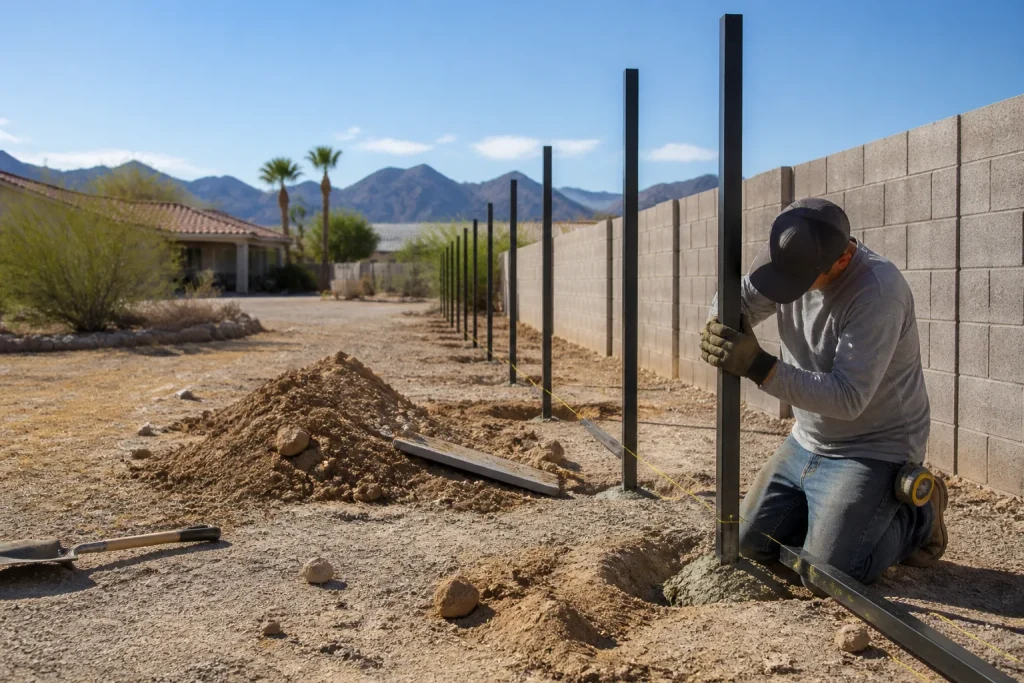
Most online fence guides publish a flat “24 inches deep” rule for post footings. That number was written for climates with a frost line, where the footing has to sit below the depth the ground freezes. Las Vegas has no frost line. Copying that chart here gets you a post set too shallow for the wind loads the valley actually sees.
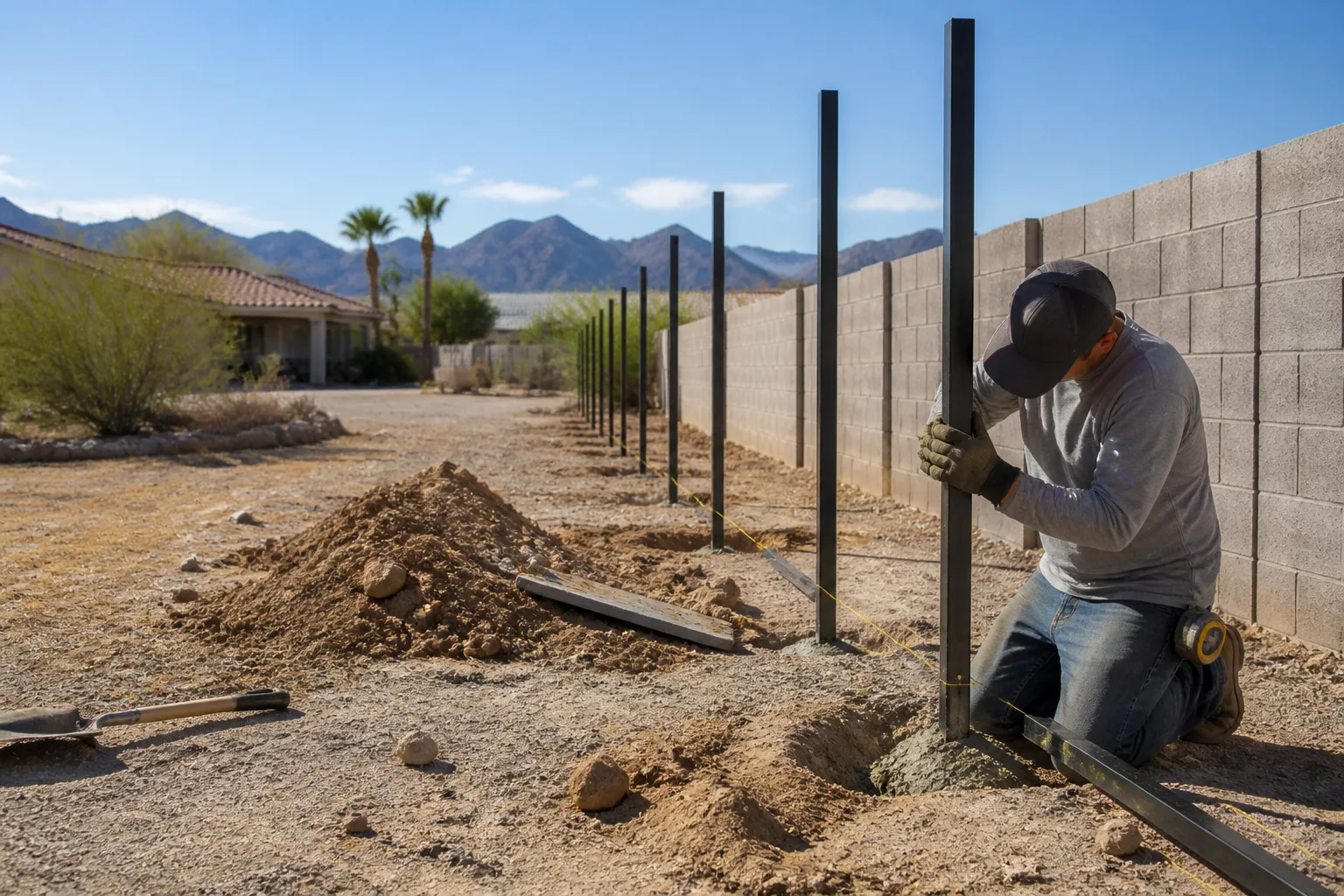
What Clark County wind exposure zones call for is post embedment of at least one-third the post height above grade. A 6-foot post needs roughly 2 feet buried; an 8-foot post needs closer to 2 feet 8 inches. The one-third rule isn’t a suggestion. It’s the spec that keeps a fence standing through the spring gusts that roll off the Spring Mountains and the summer monsoon outflow that snaps weaker fences across the valley every July and August.
Two more footing details that get skipped:
- Hole diameter. The footing hole should be roughly three times the post width, so a 4×4 post sits in a 10- to 12-inch hole. A post wedged into a hole the same width as the post has no concrete around it to resist lateral load.
- Cure time before backfill. Concrete needs to set before you load the fence with panels and soil. Backfilling the same day is a common low-bid habit that shows up as a leaning fence two seasons later.
This is one of the reasons we take footing specs seriously on every Fence Installation in Las Vegas project. The number is written into the scope before the first hole is dug.
3. Pulling the Permit for the Wrong Fence Category
Clark County separates fence work into distinct permit tiers, and the application you file has to match the fence you’re building. Fences under 6 feet, fences over 6 feet, and masonry walls each carry their own inspection requirements. File the wrong one and you’re looking at weeks of added review, and in some cases a demolition order if the fence was already built to a spec the permit didn’t cover.
The trap is that the tiers are easy to confuse. A homeowner building a 6-foot privacy fence with a 7-foot gate post may technically cross into the over-6-foot tier. A block wall built as a property divider has different structural review than a wood privacy fence. Get the category wrong and the correction isn’t a paperwork fix; it’s a rebuild.
The practical answer is to know your finished height and material before you pull anything, and to pull the permit before you build. Permits in hand and inspections passed are the cheapest insurance a fence project has. A fence that gets flagged after the fact can cost more to correct than it cost to install the first time.
4. Setting Wood Posts Without Gravel Drainage in Alkaline Soil
Las Vegas soil is alkaline and drains poorly in most of the valley. That combination is what rots wood fence posts from the base up, years before a homeowner expects it. The mechanism is straightforward: water pools at the bottom of the concrete footing, the moisture wicks up into the wood, and the post starts to fail from the inside. You won’t see it until the fence leans.
The $4-per-post fix is a gravel drainage collar at the base of the footing. You put 4 to 6 inches of washed gravel at the bottom of the hole before the concrete goes in, so water has somewhere to go that isn’t into the post. It adds a few dollars per post and years to the post life.
We’ve pulled fence posts out of the ground in neighborhoods off Charleston where the wood was rotted 18 inches up from the base and the concrete was still solid. That’s a drainage failure, not a material failure, and it’s preventable on day one.
Pair the drainage collar with a pressure-treated post rated for ground contact and a clear post cap, and you’ve addressed the two failure points that end wood fences early in Las Vegas. If you’d rather go with a material that resists rot entirely, vinyl and composite are worth pricing against wood before you commit.
5. Building Before the HOA Approval Is In Hand
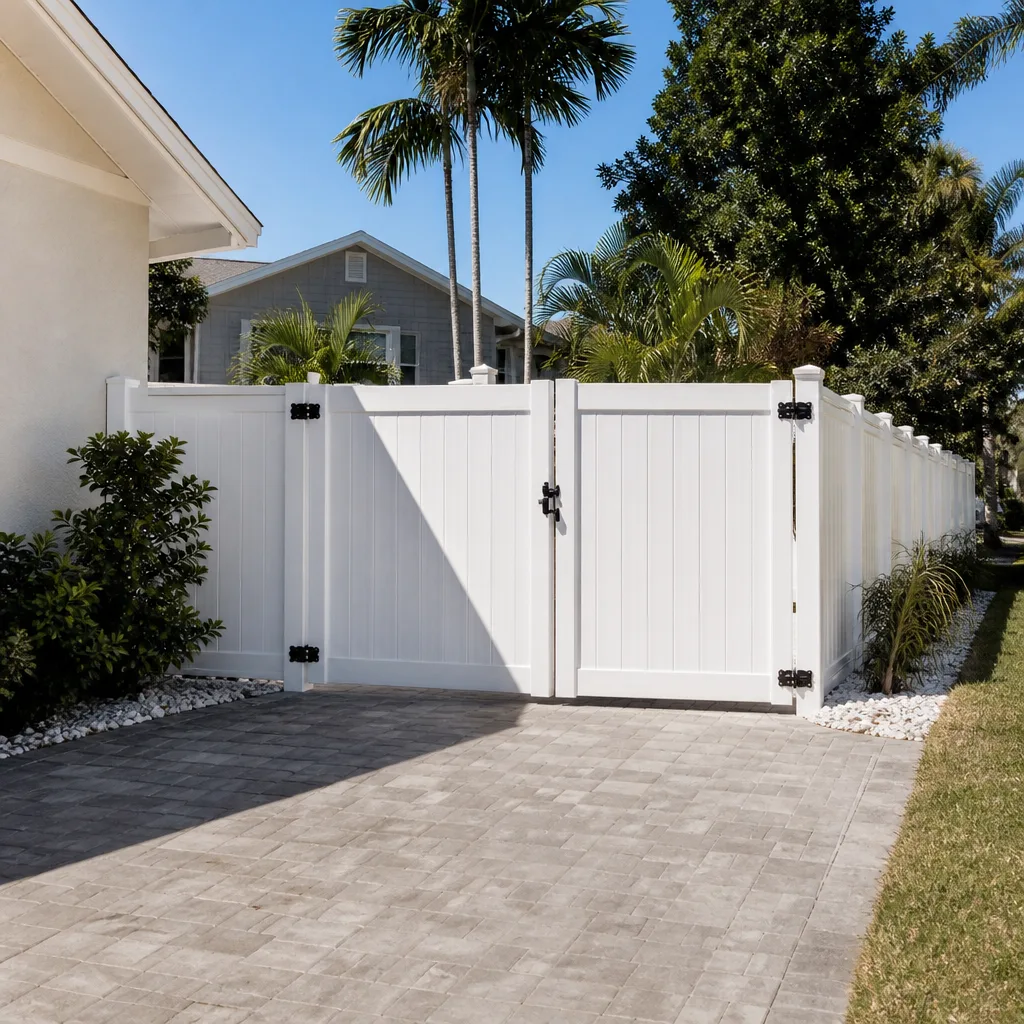
A lot of Las Vegas neighborhoods sit under HOA covenants, and the HOA is a second approval body that has nothing to do with the county permit. Build before that approval and you can be looking at a removal order, which is the most avoidable four-figure cost in this entire list.
A typical Las Vegas HOA approval package includes:
- A site plan showing the fence line, height, and setbacks from property lines.
- A material spec sheet naming the exact product and manufacturer.
- A color sample or product swatch for the fence finish.
Some HOAs add height restrictions, design guidelines for street-facing fence, and rules about the finished side facing the neighbor or the street. Removal orders for non-compliant fences run $2,000 to $6,000 in what we’ve seen, plus the cost of reinstalling to a spec the HOA will actually approve.
The sequence is: get HOA approval first, then pull the county permit, then build. It’s slower on the front end and dramatically cheaper on the back end.
When to Call a Pro
Some of this list is genuinely a Saturday project. Digging post holes, setting posts, and hanging panels is within reach for a homeowner with time and patience. The parts that are not a Saturday project are the utility mark coordination, the permit tier matching, and the footing spec that depends on your finished fence height and the wind exposure of your specific lot.
That’s the moment to call. Not because the work is impossible, but because a fence installed to the wrong spec is a fence you pay for twice. Estimates are free, and we’ll walk the property and quote the full scope in writing before anything is scheduled.
Related services in Las Vegas: if the fence project is part of a larger yard buildout, see our Driveway & Pavers in Las Vegas and Home Additions & ADU in Las Vegas pages. Our technicians have up to 19 years of experience across those trades.
The Bottom Line
Every mistake on this list is cheaper to avoid than to fix. Call 811 and wait the two days. Use the one-third post embedment rule, not the frost-line chart. Match your permit tier to your finished fence height and material. Put gravel in the bottom of every post hole. Get HOA approval before you build. Those five steps cost a couple of days and a few dollars per post, and they’re the difference between a fence that lasts and one that ends up in a removal order.
Rowan Construction Group runs every project on a written price before any work starts, a written scope, and a signed change order before any change moves forward. That’s the discipline that keeps the final number within a few percent of the number you agreed to. Under the 365-Day Done Right Promise, if it isn’t done right, we make it right. Every crew is background-checked and uniformed, every visit includes a photo record, and calls are answered by a live person. Bring a competitor’s written estimate and we’ll review it line by line at no charge through our Free Second Opinion offer.
If you’re in Las Vegas and need help, Rowan Construction Group Las Vegas offers free estimates – call (833) 467-9123. You can also start at our Rowan Construction Group Las Vegas home page for the full scope of what we do.
Frequently Asked Questions
Wood privacy fence typically runs $25 to $45 per linear foot installed, vinyl runs $30 to $55, and block or masonry walls run higher because of the structural footing and inspection requirements. A 150-foot wood fence generally lands between $3,750 and $6,750 depending on height, material grade, and whether the lot needs a block wall base. Call (833) 467-9123 for an exact quote – estimates are free.
Yes. Nevada 811 marking is free and legally required before any excavation in Clark County, and the marking crew typically needs about 48 hours to respond. Skipping it exposes you to the full repair cost of any line you strike, plus project delays that can run four to six weeks.
It depends on finished height and material. Clark County separates fences under 6 feet, fences over 6 feet, and masonry walls into different permit tiers, each with its own inspection requirements. If your fence is under 6 feet and made of a standard material, it may not require a permit – but confirm the tier before you build. Filing the wrong tier can add weeks to the review and, in some cases, lead to a demolition order.
Most residential fence installs run two to four days of on-site work for a typical lot, but the total timeline includes the 811 wait, permit review, and HOA approval if you’re under covenants. Plan four to eight weeks from approval to finished fence depending on which authorities you’re waiting on. Call (833) 467-9123 to schedule your free estimate and get an exact timeline for your property.
Written by the team at Rowan Construction Group Las Vegas.
Need Construction Help?
Call Rowan Construction Group Las Vegas - licensed & insured, here with fast after-hours help in Las Vegas.
(833) 467-9123