
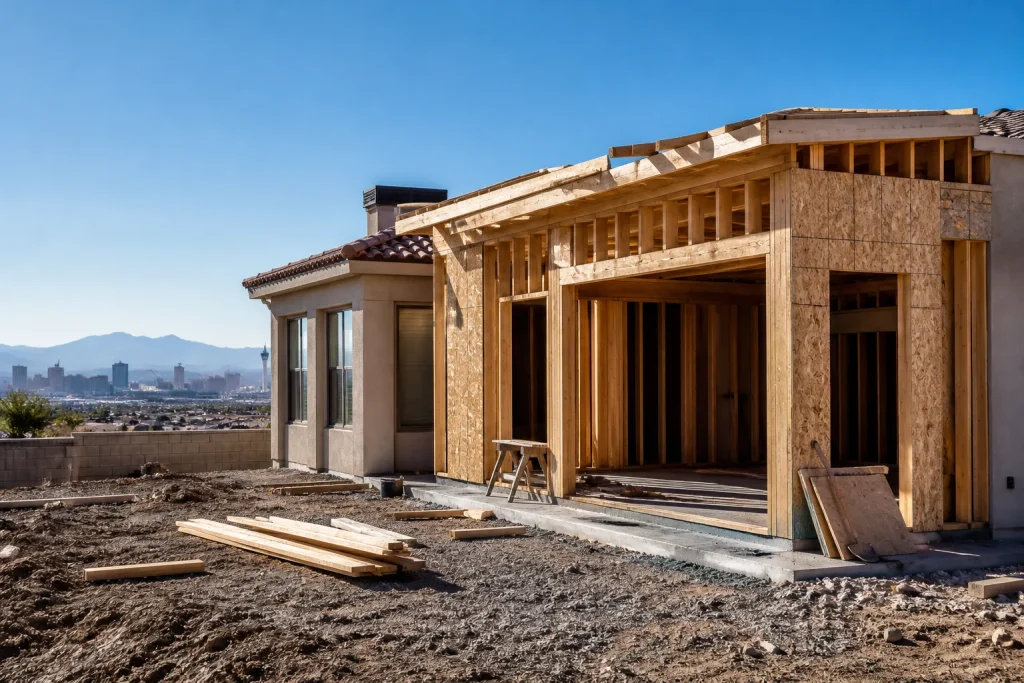
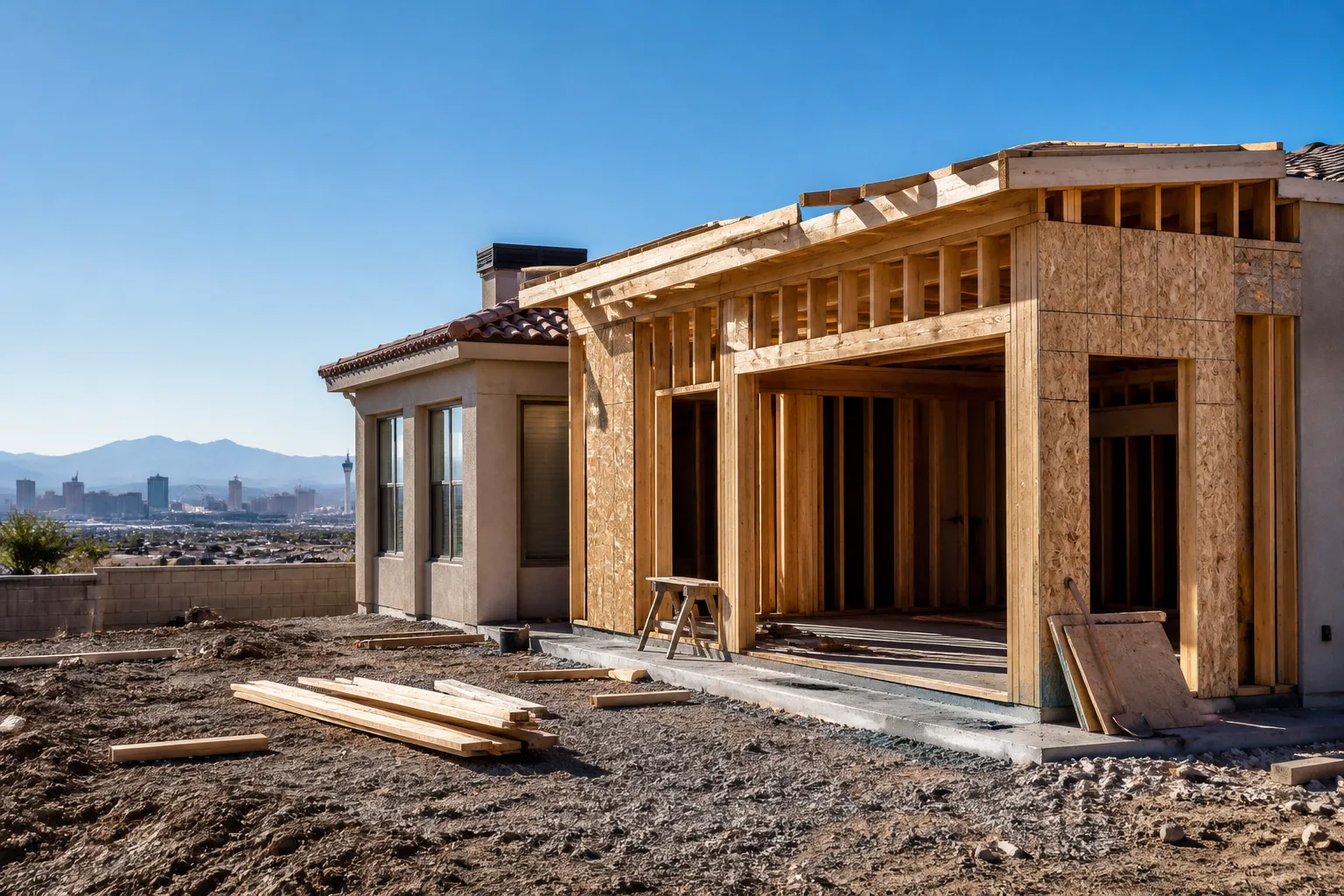
5 Mistakes to Avoid With Home Additions & ADU
The five most expensive mistakes in a Las Vegas addition or ADU project are process failures, and all of them happen before a single shovel hits dirt. They occur in the permit application, the utility coordination, the contractor agreement, and the HOA approval sequence. Clark County issued 847 ADU permits in fiscal year 2023, and a contractor-documented number of additions get built with no permit at all, often by homeowners who didn’t know their project required one. Legalizing an unpermitted addition in Las Vegas runs $8,000 – $22,000 after the fact, assuming it can be legalized at all. If you’d rather not sort through Clark County’s portal on your own, call (833) 467-9123 and we’ll walk you through what your project actually needs.
Mistake 1: Starting Construction Before Clark County Actually Issues the Permit
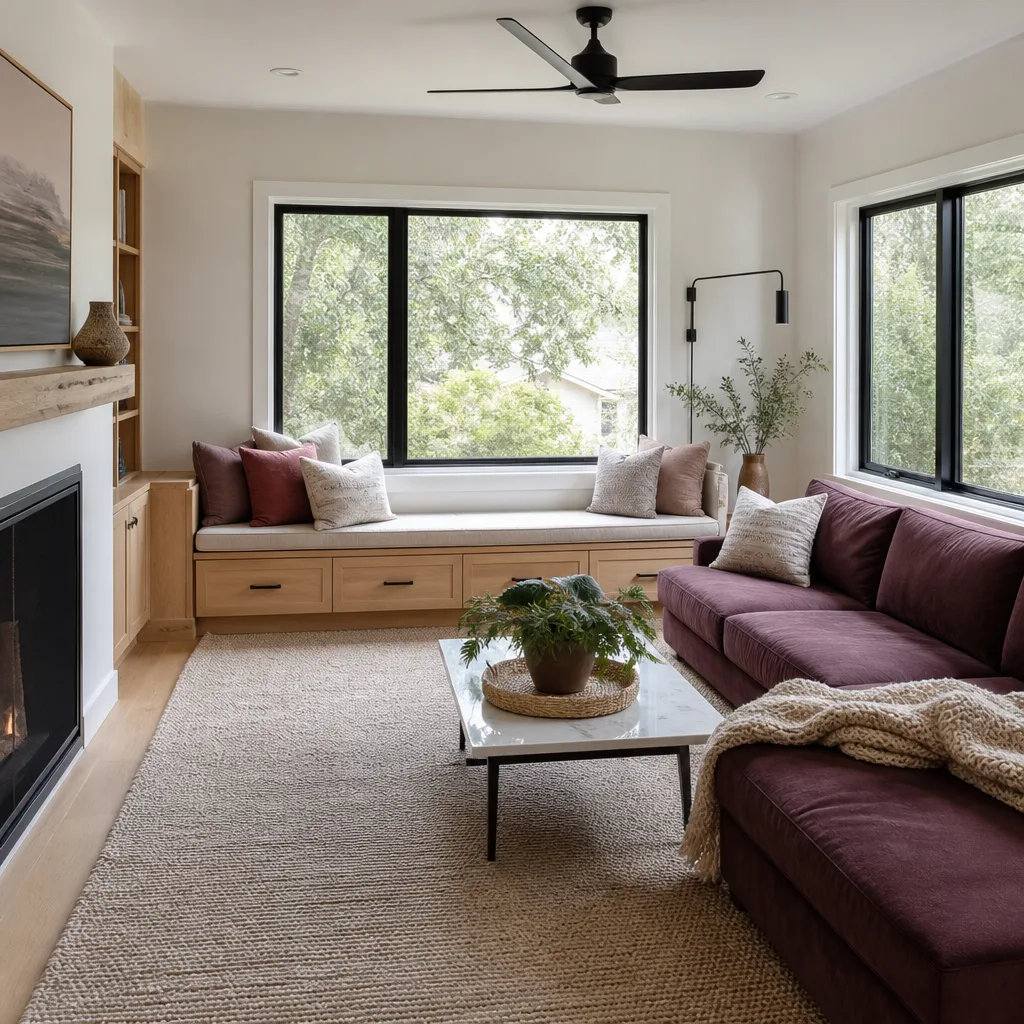
“Approved for permit” and “permit issued” are not the same thing, and the gap between them is days to weeks. A plan reviewer can stamp your drawings as approved and still leave you waiting on a separate issuance step: fees paid, contractor signature on file, and the permit number generated in the Clark County portal. Homeowners who read “approved” and tell a framer to start are building on a permit that doesn’t legally exist yet. If an inspector drives by and sees a foundation poured with no issued permit on record, you’re looking at a stop-work order and a retroactive review that costs far more than the wait you tried to skip.
The portal step where Las Vegas applicants most often stall is the resubmittal loop. Plan check comments come back with corrections, the applicant uploads revised drawings, and the clock resets. Each cycle can run two to three weeks. We’ve watched a Summerlin addition lose six weeks because a single dimension on the site plan didn’t match the survey. Before you sign anything with a builder, ask to see the permit number, not the approval email. Under Clause 1 of The Haven Standard, the written price comes before anyone picks up a tool, and part of quoting honestly is building the permit timeline into the schedule instead of pretending it doesn’t exist.
Mistake 2: Pouring the Foundation Before NV Energy and Southwest Gas Are Coordinated
Utility trenches dictate where your slab can go. NV Energy and Southwest Gas need to run service lines to the new structure, and the routing of those trenches affects foundation placement, grade, and sometimes the entire footprint. Rerouting a trench after the slab is poured averages $4,000 – $9,000 in Las Vegas, depending on trench length, and that’s before the concrete patch and the delay. The number gets worse on a corner lot where the service drop has to cross a driveway apron. Coordinate the utility design before the excavator arrives, not after.
The sequence that avoids this looks like:
- Submit the utility service request to NV Energy and Southwest Gas as soon as the site plan is finalized.
- Get the trench routing confirmed in writing before you schedule the foundation crew.
- Schedule the trench inspection separately from the foundation inspection, since Clark County treats them as distinct steps.
- Build a two-week buffer into the schedule for utility scheduling, because neither utility moves at construction speed.
This is the kind of thing that separates a documented process from a hopeful one. When we quote an addition in Las Vegas, the written scope names the utility coordination as a line item so nobody discovers it mid-pour.
Mistake 3: Signing a Contract Without an Enforceable Change Order Clause

Nevada Revised Statutes Chapter 624 governs contractor licensing and written contracts, and a change order clause that isn’t written to the statute is a clause that won’t hold up when a dispute starts. The language that makes a change order enforceable is specific: it has to require written authorization signed by the homeowner before any out-of-scope work begins, it has to state the cost of the change, and it has to describe the scope change in enough detail that both parties know what they’re agreeing to. A verbal “we’ll figure it out at the end” is not a change order. It’s a future argument.
Read the contract for three things before you sign with any Las Vegas builder:
- A written change order requirement for any work outside the signed scope.
- A stated price for the change, not an hourly rate that gets settled later.
- A written warranty that survives the end of the job, not a handshake.
This is the discipline that keeps projects within a few percent of the agreed cost. No work proceeds on a change until the change order is signed. That single administrative habit is why 4,000-plus projects have finished close to the number the homeowner agreed to. It sounds boring. Boring is what you want on a five-figure addition.
Mistake 4: Missing Clark County’s Owner-Occupancy Requirement for ADUs
Clark County requires that the owner of a property with an ADU occupy either the main house or the ADU. That restriction has to be recorded as a deed covenant, and skipping that recording step is the mistake that surfaces years later at resale, when a title search finds an ADU the county treats as noncompliant. Many homeowners and, frankly, many contractors skip the covenant because it doesn’t affect construction. It affects everything after construction. A buyer’s lender can refuse to fund a loan on a property with an unrecorded ADU restriction, and the seller is left paying to fix a problem that should have taken one form at the county recorder’s office.
The covenant does limit your options. You can’t rent out both the main house and the ADU and live somewhere else, and you can’t sell the ADU as a separate unit. If your plan involves income from both units, the ADU route won’t work in Las Vegas without a different permit path. Know that before you draw the plans, not after. Our team at our Home Additions & ADU in Las Vegas page walks through the county’s current requirements line by line, and a free second opinion on your existing quote is available if you’ve already started the process.
Mistake 5: Ordering Custom Windows and Doors Before Plan Check Is Final
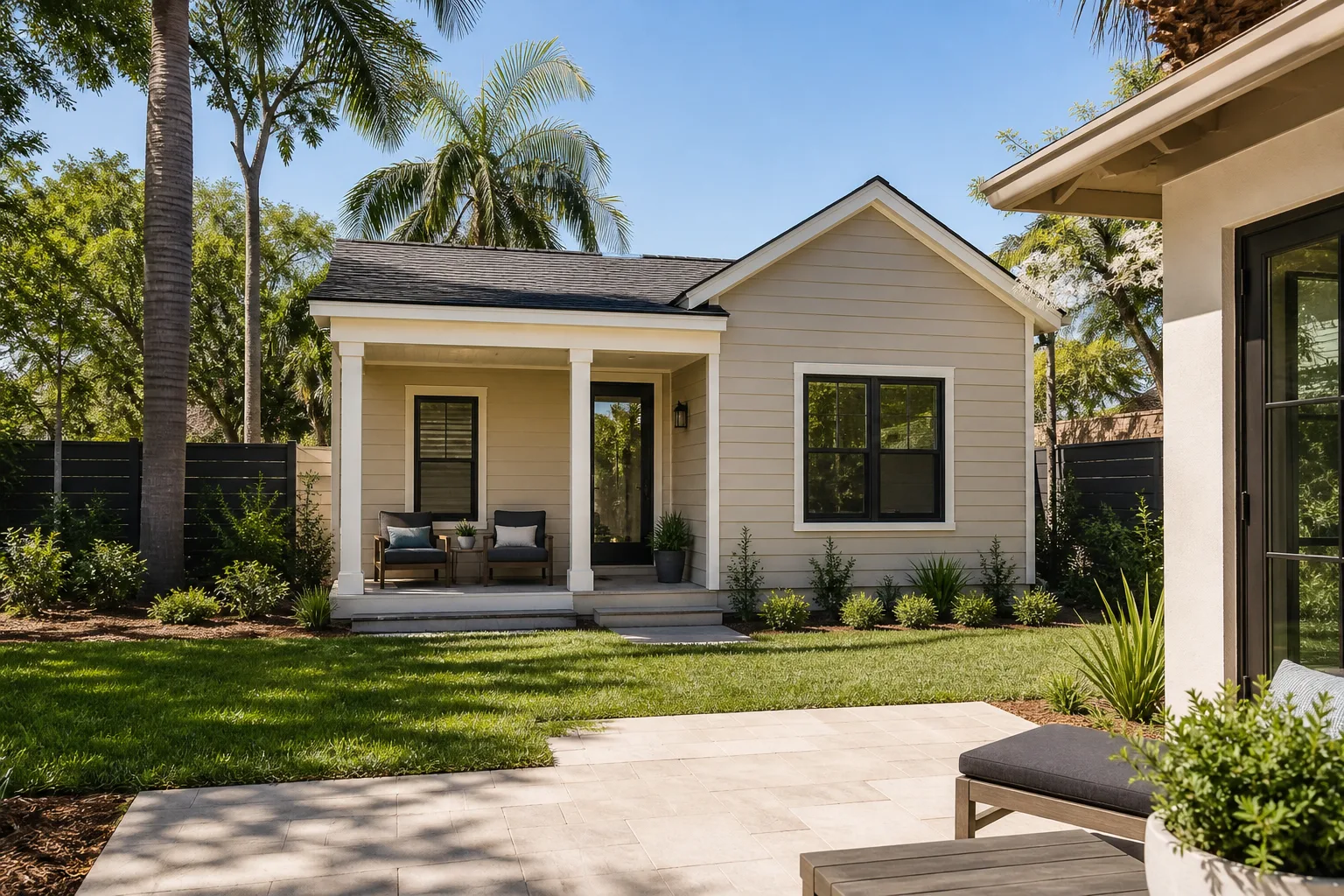
Clark County plan checkers regularly require window size or location changes to meet egress, energy, or setback rules. If you’ve already ordered custom-fabricated units from a manufacturer like ES Windows or ECO Window Systems, those units may not match the revised plans, and custom windows are not returnable. We’ve seen this single mistake cost $3,000 – $11,000 on one Las Vegas project where the egress window in a new bedroom got resized during review and the original unit was already on a truck. That’s an expensive piece of glass to store in a garage.
The fix is simple and unglamorous. Wait until the permit is issued and the final plans are stamped before you place a custom order. Standard sizes and stock units from manufacturers like CGI or CWS can sometimes be ordered earlier because they’re returnable. Anything fabricated to your plan should wait. We pulled a set of windows out of a stalled project in Spring Valley last month where the homeowner had ordered six weeks early and the plan checker moved every opening by four inches. That’s a conversation nobody enjoys. For other exterior work that has to coordinate with an addition, our Fence Installation in Las Vegas and Driveway & Pavers in Las Vegas pages cover the sequencing on those pieces.
When to Call a Pro
Most of the mistakes above turn on a document, a signature, or a sequence. An experienced contractor who does addition and ADU work in Las Vegas every month knows which county step trips most applicants and which utility request has to go out first. Our technicians have up to 19 years of experience reading Clark County plan comments and coordinating NV Energy and Southwest Gas schedules. We answer calls with a live person 24/7, and every visit includes a documented photo record as a standard deliverable, not an upgrade. If you already have a quote from another builder, bring it in. Rowan offers a free second opinion on any written estimate, reviewed line by line at no charge.
Related services in Las Vegas: Rowan Construction Group Las Vegas home | Home Additions & ADU in Las Vegas | Fence Installation in Las Vegas | Driveway & Pavers in Las Vegas
The Bottom Line
Every one of the five most expensive mistakes in a Las Vegas addition or ADU is preventable with a written process. Get the permit number before the first day of construction. Coordinate NV Energy and Southwest Gas before the foundation crew shows up. Use a change order clause that’s enforceable under Nevada Revised Statutes Chapter 624. Record the Clark County owner-occupancy covenant as a deed restriction. And keep your custom window and door orders in the cart until plan check is final. None of those steps require an architect. They require knowing what Clark County wants and in what order.
If you’re in Las Vegas and need help, Rowan Construction Group Las Vegas offers free estimates. Call (833) 467-9123 to schedule yours. Every quote comes with a flat written price and a written scope before any work starts, a signed change order requirement for any change, the 365-Day Done Right Promise, and a documented photo record of every visit.
Frequently Asked Questions
Legalizing an unpermitted addition in Las Vegas typically runs $8,000 – $22,000, and that’s the low end assuming the county will permit it at all. Legalization means retroactive plan review, inspections of work you may not be able to see behind drywall, and frequently correction of code issues the original builder skipped. If the addition sits over a setback line or violates the owner-occupancy covenant on an ADU, the county may require removal instead. Call (833) 467-9123 for a free estimate on your specific situation before you start the process yourself.
Clark County ADU permit timelines in Las Vegas typically run six to twelve weeks from first submittal to issuance, and each plan check resubmittal cycle can add two to three weeks on top. The single biggest factor is the number of correction cycles your plans trigger. A clean submittal with a complete site plan and properly sized egress openings moves faster than one that needs three rounds of revisions. Build the timeline into your project schedule, not on top of it.
No. Any addition that changes the footprint, adds conditioned square footage, or changes the structural load requires a Clark County permit in Las Vegas. So does any new electrical, plumbing, or gas line. Building without one exposes you to stop-work orders, retroactive legalization costs, and a title problem at resale. Some homeowners assume a small addition or a converted garage doesn’t need a permit, and that’s the assumption that produces $8,000 – $22,000 in legalization costs down the road.
A Las Vegas ADU construction contract should include a written scope, a flat written price, an enforceable change order clause under Nevada Revised Statutes Chapter 624, a written warranty, and the permit number once issued. The change order clause needs to require signed written authorization before any out-of-scope work begins, and it needs to state the cost of the change. If a contractor won’t put the price in writing before work starts, that’s not a contractor to sign with. Call (833) 467-9123 for a free second opinion on any written estimate you’re holding, reviewed line by line at no charge.
Written by the team at Rowan Construction Group Las Vegas.
Need Construction Help?
Call Rowan Construction Group Las Vegas - licensed & insured, here with fast after-hours help in Las Vegas.
(833) 467-9123