
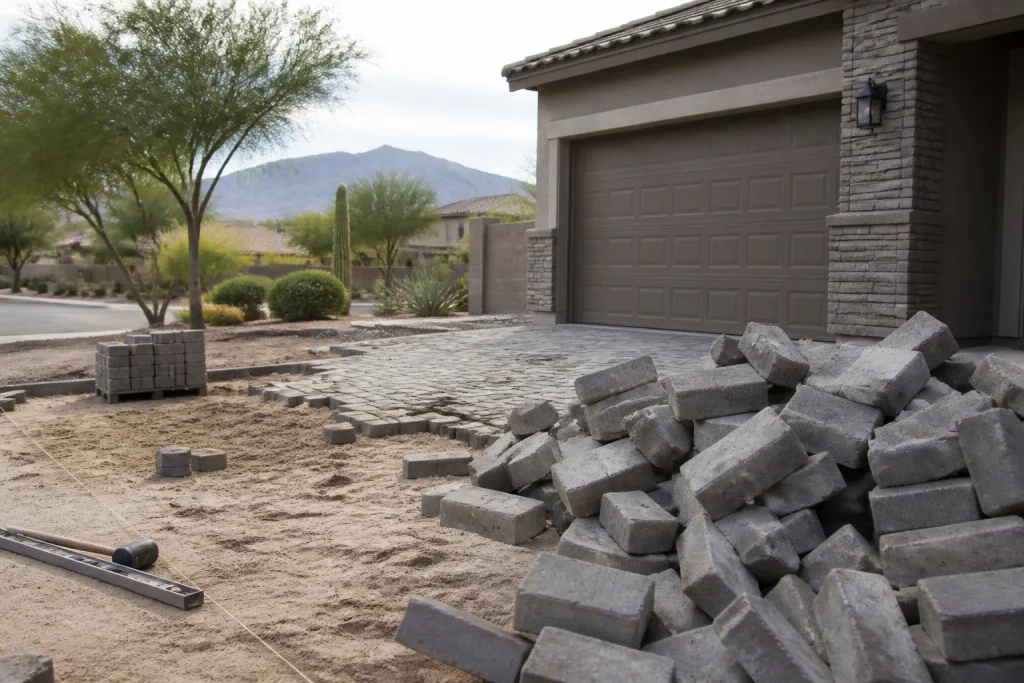
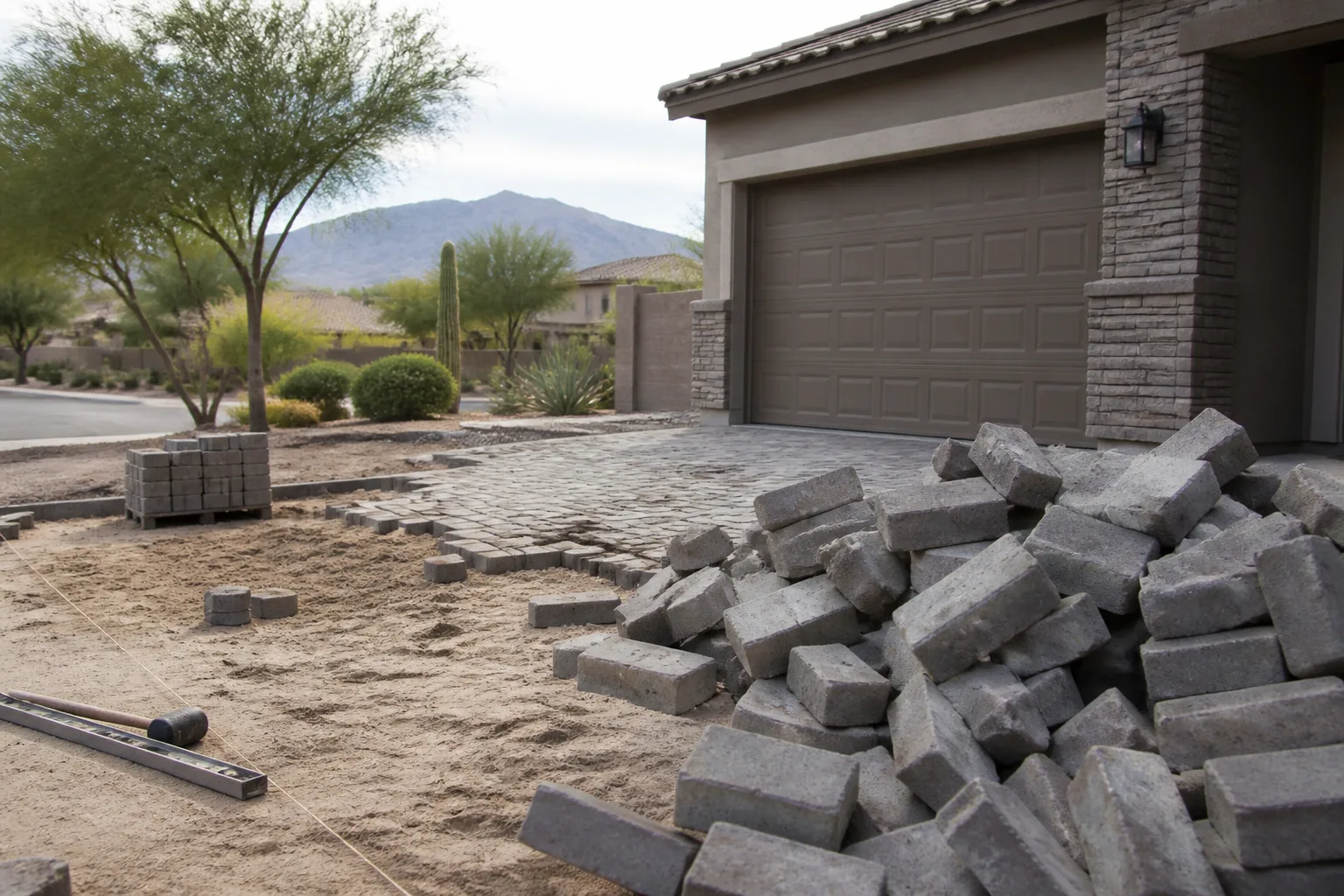
Emergency Driveway & Pavers Near Me: What Las Vegas Homeowners Should Do First
If a section of your Las Vegas driveway sinks, heaves, or collapses over a utility line, the first hour is about documentation, not phone calls to contractors. Photograph the damage with a timestamp, call 811 before anyone digs, and notify your insurance carrier before you authorize a single repair. Most sunken pavers in Las Vegas are not true emergencies. They become expensive when the paper trail is wrong.
If you’d rather have a professional assess it than sort through it yourself, call (833) 467-9123 for a free estimate.
Key Takeaways
- Document first, dispatch second. Photos with timestamps and an 811 ticket protect both your claim and your warranty.
- A genuine structural emergency means a void under the slab or a sudden sinkhole. Cosmetic settlement can usually wait for a scheduled estimate.
- Hiring the first contractor who answers at 9 PM is often the most expensive decision in the whole process.
- No contractor in Las Vegas can legally skip a permit on structural driveway work, “emergency” or not.
What should you do in the first hour after driveway damage in Las Vegas?
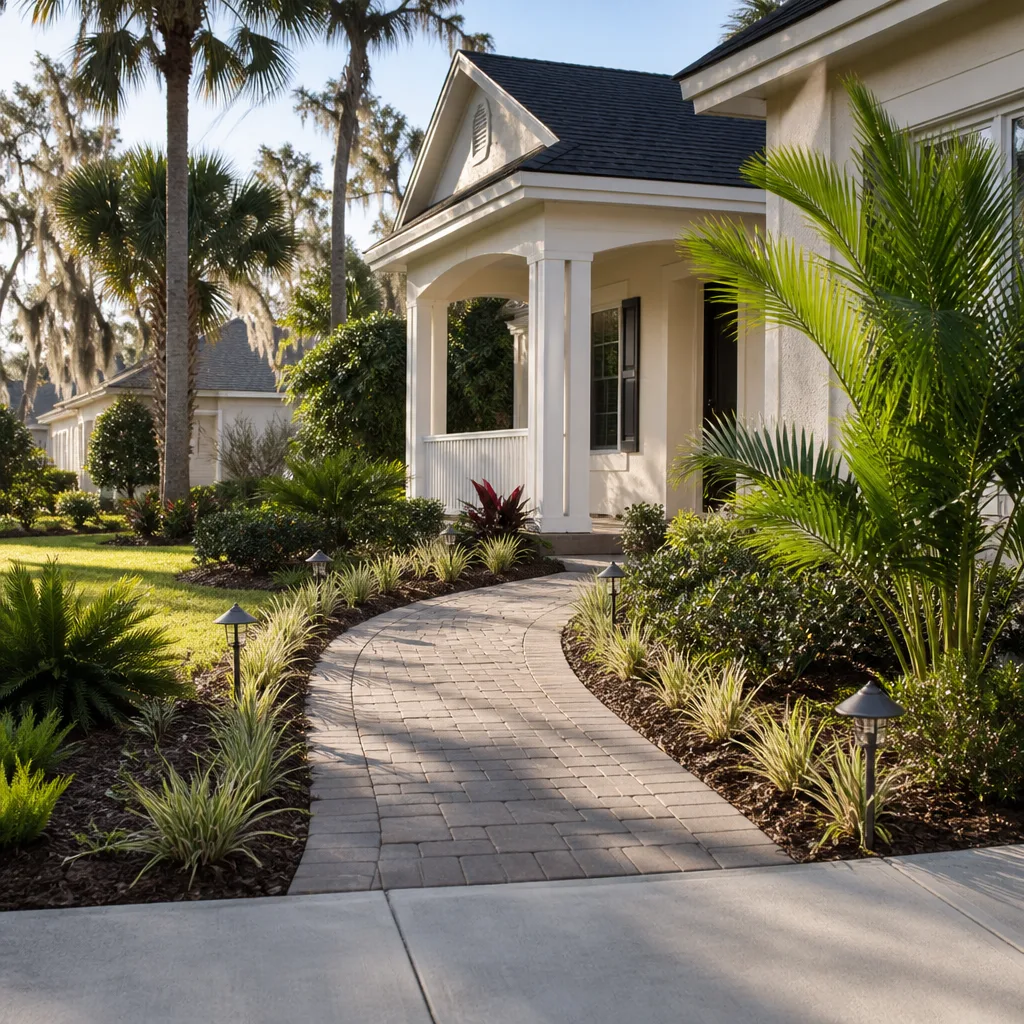
Work through these steps in order. The sequence matters more than the speed. A Las Vegas homeowner who photographs, calls 811, then calls the insurer has a claim and a warranty intact. One who calls three contractors first and lets a crew start digging can lose both.
- Stop traffic on the damaged section. Move vehicles off it. A paver that shifts under a tire can crack the base course underneath, and that turns a $400 reset into a base rebuild.
- Photograph before you touch anything. Wide shot of the whole driveway, then close-ups of the defect. Prop a ruler or a coin next to any crack so the size reads in the photo. Get the sky or a clock in at least one frame so the timestamp is visible, since phone metadata gets stripped when you email a photo to an adjuster.
- Check for utility markers. Look for painted flags, a meter box, or a fresh patch in the pavement. If any of those sit within a few feet of the damage, treat it as a potential utility issue and stop.
- Call 811 before anyone discusses excavation. Nevada law requires a locate request before digging. If a gas line, water main, or conduit runs under that section and a crew breaks it, the bill and the liability land on the property owner who authorized the dig. The 811 ticket is free and it’s your proof you followed the process.
- Notify your insurance carrier. Do this before you sign anything with a contractor. Most carriers want first notice of loss on their record before work begins, and some policies require it within a set window. Ask for the claim number and the adjuster’s name in writing.
- Photograph the 811 response record and every email. That paper trail is what you hand the contractor and the adjuster.
In our experience around the valley, the calls that go sideways are almost never the ones with the worst damage. They’re the ones where the homeowner got a verbal estimate at 10 PM and let a crew start the next morning.
Is a sunken or heaved driveway a real emergency in Las Vegas?
Usually not. A single settled paver, a hairline crack running along a joint, or a slight dip where the driveway meets the garage apron is cosmetic settlement, and it can wait for a scheduled estimate this week. A true structural emergency looks different. Watch for these signals:
- A visible void beneath the slab or pavers when you look into the gap at an angle, especially one you can fit a hand into.
- A sudden sinkhole or depression that wasn’t there yesterday, particularly near a meter box or a known utility easement.
- Water pooling in a low spot with no drainage path, which in Las Vegas points to a broken irrigation line or a failed base course under the pavers.
- Heaving that lifts a whole section high enough to trip someone or hang a car’s undercarriage.
- A crack that’s widening day to day. Mark the ends with chalk and photograph it again in 24 hours. If it moved, that’s structural.
Las Vegas makes this harder to read than most cities. Our soil is caliche-heavy and expands and contracts hard with the temperature swings, and the summer monsoon dumps a month of rain in an afternoon. That combination produces a lot of settled pavers that look alarming and are actually routine, and a smaller number of genuine voids that look like nothing until a car tire finds them. The chalk-and-photograph test is the cheapest way to tell the two apart.
What can a Las Vegas contractor legally do without a permit, even in an emergency?
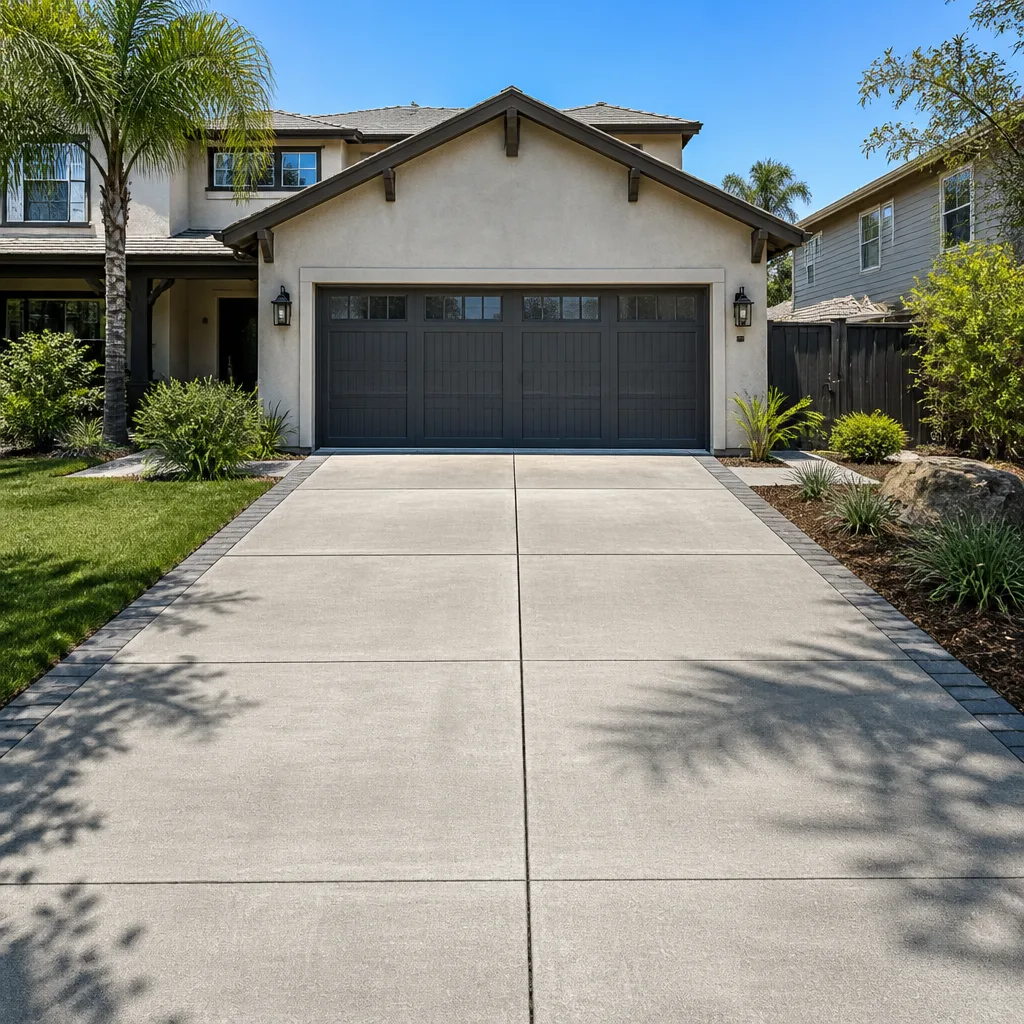
Structural driveway repair in Las Vegas requires a permit. That includes replacing a base course, rebuilding a section over a utility, or resurfacing beyond a cosmetic patch. No contractor can legally skip that step because the damage looked urgent. What they can do without a permit is limited: temporary barricading, resetting a loose paver, or stabilizing a section so it’s safe to walk past while the permit is pulled.
Here’s why that matters to your timeline. A permit adds days, not months, to a driveway repair, and a contractor who tells you they’ll “handle the paperwork after” is putting the inspection and your warranty at risk. When the work is inspected and signed off, you have a record that the repair was done to code. When it isn’t, you have a repair that a future buyer’s inspector may flag, and a warranty that a manufacturer can decline to honor.
Ask any contractor two questions before they touch the driveway: will you pull the permit, and can I see the number. A written quote should name the permit as a line item. If it doesn’t, that’s a signal about how the rest of the job will be documented. The same discipline applies across every trade we work in, which is why our written quote always shows the scope and the permit before a crew arrives.
Why is hiring the first contractor who answers at 9 PM the most expensive move?
Because the 9 PM call is a sales call, not a site assessment. A contractor who answers after hours and quotes you a price over the phone hasn’t seen the substrate, hasn’t run the 811 locate, and hasn’t read your insurance policy. What you get is a number that will change once the crew opens the driveway, and by then the truck is parked and the base is already broken up.
Put the two costs side by side. Waiting 48 hours for a documented estimate costs you two days of a driveway you can mostly still use. Hiring the wrong contractor costs you a change order you didn’t agree to, a repair with no permit, a warranty nobody will honor, and possibly a denied claim because the work started before the insurer was notified. In our experience, that second number runs into the thousands, and it’s the one homeowners rarely see coming.
There’s a real difference in materials, too. A driveway quote that names Belgard or Techo-Bloc pavers with a specified base depth is a quote you can compare line by line. A quote that says “pavers, installed” is a quote you can’t compare to anything. We’ve pulled pavers out of a garage over in Summerlin where the previous crew had laid them on two inches of base instead of the six the manufacturer’s spec calls for. The homeowner had a three-year-old driveway that was already heaving. That repair wasn’t caused by Las Vegas weather. It was caused by skipping the base.
What documentation do you need before work starts?
Assemble this packet before you sign a contract. Present the same packet to your insurer and to the contractor. It’s the difference between a claim that moves and a claim that stalls.
- Dated photos of the damage, wide and close, with a scale reference and a visible timestamp.
- Your 811 locate ticket number and the response record. This proves you followed the process before any excavation.
- Your insurance claim number and the adjuster’s contact, in writing from the carrier.
- The contractor’s written scope and flat price, with the permit named as a line item.
- The written warranty, in hand before work starts, not after.
- A signed change order for anything that changes, before the change gets done.
If a contractor can’t produce a written scope and a warranty before the crew shows up, that’s your answer. The documentation is the job. A contractor who builds carefully writes it down first.
When to call a pro
Call a professional when you see a void under the pavers, a widening crack, or any damage near a utility easement. Call sooner if water is pooling against your foundation or a section is unsafe to drive on. A structural assessment with a written quote tells you whether this is a weekend reset or a base rebuild, and it tells you before you’ve spent anything.
Related services in Las Vegas: our Driveway & Pavers in Las Vegas page covers base prep, paver selection, and permit-ready scopes. If the damage runs along your property line, our Fence Installation in Las Vegas page covers shared-easement work. And if the repair is part of a larger plan for the property, start at our Rowan Construction Group Las Vegas home page or look at Home Additions & ADU in Las Vegas for projects where the driveway feeds into a bigger build.
One more thing we flag on every visit: if your driveway damage sits next to a roof that’s also showing its age, the runoff is often the real culprit. That’s a roofing conversation, and naming Owens Corning or GAF shingles with a spec sheet is how you compare those quotes too.
The Bottom Line
The first hour after driveway damage in Las Vegas is about documentation, not dispatch. Photograph it with timestamps, call 811 before anyone digs, and notify your insurer before you sign. A genuine emergency means a void, a sinkhole, or a widening crack. Most settlement is cosmetic and can wait for a scheduled estimate. The 48-hour delay costs you two days. The wrong contractor costs you a claim and a warranty.
If you’re in Las Vegas and need help, Rowan Construction Group Las Vegas offers free estimates. Our technicians have up to 19 years of experience, and every visit includes a documented photo record as a standard deliverable, plus a written flat price before any work starts. Bring a competitor’s written quote and we’ll review it line by line at no charge. Call (833) 467-9123 to schedule your free estimate.
Frequently Asked Questions
A cosmetic paver reset in Las Vegas typically runs $300 to $800. A section rebuild with new base course runs $1,500 to $4,500 depending on square footage, and a full driveway replacement runs $8,000 to $18,000 based on size and paver brand. The emergency premium is usually zero if you wait for a documented estimate. Call (833) 467-9123 for an exact quote – estimates are free.
Yes, for structural work. Rebuilding a base course, replacing a section over a utility, or resurfacing beyond a cosmetic patch requires a permit in Las Vegas. Temporary stabilization does not. Ask the contractor to name the permit as a line item on the written quote. Call (833) 467-9123 and we’ll walk you through what your repair needs.
It depends on the cause. Sudden damage from a broken utility line or a burst pipe is often covered. Gradual settlement or poor installation typically isn’t. That’s why the first hour matters: photograph the damage, call 811, and notify your carrier before work starts. Call (833) 467-9123 for a documented assessment you can hand to your adjuster.
A paver reset takes a few hours. A section rebuild with base course takes two to four days including the permit and inspection. A full replacement runs four to seven days. None of it is same-day work, and a contractor who promises same-day structural repair is telling you they’re skipping the permit. Call (833) 467-9123 for a written timeline with your estimate.
Written by the team at Rowan Construction Group Las Vegas.
Need Construction Help?
Call Rowan Construction Group Las Vegas - licensed & insured, here with fast after-hours help in Las Vegas.
(833) 467-9123