
Fence Installation: Repair or Replace? How Las Vegas Homeowners Decide
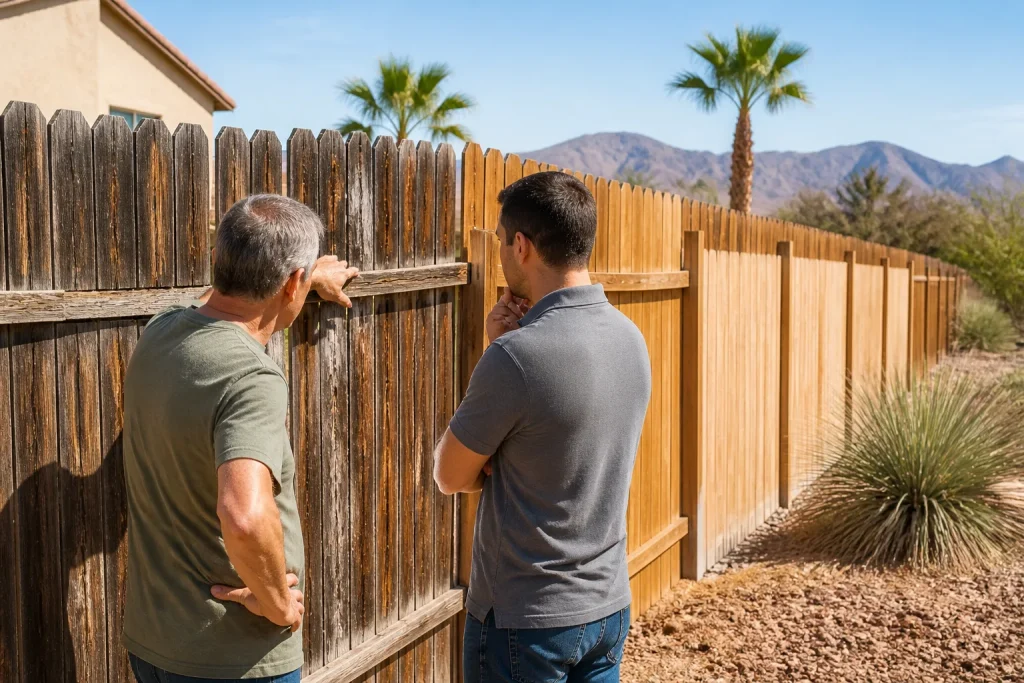
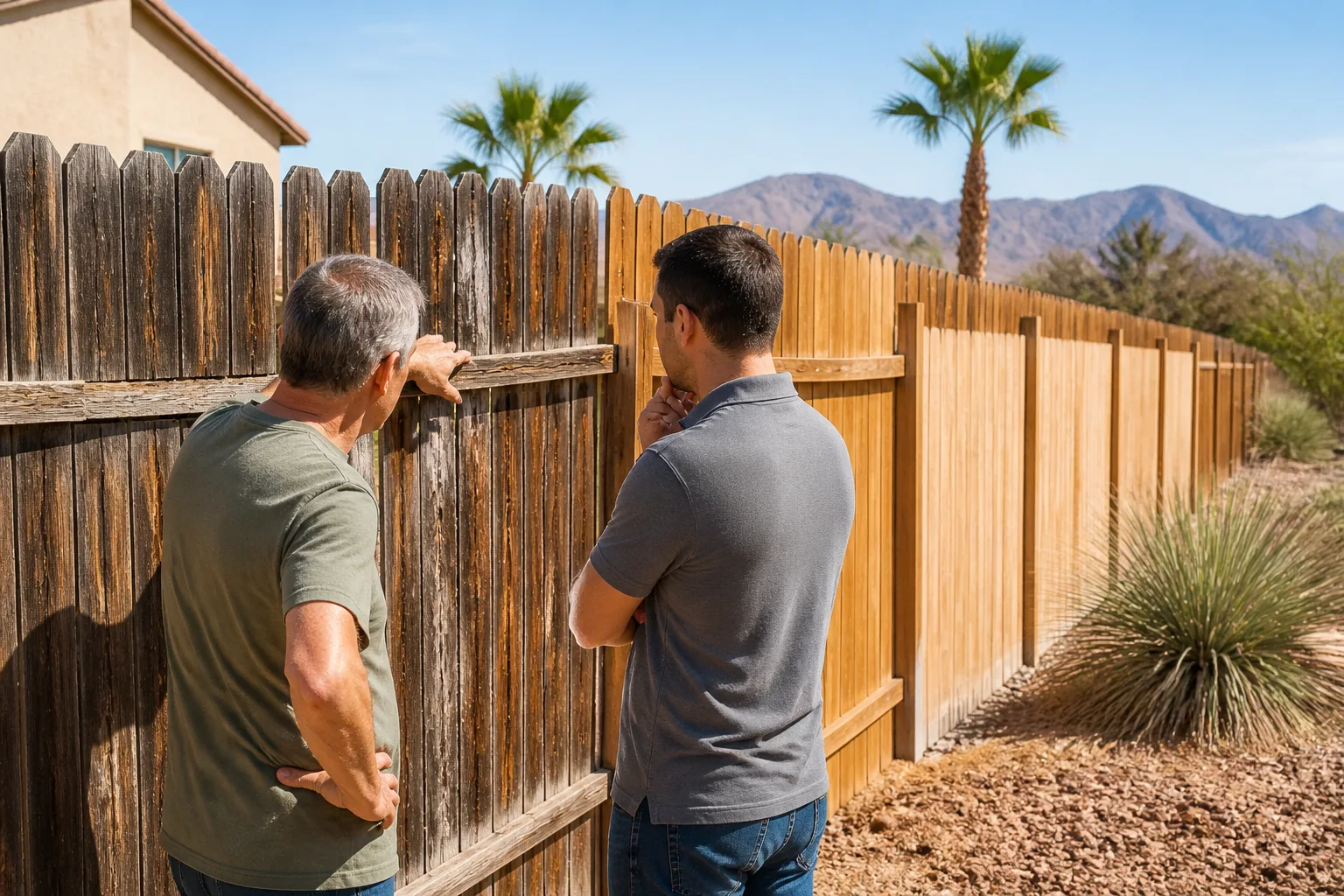
A fence that looks weathered but still stands upright in Las Vegas is not automatically a fence worth repairing. Alkaline soil with a pH above 8.5, common across much of the valley, corrodes galvanized post steel from the ground up, leaving posts that test solid at the surface and hollow two feet down. Our technicians have up to 19 years of experience, and the same pattern shows up over and over: the visible cedar looks fine while the foundation under it has already failed. If you’d rather not run the tests yourself, call (833) 467-9123 and we’ll take a look.
Key Takeaways
- In Las Vegas, post depth, footing diameter and panel warp decide repair vs. replace more than surface appearance does.
- Most of the valley sits in a 90 mph wind exposure category, which sets the footing spec insurance adjusters reference after storm damage.
- Wood repairs are cheap but recur; block wall repairs cost more once and last 30+ years.
- A signed change order with specific footing language is what stops a repair from doubling in cost mid-project.
Why Does a Las Vegas Fence Fail From the Ground Up?
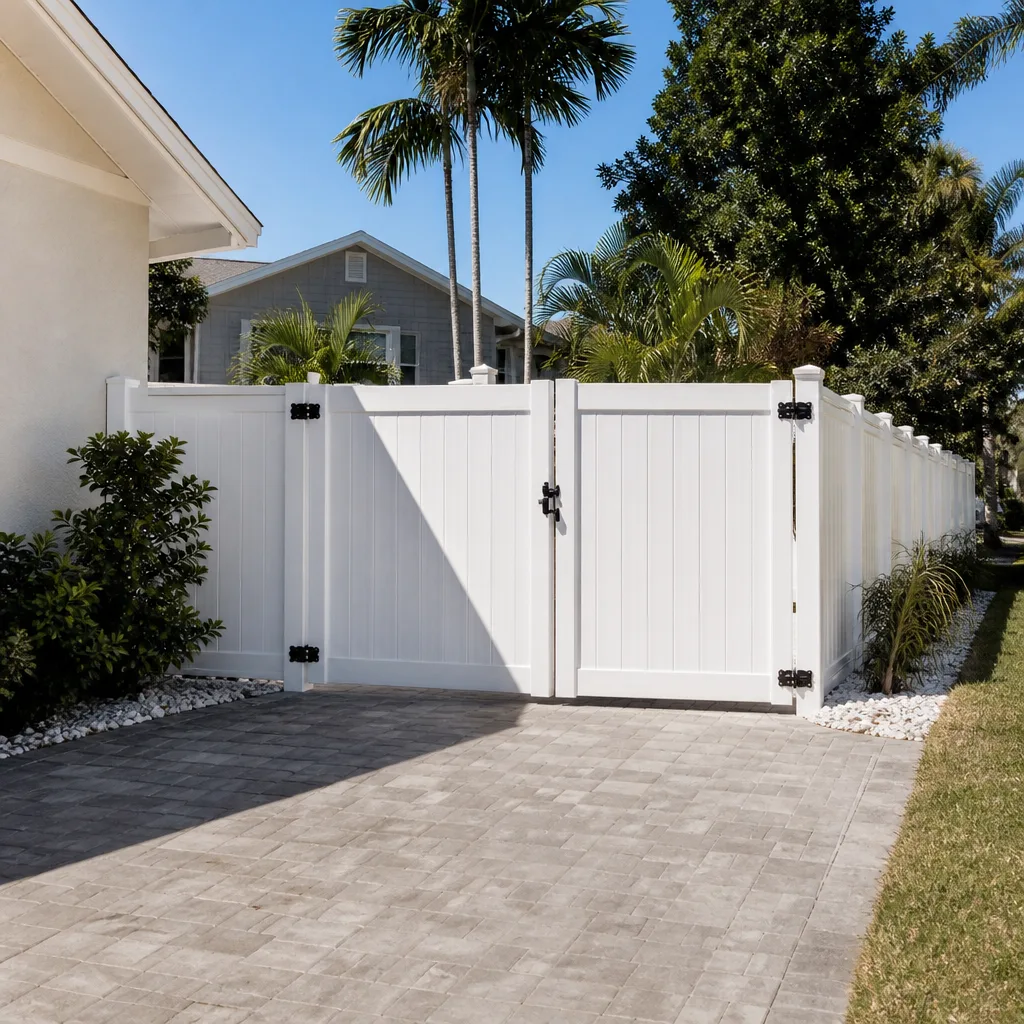
Las Vegas fences fail at the footing first, and the surface problem comes later. The valley’s soil runs alkaline, often above pH 8.5, and that chemistry eats at the zinc coating that protects galvanized post steel. Once the coating is compromised, the post rusts from the buried end upward. Summer ground temperatures that push past 100 degrees and the seasonal swing between dry heat and monsoon moisture speed the process along. You end up with a post that looks straight and feels solid when you push on it at shoulder height, then crumbles when you dig down 18 inches.
Wind is the second factor. Most of the Las Vegas valley falls within a 90 mph exposure category under the wind provisions Clark County references, and a fence is essentially a sail catching that load. A post set 18 inches deep in a 10-inch footing will hold up in calm weather and lean after the first sustained gust event. That’s why a fence can look cosmetically rough but be structurally fine, or look clean and be one windstorm from falling over. Judge the footing, not the finish.
We’ve pulled posts out of front yards in Summerlin and Spring Valley that were set barely 15 inches into the ground in a footing narrower than a coffee can. Those fences never had a chance once the wind arrived. If you want to know what a properly specified install looks like from the start, our Fence Installation in Las Vegas page walks through the specs we quote to.
What Is the Three-Point Field Test for a Las Vegas Fence?
You can run this test in about 30 minutes with a probe rod, a shovel, a 4-foot level and a tape measure. It tells you whether the foundation is sound before you spend a dollar on repairs that won’t hold.
- Post depth with a probe rod. Drive a thin steel rod down alongside a representative post until it stops. Read the depth. If the footing bottom is shallower than 24 inches, that’s below what we’d specify for a 90 mph exposure category in Las Vegas, and repair money is likely wasted.
- Footing diameter by excavating 6 inches at the base. Dig out a small area around the post at ground level. Measure the concrete pad. Anything under 10 inches in diameter for a standard 6-foot privacy fence is undersized. At 12 inches or better, you have room to work.
- Panel warp angle with a 4-foot level. Hold the level vertically against the face of several panels. Note the gap at top or bottom. A warp of more than 3/4 inch over 4 feet on more than two panels means the rails have lost their stiffness and the panels are past saving.
Two failing results out of three, and replacement is the honest answer. One or none, and you have a repair on your hands. Write the numbers down as you go; they’re the same figures a contractor will use, and having them in hand makes the conversation shorter.
How Do Wind Loads and Clark County Specs Affect the Decision?
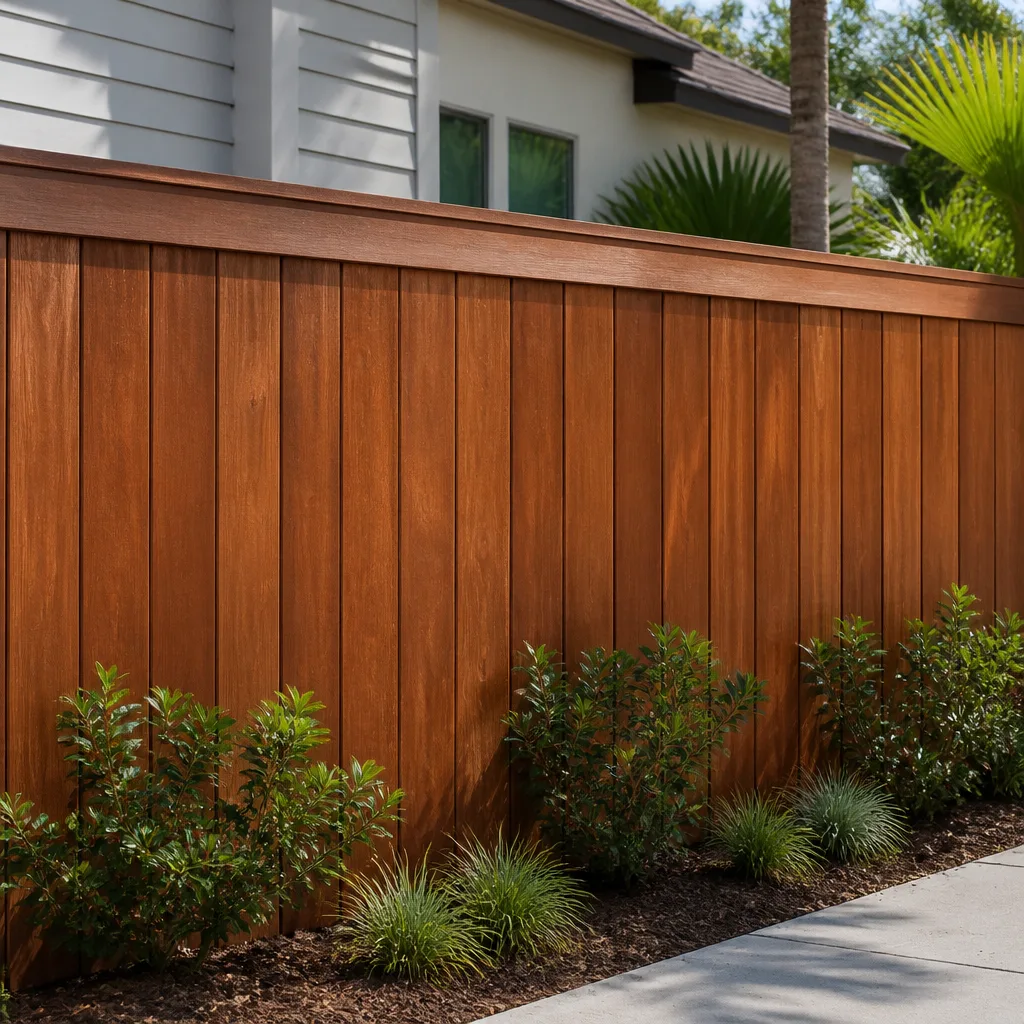
Wind specifications are the reason repair vs. replace isn’t just about money. A repaired fence that stays below the wind load spec will fail again in the next significant gust event, and your insurer will look at the footing specification when you file a claim. Most of the Las Vegas valley is mapped to a 90 mph basic wind speed under the county’s adopted building provisions, and that number sets the minimum embedment depth and footing diameter a fence should meet.
In practice, that means a 6-foot wood privacy fence needs posts set at least 24 inches deep in a footing of 10 to 12 inches in diameter, depending on soil and post spacing. A CMU block wall has its own requirements, including a steel-reinforced footing and grout-filled cells at intervals. Wrought iron panels a little over 4 feet tall carry less wind load but still need footings sized to the exposure.
- 90 mph exposure category applies to most of the metro area, including Henderson and North Las Vegas.
- Undersized footings are the most common cause of storm-related fence failure claims after monsoon season.
- A repair that reuses an undersized footing won’t pass an adjuster’s eye even if the surface looks new.
If you want the specification written into a quote rather than described on the phone, that’s the standard we work to. Every Rowan Construction Group project carries a written price and written scope before work starts.
Which Fence Type Costs Less to Repair Over Time?
Wood, block wall and wrought iron each have a different repair cost curve, and the answer to “repair or replace” differs for each. Wood is labor-cheap to repair but recurs every few years in Las Vegas heat. Block wall repairs are expensive when they happen but last 30-plus years. Wrought iron sits in the middle: a rusted panel can be re-coated or replaced in a section without touching the posts.
| Fence Type | Repair Cost per Linear Ft. | Replace Cost per Linear Ft. | Break-even (10-year horizon) |
|---|---|---|---|
| Wood privacy (6 ft) | $18 – $35 | $38 – $60 | Frequent patch repairs (2+ times in 10 years) make replace cheaper |
| CMU block wall | $30 – $65 (per failed section) | $55 – $95 | Two or more section failures in 10 years; otherwise repair holds |
| Wrought iron | $22 – $45 | $50 – $85 | Coating recoat every 5 – 7 years beats replace unless sections are buckled |
The pattern is clearer than the numbers suggest. Wood rewards replacement once it starts failing a pattern; each repair is a papering-over, and the money goes into labor you’ll spend again. Block wall rewards targeted repair because the material life is measured in decades once the footing is right. Wrought iron rewards maintenance recoating over full replacement unless the panels are physically buckled.
In our experience, the Las Vegas climate pushes wood speed along fast enough that five years is often the honest planning horizon for a repair cycle. A block wall built to spec on a proper footing can outlive the mortgage on the house.
What Should a Signed Change Order Cover on a Mid-Project Repair?
When a repair job uncovers footing failures, the change order is what stops the budget from doubling. We’ve seen a $900 panel repair turn into a $3,400 job without a single signed approval, just because the crew found more rot under the soil and added it on. Under Clause 1 of the Haven Standard, no work proceeds on a change until the change order is signed; that discipline is exactly what keeps a repair from growing sideways.
A well-written change order for a fence repair should specify:
- The exact linear footage of additional posts or panels affected, with locations marked on a site sketch.
- The revised footing specification for each added section (depth, diameter, concrete mix).
- The removal and disposal cost for failed material, listed separately.
- The new total price, stated as a flat dollar figure with the delta from the original quote.
- A revised completion date tied to the added work, not a re-quote of the whole job.
If a contractor can’t produce that on request, the number you were given at the start wasn’t a written price, it was a placeholder. Under our process, the written quote you receive at the start is a flat price with a written scope and written warranty, and the change order is the only way it moves.
When Should You Call a Pro Instead of Testing It Yourself?
Probe the post depth and measure the footing yourself; those are safe and slow. Stop and call a pro when you get to anything involving post removal, footing demolition, block wall section replacement or electrical fence components. Exposing a footing on a leaning fence can shift the fence onto you, and pulling a rusted post out of a concrete footing without knowing how the rails are attached can send a panel down on top of someone. This is not a job to freelance.
Common signs it’s time for a professional evaluation:
- Two or more posts lean more than 2 degrees from vertical in the same run.
- Any panel sways visibly when you push it at rail height.
- Visible concrete spalling or exposed rebar at the footing.
- A leaning fence line along a property boundary, where a repair affects a neighbor’s side.
If the repair widens once the crew opens the ground, a straightforward replacement may end up being the honest number. Our Driveway & Pavers in Las Vegas crews regularly see the same footing failures where pavers meet fence lines, and they flag the pattern before it costs the homeowner a second repair.
How Does the Repair vs. Replace Math Play Out Over 10 Years?
Run the math over a decade and the decision usually sorts itself. Take a 100-foot wood privacy fence. A repair of 8 failed posts and panels runs $22 – $30 per linear foot on the affected sections, so roughly $1,760 – $2,400 the first time. Given the Las Vegas climate, that repair is likely to recur at year 4 or 5, then again around year 8. Over 10 years, the homeowner spends $4,000 – $6,000 on patch repairs and still has a fence with the original undersized footings.
A full replacement at $45 – $55 per linear foot for the same 100 feet lands at $4,500 – $5,500 with footings set to the 90 mph wind spec, and no further cost inside the 10-year window if the material is right. The break-even arrives around year 7 for wood. For block wall, the math tilts toward targeted repair until two or more sections fail in the same stretch; for wrought iron, recoating beats replacement until panels buckle.
The honest way to see it: repair buys you time if the footing is right, replace buys you time if the footing is wrong. Get the footing tested first, then do the math.
Related services in Las Vegas
If the fence decision sits inside a larger yard project, the same footing and grade discipline applies to hardscape. You can see how we scope the work from the Rowan Construction Group Las Vegas home page, and if a fence replacement is part of an ADU or addition boundary change, Home Additions & ADU in Las Vegas lays out the planning side.
The Bottom Line
In Las Vegas, the repair vs. replace call comes down to three measurable numbers: post depth, footing diameter and panel warp angle. If two or more are failing, replace. If one or none, repair. The visible surface tells you almost nothing; the footing tells you everything. Our technicians have up to 19 years of experience reading exactly this pattern, and the written price we quote reflects what the ground actually shows.
If you’re in Las Vegas and need help, Rowan Construction Group Las Vegas offers free estimates. Bring a competitor’s quote if you have one; our free second opinion reviews it line by line. Call (833) 467-9123.
Frequently Asked Questions
Fence repair in Las Vegas typically runs $18 – $35 per linear foot for wood, $30 – $65 per affected section for CMU block wall, and $22 – $45 per linear foot for wrought iron, depending on footing condition. Call (833) 467-9123 for a free estimate with a written line-item price.
No. The written price you receive before work starts is a flat price with a written scope and written warranty. If the crew finds additional footing failures, no work proceeds on the change until a signed change order with the new dollar figure is in place. Call (833) 467-9123 to see a sample change order on a fence repair.
Permit requirements depend on fence height and whether it’s a block wall, which usually needs a permit for the footing and reinforcement. Wood and wrought iron fences under standard height often don’t require a permit, but the footing spec still governs wind survival. Call (833) 467-9123 and we’ll tell you what your specific fence needs before anyone picks up a tool.
A 100-foot wood privacy fence replacement typically takes 2 – 3 working days in Las Vegas once materials are on site; a CMU block wall runs 4 – 6 days because of footing cure time. Timing depends on post spacing, footing cure and gate hardware. Call (833) 467-9123 for a written schedule on your specific layout.
Written by the team at Rowan Construction Group Las Vegas.
Need Construction Help?
Call Rowan Construction Group Las Vegas - licensed & insured, here with fast after-hours help in Las Vegas.
(833) 467-9123