Last updated November 18, 2026





Free written scope consultation - allowances, timeline, and change-order rules on paper before a single trade is scheduled
How to Hire a Construction Contractor in Las Vegas: A Step-by-Step Guide
A bid that never mentions “permit-ready drawings” is a bid that will quietly add $1,200 to $3,500 to your project after you’ve already said yes. That phrase, along with about a dozen others, is what this guide teaches you to find before you sign anything. Most hiring advice stops at “get three bids.” That’s the easy part. The hard part is what happens next: three contractors hand you three documents written at three different levels of detail, and none of them line up. One quote lists “demo” as a single line. Another breaks it into haul-away, dumpster, and disposal fees. A third writes “as needed” and leaves you guessing. Comparing those bids side by side is impossible until you normalize them, and that’s exactly the gap this guide closes. You’ll learn how to verify a Nevada license in three minutes, how to read the contract language that actually binds a contractor to a price, how to build a scope-comparison worksheet, and how to tie payments to inspections instead of calendar dates. Every step is written from our experience working Las Vegas jobs, where the desert climate, the inspection calendar, and the local market all shape how a contract should read.
Quick Answer
To hire a construction contractor in Las Vegas, verify the contractor’s license on the Nevada State Contractors Board (NSCB) website, confirm the license classification covers your type of work, insist on a fixed-price written contract with a defined scope, and tie your payment schedule to inspection milestones rather than dates. The single most important step is comparing bids line by line on a normalized worksheet so you can see what each contractor included, excluded, and left deliberately vague. A written price before work starts is not a courtesy, it’s your main protection.
Styles & brands we work with
- Kitchen remodeling
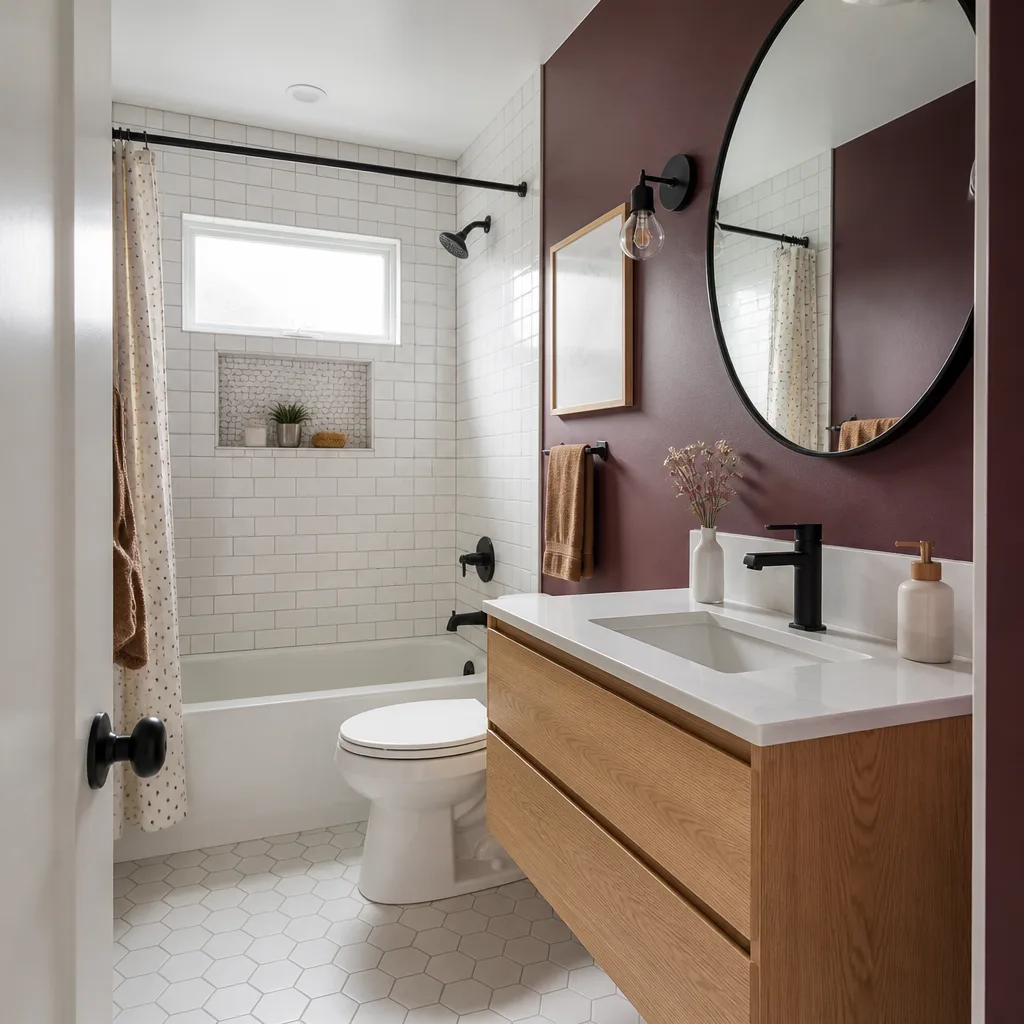
- Bathroom remodeling
- Home additions & ADU
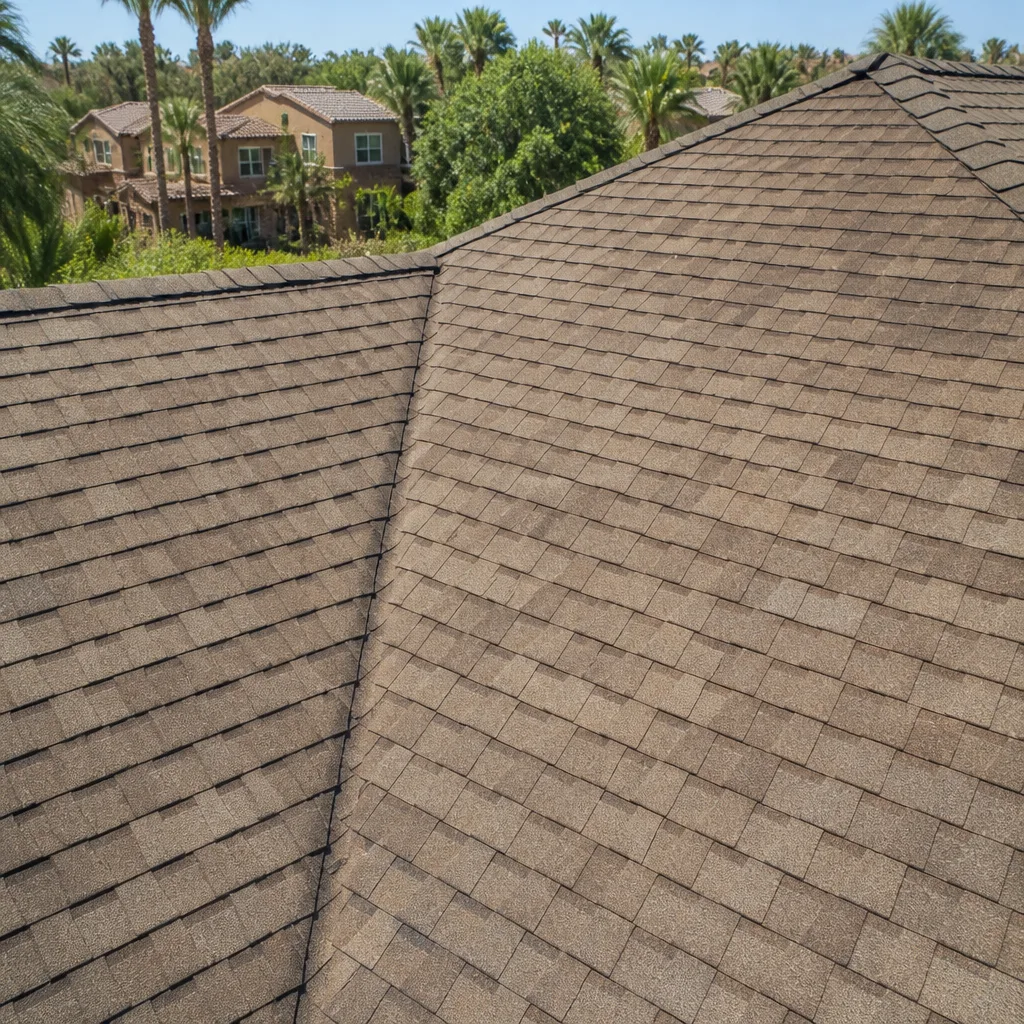
- Roofing
- Windows & doors
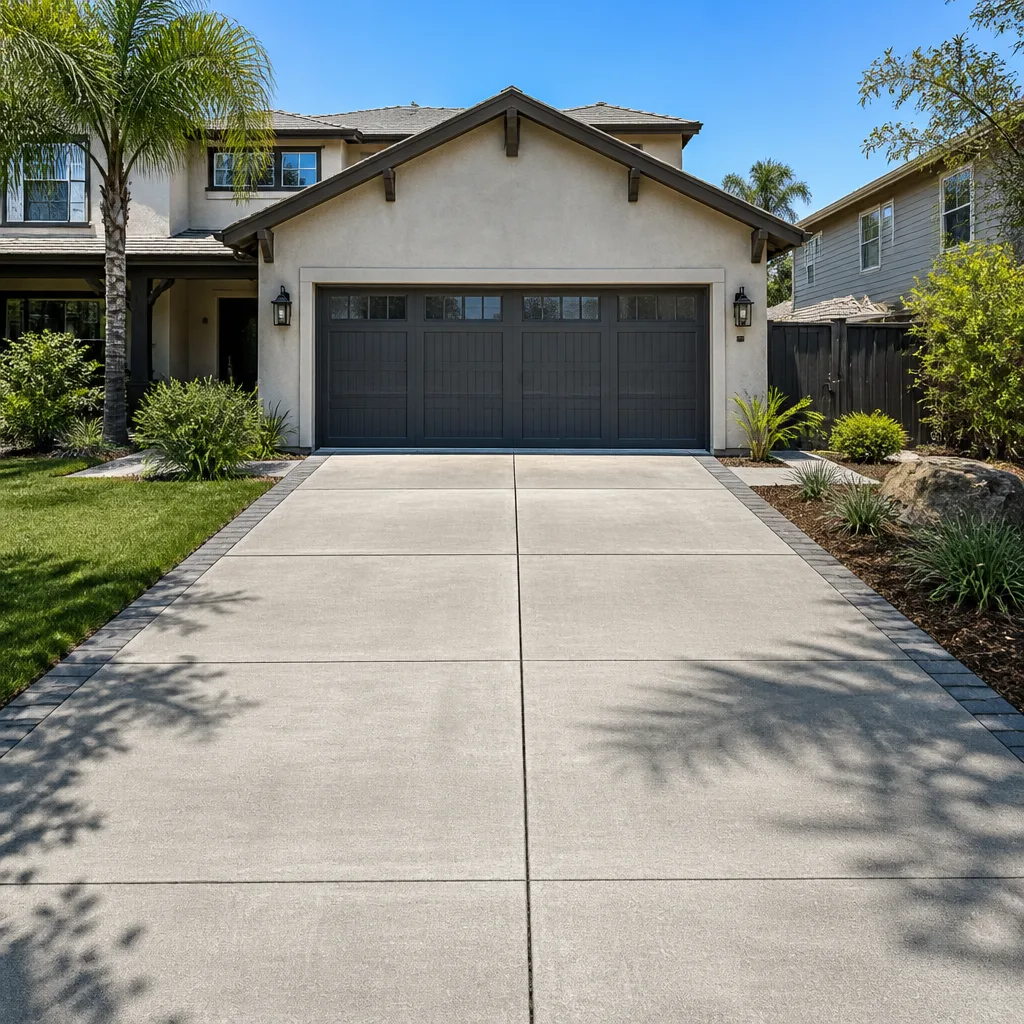
- Driveway & pavers
- Fence
Table of Contents
- Step 1: Verify the Contractor’s Nevada License in Under Three Minutes
- What Nevada License Classifications (B-2, C-2, and Others) Actually Cover
- The Contract Clauses That Legally Bind a Contractor to Their Price
- Step 2: Build a Scope-of-Work Comparison Worksheet
- Red-Flag Language in Bids: Allowances, “As Needed,” and “Per Owner Selection”
- Step 3: Structure Payments Around Inspections, Not Calendar Dates
- Las Vegas Context: Climate, Codes, and Neighborhoods That Change the Bid
- Step 4: Get a Free Second Opinion on Any Written Estimate
Step 1: Verify the Contractor’s Nevada License in Under Three Minutes
Nevada requires anyone who contracts for construction work over $1,000 to hold a state license, and the NSCB maintains a public database you can search for free. Three minutes on that site tells you more than an hour of phone calls. Here’s the exact sequence:
- Go to the NSCB website and open the license search tool.
- Search by the contractor’s business name or license number. Ask for the number directly; a legitimate contractor will hand it over without hesitation.
- Confirm the license status reads “active,” not “expired,” “suspended,” or “revoked.”
- Check the classification code against the work you’re hiring for (more on this below).
- Look at the monetary limit. Nevada licenses carry a cap on the size of the contract a contractor can legally take. If your project exceeds that limit, the contractor isn’t licensed for it.
- Review any disciplinary history. Complaints and actions are listed publicly.
We’ve seen homeowners skip this step because a contractor seemed trustworthy in person. The database doesn’t care how likable someone is. It records what the state knows, and that record is the only one that counts when a dispute lands in front of a judge. In Las Vegas, where new construction and renovation volume runs high, the pool of licensed contractors is large and the pool of unlicensed ones is larger than most people expect. Pulling the record takes less time than reading a single Yelp review thread.
What Nevada License Classifications (B-2, C-2, and Others) Actually Cover
Nevada sorts contractors into classifications, and the letters matter because a license that covers one trade doesn’t cover another. Hiring a roofer whose license is limited to something else means the work isn’t legally theirs to perform, and your recourse shrinks to a complaint instead of a remedy.
- Class A covers general engineering and heavy construction, the kind of work tied to infrastructure rather than homes.
- Class B is the general building contractor classification, covering construction of a structure or addition. A B-2 license is a subclassification within that family, and it broadly allows the holder to take on a full building project, coordinating the trades.
- Class C covers specialty trades. Within it, C-2 is a common specialty subclassification, and the specific C-number identifies which trade. Roofing, fencing, paving, plumbing, and electrical each sit in their own specialty category.
- Monetary limits attach to every license, and the limit rises with the classification and the contractor’s financial standing. A small specialty license often carries a limit far below the cost of a full home addition.
The practical rule: match the classification to the job, and match the monetary limit to your budget. If you’re building an addition or an ADU, the contractor needs the classification that covers full structure work. If you’re replacing a fence, the classification needs to cover fencing specifically. Cross-check both before you discuss a number. This is the same discipline we apply on our own projects, and it’s a large part of why a written scope and a written price are the standard on every job we take on.
The Contract Clauses That Legally Bind a Contractor to Their Price
Two phrases carry almost all the cost risk in a residential construction contract: fixed price and time and material. They are not interchangeable, and the difference can run into tens of thousands of dollars on a Las Vegas remodel.
Fixed-price language means the contractor commits to completing the defined scope for a stated dollar amount. If the work takes longer, runs into a surprise, or the material costs move, that’s the contractor’s problem, not yours. This is the structure that protects you, and it only works if the scope is written with enough detail that “the work” is unambiguous.
Time-and-material language means you pay for hours worked plus materials, often with a markup. It shifts cost risk onto you. A time-and-material contract isn’t automatically a bad deal, but you should know when you’re signing one, because a blowout becomes your bill rather than the contractor’s.
Nevada law also sets requirements for written contracts on residential work above a threshold, and those requirements include a defined scope, a payment schedule, and a notice of your right to cancel. What the law doesn’t do is force a contractor to fix a price. Only the contract language does that. Read the clause that describes how the price is set, then find the clause that describes what happens when the scope changes.
That second clause is the one people skip. It should say that no additional work and no additional charge happens without a signed change order describing the change and the cost. A signed change order is not paperwork for its own sake. It’s the mechanism that keeps a project within a few percent of the agreed price instead of drifting 20% over. We put that mechanism in writing on every job, because a verbal “we’ll sort it out later” always sorts out in the contractor’s favor.
Step 2: Build a Scope-of-Work Comparison Worksheet
Here’s where most hiring guides run out of road. “Get three bids” assumes the bids are comparable. They almost never are, because each contractor decides how much detail to include and where to leave a gap. A low bid often looks low because it left things out. Normalize the bids on one worksheet and the picture flips.
Build a spreadsheet with one row per line item and one column per contractor. Then fill it in from each bid, using these rows:
- Demolition and haul-away – is dumpster rental and disposal included, or listed separately?
- Permits and drawings – does the bid say “permit-ready drawings,” or does it say “permits by owner”? That omission is where the $1,200 to $3,500 surprise lives.
- Materials by brand and spec – a bid that names the cabinet line, the countertop material, and the roofing manufacturer is a bid you can compare. A bid that says “cabinets” is not.
- Labor scope – what’s explicitly included, what’s excluded, and what falls under “miscellaneous”?
- Cleanup and final walkthrough – included or billable?
- Warranty – written terms, length, and what it covers.
- Exclusions – the most important row. Read it twice. This is where the cost is hiding.
When you’ve filled the grid, look for empty cells and vague cells. An empty cell usually means “not included.” A vague cell usually means “we’ll decide later, and it will cost you.” Our written quotes name brands and specifications for that reason. A quote that references a specific cabinet line or countertop material such as KraftMaid, Wellborn, Cambria, or Caesarstone has honest numbers behind it. A quote that says “cabinets – allowance” does not. If you’re comparing bids on paving or fencing, the same principle applies: name the paver system, name the material spec. You can see how that looks on our Driveway & Pavers in Las Vegas page, where the line items are spelled out.
Red-Flag Language in Bids: Allowances, “As Needed,” and “Per Owner Selection”
Three phrases quietly inflate final costs on Las Vegas jobs, and all three look harmless in a proposal. Learn to spot them before you sign.
- “Allowance” – an allowance is a placeholder number, not a price. When the bid says “$4,000 allowance for tile,” that’s a guess. If the tile you actually choose costs $7,500, the extra $3,500 is a change order. Allowances are legitimate for genuinely unknown selections, but they should be rare and clearly labeled, not used to make a bid look lower than it is.
- “As needed” – as-needed language gives the contractor open-ended discretion. “Reframe as needed” or “additional electrical as needed” means you’ve agreed to a charge you can’t predict or cap. Ask for a defined scope with a defined price, or a written change order process for anything beyond it.
- “Per owner selection” – this phrase pushes a decision and its cost to you without a number attached. Sometimes that’s honest, because you haven’t picked a countertop yet. But when it appears on a structural line, or on items that shouldn’t be owner-selected at all, it’s a way of leaving scope open so the cost can move later.
The test for all three: does the phrase have a number next to it? If a bid line has an allowance, an “as needed,” or an owner selection with no dollar figure, mark it. That mark is the amount your project could grow. In our experience working Las Vegas homes, the bids that look $5,000 cheaper up front are almost always the ones carrying $10,000 of open-ended language. The fix is a written, flat-price scope that names what is included and a signed change order for anything that isn’t.
Step 3: Structure Payments Around Inspections, Not Calendar Dates
The single change that most reduces payment disputes in Nevada residential work is tying payments to inspection milestones instead of calendar dates. A calendar-based schedule (“30% on signing, 30% in March, 40% at completion”) pays a contractor for time spent, not for work verified. An inspection-tied schedule pays for work the city has signed off on.
Structure it like this:
- A modest deposit at contract signing. Enough to order materials and pull permits, not more.
- Payment when the foundation or rough framing inspection passes. The inspector’s approval is your proof the work met code.
- Payment when the rough-in inspections pass. Electrical, plumbing, and mechanical rough-ins all get inspected before walls close.
- Payment at drywall or final structural milestone. Tied to a defined stage of completion, not a date on a calendar.
- Final payment at the final inspection. Held until the work is complete and passed, and until you have your documentation in hand.
Keep the final payment meaningful. A final payment that’s 5% of the project gives you little leverage. A final payment tied to the final inspection and a full written record protects you. The photo record matters here too: every stage should be documented so you know what’s behind the drywall and under the pavers. We include a documented photo record on every visit as a standard deliverable, not an add-on, because the record is what lets a homeowner verify work without standing on the site every afternoon. For larger projects such as home additions, where several inspections occur in sequence, an inspection-tied schedule is the difference between a clean closeout and a payment argument. You can see the sequencing on our Home Additions & ADU in Las Vegas page.
Las Vegas Context: Climate, Codes, and Neighborhoods That Change the Bid
Las Vegas isn’t a neutral backdrop for construction. The climate and the local code environment shape what a bid should include, and a contractor who doesn’t account for them will hand you a change order later.
The heat is the biggest factor. Summer temperatures in Las Vegas routinely push past 110 degrees, and that affects concrete curing, roofing schedules, and exterior work. A bid that prices a full re-roof or a driveway pour in the middle of July without acknowledging the heat either schedules around it or eats the difference. We’ve watched pavers lift and crack in Las Vegas heat because the base wasn’t prepped for the soil conditions and the thermal swing; proper base prep costs more up front and saves the rework. In neighborhoods like Summerlin, the estate standards and HOA review requirements add review time and sometimes material restrictions that a bid should reflect. In older parts of town, the permit and inspection process can differ depending on what a previous owner did to the house and whether those improvements were permitted.
Fences are another local touchpoint. HOA rules in many Las Vegas communities dictate fence height, material, and color, and a bid that ignores them leads to a redo. You can see how material choices get specified on our Fence Installation in Las Vegas page. Window and door replacements face their own local requirements around energy performance and code compliance, and roofing bids in Las Vegas should address wind ratings and underlayment specs, not just shingle brand. If you’re starting to plan across several trades at once, our Rowan Construction Group Las Vegas home page lays out how the pieces fit together.
Step 4: Get a Free Second Opinion on Any Written Estimate
Before you sign anything, let someone who builds for a living read the bid with you. A free second opinion on a written estimate is a line-by-line review, not a sales pitch. Bring the competitor’s quote and we’ll walk the scope with you: what’s included, what’s excluded, where the allowances sit, and which lines leave your budget open. You don’t have to switch contractors to use it. Plenty of homeowners get a second set of eyes and sign with the first contractor anyway, and we’re glad they did, because they now understand what they’re agreeing to.
The review catches the same things every time: a bid missing permit-ready drawings, an allowance that’s really a down payment on a future change order, a payment schedule that pays out more than the work has earned, and an exclusion buried at the bottom of page three that was going to cost the homeowner $2,000. Our written price is a flat price with a written scope and a written warranty, and every change order gets signed before work moves. If a competing bid doesn’t hold up to comparison, that’s useful. If it does, that’s useful too. Under the 365-Day Done Right Promise, if the work isn’t done right, it gets made right, and that’s a written commitment printed on the page rather than a handshake. We help homeowners compare bids because an informed homeowner makes better decisions, and better decisions mean better projects in Las Vegas.
Common Mistakes to Avoid
- Picking the lowest bid without normalizing the scopes. The lowest bid is often the most incomplete one. A bid thousands lower with an allowance and an “as needed” line can finish higher than the detailed quote.
- Skipping the NSCB check. A contractor who can’t produce a license number or whose license is expired has no business on your property. Check the classification and the monetary limit, not just the name.
- Signing a calendar-based payment schedule. Payments tied to dates rather than inspections reward time spent, not work verified. In Nevada, that’s the most common source of payment disputes.
- Ignoring the exclusions page. The exclusions tell you what the contractor isn’t doing. Reading them is where you catch the $1,200 to $3,500 in “permit-ready drawings” and the other costs that show up later.
- Accepting a verbal change order. A change agreed verbally has no written price, and that means the final bill is a conversation, not a number. No work proceeds on a change until the change order is signed.
- Forgetting the HOA rules. In Las Vegas communities with architectural review, a fence or exterior change that skips HOA approval comes back to you as a redo bill.
- Skipping the final inspection and the documentation. Without a final inspection and your written record, the closeout is only as strong as the contractor’s word.
See the difference
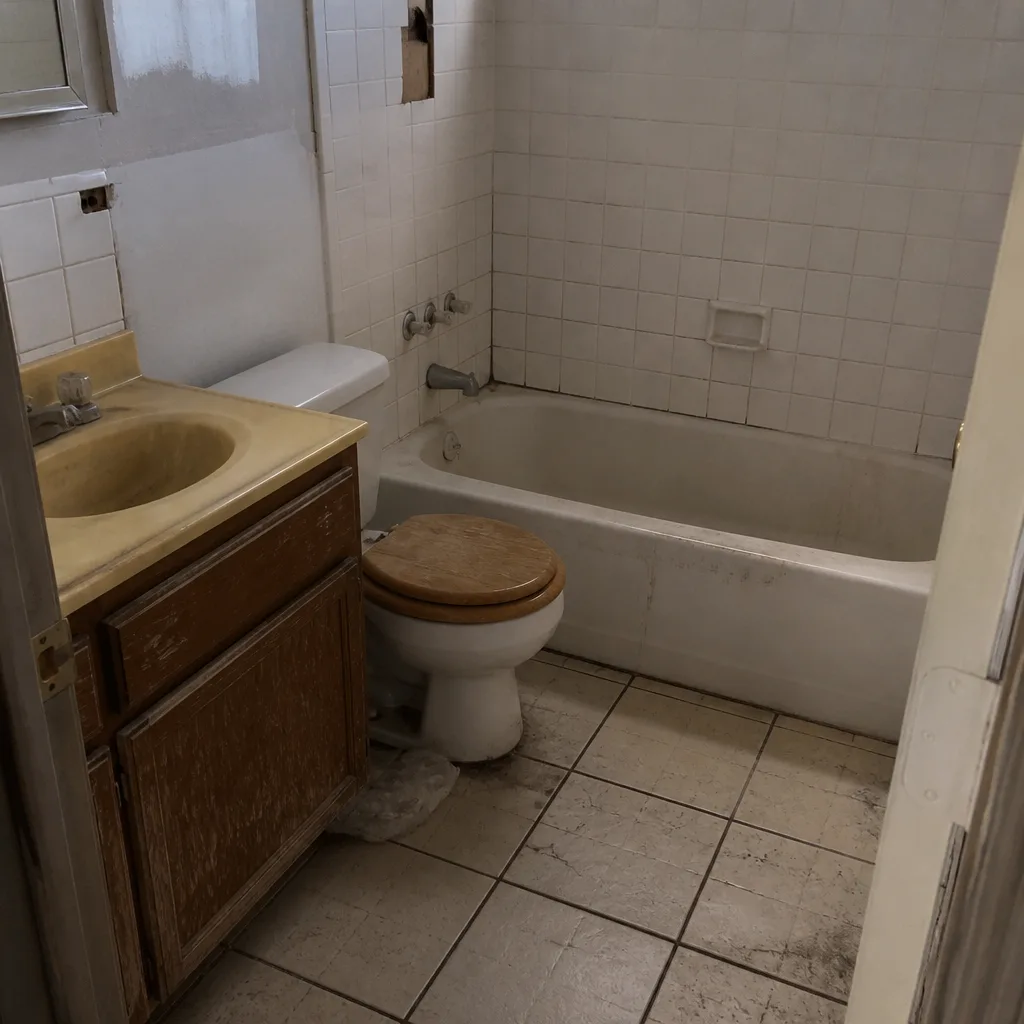 Before
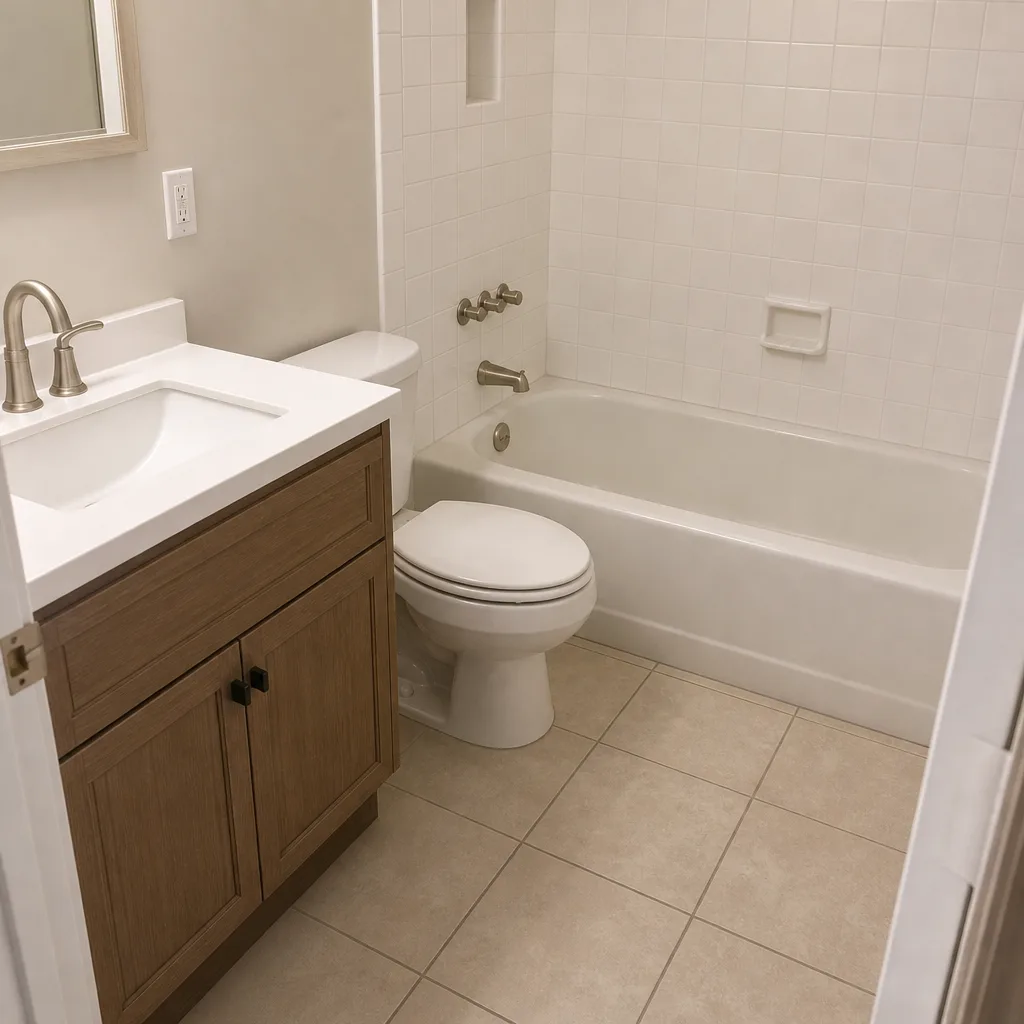 After
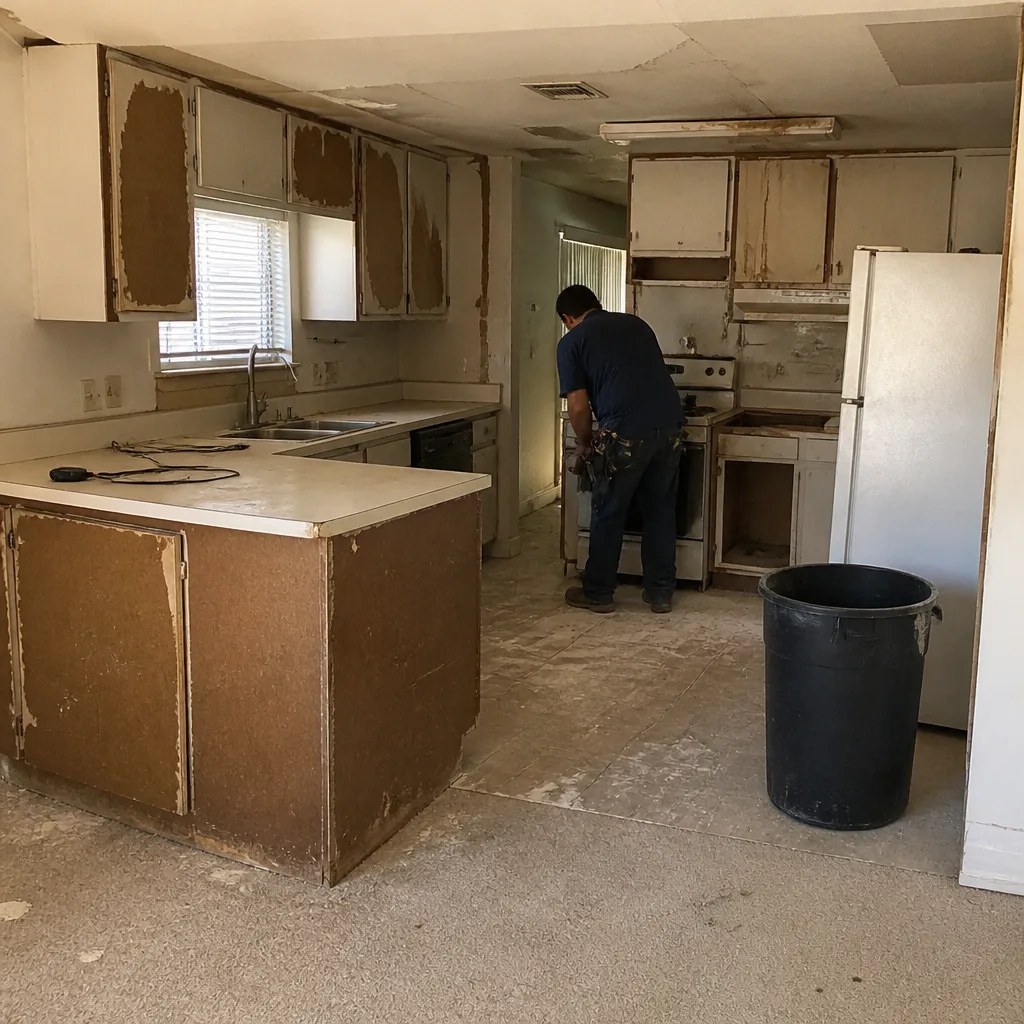 Before
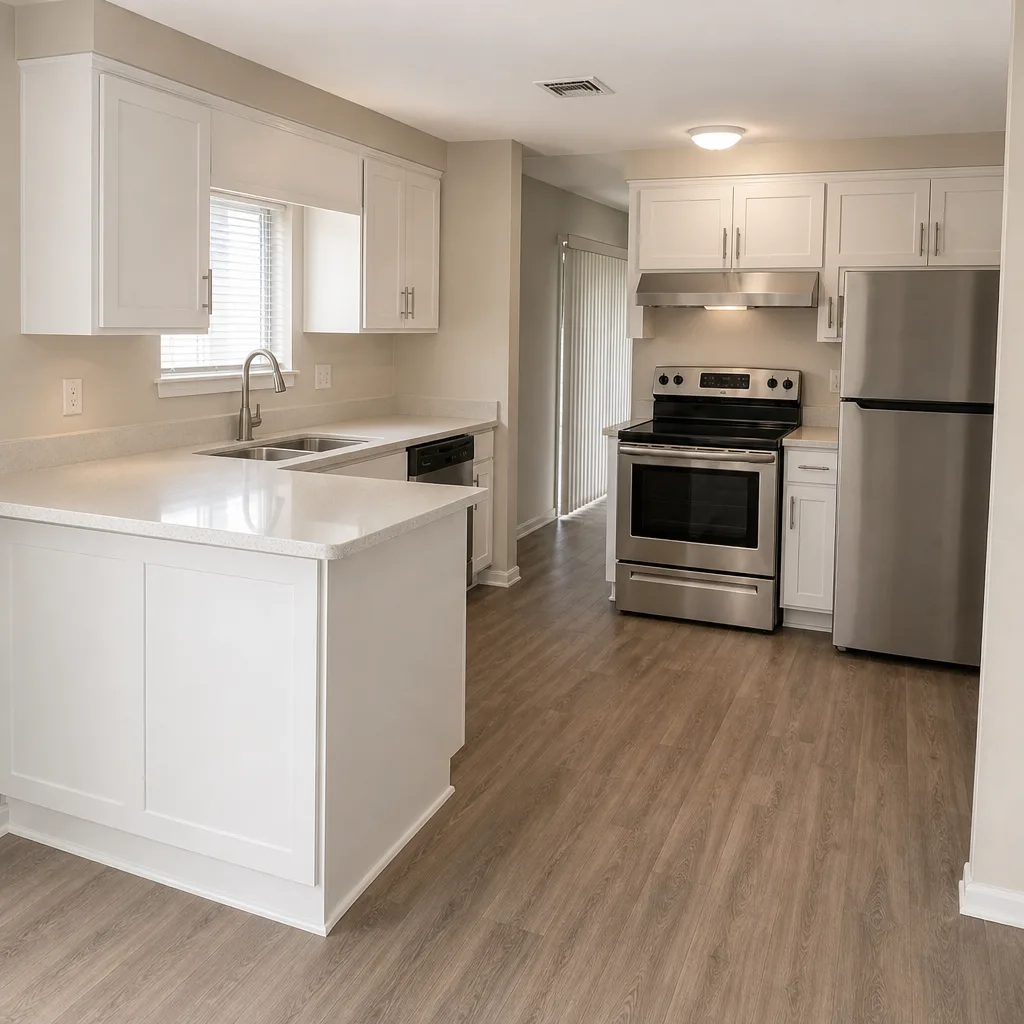 After
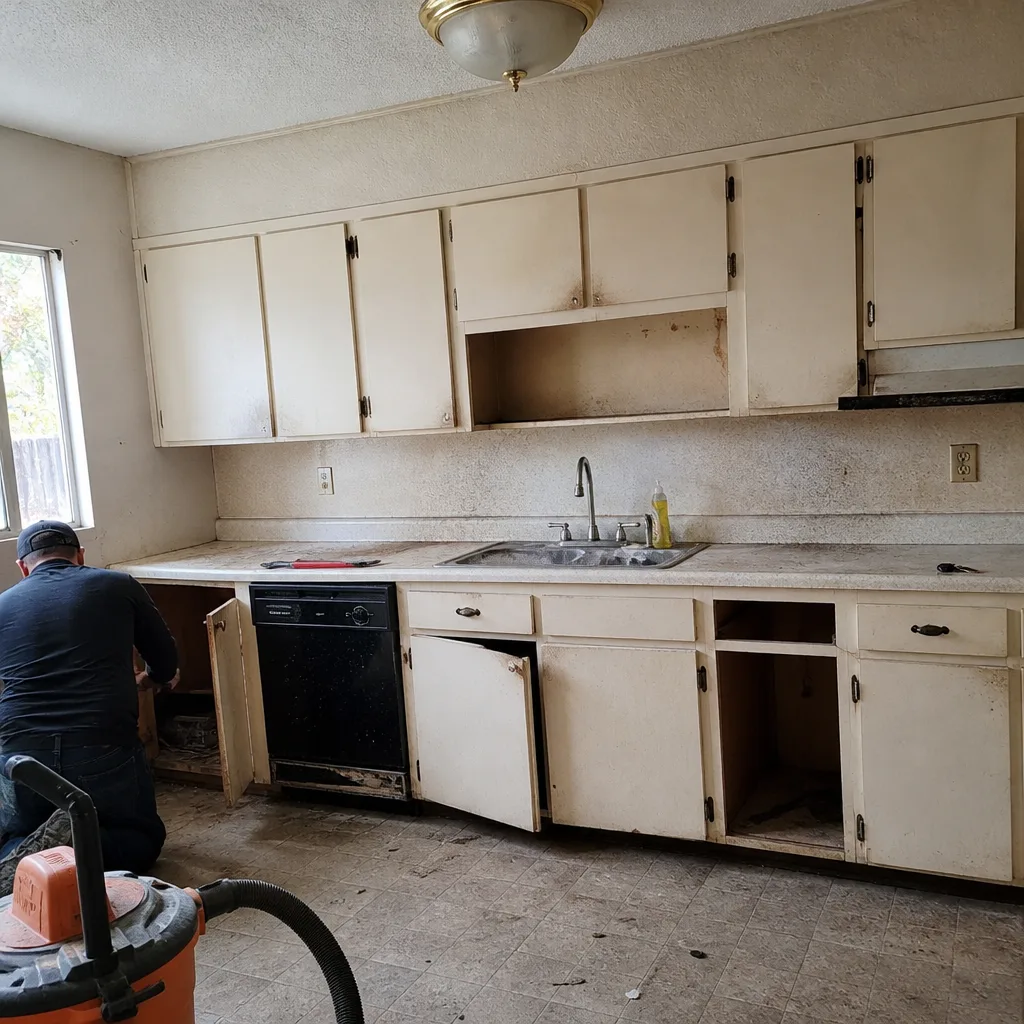 Before
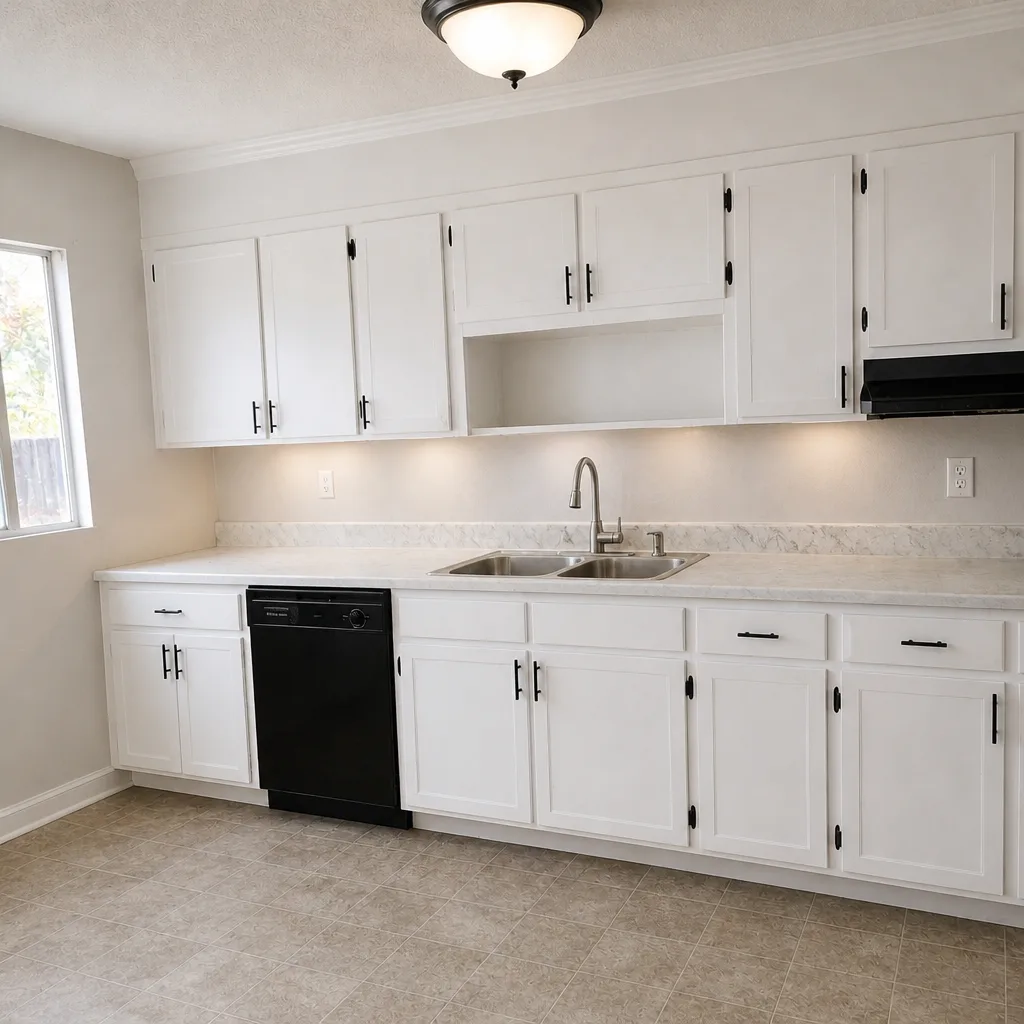 After
When to Call a Professional
Some of this work you can handle yourself: verifying a license, building the comparison worksheet, reading a bid for red flags. The work that needs a licensed professional is the construction itself and anything that touches structure, electrical, gas, plumbing, or roofing. Wiring and panel work can cause fire or shock, gas work can leak, and roofing and additions put you at height. Those jobs belong with classified, insured tradespeople, not with a homeowner winging it from a video. If you’re planning a project in Las Vegas and want a written, flat-price scope to compare against the bids you’ve collected, Rowan Construction Group Las Vegas offers free estimates across our seven trades. Our technicians have up to 19 years of experience, crews are background-checked and uniformed, and every job comes with a documented photo record. Call (833) 467-9123 for a free estimate.
Frequently Asked Questions

Go to the Nevada State Contractors Board website, search by business name or license number, and check three things: that the license is active, that the classification covers your type of work, and that the monetary limit exceeds your project cost. The search takes under three minutes and also shows any disciplinary history. Call (833) 467-9123 if you want a second set of eyes on what the record means for your project; estimates are free.
A fixed-price contract commits the contractor to a set dollar amount for a defined scope, so cost overruns are the contractor’s risk. Time-and-material means you pay for hours and materials, which shifts cost risk to you. Fixed-price protects you only when the scope is written in detail, so the two have to go together. Call (833) 467-9123 for a written, flat-price estimate.
An allowance is a placeholder number, not a price. If a bid says “$4,000 allowance for tile” and your chosen tile costs $7,500, the difference becomes a change order. Ask how many allowances a bid contains and what items they cover before you sign. A written quote with specific materials and brands avoids the problem, and we’ll review a competing bid line by line if you call (833) 467-9123.
Tie payments to inspection milestones, not calendar dates. A payment due on “March 15” is paid whether or not work is verified; a payment due when the rough-in inspection passes is paid only for work the city signed off on. Keep the final payment meaningful and hold it until the final inspection and your documentation are complete. Call (833) 467-9123 to talk through a payment schedule.
Yes. Permit-ready drawings and inspections raise a bid’s cost up front, and a bid that omits them shifts $1,200 to $3,500 onto you later. HOA communities around Las Vegas can also require architectural review and dictate fence height, material, and color, which means an architectural-review delay or a redo if the bid ignores it. Call (833) 467-9123 for a written scope that accounts for both.
Normalize them on one worksheet with matching line items: demo, permits and drawings, materials by brand and spec, labor scope, cleanup, warranty, and exclusions. Fill in each contractor’s column from their bid, then look for empty cells (usually not included) and vague cells (usually a future charge). The lowest bid is often the one with the most gaps. Call (833) 467-9123 for a free second opinion on any written estimate.
The Bottom Line
Hiring a construction contractor in Las Vegas comes down to what you do after you get the bids, not how many you collect. Verify the license on the NSCB site and check the classification and monetary limit. Insist on fixed-price language and a signed change order for every change. Build a scope-comparison worksheet and mark every allowance and “as needed” line, because that’s where the cost hides. Tie your payments to inspection milestones so you’re paying for verified work, not for time passing. And get a second opinion on any written estimate before you sign. A written price before work starts is the standard to hold every bid to, and it’s the standard we hold ourselves to. Call (833) 467-9123 for a free estimate.
Written by the team at Rowan Construction Group Las Vegas.