Last updated November 18, 2026







Free written scope consultation - allowances, timeline, and change-order rules on paper before a single trade is scheduled
Bathroom Remodeling Maintenance Schedule: What to Do and When
Grout doesn’t fail randomly. It fails at the 18-to-24-month mark, and almost always at the same place: the silicone caulk line where the floor tile meets the wall. In our experience, that ignored bead is where a $12 tube of Mapei Mapesil turns into a $4,000 subfloor replacement. Las Vegas homes push that clock faster than most of the country, because our water runs hard and our indoor air runs dry. This guide hands you the maintenance calendar most homeowners never receive at project closeout: a month-by-month, year-by-year schedule tied to your actual installed materials, with the specific joints, cadences, and records that keep a bathroom remodel standing.
Quick Answer
Follow a tiered bathroom maintenance schedule: inspect caulk and grout joints every 6 months, reseal natural stone annually and re-caulk floor-to-wall transitions every 18 to 24 months, service the exhaust fan and check the supply lines once a year, and re-seal porcelain grout every 2 to 3 years. In Las Vegas, add a quarterly hard-water wipe-down on fixtures and glass, because mineral scale here works faster than in soft-water cities.
Styles & brands we work with
- Kitchen remodeling
- Bathroom remodeling
- Home additions & ADU
- Roofing
- Windows & doors
- Driveway & pavers
- Fence
Table of Contents
- Why a Bathroom Remodel Needs a Maintenance Schedule at All
- The Three Joints That Fail First (and Why)
- Maintenance by Material: Porcelain, Stone, and Luxury Vinyl Plank
- A Printable Five-Year Maintenance Log
- How Las Vegas Hard Water Changes the Calendar
- What a Closeout Packet Should Contain
- Ventilation and Plumbing: The Annual Check
- Common Mistakes to Avoid
- When to Call a Professional
Why a Bathroom Remodel Needs a Maintenance Schedule at All
A bathroom is the wettest room in the house and the smallest. That combination means every material in it cycles through moisture and drying far more often than the walls or floors elsewhere. A shower surround can go from soaked to dry twice a day. Tile and grout expand and contract with that cycle, and the flexible joints designed to absorb the movement are the first things to wear.
Most homeowners receive a punch list and a warranty folder at the end of a remodel, then nothing. No calendar, no material list, no map of which product went where. Six months later the details blur, and by the time a soft spot shows up near the toilet flange, nobody remembers which tile was set over what substrate.
The schedule matters because the failure mode is slow and quiet. A failed caulk bead doesn’t announce itself. Water wicks behind tile and into the subfloor, and the visible symptom – a loose floor tile or a grout line that crumbles when you touch it – appears long after the damage started. A $4,000 subfloor repair in a Las Vegas bathroom rarely begins with a leak you can see. It begins with a joint nobody checked.
What follows is the calendar. It’s written for the materials actually installed in Las Vegas bathrooms, and it’s built so you can tape it inside the vanity door.
The Three Joints That Fail First (and Why)
Every bathroom has dozens of joints between materials. Three of them do almost all the early failing, and they fail for mechanical reasons, not because anyone did bad work.
- The floor-to-wall transition. This is where the horizontal floor plane meets the vertical wall tile or drywall. The two surfaces move in different directions when the house settles, when the slab or subfloor flexes, and when the room warms and cools. Rigid grout in that corner cracks within a year or two. This joint should be filled with flexible caulk matched to the grout color – not grout, and not a clear silicone you’ll never get off cleanly.
- The tub or shower surround base. Where the bottom row of wall tile meets the tub deck or shower pan, the movement is constant: every shower fill and drain flexes the tub, and the caulk line absorbs it. The bead also sits in standing water at the lowest point, so it degrades from both movement and chemistry. This is the joint most likely to let water behind the wall.
- The vanity backsplash seam. Where the backsplash meets the countertop, caulk fails quietly. A hairline gap there lets splash water run down the back of the cabinet, where it stains the cabinet back and swells the particleboard floor of the vanity before anyone notices. It’s the cheapest joint to maintain and one of the most expensive to ignore.
In our experience across Las Vegas bathrooms, all three joints look fine right up until the day they don’t. Check them by pressing a fingernail into the bead: if it pulls away from either surface or feels brittle, it’s due. Replacement takes under an hour with the right caulk.
Maintenance by Material: Porcelain, Stone, and Luxury Vinyl Plank
The single biggest mistake in bathroom maintenance is applying one schedule to every material. Porcelain, natural stone, and luxury vinyl plank each need different sealing and inspection cadences, and treating them alike either overworks one or neglects another.
Porcelain tile. The tile itself is nearly maintenance-free. The grout is the issue. Cementitious grout is porous, so it needs sealing every 2 to 3 years in a bathroom – more often in a shower. Porcelain grout holds up well, but in Las Vegas hard water, soap scum and mineral film bond to it faster. Inspect annually and test the seal by sprinkling a few drops of water on the grout: if it beads, the seal is holding; if it darkens and soaks in, it’s time to reseal.
Natural stone (marble, travertine, quartzite). Stone is porous even when polished. It needs a penetrating sealer every 12 months in a shower and every 18 months on a bathroom floor. Marble in particular etches when it meets acidic cleaners, and it stains from standing water. Never use vinegar or an acidic bathroom spray on stone. Inspect for dull patches and re-seal on a fixed annual date so it gets done.
Luxury vinyl plank (LVP). LVP needs the least sealing – none – but it needs joint and seam inspection every 6 months. The planks are water-resistant, not waterproof at the seams. In a bathroom, a lifted seam near the tub is where water gets under the floor. Check the perimeter where the plank meets the wall and the transition strips, and re-caulk gaps as they open.
A quick reference:
- Porcelain grout: seal every 2-3 years, inspect annually.
- Natural stone: seal annually (shower) to every 18 months (floor).
- LVP: no sealing, inspect seams and perimeter every 6 months.
We’ve seen Las Vegas bathrooms with three materials under one roof, and each one was on a different clock. The schedule has to match the list. When the day comes to replace flooring or extend the bathroom into a bigger remodel, our Rowan Construction Group Las Vegas home page lays out how the trades fit together.
A Printable Five-Year Maintenance Log
This is the calendar most contractors never hand over. Print it, tape it inside the vanity door, and initial each task as it’s done. Assign specific months so the work lands in the same season each year.
- Month 1 (first month after closeout): Walk the room with your closeout packet. Photograph every joint. Note the brand names of caulk, grout, sealer, and tile.
- Month 6 (plumbing): Check supply lines under the vanity and the toilet for moisture. Test the shutoff valves. Look for corrosion at the fittings.
- Month 9 (tile): Press-test all three critical joints – floor-to-wall, surround base, backsplash. Re-caulk anything that pulls away.
- Month 12 (ventilation and stone): Clean the exhaust fan grille and check airflow with a tissue test. Re-seal natural stone if installed. Test the grout sealer with water drops.
- Month 18 (caulk cycle): Full re-caulk of the floor-to-wall and surround-base joints, even if they look intact. This is the 18-month bead that saves the subfloor.
- Month 24 (deep inspection): Check for loose tile (tap gently and listen for hollow sound), soft spots near the toilet and tub, and any water staining on the ceiling below if there’s one.
- Year 3 (grout): Re-seal porcelain grout throughout, and repeat the full joint replacement.
- Year 5 (fixtures and systems): Replace supply lines if they show any wear, inspect the exhaust fan for bearing noise, and assess whether the caulk cycle should shorten based on what the past five years of initialed rows show.
The point of the log isn’t paperwork for its own sake. It’s evidence. When something fails at year four, you can point to the row where you checked it and the date it was serviced – which matters when a warranty claim is on the table.
How Las Vegas Hard Water Changes the Calendar
Southern Nevada water is famously hard. Treated water in the Las Vegas Valley runs well above the national average for dissolved minerals, and you can measure the effect with a cheap TDS meter: readings in the hundreds of parts per million are routine here. That number matters because mineral scale acts on a bathroom the way grit acts on a bearing – it accelerates wear everywhere water touches.
What that means in practice:
- Fixtures degrade faster. Aerators, showerheads, and faucet cartridges scale up and lose flow. A quarterly soak in white vinegar (on the removable parts, never on stone) keeps them clear. Skip it and you’ll be replacing cartridges years earlier than a soft-water city would.
- Glass and grout film. Scale bonds to shower glass and grout haze, dulling both. A squeegee after every shower and a quarterly scale-removal wipe keeps the glass clear without abrasives.
- Caulk and grout chemistry. Mineral deposits get under failing caulk beads and pry them loose. In Las Vegas we recommend inspecting joints quarterly rather than semi-annually, and treating the 18-month caulk cycle as a maximum, not a target.
The dry indoor air has a second effect: it pulls moisture out of grout and wood fast, which speeds the shrink-and-swell cycle that cracks rigid joints. Together, hard water and dry air make Las Vegas a genuinely harder environment for bathroom materials than the national maintenance guides assume. Our Driveway & Pavers in Las Vegas work runs into the same hard-water and sun exposure story, just outdoors.
What a Closeout Packet Should Contain
You can’t anchor a maintenance schedule to materials you can’t name. That’s why the packet matters. A proper closeout packet from a bathroom remodel should be a single folder, physical or digital, that tells the next owner – or the next contractor – exactly what’s in the room.
- The material list with brand names. Tile brand and line, grout brand and color, caulk brand, sealer brand, vanity and fixture brands. Kohler, Toto, and similar names should appear exactly as installed, not generically.
- The written scope and the flat written price. The document that says what was installed and what it cost, with any signed change orders attached.
- The written warranty and its terms page. Ours is the 365-Day Done Right Promise, printed and backed by a terms page rather than an asterisk.
- The photo record. Documented photos of the substrate and waterproofing before tile went down – the evidence of what’s behind the wall that you can’t see later.
- Care instructions per material. Which cleaner is safe for which surface, and which will etch stone.
With that packet in hand, the maintenance log fills itself in. Without it, you’re guessing, and guessing is how a bathroom ends up resealed with the wrong product on the wrong surface. When we close out a bathroom remodel, the photo record and the written price are standard deliverables, not upgrades – it’s the same discipline behind our Home Additions & ADU in Las Vegas work, where the documentation matters even more.
Ventilation and Plumbing: The Annual Check
Tile and caulk get the attention, but two systems decide whether the room dries out between uses: the exhaust fan and the plumbing. Both deserve an annual, scheduled check rather than a reaction when something smells wrong.
The exhaust fan. A bathroom fan that’s venting into the attic instead of outdoors, or one with a clogged grille, leaves moisture in the room where it feeds mold and softens caulk. The annual test: turn the fan on and hold a tissue to the grille. If it doesn’t pull the tissue flat, airflow is weak. Clean the grille, check the duct, and confirm it terminates outside the envelope, not in the attic. In Las Vegas, the dry air masks the problem, so the fan gets ignored right up until a ceiling stain appears.
The plumbing. Once a year, look under the vanity and behind the toilet for moisture, corrosion, or a bulging supply line. Test the shutoff valves by turning them – a valve that hasn’t moved in years can seize, and a seized valve becomes a plumber’s emergency call. Check the toilet base for a rocking bowl and any softness in the floor around the flange, the classic early sign of a hidden leak.
These two checks are cheap and take maybe twenty minutes. Skipping the fan check is how moisture damage starts behind a wall. Skipping the plumbing check is how a $30 supply line turns into a floor replacement. If the plumbing runs into bigger work – a vanity relocation, a tub-to-shower conversion – that’s a job for a licensed crew, and we’ll say so plainly.
Common Mistakes to Avoid
- Grouting the floor-to-wall corner instead of caulking it. Rigid grout in a movement joint cracks within a year or two. Every corner and every plane change needs flexible caulk, color-matched to the grout.
- Using vinegar or acidic cleaner on natural stone. It etches marble and travertine permanently. Las Vegas hard water tempts people to reach for strong descalers – keep them off stone.
- Assume the grout sealer is permanent. It isn’t, and a “sealed” floor still needs re-sealing every 2 to 3 years. Test with water drops instead of trusting the label.
- Ignore the exhaust fan because the room feels dry. Las Vegas air hides moisture problems. A fan venting into the attic is a mold problem waiting for the right season.
- Skip the annual supply-line check because everything looks fine. The failure is invisible until it isn’t. A twenty-minute check prevents a floor replacement.
- Reseal without reading the material list. Applying a stone sealer to LVP, or the wrong caulk to a joint, wastes the work and can damage the finish. Anchor to the packet.
- Treat Las Vegas like a soft-water city. The national calendars assume milder water. Add the quarterly scale wipe and shorten the joint schedule accordingly.
When to Call a Professional
Some tasks are homeowner work: a caulk bead, a sealer coat, a fan grille cleaning. Others are not. Call a professional when you find a soft spot in the floor near the tub or toilet, when a floor tile sounds hollow and lifts, when there’s staining on a ceiling below the bathroom, or when a shutoff valve won’t turn and you’re not sure how far the problem runs. Those point to water behind the wall or under the floor, and they need to be opened up and inspected, not patched. If your exhaust fan has never been confirmed to vent outdoors, that’s worth a look too. Rowan Construction Group Las Vegas offers free estimates in Las Vegas, and our technicians have up to 19 years of experience across the trades – call (833) 467-9123.
See the difference
 Before
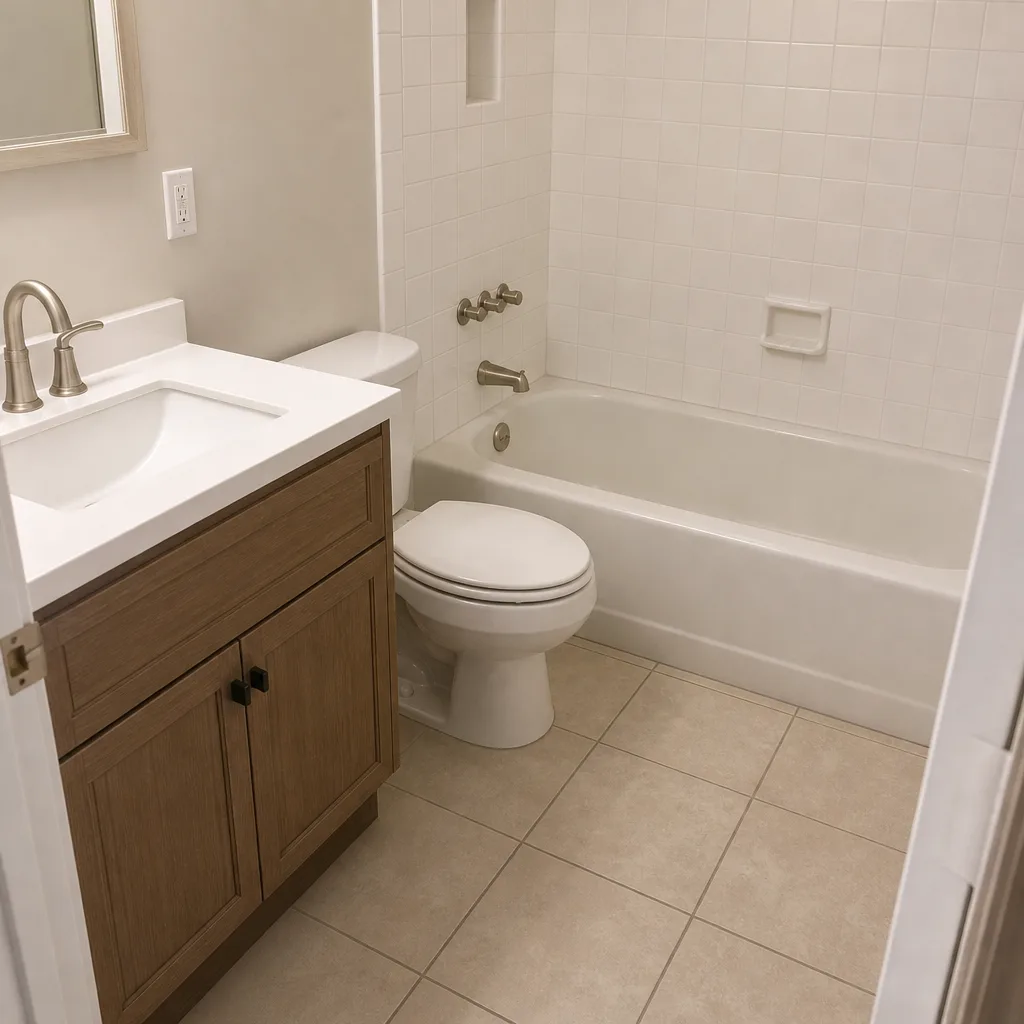 After
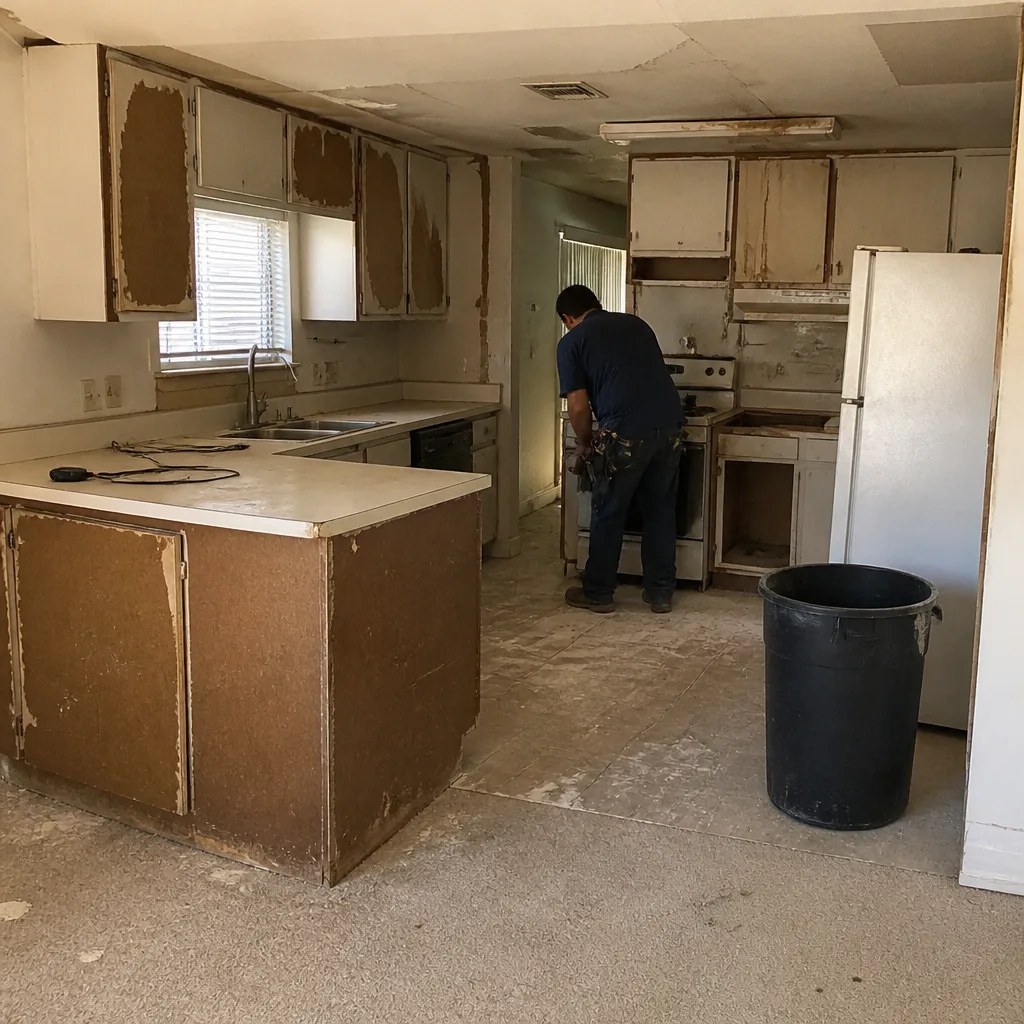 Before
 After
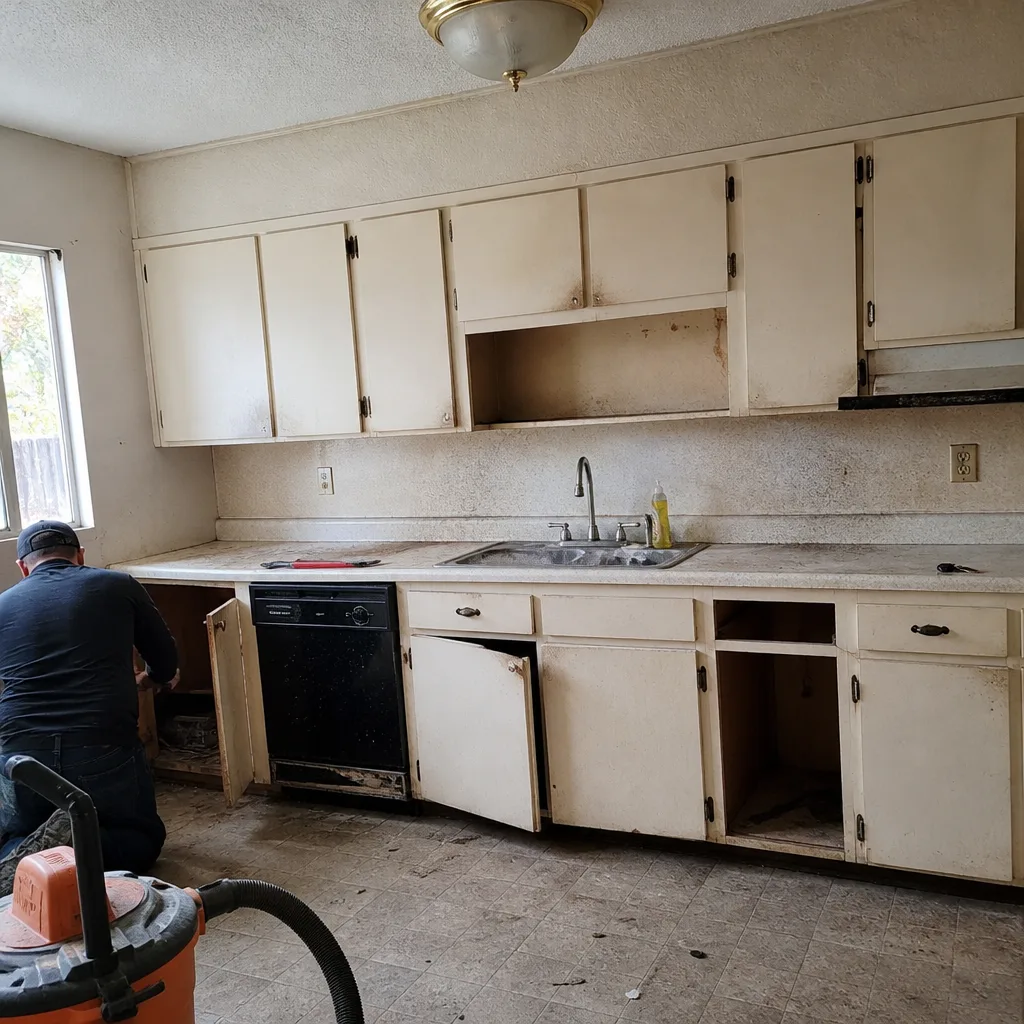 Before
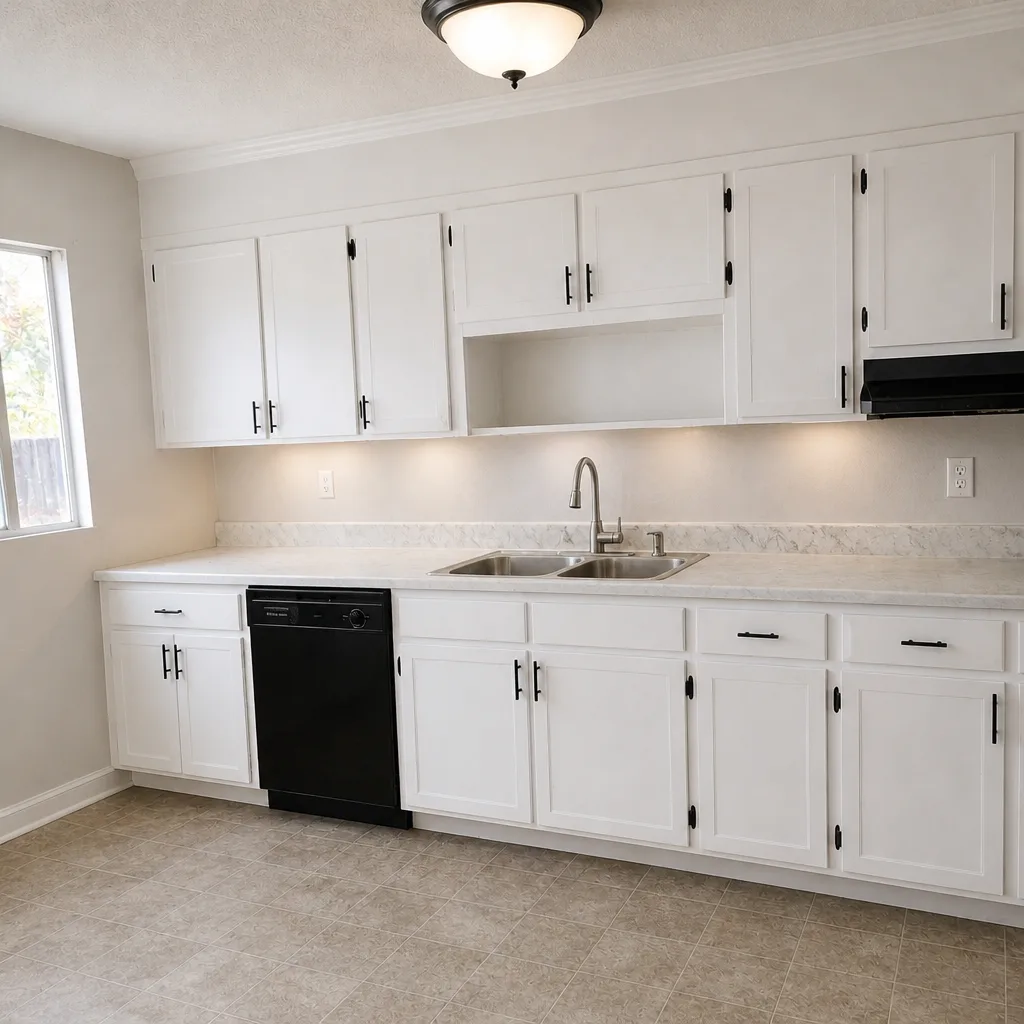 After
Frequently Asked Questions
Replace the caulk at floor-to-wall transitions and the tub or shower surround base every 18 to 24 months, and inspect it every 6 months. In Las Vegas hard water, treat 18 months as the maximum. If a bead pulls away from either surface or feels brittle, replace it immediately – call (833) 467-9123 for a free estimate if you’re not sure what’s underneath.
Yes. Porcelain tile itself doesn’t need sealing, but the cementitious grout between it does, and it should be re-sealed every 2 to 3 years, or annually in a shower. Test the seal by dropping water on the grout: if it soaks in rather than beads, it’s time. Call us for an exact quote on resealing or tile work – estimates are free.
Rigid grout cracks at movement joints because the two surfaces it bridges move in different directions, and Las Vegas hard water and dry air speed that cycle. The fix is flexible caulk at every corner and plane change, not more grout. If a joint keeps cracking after re-caulking, call (833) 467-9123 – it may signal movement worth inspecting.
Water here runs well above the national average for dissolved minerals, which scales up fixtures and bonds to glass and grout, accelerating wear. Add a quarterly scale wipe on fixtures and glass, and inspect joints more often than a soft-water city would. Our Fence Installation in Las Vegas crews see the same mineral and sun wear outdoors.
A closeout packet should include the material list with brand names, the written scope and flat written price, any signed change orders, the written warranty and its terms page, the documented photo record, and care instructions per material. Ask for it at completion – it’s what anchors your maintenance schedule to the materials actually installed. Call us to schedule your free estimate and we’ll show you what that packet looks like.
A well-built bathroom with a followed schedule typically runs 10 to 15 years before a major element like tile or fixtures needs replacing, with caulk and sealing done on schedule throughout. Material quality matters, which is why we source from vetted brands and put the price in writing before work starts. Call (833) 467-9123 for a free estimate.
The Bottom Line
A bathroom remodel is only as durable as the calendar behind it. Inspect joints every 6 months, replace caulk every 18 to 24 months, reseal stone annually and grout every 2 to 3 years, and check the fan and plumbing once a year. In Las Vegas, add the quarterly hard-water wipe and shorten the cycle. Keep a closeout packet so the schedule matches the materials, keep the maintenance log so the evidence exists, and know when a soft spot means calling a pro. Under our 365-Day Done Right Promise, if it’s not done right we make it right – and the maintenance schedule is part of that promise. Call (833) 467-9123 for your free estimate, and bring a competitor’s written quote if you have one – the second opinion is free.
Written by the team at Rowan Construction Group Las Vegas.