Last updated November 18, 2026






Free written scope consultation - allowances, timeline, and change-order rules on paper before a single trade is scheduled
Home Additions & ADU Maintenance Schedule: What to Do and When
Las Vegas municipal water runs 310 to 320 parts per million total dissolved solids, roughly three times the national average. That number quietly rewrites your maintenance calendar: the water heater anode rod in a new ADU wears out in about half the time the manufacturer’s manual assumes, and the “replace every five years” line in the warranty paperwork is written for softer water in softer climates. A home addition or accessory dwelling unit here also sits through 110°F summers, stucco that bakes under relentless UV, and soil that swells and shrinks with seasonal moisture. This guide lays out what to check monthly, quarterly, and annually, organized around the seasons Clark County actually has, not the ones a national checklist assumes.
Quick Answer
Maintain a Las Vegas ADU or home addition on a seasonal loop: inspect caulk, stucco, and the roof membrane in April and May before peak heat; prep drainage and flat-roof scuppers in June ahead of monsoon season; check HVAC filters and coils in October when cooling demand drops. On the water side, descale a tankless heater at 12 months, clean faucet aerators at 6 months, and replace reverse-osmosis membranes at 18 months because of the valley’s hard water.
Styles & brands we work with
- Kitchen remodeling
- Bathroom remodeling
- Home additions & ADU
- Roofing
- Windows & doors
- Driveway & pavers
- Fence
Table of Contents
- The Las Vegas Maintenance Calendar: Four Seasons, Not Four Quarters
- Pre-Summer: What to Inspect in April and May
- Monsoon Prep in June: Drainage, Scuppers, and Roof Edges
- Hard Water Intervals for ADU Fixtures
- Stucco and Elastomeric Paint: Map Cracks vs. Stress Cracks
- The Slab Perimeter Moisture Check
- Flat and Low-Slope Roof Membranes: Ponding, EPDM, and TPO
- Post-Summer HVAC and October Reset
The Las Vegas Maintenance Calendar: Four Seasons, Not Four Quarters
Most maintenance schedules are written for a temperate climate with four even quarters and a real winter. Las Vegas doesn’t cooperate. Our year is better described as four phases: a mild spring window (roughly March through May) when it’s comfortable to be on a roof or up a ladder; a brutal summer (June through September) when exterior work is miserable and materials expand; the monsoon stretch (July through September, with prep starting in June) when the rare but intense rain arrives; and a short, kind fall (October and November) when the smart homeowner catches up on everything deferred. December through February is cool enough for catch-up work but cold enough that some sealants won’t cure properly.
We organize every ADU and addition maintenance plan around those phases because the tasks themselves don’t change much from a national checklist, but the timing does. Caulking an exterior joint in July is a waste: the substrate is too hot, the sealant skins over before it bonds, and it fails within a season. Inspecting roof drainage in April instead of June means you discover a blocked scupper before the first monsoon cell dumps an inch of rain in twenty minutes.
If you’ve just finished a home addition or ADU in Las Vegas, the first twelve months are the most important. New construction settles, sealants cure, and the first summer of expansion and contraction reveals which joints were done to spec and which weren’t. That first year is when a documented photo record pays off: you want a baseline of what the finish looked like the day the crew left, so a hairline crack in month eight is provably a maintenance item and not a defect.
The Four Phases at a Glance
- March – May (spring window): Exterior caulk, stucco and paint inspection, roof membrane check, HVAC pre-season service.
- June (monsoon prep): Clear scuppers and drains, check roof edges and flashing, verify site grading drains away from the addition.
- July – September (peak heat): Minimal exterior work; focus on water-system tasks and indoor checks.
- October – November (fall reset): HVAC filter and coil inspection, post-summer caulk touch-ups, slab moisture check before winter.
Pre-Summer: What to Inspect in April and May
April and May are the last comfortable months to be on a ladder or a roof in the valley, and they’re your best chance to catch a failure before 110°F makes it worse. The goal of this window is to seal the envelope (the exterior shell of the building) before the heat drives expansion and contraction cycles that open every weak joint. Do this inspection yourself at eye level, and bring in a pro for anything on the roof or above one story.
Pre-Summer Inspection Checklist
- Walk the exterior caulk lines. Look at every joint where the addition meets the original house, around windows and doors, and along the base of the stucco. Press a fingernail into suspect caulk. If it’s brittle or pulls away, it’s done.
- Inspect the stucco for new cracks. Photograph anything you find with something for scale (a coin, a tape measure) so you can compare next spring.
- Check elastomeric paint for chalking. Rub a clean white cloth along a sun-facing wall. A heavy white residue means the paint’s UV protection is breaking down ahead of schedule.
- Look at the roof membrane and flashing from the ground with binoculars, or have a pro get up there. Note any lifted seams, blisters, or debris.
- Test the HVAC before you need it. Run the AC on a warm afternoon in April. If it struggles now, it will fail in July. Have the coils cleaned and the filter changed.
One thing we’ve learned about Las Vegas UV: elastomeric paint here degrades faster than the manufacturer’s warranty assumes. A “10-year” elastomeric coating on a west- or south-facing wall often shows chalking and loss of elasticity in six to seven years because the UV index and heat load are simply higher than the product’s test environment. That’s not a defect; it’s a climate adjustment. Plan for a re-coat cycle about 30% shorter than the can suggests on the sun-blasted faces, and longer on shaded north walls.
Monsoon Prep in June: Drainage, Scuppers, and Roof Edges
Las Vegas gets about 4 inches of rain a year, but a good chunk of it can land in a single afternoon between July and September. The desert doesn’t need to handle steady rain; it needs to handle sudden volume. Buildings that fail in monsoon season almost never fail because of rain totals. They fail because a scupper, a drain, or a grade that worked fine all year suddenly can’t move water fast enough. June is the month to walk the property and clear the path before the first storm.
Monsoon Prep Steps
- Clear every scupper, roof drain, and downspout on the addition or ADU. Palm fronds, blown dust, and dried mesquite debris are the usual culprits.
- Check the grade around the slab. Soil should slope away from the foundation at roughly a 6-inch drop over the first 10 feet. If you see a low spot where water pools against the wall, that’s a monsoon problem waiting.
- Inspect window and door flashing at the head and sill. This is where water gets in during wind-driven rain.
- Look at the roof edge and fascia for gaps where wind can lift water under the edge metal.
- Test any site drainage (channel drains, dry wells) by running a hose for a few minutes and watching where the water actually goes.
Monsoon moisture also matters underground. Expansive clay soils swell when they get wet and shrink when they dry, and a big storm after months of dry heat is exactly the cycle that stresses a slab. The perimeter moisture check below is the tool that catches this before it becomes a structural repair.
Hard Water Intervals for ADU Fixtures
At 310 to 320 ppm, Las Vegas water carries roughly three times the dissolved minerals of the national average, and that number changes every maintenance interval in an ADU or addition. The manufacturer’s schedule assumes soft water. Yours doesn’t get soft water unless you install a softener or conditioner, and most ADUs don’t have one because they share the main house’s supply. So here’s how to shift the calendar.
Water-System Maintenance Intervals
- Tankless water heater descaling: every 12 months. The manufacturer typically recommends descaling every 24 months in average water. In Las Vegas, halve it. Scale builds twice as fast, and a scaled heat exchanger runs hot and can void the warranty if the manufacturer’s water-quality conditions aren’t met. A Kohler or similar tankless unit used daily needs the annual flush.
- Faucet aerator cleaning: every 6 months. The screen in a Moen or Delta faucet clogs with mineral deposits and drops flow. A quick soak in white vinegar restores it.
- Reverse-osmosis membrane replacement: every 18 months. RO membranes in Las Vegas foul faster than the 24-month default because of the mineral load. If you have a Blanco or under-sink RO system, log the install date and replace on the 18-month mark.
- Water softener salt check: monthly. If the addition has a softener, check the salt level monthly and the resin bed annually.
- Water heater anode rod inspection: annually, replacement as needed. This is the item that gets missed. The anode rod is the sacrificial metal that protects the tank from corrosion, and in hard water it’s consumed faster than the manual assumes. Have it checked every year, not just at the “five-year” mark.
The running theme: every water interval in this schedule is shortened relative to a national default, and the reason is always the same number. The 310 to 320 ppm reading is why an ADU in Las Vegas costs more per year to maintain than the identical ADU in a soft-water city, and why ignoring the schedule is a false economy. Replacing a tankless heat exchanger is a four-figure repair. An annual descale is a fraction of that.
Stucco and Elastomeric Paint: Map Cracks vs. Stress Cracks
Stucco cracks are normal and mostly cosmetic, but two very different cracks get confused all the time. Knowing the difference is the difference between a $200 patch and a structural investigation.
A map crack (also called craze or shrinkage cracking) is hairline, usually under a 1/16 inch wide, and forms a web-like pattern. It’s caused by the stucco curing and shrinking, and it’s cosmetic. It doesn’t let water in deep enough to matter and it doesn’t signal a structural problem. Patch it if it bothers you; leave it if it doesn’t.
A stress crack is a single, longer line, often diagonal or running from a corner of a window or door opening, and it’s more than 1/16 inch wide. That’s the kind that needs investigation. It can mean the underlying metal lath (the wire mesh the stucco is keyed into) has moved, that a control joint was omitted, or that the substrate is settling. Cracks at inside corners or where the addition meets the original house are especially worth a professional look because they often trace back to how the two structures move against each other.
Stucco and Paint Inspection Protocol
- Walk the walls each spring. Note every crack wider than a credit card is thick. Anything wider than 1/16 inch gets flagged for a pro.
- Look for rust streaks. Orange-brown stains along crack lines mean water is reaching the metal lath. That’s a repair, not a patch.
- Check for “pop-out” or hollow spots. Tap the stucco gently with a screwdriver handle. A hollow sound means the stucco has delaminated from the lath.
- Test elastomeric for chalking (rubbing test above) and plan for re-coating on a UV-accelerated cycle.
For the exterior shell, a Rowan Construction Group Las Vegas home project often surfaces these issues at the design stage, which is the cheapest moment to fix them. Once the stucco is up, you’re diagnosing rather than designing.
The Slab Perimeter Moisture Check
Las Vegas soil expands and contracts with seasonal moisture. That’s a normal, slow cycle, but it’s also the mechanism behind most of the expensive foundation repairs we see. The good news is you can catch the early warning with a $30 moisture meter and a five-minute walk. The main tool is a pin-type moisture meter, sold at any hardware store; you press the pins into the soil and the meter reads percentage.
Step-by-Step Perimeter Check
- Walk the perimeter of the slab at the foundation-to-wall joint (where the stucco base meets the concrete).
- Look for new gaps or separation at the joint. A hairline is fine; a gap wider than 1/8 inch that appeared in the last year deserves attention.
- Press the moisture meter pins into the soil about 6 inches out from the slab at several points, especially on the side that faces the afternoon sun.
- Compare the readings. A big difference between sides (say, 18% on one side and 6% on another) means uneven moisture, which drives the swelling and shrinking that stresses the slab.
- Look for new cracks in the interior wall where it meets the slab, and for doors that have started to stick or stick only in one season. Both are early signs of slab movement.
Spring and fall are the best times for this check because the soil is transitioning. Do it once a year in October, log the readings, and compare. A slow trend tells you more than any single number. If the readings are drifting, the fix is usually a drainage or irrigation adjustment, not a structural repair, and catching it early is the whole point.
Flat and Low-Slope Roof Membranes: Ponding, EPDM, and TPO
Most additions and ADUs in Las Vegas end up with a flat or low-slope roof, and those membranes have their own maintenance logic. The single biggest issue is ponding water: standing water that stays on the roof for more than 48 hours after a storm. Standing water stresses the seams, feeds algae, and is the fastest way to void most membrane warranties, which typically exclude damage caused by ponding. In Las Vegas, with our infrequent but intense storms, ponding shows up right after a monsoon and then disappears, so you have to catch it during the rain or right after.
What to Check on a Flat Roof
- After any rain, look for standing water the next day. If it’s still there after 48 hours, the drainage isn’t working and it needs correction before the warranty question comes up.
- Inspect the seams and lap edges in spring. Any lift, gap, or blister needs a pro.
- Check the scuppers and drains as part of the June monsoon prep above.
- Note the membrane type. EPDM (black rubber) and TPO (white thermoplastic) have different re-coat product lines and different UV profiles.
On the re-coat question: EPDM membranes generally accept elastomeric or acrylic EPDM-specific re-coat products, while TPO requires a TPO-compatible coating, not a generic acrylic. Coating the wrong product on the wrong membrane is a warranty problem and a performance problem. For Las Vegas UV exposure, use products rated for high-solids, high-UV coatings labeled specifically for the membrane (EPDM-specific or TPO-specific) and rated for the heat. A re-coat extends the membrane’s life, but only if it’s the right product. Have the roof inspected and the re-coat scheduled by a pro before the membrane shows exposed reinforcing mat or widespread blisters, not after.
Post-Summer HVAC and October Reset
When October arrives and the AC finally gets a day off, that’s your window to inspect what the summer did. The cooling system ran hard for four or five months, filter loaded with dust and pollen, coils packed with debris, and it’s still got one more warm spell or two before winter. This is the moment to reset it.
October HVAC and Home Reset
- Replace the HVAC filter. If you haven’t changed it since spring, it’s overdue. In a dusty Las Vegas summer, a filter can load up in two to three months.
- Have the coils cleaned and inspected. A dirty evaporator coil loses efficiency and stresses the compressor, which is the expensive part. This is a pro job on most systems.
- Touch up exterior caulk. The summer expanded and contracted every joint; October is when you catch the failures while the weather is still cool enough for sealant to cure.
- Run the slab perimeter moisture check (above) for the fall.
- Test the heating side of the system before you need it, if the addition has one.
This is also the season to do a broader exterior pass, which is where a fence installation in Las Vegas or a repair gets caught: gates sag in the heat, posts shift with the soil, and October is the right time to re-set and re-hang before the next cycle. Same logic for driveway and pavers in Las Vegas: joint sand washes out in monsoon season, and fall is when you refill the joints and check for settling.
Monthly, Quarterly, and Annual Checklist
Pulling it all together into three cadences makes it manageable. The monthly tasks are short. The quarterly tasks are seasonal. The annual tasks are the big ones and they’re worth scheduling on your phone now.
Monthly
- Change or check HVAC filter during heavy-use months.
- Check water softener salt, if present.
- Look at the roof from the ground for debris or lifted spots (binoculars work).
Quarterly
- Spring window (April – May): exterior caulk, stucco, paint inspection, HVAC pre-season service.
- Monsoon prep (June): clear scuppers, check grading, inspect flashing.
- Fall reset (October – November): HVAC filter and coil inspection, caulk touch-ups, slab moisture check.
Annual
- Tankless water heater descale (12 months).
- Water heater anode rod inspection.
- Faucet aerator cleaning (every 6 months, so twice a year).
- RO membrane replacement at 18 months.
- Flat-roof membrane inspection and re-coat assessment.
- Full stucco and paint walk.
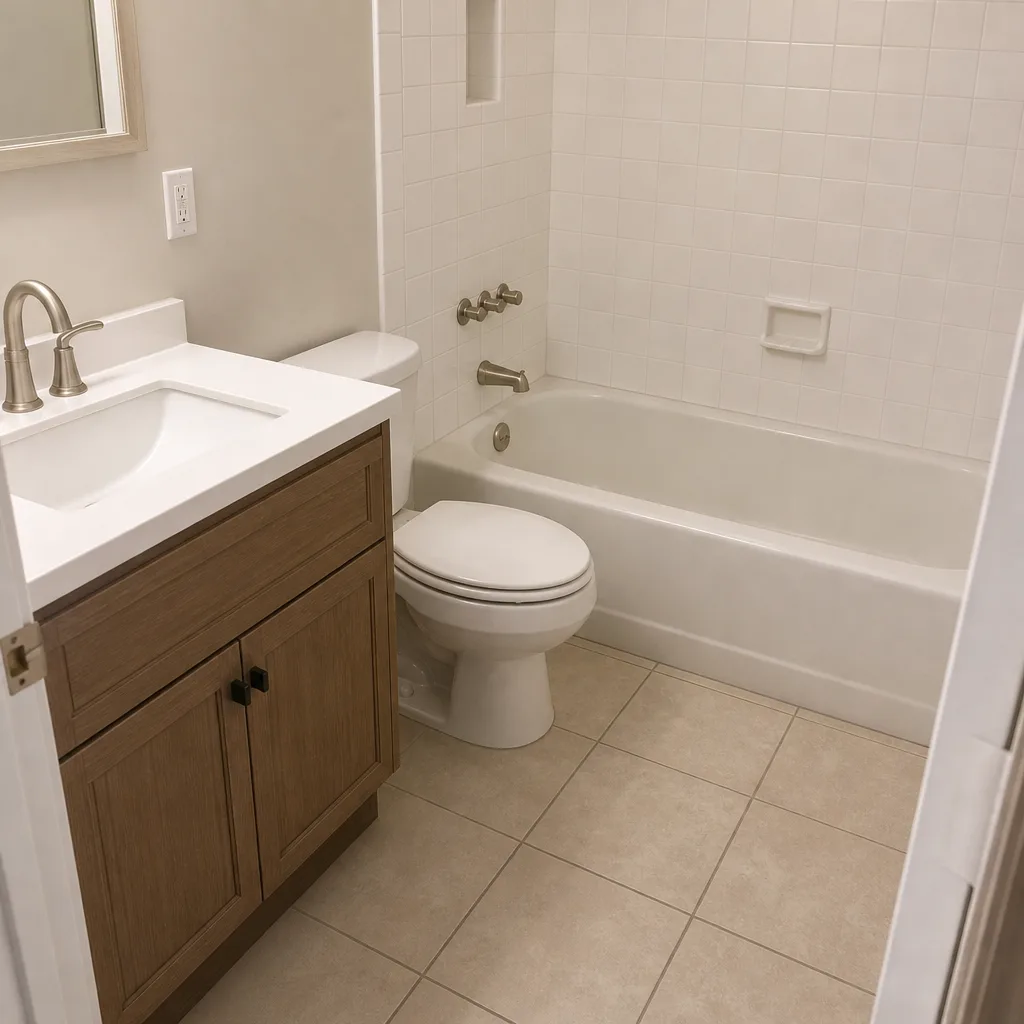
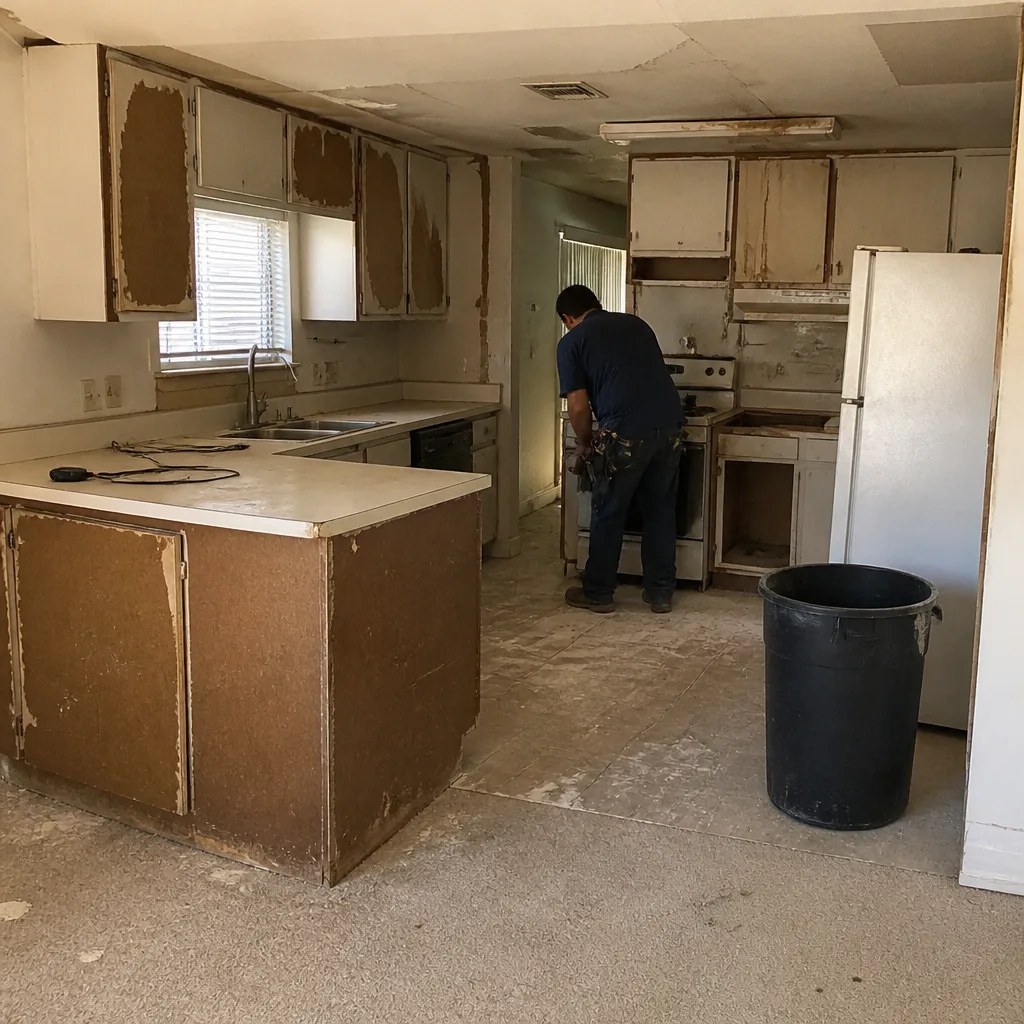
See the difference
 Before
 After
 Before
 After
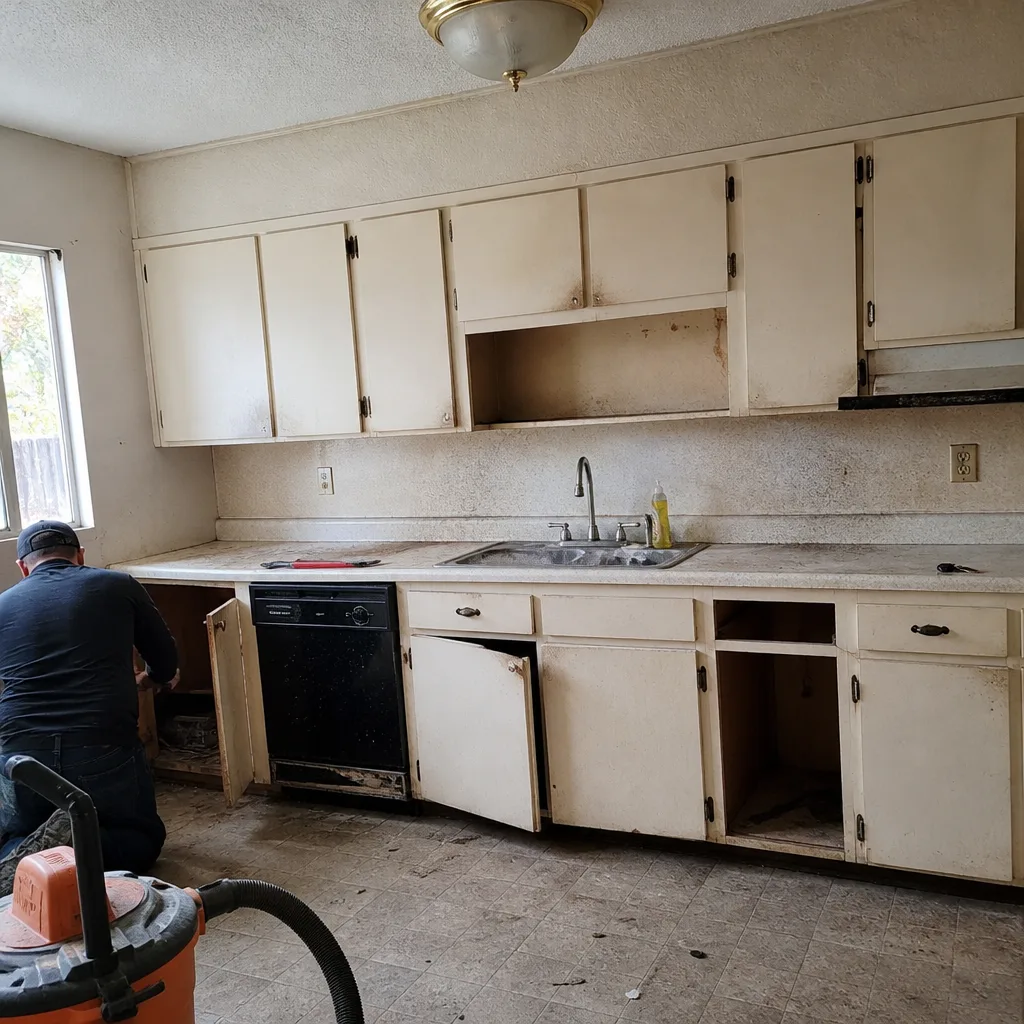 Before
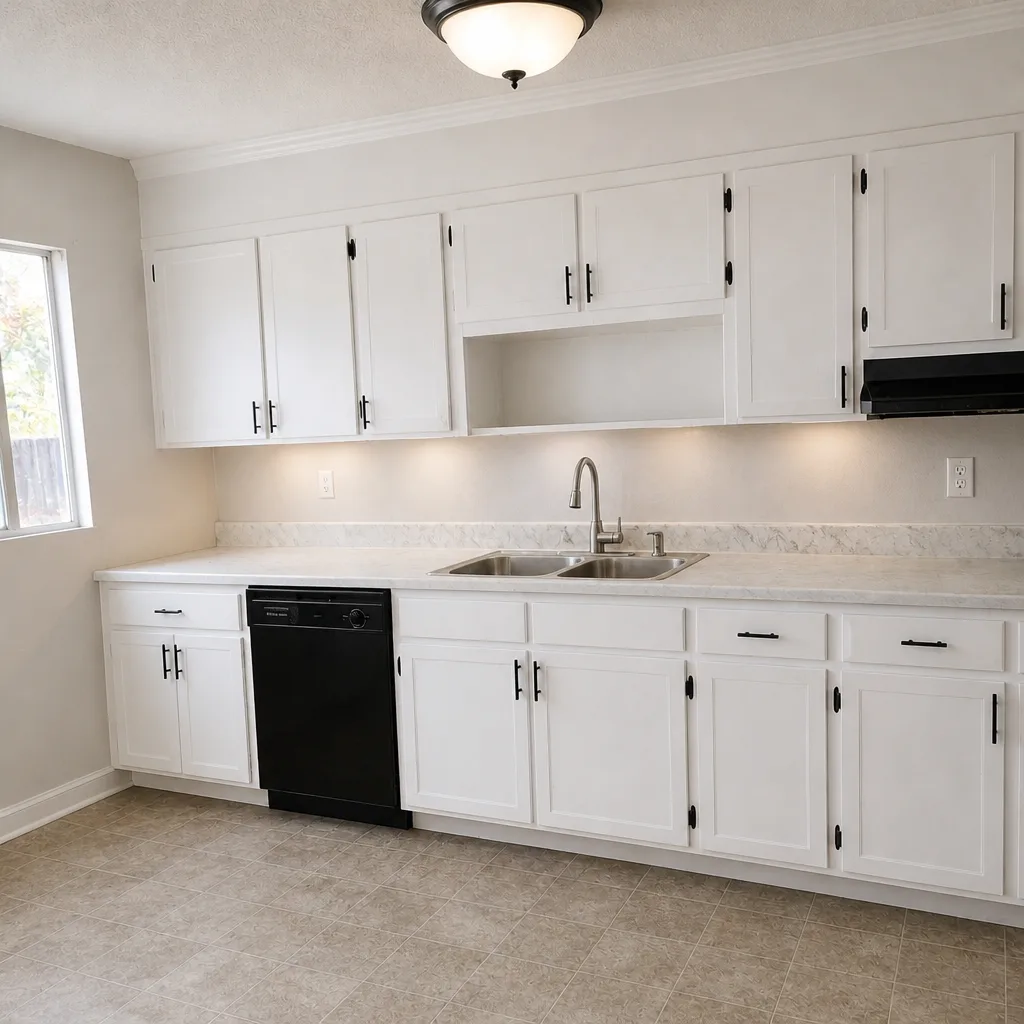 After
Common Mistakes to Avoid
- Following the manufacturer’s water-heater schedule. The “five-year anode rod” default assumes soft water. In Las Vegas it’s a recipe for a failed tank, and the warranty won’t always cover it. Check annually.
- Doing exterior caulk in summer. July substrate temperatures can hit 150°F, and sealant skins before it bonds. Schedule exterior sealing for April, May, or October.
- Ignoring ponding water after a monsoon. If water is still on a flat roof 48 hours after a storm, it’s a warranty and a structural issue. Catch it right after the rain.
- Coating a TPO membrane with a generic acrylic. Use a TPO-specific re-coat product. Wrong-product coatings void most warranties and fail fast in our UV.
- Patching a stress crack like it’s a map crack. Cracks wider than 1/16 inch, or ones with rust streaks, need investigation, not a caulk-over.
- Skipping the slab perimeter check. A $30 moisture meter and five minutes a year catch foundation movement before it’s a repair.
- Treating the first year after a new addition as maintenance-free. The first summer of expansion is when the real joints reveal themselves. Keep the documented record and inspect closely.
When to Call a Professional
Most of this schedule is homeowner-level: change the filter, clear the scupper, run the moisture meter, photograph the crack. But several of these tasks are genuinely dangerous or need a licensed eye. Anything on a roof above one story, any electrical service work, and any gas-line connection is pro territory, full stop. High-tension garage-door springs, panel work, and steep-roof access can injure or kill; don’t DIY those. Beyond safety, call a pro for: a stress crack wider than 1/16 inch or one with rust staining; ponding water that persists past 48 hours; a tankless heater that’s throwing scale codes or losing hot-water volume; HVAC coils that need chemical cleaning; and any slab movement that shows up as sticking doors or new interior cracks. Rowan Construction Group Las Vegas offers free estimates in Las Vegas and will give you a written price before any work starts. Call (833) 467-9123 to schedule a free estimate.
Frequently Asked Questions
Every 12 months. Las Vegas water at 310 – 320 ppm runs about three times the national average mineral load, so scale builds twice as fast as the 24-month recommendation most manufacturers print. Call (833) 467-9123 for an exact quote on an annual descale service; estimates are free.
A map crack is hairline, under 1/16 inch, and web-like; it’s cosmetic shrinkage and just needs a patch. A stress crack is a single longer line, often diagonal from a window or door corner, wider than 1/16 inch; it can mean the metal lath or substrate has moved and should be investigated. If you’re unsure, call (833) 467-9123 for a free estimate on an inspection.
No more than 48 hours. Ponding water that persists past two days is the fastest way to void a membrane warranty and stresses the seams. In Las Vegas, catch it during or right after a monsoon storm. Call (833) 467-9123 for a free estimate on a roof inspection.
Match the product to the membrane. TPO needs a TPO-specific coating; EPDM needs an EPDM-specific elastomeric coating. A generic acrylic on either is a warranty problem in our UV. Call (833) 467-9123 for a free estimate and we’ll confirm which membrane you have before any work starts.
Use a pin-type moisture meter about 6 inches out from the slab at several points, especially the sun-facing side, and compare the readings. A big difference between sides means uneven moisture, which drives the swelling. Do it in October and compare year over year. Call (833) 467-9123 for a free estimate if readings are trending.
The 365-Day Done Right Promise covers work we performed: if it’s not done right, we make it right. Normal maintenance tasks and wear items are separate, but the documented photo record we leave on every visit gives you a clear baseline of the finish condition, so a maintenance item and a defect are easy to tell apart. Call (833) 467-9123 to schedule your free estimate.
The Bottom Line

The Las Vegas maintenance environment doesn’t match the manual in your ADU’s appliance drawer. Hard water at 310 – 320 ppm, 110°F summers, and expansive soil each shift the schedule. Descale tankless heaters at 12 months, clean aerators at 6, replace RO membranes at 18, and check water heater anode rods annually. Do exterior caulk and stucco inspections in April and May, prep drainage in June, and catch HVAC and slab in October. Keep a documented record so you can tell a maintenance item from a defect. Most of this work is a few hours a year; done on time, it protects a five-figure addition from a five-figure repair.
Call (833) 467-9123 to schedule your free estimate, and we’ll deliver a written price before any work starts, backed by the 365-Day Done Right Promise and The Haven Standard.
Written by the team at Rowan Construction Group Las Vegas.