Last updated November 18, 2026


Free written scope consultation - allowances, timeline, and change-order rules on paper before a single trade is scheduled
Home Additions & ADU Warning Signs Every Homeowner Should Know
If a contractor’s ADU proposal doesn’t include a soils report, or explicitly waive the need for one in writing with a stated reason, there’s no engineering basis for the foundation design. In Las Vegas’s expansive clay soil zones, that omission is a structural risk built into the first document you sign. Most homeowners shop for an ADU by touring finished guest houses and scrolling photos of kitchenettes. The failures we get called to untangle rarely start on the jobsite. They start in the proposal, the contract, the payment schedule, and the permit file, weeks before the first shovel. This guide walks through the warning signs that live in a contractor’s paperwork, so you can spot a project heading sideways before money changes hands in Las Vegas.
Quick Answer
The clearest warning signs of a troubled home addition or ADU project in Las Vegas are: a proposal with no soils report (or a written waiver explaining why one isn’t needed), a contractor who suggests skipping the permit, vague scope language like “allowances” and “standard materials” without dollar amounts or brand and grade specifications, no named licensed MEP subcontractors before signing, and a deposit request above 10% of contract value before permit approval. Any single one of these is a reason to slow down. Two or more together is a reason to walk.
Styles & brands we work with
- Kitchen remodeling
- Bathroom remodeling
- Home additions & ADU
- Roofing
- Windows & doors
- Driveway & pavers
- Fence
Table of Contents
- The Permit-First Test: Verify Before You Sign
- Scope Vagueness: The Quiet Cost Overrun Predictor
- What a Legitimate Change Order Looks Like in Writing
- Subcontractor Disclosure: Who’s Actually Doing the MEP Work
- Financial Structure Red Flags in the Contract
- Soils, Foundations, and Las Vegas Clay
- ADU-Specific Signs: Detached Units and JADUs
- The Timeline Promises That Should Make You Nervous
The Permit-First Test: Verify Before You Sign
Clark County’s public portal lets you look up any contractor’s permit history without an account. Before you sign anything, run this check. A legitimate Las Vegas addition or ADU contractor will expect it and won’t be bothered by the question.
- Open the Clark County Department of Building & Fire Prevention online portal and search the contractor’s name or license number.
- Confirm their license is active and current, not expired or suspended.
- Look at their permit history. You want to see permits pulled within the last 18 months for comparable scope: a detached structure, a second-story addition, an ADU conversion. A contractor whose last structural permit is five years old may not have current code fluency.
- Click into a few approved and closed permits. Read the inspection notes. A clean inspection history tells you the work passed. A pattern of red tags or failed inspections is a real signal.
- Ask the contractor directly: “Which of these permits on your record are homes like mine?” A vague answer is a warning sign.
If a contractor suggests “we can skip the permit on this one, it’s just an interior conversion,” end the conversation. Every habitable structure in Las Vegas requires permits and inspection. An unpermitted ADU becomes your problem at resale, at refinance, and at insurance time.
We’ve seen it play out dozens of times: an unpermitted ADU gets flagged during a routine appraisal and the homeowner is told to either legalize it (expensive) or tear it out (more expensive). Under Clause 1 of the Haven Standard and every Rowan proposal, permits are pulled before work begins, no exceptions.
Scope Vagueness: The Quiet Cost Overrun Predictor
Scope language is where the price you were quoted quietly becomes a different number eight weeks in. The problem clauses look reasonable on first read. They’re the ones that let a contractor fill in details later.
Three specific phrases to flag:
- “Allowance” without a dollar amount. Every allowance must have a number attached, and the scope must say what happens if you spend more (a signed change order) or less (a credit). An allowance with no dollar figure is an open-ended bill.
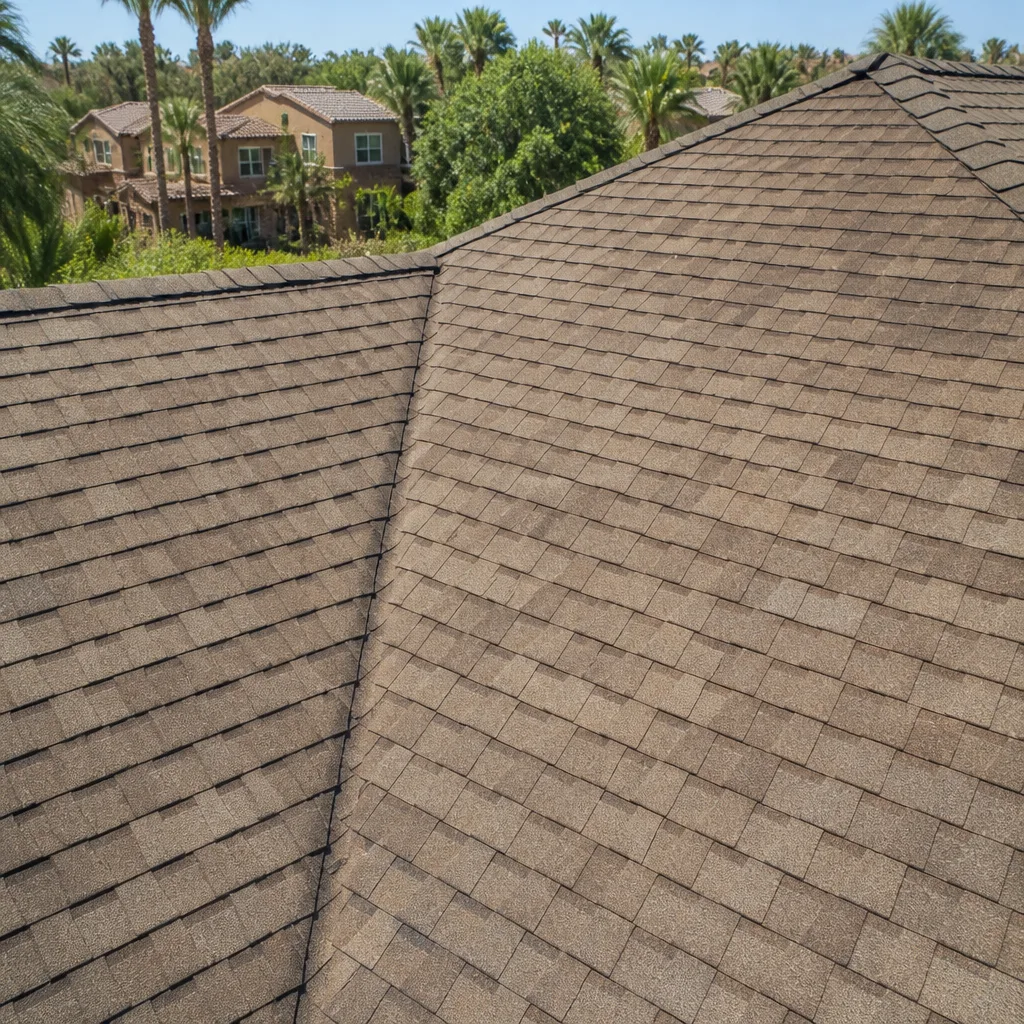
- “Standard materials” without a brand and grade. “Standard windows” is meaningless. We specify brands and grades precisely for this reason. On a Las Vegas addition, “standard” should read like “Milgard Tuscany vinyl, dual-pane, low-E,” not “builder-grade.” Similarly, a roof replacement spec should name the shingle. IKO, Atlas, or Tamko each have distinct product lines, and the differences between them matter.
- “As needed” line items in the trade breakdown. “Electrical as needed” or “framing as needed” means the number is a placeholder, not a price. Every trade should carry a defined scope and a defined number.
Ask for a line-item trade breakdown: sitework, foundation, framing, roofing, MEP rough-in, insulation, drywall, finishes, fixtures. If it’s not there, request it in writing before signing. Rowan’s proposals are written as a flat price with a written scope and a written warranty. That’s not a marketing phrase, it’s the contract structure.
For the broader picture of how additions fit a Las Vegas home, see our Home Additions & ADU in Las Vegas page.
What a Legitimate Change Order Looks Like in Writing
A change order is the single most important administrative document in an addition project. When it’s handled well, it protects both sides and keeps the final cost within a few percent of the original number. When it’s handled verbally, it can add 10-25% to a project cost depending on how many verbal “we’ll figure it out” decisions accumulate. We’ve seen that number blow past 30% when the client loses track of what was agreed.
A legitimate change order looks like this:
- It’s a separate written document with a date, a number, and a description of the scope change.
- It names a specific dollar amount: not “approximately” and not “to be determined.”
- It states the schedule impact if any (e.g., “+5 working days for delivery of upgraded Crystaline slab”).
- It carries signatures from both the contractor and the homeowner before any work related to the change begins.
- It updates the running total of the contract price and is filed with the rest of the project documentation.
A problematic change order process looks like a phone call and a nod. No price. No document. The complaint that usually follows: “the contractor told me it was a small upgrade.” This is why every change proceeds only after a signed, priced change order, and the discipline is one of the credentials Rowan was acquired for by Haven.
Cornerstone addition projects in Las Vegas often hit multiple change orders: a window moved 18 inches for a better yard view, an upgraded electrical service to accommodate a second HVAC, a plan change from the inspector. When each one is signed and priced, the final number lands where you can see it. When they aren’t, you get a surprise invoice at closeout.
Subcontractor Disclosure: Who’s Actually Doing the MEP Work
A general contractor who can’t name their licensed MEP subcontractors before contract signing is a warning sign. “We’ll get the electrician when we’re closer to rough-in” sounds flexible. It usually means the plumbing, electrical, and HVAC are going to whoever is cheapest the week they’re needed, with no consistency and no accountability.
Ask three questions before signing:
- Who is your licensed electrical subcontractor for this project, and what is their Nevada license number?
- Who is your plumbing subcontractor, and are they licensed and bonded?
- Who is your HVAC subcontractor, and when are they first on-site?
You can verify each name on Nevada’s State Contractors Board (NSCB) database at nscb.nv.gov. The database shows license status, classification, and any disciplinary history. Two minutes of lookup prevents a very expensive discovery later when the electrician who wired your ADU turns out to have been unlicensed.
Vegas permits for ADUs always require licensed trades on the MEP rough-in inspections. There’s no skirting it. If the contractor can’t name who’s licensed before work starts, they either don’t know who they’re hiring yet or they’re planning to let an unlicensed crew cut corners. Neither is acceptable.
Financial Structure Red Flags in the Contract
The payment schedule is a second contract hiding inside the first. Read it carefully. The structure of the deposit and the draw schedule speaks volumes about how the contractor runs their business, and about how much recourse you have if things go wrong.
Specific red flags:
- A deposit over 10% of total contract value before permit approval. Permits and initial plan reviews are administrative, not construction. Legitimate contractors don’t need a large deposit to get to permit issuance. A 30-40% deposit request before permits are even pulled is a sign the contractor has cash-flow problems.
- Payment not tied to inspections. The payment schedule should be structured around milestones that are independently verifiable: footing inspection passed, framing inspection passed, drywall milestone, final inspection passed. Payment tied to “30 days after start” or “monthly” gives you no leverage when work is incomplete.
- No lien waiver provision. In Nevada, subcontractors and suppliers can lien your property for unpaid balances the general contractor owes them. A proper contract requires the general contractor to furnish lien waivers from every sub and supplier at each draw. If the contract doesn’t mention lien waivers, you could end up paying twice, once to the GC and again to a plumbing supplier who was never paid.
- No retainage at final. A 5-10% holdback against the final draw, released after all inspections clear and the punch list is done, is standard. A contractor who resists this is telling you they intend to be out of touch by the time you find the problems.
We build payment schedules around inspection milestones, not calendar dates, and every draw carries a lien waiver. This is basic documentation discipline, not generosity. If your contractor’s payment schedule doesn’t look like this, ask why. The answer is either a reasonable explanation or it isn’t.
Soils, Foundations, and Las Vegas Clay
Las Vegas soil is highly variable. Expansive clay zones in some parts of the valley can heave and shrink with moisture, and a foundation design that ignores that reality will crack the slab, the walls, and the drywall above within a few years. Expansive soils are not a niche concern here, they’re the reason geotechnical reports exist. Under a real proposal, either a soils report is included, or a licensed engineer has signed a written waiver that names the reason (typically: historical data for that specific lot, known local soil conditions, or an alternative foundation design that doesn’t hinge on soil movement).
If a contractor doesn’t include either document, the foundation is a guess. A guess on a $200,000 ADU is a $200,000 guess.
Ask these questions before signing:
- Will a geotechnical engineer visit the site?
- If not, will you provide a written waiver explaining why the soils report isn’t needed?
- What foundation spec are you proposing, and does it account for expansive soil based on that geotechnical report?
- What is the slab thickness and reinforcement specified?
For detached ADUs and additions on sloped properties in areas like Summerlin’s western foothills or pockets of Henderson, the soil and drainage calculation becomes even more important. Retaining walls, grading, and the foundation slab all depend on what the geotech says. Skip the soils report and the foundation math is fictional.
ADU-Specific Signs: Detached Units and JADUs
ADU and JADU (junior ADU, sometimes called a casita conversion) projects carry a handful of failure points that don’t exist on a straight addition. Watch for these on top of everything above.
No utility capacity analysis. Detached ADUs need to route electrical, plumbing, and sometimes gas service from the main house. Adding a second 100-Amp service plus a water line 80 feet from the main house is a real cost. If the proposal doesn’t state whether existing service capacity supports the ADU or requires an upgrade, the electrical number is a guess.
No sewer lateral analysis. In older neighborhoods, existing sewer laterals may already be at capacity or in poor condition. A proposal that doesn’t examine the lateral before quoting the plumbing number is setting up a change order.
No egress and setback confirmation. Las Vegas ADU rules govern lot coverage, setbacks, height, and egress. A proposal without a site plan showing those dimensions is not ready to be signed.
No stated unit configuration. “ADU” can mean a studio, a one-bedroom with kitchenette, or a fully independent two-bedroom. The scope needs to name the configuration.
The brand of exterior finishes on a detached ADU matters too. Roofing and siding should be specified: a Boral or Tamko roof tile isn’t the same cost as builder-grade composite. Get the brand and grade on the page, not in a verbal promise.
The Timeline Promises That Should Make You Nervous
Addition and ADU timelines in Las Vegas run long. Plan check alone can take 6-8 weeks for a detached unit, and inspection scheduling through the county building department adds more. A contractor who promises an 12-week ADU is telling you they either don’t know how long plan check takes or intend to skip it.
A realistic detached ADU timeline from contract to occupancy certificate usually runs 7-11 months depending on size, complexity, and county scheduling. That’s not slow, it’s the sequence of engineering, permitting, and inspection. Any contractor who quotes a materially shorter timeline is either promising something they can’t deliver or planning to bypass a step. Both are warning signs.
Ask for two references who completed an ADU of comparable size in Las Vegas within the last two years. Then call them and ask how long it took, how the inspection sequence went, and what the change order total ended up being. Real reference calls reveal more than a portfolio of finished photos ever will.
Common Mistakes to Avoid
- Choosing on price alone. The lowest bid on a Las Vegas ADU almost always wins by leaving things out: the soils report, permit fees, second HVAC, or upgraded service. Compare line items, not bottom-line numbers.
- Paying a large deposit before permits. Deposits go toward materials and phased work. Money handed over before the permit is even filed goes to the contractor’s overhead with nothing to show on your lot.
- Accepting a “we’ll do it without a permit” shortcut. The unpermitted ADU will cost you more at resale than it saved you, and the work will have had no inspection.
- Letting verbal change orders slide. “We’ll figure it out at the end” is the phrase that produces a $30,000 surprise invoice. Insist on a signed, priced change order every time.
- Skimping on the soils report. Las Vegas clay is not theoretical. Skip the geotech and the foundation will crack within a few years, at which point the fix is more than the report.
- Not asking who the MEP subcontractors are. Unlicensed trades on rough-in are a real and common problem, and Nevada’s NSCB database catches them in two minutes.
- Accepting a contract with no lien waiver clause. Without it, you can be required to pay a supplier or sub a second time for a bill the GC never covered.
See the difference
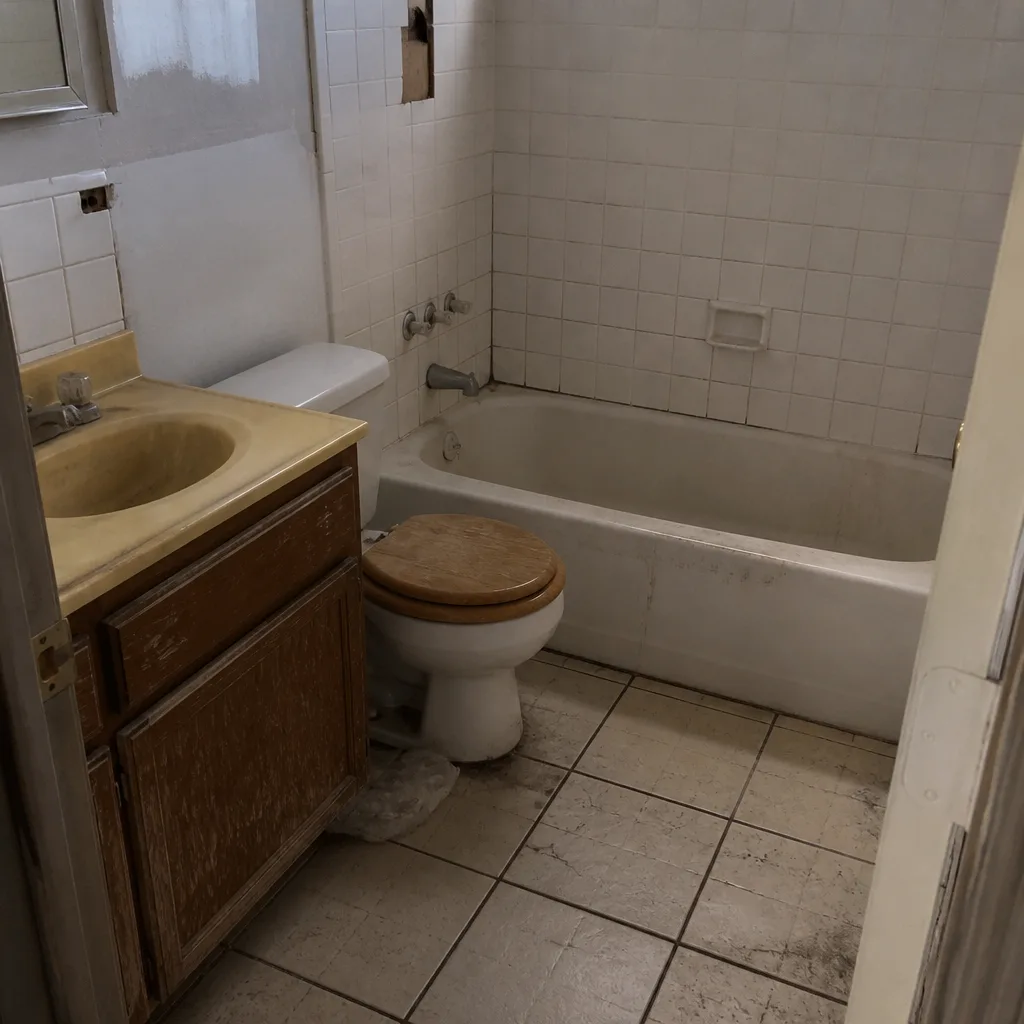 Before
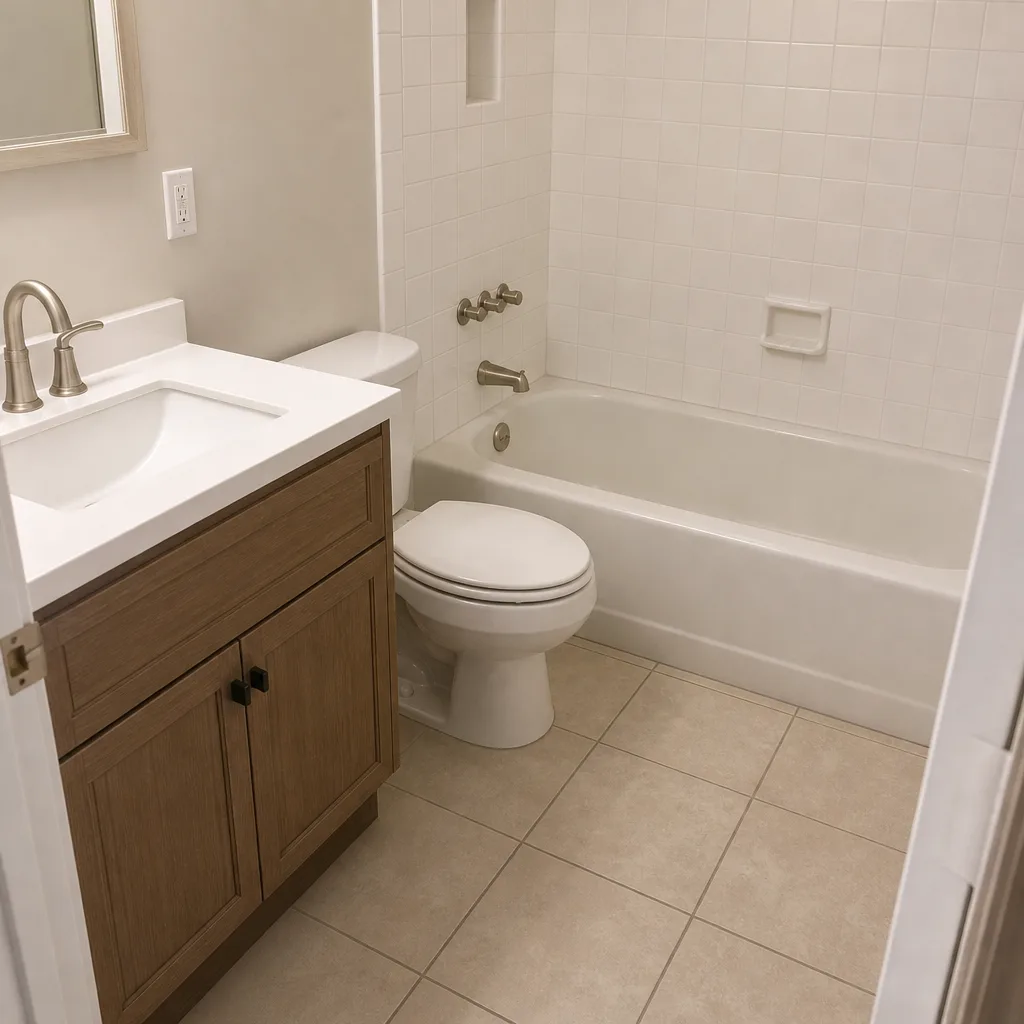 After
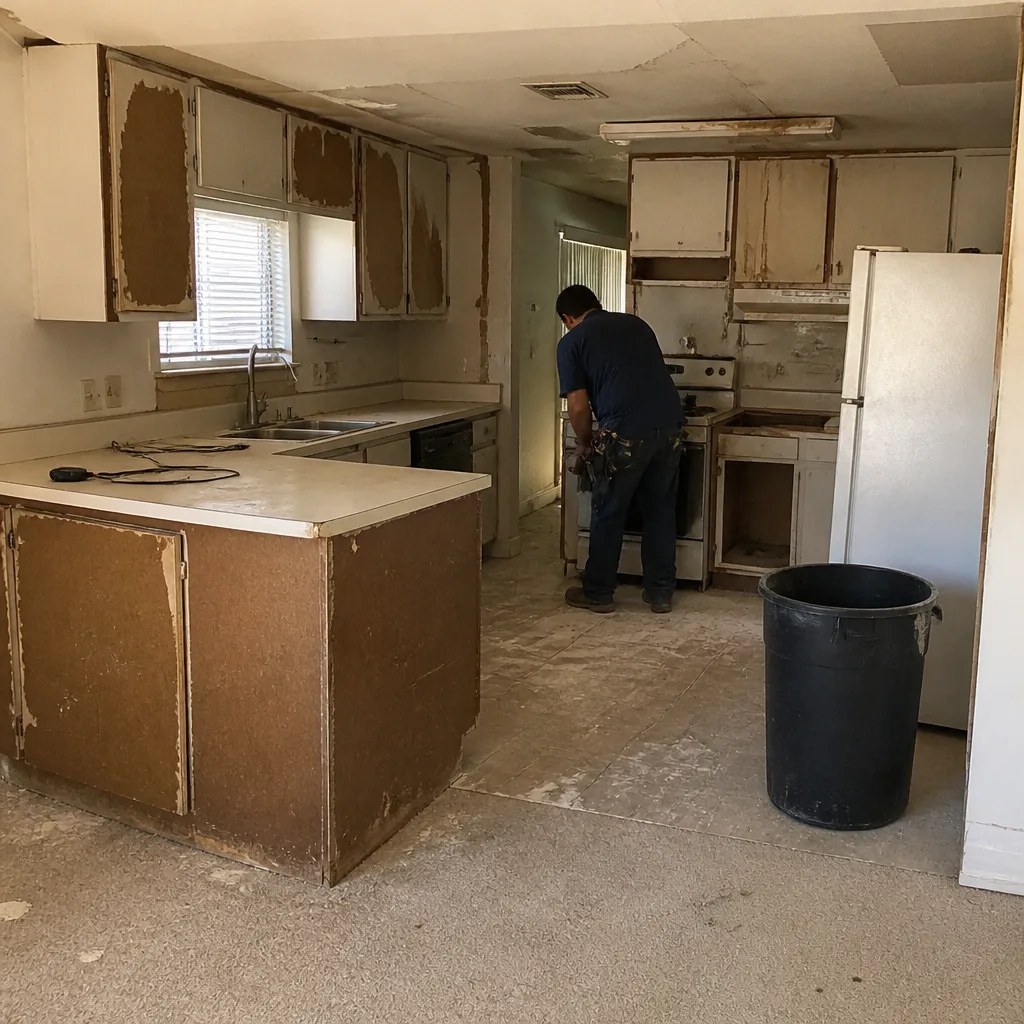 Before
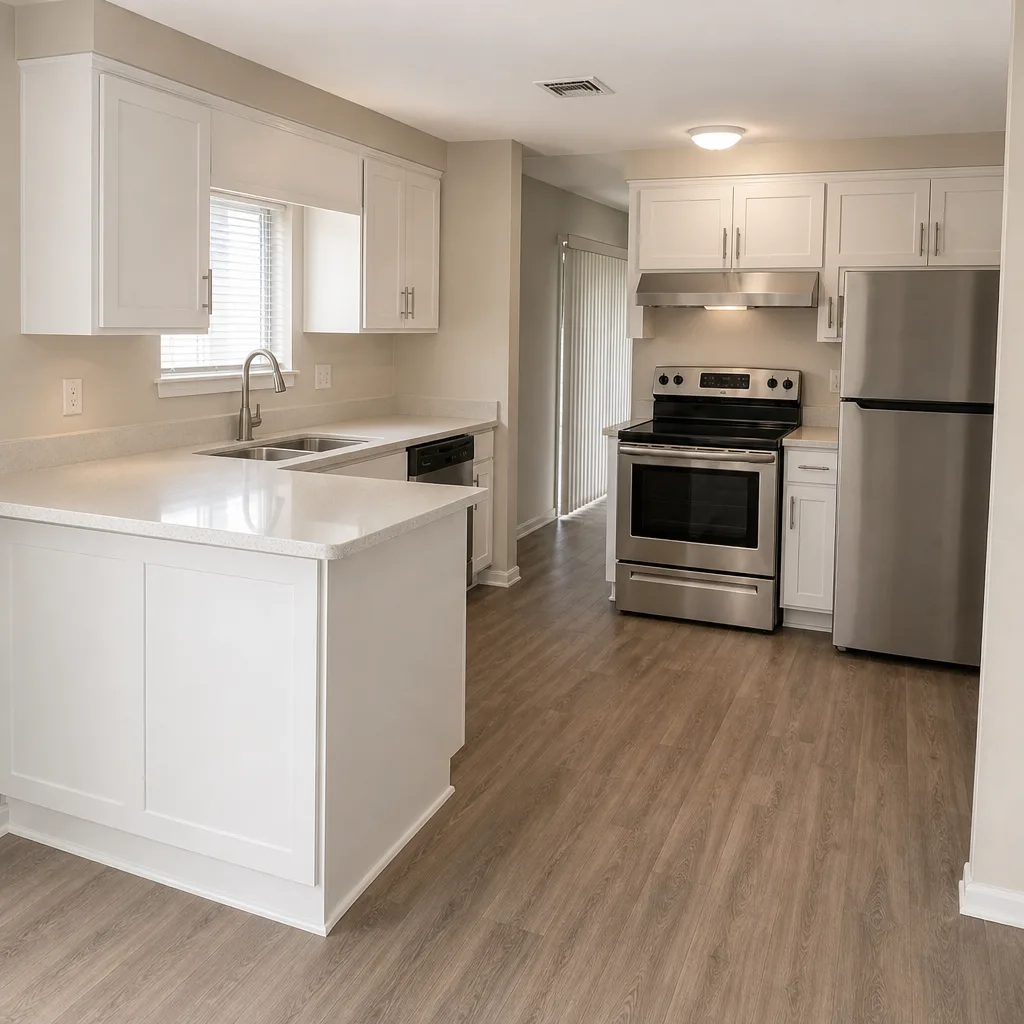 After
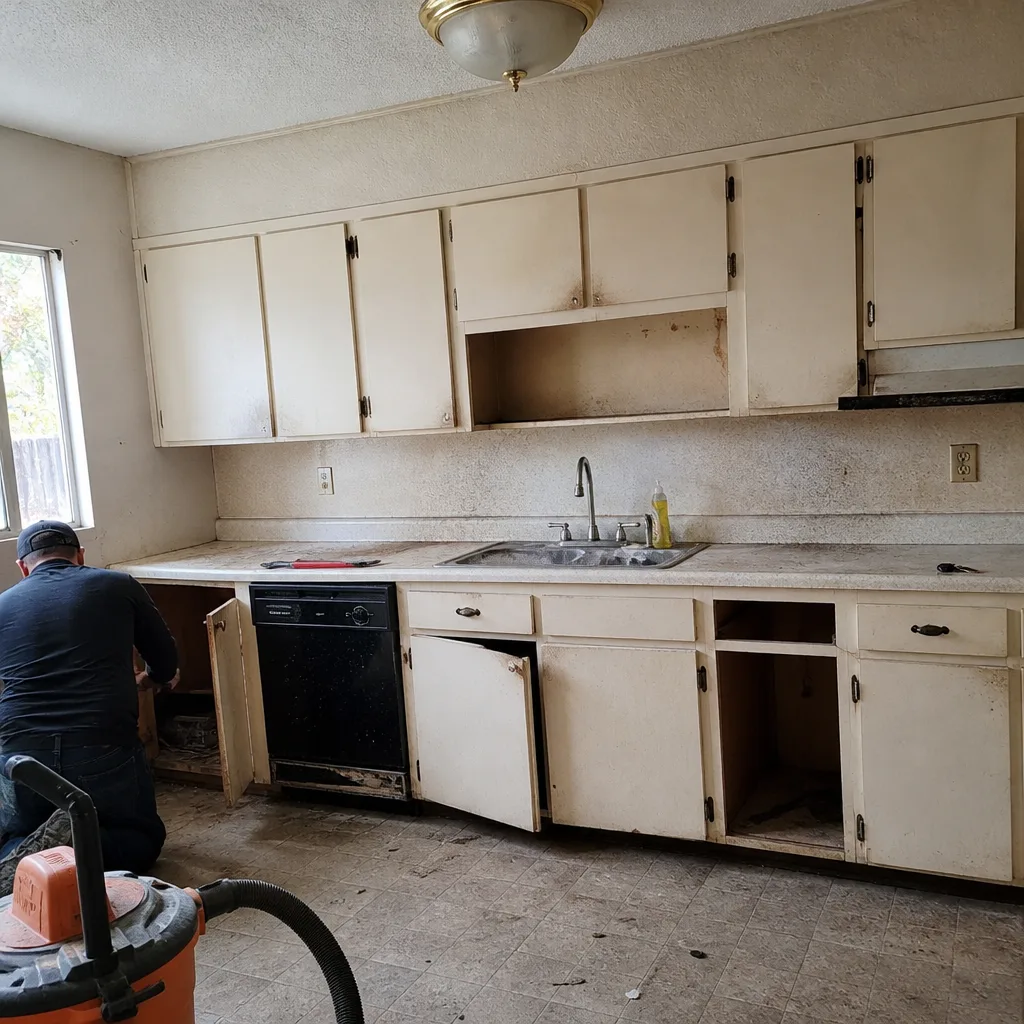 Before
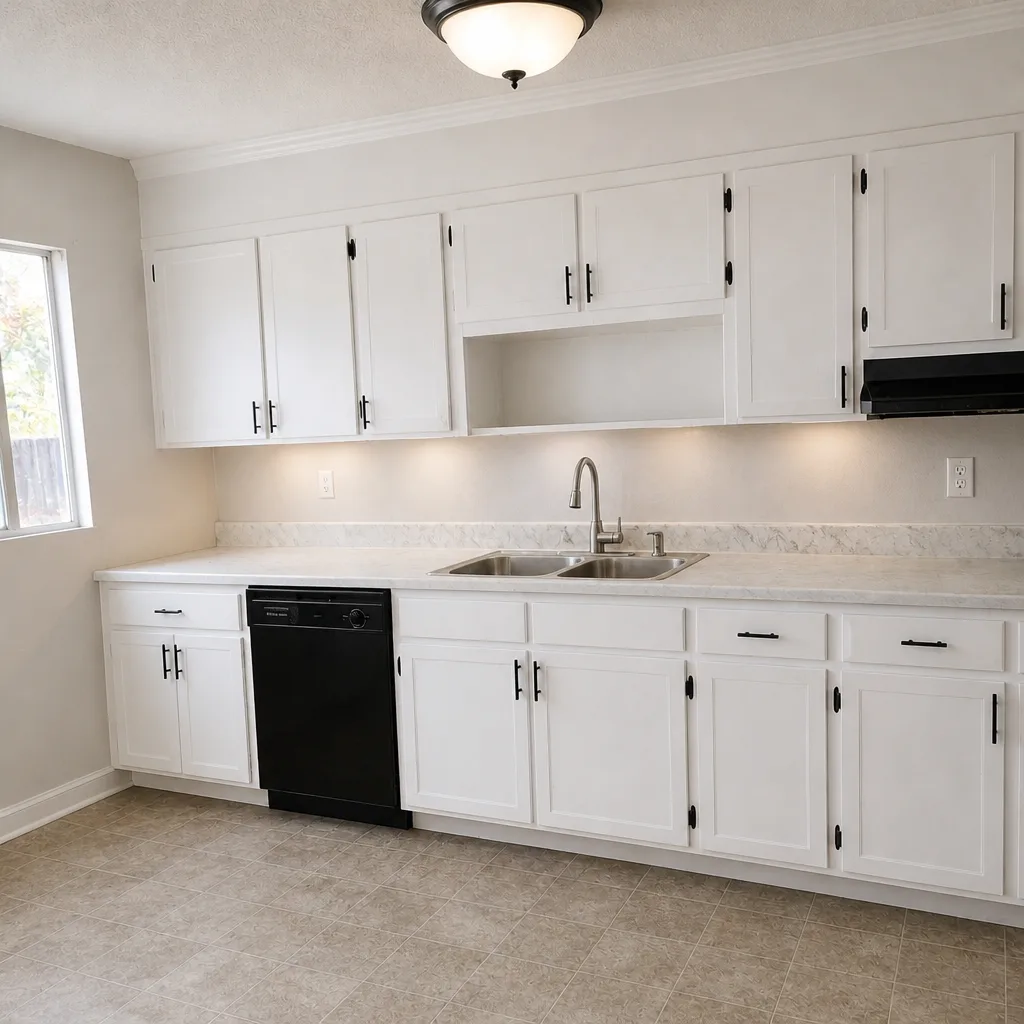 After
When to Call a Professional
Call a licensed construction professional to review your addition or ADU proposal before you sign. Specifically: if a contractor’s proposal lacks a soils report or written waiver, if the scope uses “allowances” or “standard materials” without dollar figures or brand names, if the payment schedule isn’t tied to inspection milestones, if the deposit request is above 10% before permit approval, or if the contractor can’t name their licensed MEP subcontractors before signing. Any single one of those is worth a second opinion on the written estimate. A free second-opinion review of any written estimate is a standing offer at Rowan Construction Group Las Vegas, and we’ll go through it line by line at no charge. If you’re also planning related work like Driveway & Pavers in Las Vegas or Fence Installation in Las Vegas, those should be reviewed separately.
Rowan Construction Group Las Vegas offers free estimates in Las Vegas on every addition and ADU project. Call (833) 467-9123 to schedule yours.
Frequently Asked Questions
The most common warning signs in a contractor’s paperwork are: no soils report (or no written waiver explaining why it isn’t needed), suggested permit skipping, scope language that uses “allowances” or “standard materials” without dollar figures or brand names, no disclosure of licensed MEP subcontractors, deposits above 10% before permit approval, and a payment schedule not tied to inspection milestones. Any one of those is a reason to slow down. Two or more is a reason to walk. Call (833) 467-9123 for a free second opinion on any written estimate.
Verify the contractor’s state license on Nevada’s State Contractors Board (NSCB) database at nscb.nv.gov, and verify their permit history on the Clark County Department of Building & Fire Prevention online portal. The county portal shows whether they’ve pulled permits on comparable projects recently and whether inspections passed. Two minutes of lookup prevents very expensive discoveries. If the contractor seems bothered by the request, that itself is a signal. Call (833) 467-9123 with questions about your estimate.
Yes, or a written waiver signed by a licensed engineer that names the reason. Las Vegas’s expansive clay soil zones can cause foundation movement, so the foundation design needs an engineering basis. A proposal without either document is guessing on the foundation, which is the most expensive component of the build. Ask for the geotech report or the written waiver before signing. Call (833) 467-9123 to have a Rowan team member review your proposal.
Not more than 10% of the total contract value, and not before permit approval. A larger upfront request is a sign the contractor has cash-flow problems or is treating your money as working capital. Payment should be tied to inspection milestones (footing passed, framing passed, final passed), with a 5-10% holdback against the final draw until punch list and inspection are complete. Rowan structures every contract this way. Call (833) 467-9123 for a written quote with the terms documented.
No. Every habitable structure in Las Vegas requires a permit and county inspection. An unpermitted ADU will cause problems at resale, at appraisal, at refinance, and at insurance renewal, and the correction cost usually exceeds the savings many times over. A contractor who suggests skipping the permit is either unaware of the rules or willing to expose you to liability. Call (833) 467-9123 if you’ve been told a permit is optional on your project.
A signed, dated document with a number, a specific scope description, a specific dollar amount, a schedule impact if any, and signatures from both the contractor and the homeowner, filed before the change work begins. Verbal “we’ll figure it out at the end” change processes routinely add 10-25% to a project total. A disciplined change order process is why projects finish within a few percent of the original agreed price. Call (833) 467-9123 to talk through how change orders work on a Rowan project.
The Bottom Line
The warning signs of a failing home addition or ADU project show up in the paperwork long before anything is built. The proposal without a soils report or written waiver. The contract with “allowances” and no dollar figures. The payment schedule that isn’t tied to inspections. The contractor who can’t name the electrician. The permit-free shortcut. Each of these is verifiable before you sign, and each is a signal about what the project will look like months later. Run the Clark County permit check and the NSCB license check. Read the contract line by line. Ask the hard questions. If you want a second opinion on the written estimate you’ve been given, a free review is available and we’ll look at it clause by clause. The full picture of what’s included in a Rowan addition or ADU project lives on our Home Additions & ADU page, and the rest of the work we do starts at our Rowan Construction Group Las Vegas home.
Call (833) 467-9123 to schedule your free estimate for your Las Vegas addition or ADU. Every quote comes as a flat written price with a written scope and a written warranty before any work starts, backed by the 365-Day Done Right Promise: if it isn’t done right, we make it right. Bring a competitor’s written estimate and we’ll review it line by line at no charge.
Written by the team at Rowan Construction Group Las Vegas.