Last updated November 18, 2026


Free written scope consultation - allowances, timeline, and change-order rules on paper before a single trade is scheduled
How Long Does Driveway & Pavers Take? Timelines and What to Expect
A 600-square-foot driveway can be fully paved in a single day by an experienced crew. The same project can be held on-site for 72 hours before a single paver is placed, if caliche is encountered and proper base lifts are required. That gap between what you can see and what happens underneath is the whole story of paver timelines in Las Vegas, and almost nobody explains it before you sign. This guide walks through each phase with real hour ranges for a typical 500-square-foot driveway, shows how Clark County permitting and monsoon-season weather push start dates, and gives you the exact questions that reveal whether a contractor is quietly cutting the base prep to promise a faster finish.
Quick Answer
A standard 500-square-foot paver driveway in Las Vegas takes 4 to 7 working days from excavation to final jointing. Plan on 2 to 4 weeks of calendar time once you factor in permit approval and a weather buffer. Caliche removal and mandatory 24-hour compaction holds between base lifts are usually the longest and least visible phases, not the paver laying itself. Call (833) 467-9123 for a free estimate with a written, flat price and a phase-by-phase schedule.
Styles & brands we work with
- Kitchen remodeling
- Bathroom remodeling
- Home additions & ADU
- Roofing
- Windows & doors
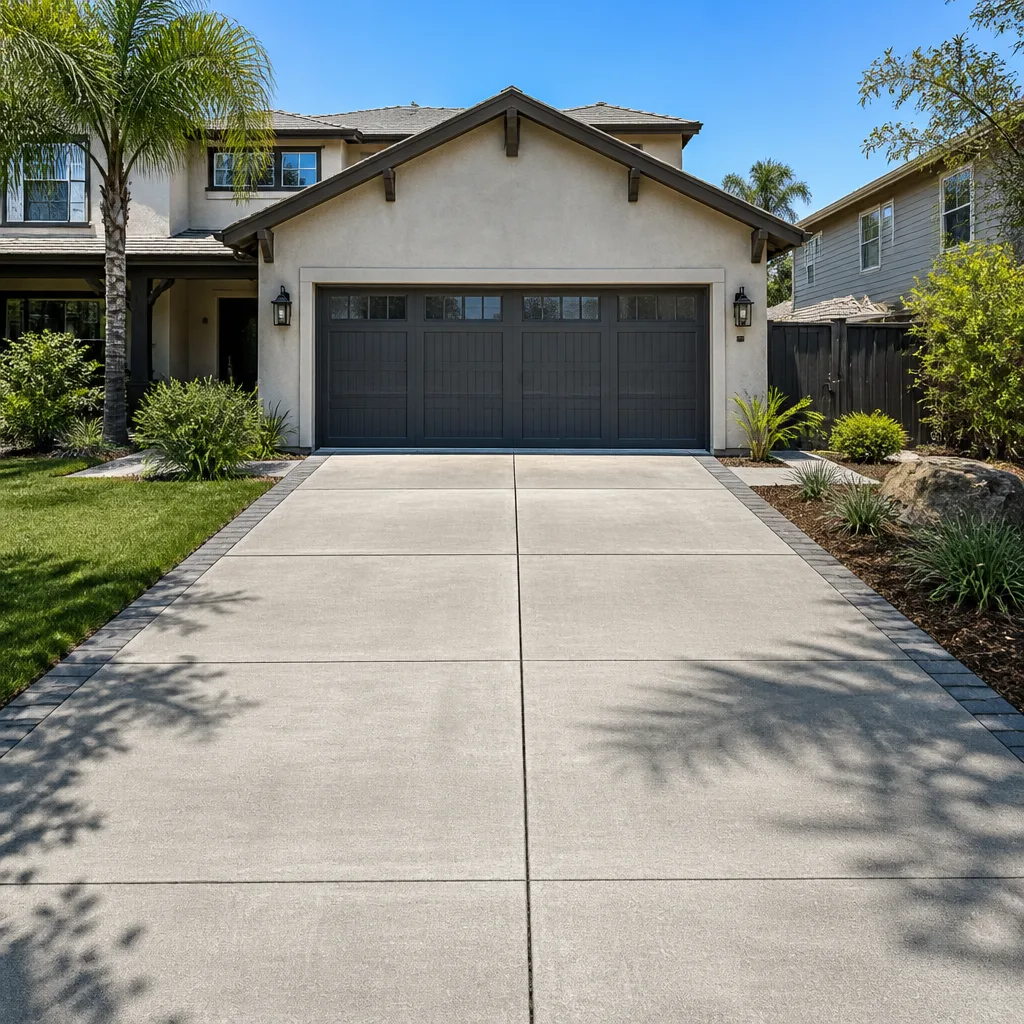
- Driveway & pavers
- Fence
Table of Contents
- Phase-by-Phase Time Breakdown for a 500 Square Foot Driveway
- Why Caliche Is the Phase That Blows Up Schedules
- How Las Vegas Permit Timing Affects Your Start Date
- The 24-Hour Compaction Hold Explained
- How Many Square Feet Can a Crew Actually Lay in a Day?
- Monsoon Season and Polymeric Sand: The 24-Hour Rule
- Questions That Reveal If a Contractor Is Cutting Base Prep
- Pavers vs. Concrete: Timelines Side by Side
Phase-by-Phase Time Breakdown for a 500 Square Foot Driveway
Here is what a properly sequenced Las Vegas driveway actually looks like hour by hour. These ranges reflect what our technicians – with up to 19 years of experience on Southern Nevada soil – see on a typical residential project. A 500-square-foot driveway is small enough to be a fair unit of comparison, but the same phases apply whether you’re paving a 900-square-foot driveway in Summerlin or a narrow side pad in Green Valley.
- Demo and excavation (6 to 10 hours). Tearing out old concrete or asphalt, or scraping virgin landscape, then digging down to grade. Depth depends on the base thickness required for your soil and load. This is where caliche first announces itself, and where the day often goes long.
- Caliche treatment (0 to 18 hours). If you encounter caliche, this phase alone can add one to three days. More on this below – it’s the biggest wildcard in the whole timeline.
- Base lifts and compaction holds (12 to 24 hours of active work, spread over at least 48 calendar hours). Class II base gravel goes down in 4-to-6-inch lifts, each compacted to 95% density. Under proper procedure, each lift holds 24 hours before the next begins.
- Bedding sand screed (2 to 4 hours). A one-inch sand bed is screeded to final grade. Fast, but precision-dependent.
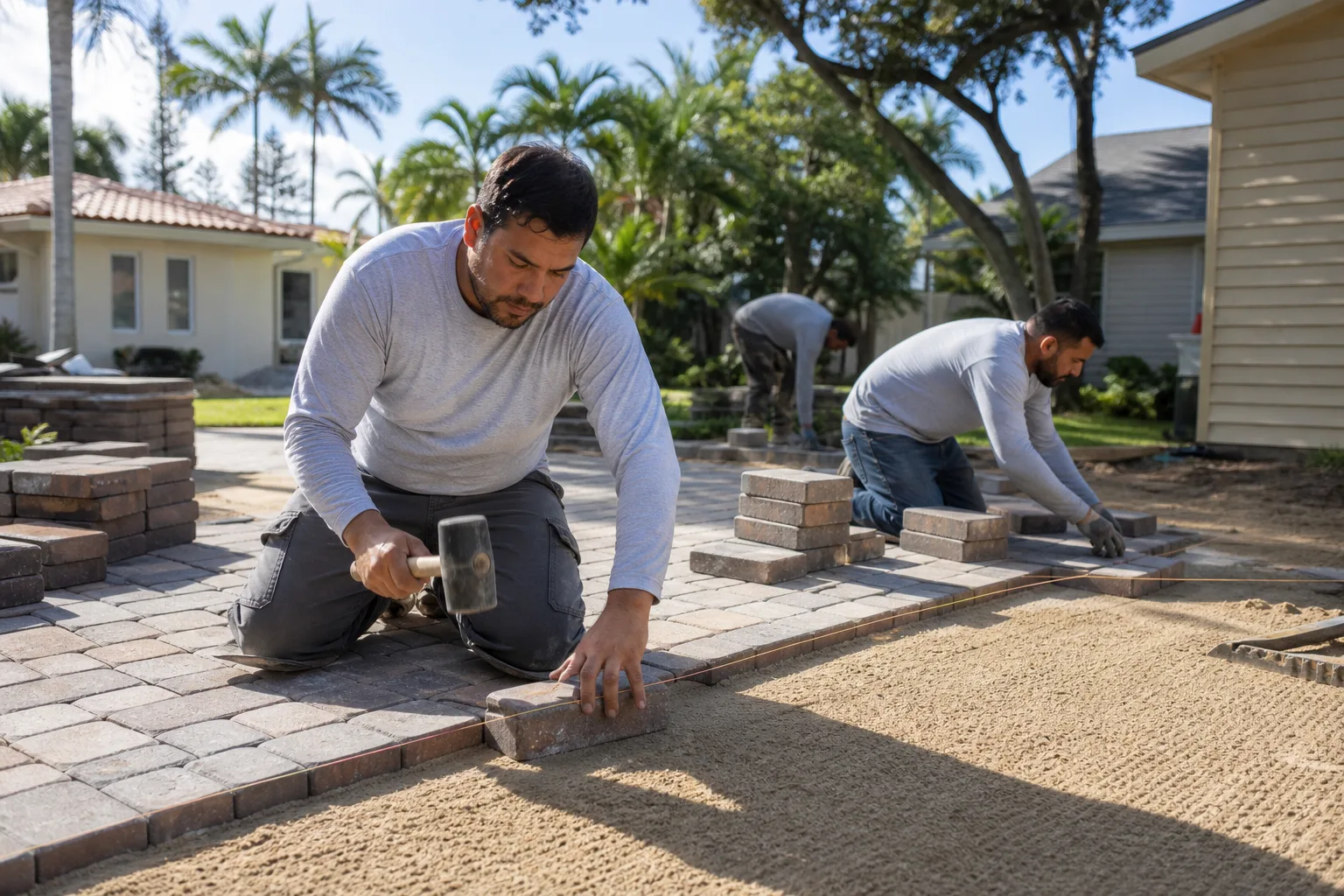
- Paver placement (6 to 10 hours). An experienced crew lays 400 to 600 square feet per 8-hour day. A 500-square-foot driveway is one solid day.
- Edge restraint and jointing (3 to 5 hours). Edge restraints get set in concrete or spiked, then polymeric sand is swept into the joints and activated with water.
Total active work: roughly 30 to 50 hours. Total calendar time: 4 to 7 working days under normal soil conditions. The base is where the clock lives, not the visible pavers.
Why Caliche Is the Phase That Blows Up Schedules
Caliche is a cemented calcium carbonate layer that forms in arid soils across the Las Vegas Valley, and it turns excavation from a morning into a multi-day operation. You can’t just scrape it – it has to be mechanically broken up and hauled off, or drilled through if it’s deep enough that removal isn’t practical. A homeowner who budgets for three days of paving and encounters a thick caliche shelf can end up at seven.
Where we see it most: properties in the older sections of Henderson, parts of Sunrise Manor, and lots near the base of the mountains in the northwest valley, where caliche runs thickest. In newer construction zones, the soil has often already been disturbed during the home build, which is why a project that looks identical on paper comes in two days faster.
What to watch for:
- Pre-schedule a soil inspection. A $60 to $200 test hole, dug before you commit, tells you whether caliche is present and how deep it runs. That’s the cheapest insurance on your schedule.
- Ask for a caliche contingency in writing. Under our Haven Standard, no work proceeds on a change until the change order is signed. If the quote doesn’t have a documented caliche line item, you’re approving mystery costs.
- Refuse “we’ll deal with it when we hit it” as the only answer. It can mean the contractor hasn’t thought about it, or worse, plans to lay pavers over loosened caliche and let it settle within a year.
For a deeper look at what a properly built base costs in materials and labor, see our guide to Driveway & Pavers in Las Vegas.
How Las Vegas Permit Timing Affects Your Start Date
Pavers themselves are frequently classified as cosmetic resurfacing and don’t always trigger a permit. What does trigger a permit is anything structural: changing driveway slope, altering a curb cut, modifying drainage, widening the apron, or adding a pad that connects to a public right-of-way. In those cases, the work runs through Clark County, the City of Henderson, or the City of Las Vegas, depending on where you are.
Current average turnaround for residential right-of-way and driveway permits across these jurisdictions runs roughly 2 to 5 weeks, with variables that will feel arbitrary until you’ve filed once:
- Plan review load. Late spring and early fall are peak season; reviews slow by a week or more.
- Right-of-way involvement. Anything touching a public sidewalk or curb adds a separate review layer.
- Drainage submittals. Clark County flips a lot (Regional Flood Control) and Las Vegas is a flood-conscious city. A project near a wash or a designated floodway can add 2 to 3 weeks.
What can be pre-permitted: site survey, drainage plan, and material selections all get done before filing. That’s the prep you can start now, even if your project is 60 days out. Our team manages pre-filing on every driveway job we quote, and it is the first thing that separates a realistic start date from a wishful one.
The 24-Hour Compaction Hold Explained
Compaction is not a gesture. Class II base gravel under a Las Vegas driveway typically needs to reach 95% relative compaction, verified with a nuclear gauge or similar density test. Each lift – usually 4 to 6 inches – must be compacted, tested, and then allowed to hold for at least 24 hours before the next lift goes down. On a 500-square-foot driveway with 8 to 12 inches of total base, that’s two or three lifts and two to three 24-hour holds.
Why the hold matters in this climate: the Las Vegas Valley swings 30-plus degrees between afternoon highs and overnight lows for much of the year. Base that is compacted and then immediately loaded with the next lift or with traffic before it has fully settled can shear, and once it shears, it doesn’t heal. Two to three years later, you’re looking at rutting and wobbling pavers, and the fix is full removal.
The visible tell: a crew that starts at 7 AM and has pavers down by noon on the same day they excavated is almost certainly skipping holds. If they’re promising a 500-square-foot driveway in “two days flat,” ask them to describe their compaction schedule. The answer tells you what they’re selling.
If your project scope reaches beyond the driveway into structures or site additions, the same discipline applies. Our Home Additions & ADU in Las Vegas team uses the identical lift-and-hold method on every foundation and slab.
How Many Square Feet Can a Crew Actually Lay in a Day?
Paver placement runs 400 to 600 square feet per 8-hour day for an experienced three-to-five-person crew, on a properly prepared and screeded base. That’s the realistic figure for Belgard, Unilock, or Tremron installations of a standard 4×8 or 6×9 paver in a running bond or herringbone pattern.
What shifts the number up or down:
- Pattern complexity. Herringbone and fan patterns cost 15 to 25% in daily output versus a simple running bond. Corner cuts and curved edges are a bigger hit.
- Paver size and thickness. Large-format pavers (16×24 and up) go down faster per square foot but require machine lift or two-person handling.
- Crew size. A two-person crew can’t keep up with a five-person crew’s pace; output doesn’t scale linearly.
- Site access. A driveway wide open to the street is far faster than a tight side yard or a pad behind a gate.
If a contractor’s schedule shows a 1,200-square-foot driveway being laid down in a single day, either they have a larger crew than usual or the base is being shortcut. Ask them to show you the compaction schedule and the crew size in writing.
Monsoon Season and Polymeric Sand: The 24-Hour Rule
Polymeric sand cannot be applied within 24 hours of a forecast monsoon event, and that single rule can add 2 to 5 days to an October project in Las Vegas. Here’s why this matters more in this city than most places people come from: Southern Nevada’s monsoon window runs roughly July through September, but the October transition month sees unpredictable late-season cells that drop a half-inch in fifteen minutes and are gone before the radar catches up.
If polymeric sand is swept into your joints and then soaked before it cures, the binder washes out. What you’re left with is loose sand that blows out of the joints for months and undermines the pavers. The correct response is to wait, re-sweep, and re-activate – but a three-to-five-day hold is often required to get a clean application window.
What a good crew does:
- Monitors the National Weather Service forecast starting 72 hours out.
- Sequences placement to finish edge restraint before the weather window opens.
- Builds a 2-to-3-day float into any October or November schedule.
- Recommends a joint stabilizer that cures faster if the window is genuinely tight.
For homeowners completing an exterior upgrade at the same time, our Fence Installation in Las Vegas team runs the same weather protocol – the same monsoon cell that wrecks wet polymeric sand can blow down a fence set in uncured post concrete.
Questions That Reveal If a Contractor Is Cutting Base Prep
These questions are not traps. They are the questions a contractor who’s done this a hundred times will answer in detail. Vague or evasive answers are the tell.
- “What is your compaction hold schedule?” A proper answer names the number of lifts, the lift thickness, the density target, and the 24-hour hold. If the answer is “we compact as we go,” that’s not a schedule.
- “How do you test density?” The correct answer involves a nuclear gauge or a certified density test. “We’ve been doing this thirty years” is not a test.
- “Who handles the caliche contingency – us or you?” This should be in writing before signing. If it’s open-ended, cap the line item or pre-inspect.
- “How many days have you built into my schedule for holds?” A 4-to-7-day schedule with holds is defensible. A 2-day schedule with a 500-square-foot driveway is impossible.
- “Can I see the daily crew assignment and square footage output per day?” A written scope and schedule is the standard deliverable, not a verbal promise.
Ask us these questions on a free estimate and we’ll answer all five in writing. Compare the answer to the next contractor’s. That is the point of a Free Second Opinion on any written estimate – we’ll review a competitor’s quote line by line, at no charge, before you sign. Our team works from the same written standard on every trade, and the same discipline appears on the Rowan Construction Group Las Vegas home page.
Pavers vs. Concrete: Timelines Side by Side
The timeline question comes up most often because homeowners are choosing between pavers and a poured concrete driveway. Both are viable in Las Vegas; the time profiles are completely different.
- Poured concrete: 2 to 3 days of active work, plus 5 to 7 days of cure before vehicle traffic. Fast, but a single crack from a soil shift is a permanent visual defect.
- Pavers: 4 to 7 days of active work, plus the compaction holds, but a cracked or settled paver can be lifted and replaced individually. For Las Vegas soil, that’s the practical argument.
- Stamped concrete: 2 to 4 days, but requires sealed maintenance every 2 to 3 years. In this climate, UV degrades sealant faster than it does in most of the country.
- Paver with base: The longest timeline, the lowest lifetime maintenance if base is built correctly. This is the trade-off most homeowners land on.
The honest framing: pavers take 2 to 3 working days longer than poured concrete, and the reason is the base. You are paying for the part you can’t see. That base is what carries the driveway for the next two decades. If budget is the binding constraint, concrete is the answer. If durability and repair-ability matter, so is pavers.
Common Mistakes to Avoid
- Believing a two-day schedule for a 500-square-foot driveway. It cannot include proper compaction holds. It will look perfect on day three and start to rut within two seasons.
- Not asking for a caliche contingency in writing. Las Vegas Valley soil can hide a caliche layer under six inches of what looks like normal dirt. If it isn’t priced into the quote, it will be priced into a change order.
- Letting polymeric sand go down with rain in the 24-hour forecast. An October or November monsoon cell can wash the binder out before it cures. If the crew doesn’t check the forecast, you should.
- Assuming permits aren’t required because it’s “just pavers.” Any change to slope, curb cut, or right-of-way triggers a permit in Las Vegas, Henderson, or unincorporated Clark County. Work without a permit can be red-tagged and forced to be removed.
- Choosing a contractor on schedule over schedule-and-detail. A three-day quote with a full compaction schedule beats a two-day quote with no schedule every single time.
- Skipping the pre-installation soil inspection to save $200. The inspection is the cheapest line item on the job and the one most likely to change your final timeline.
- Paving over an existing slab without checking it. Old concrete that has settled or cracked will telegraph through the new pavers within a year. The demo cost is not optional.
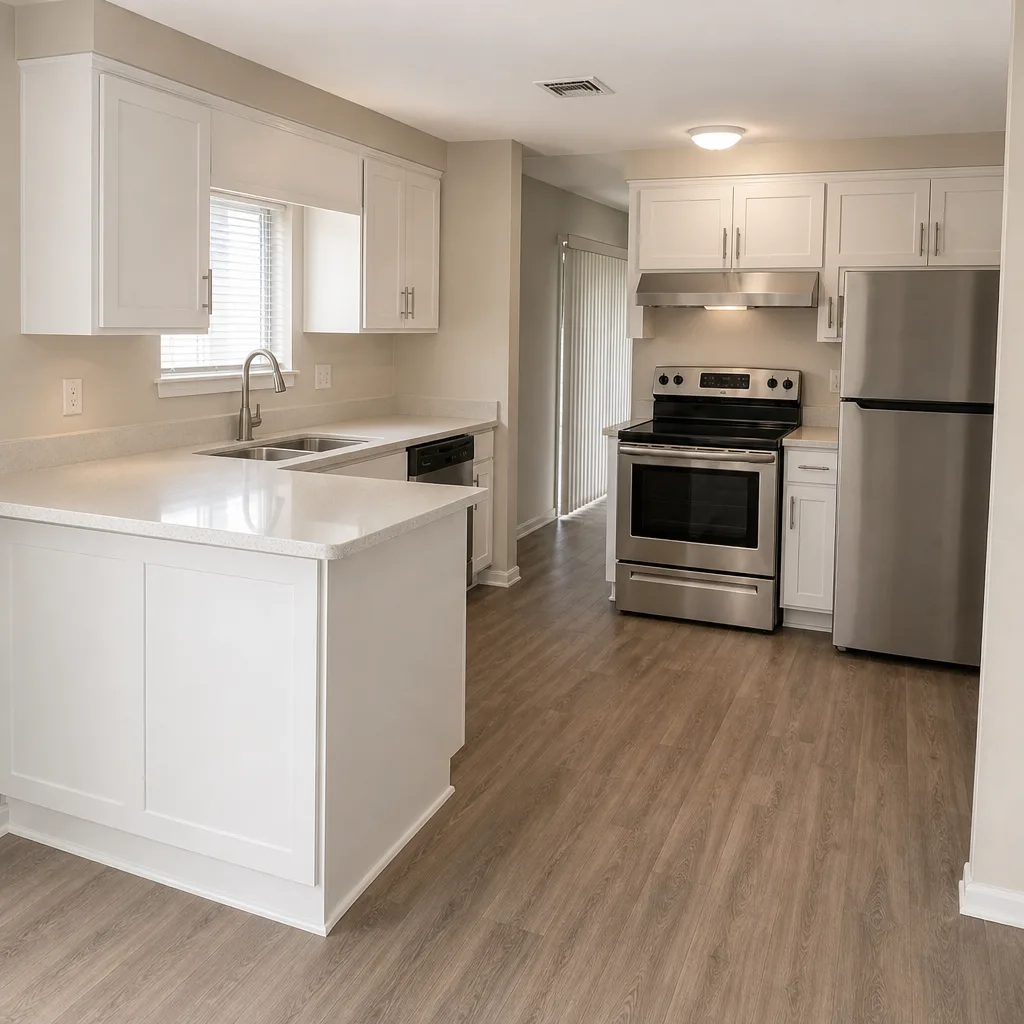
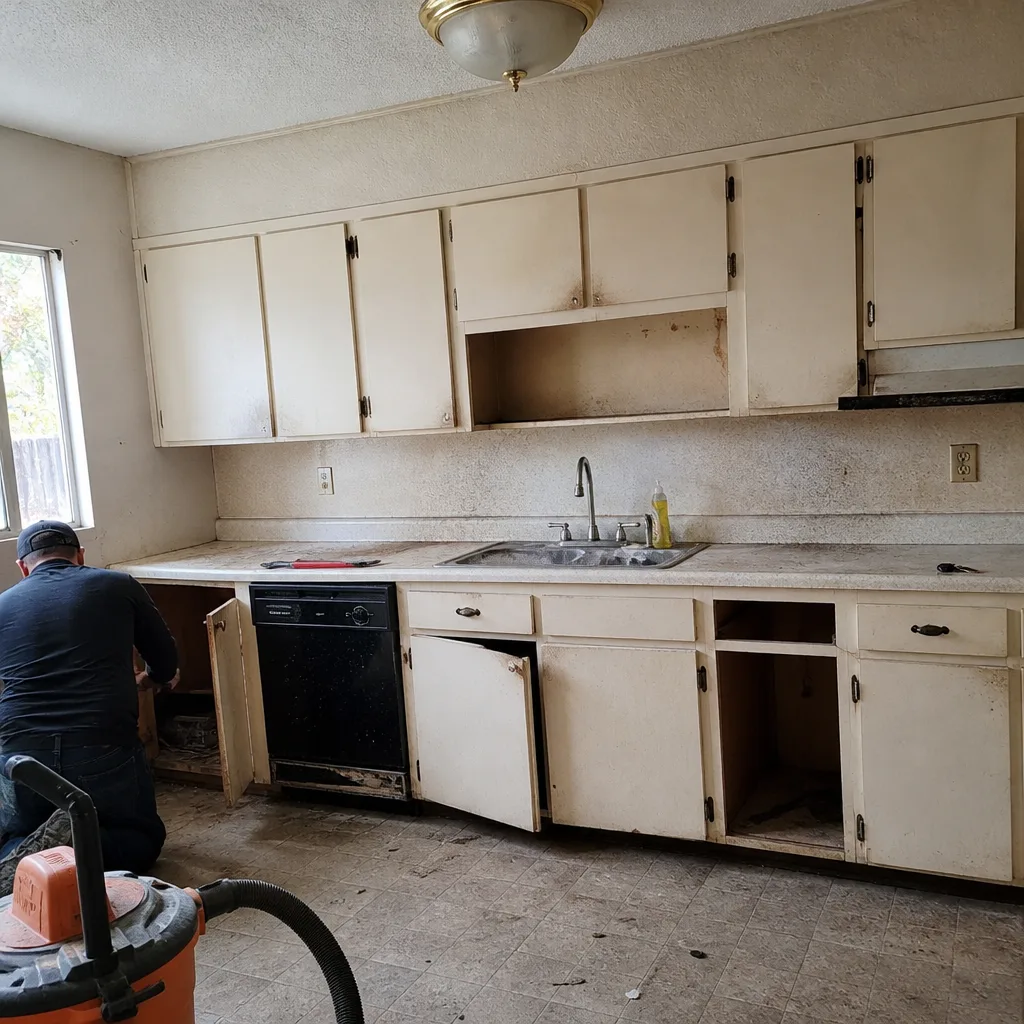
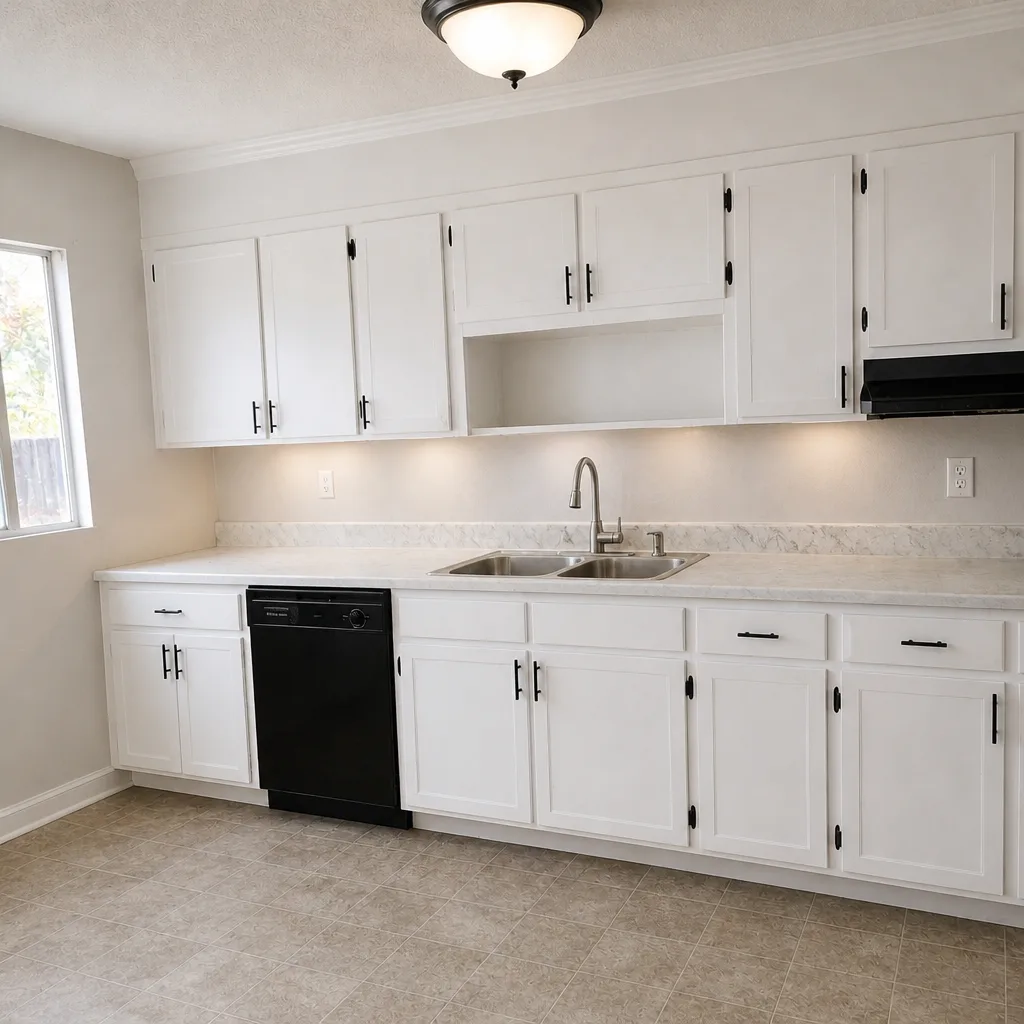
See the difference
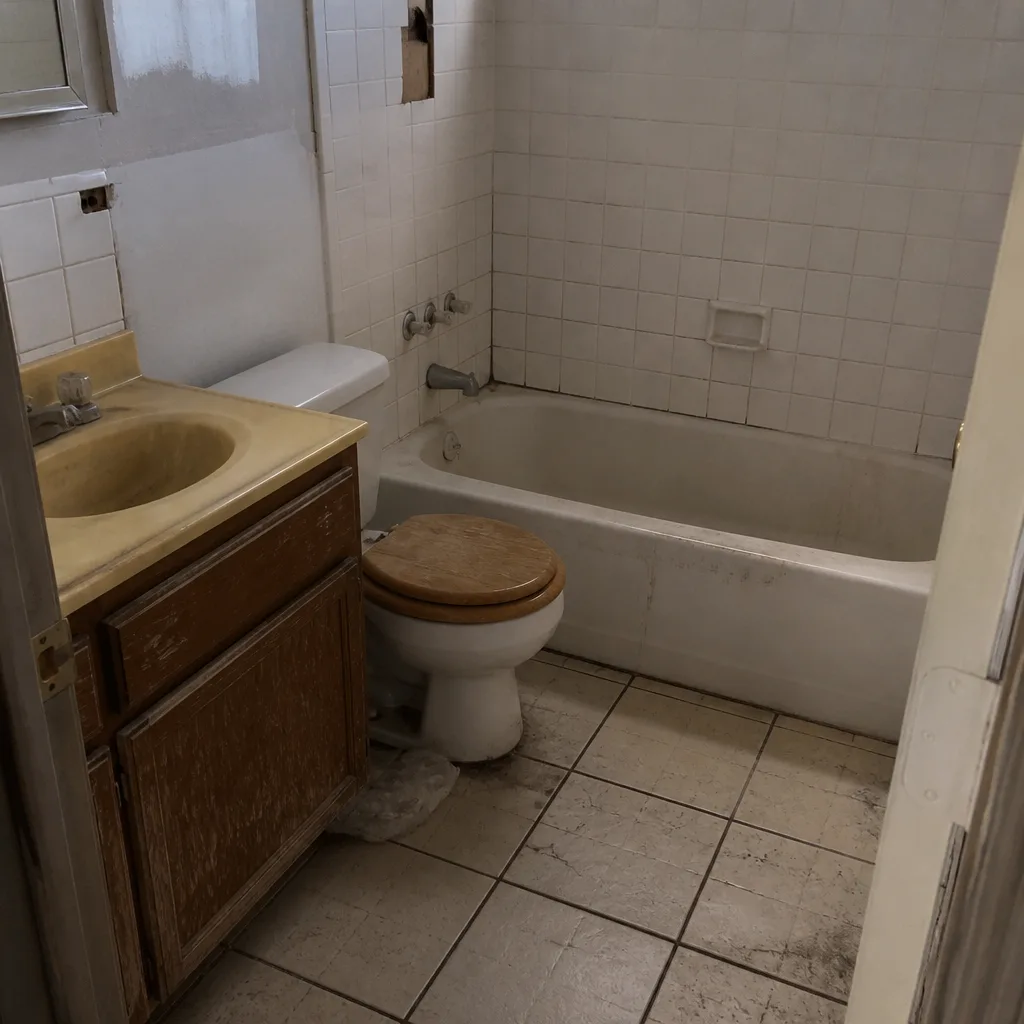 Before
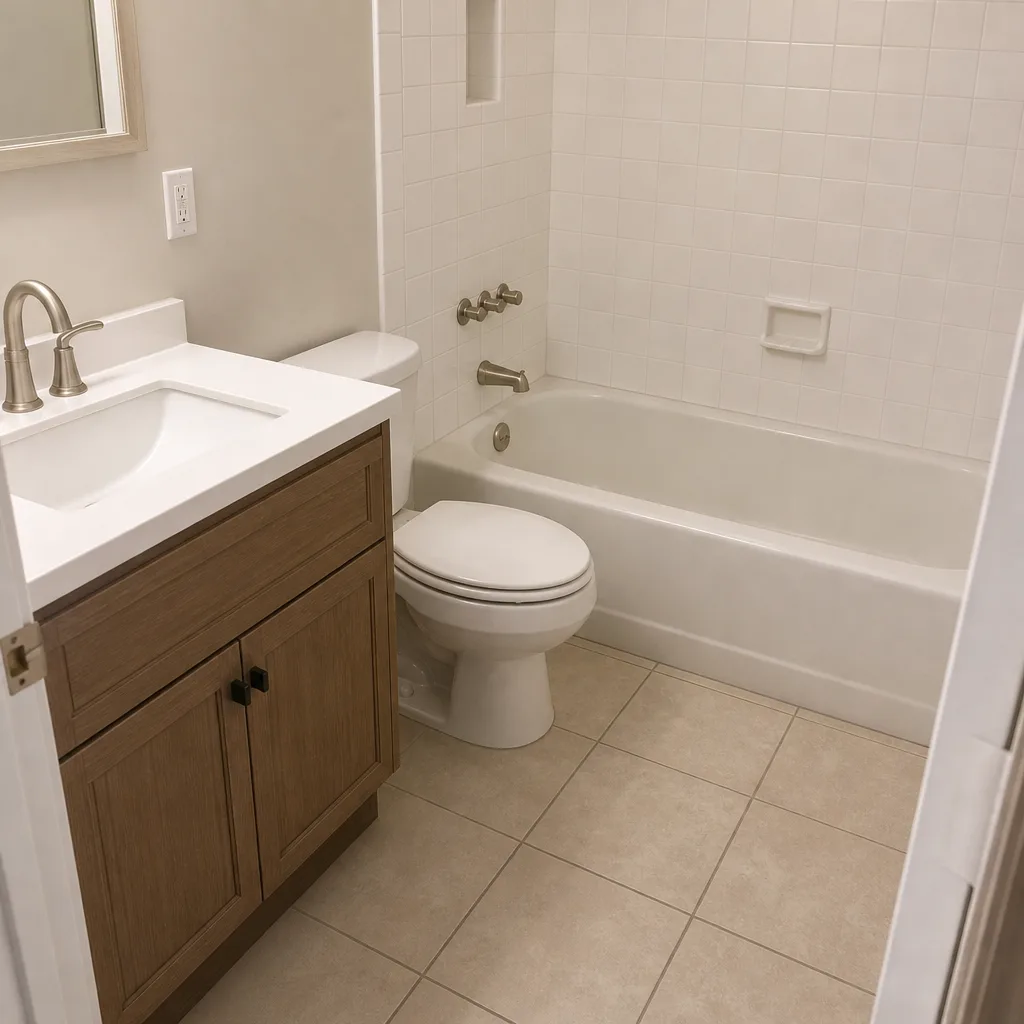 After
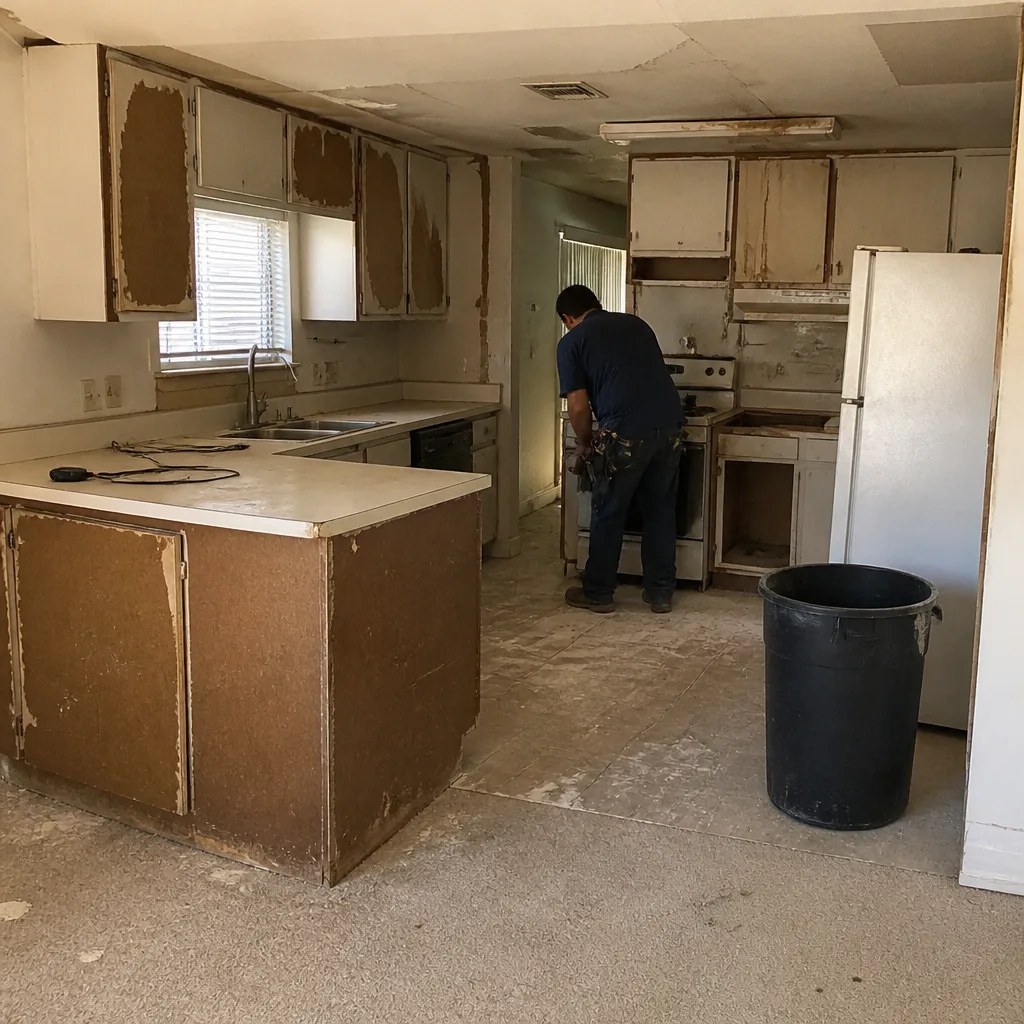 Before
 After
 Before
 After
When to Call a Professional
Call a professional when caliche is present and you don’t know how deep it runs, when the work touches a curb cut or sidewalk and needs a permit, when the existing subgrade has already settled or ponding is visible after rain, or when your project crosses 400 square feet and the base lift schedule becomes the deciding factor in whether your pavers last. Those are the conditions where a shortcut costs more than the savings. Rowan Construction Group Las Vegas offers free estimates in Las Vegas and throughout the valley – call (833) 467-9123. Our team works from a written flat price and written scope under The Haven Standard, and no change proceeds without a signed change order. The 365-Day Done Right Promise is on every job.
Frequently Asked Questions
A 500-square-foot paver driveway in Las Vegas takes 4 to 7 working days of active work and 2 to 4 weeks of calendar time once permit approval and weather floats are included. The single biggest variable is caliche: if your lot has it, expect 1 to 3 additional days for mechanical removal. Call (833) 467-9123 for a project-specific schedule – the estimate is free.
Pavers require a layered compacted base with 24-hour holds between lifts; poured concrete does not. That base is what carries the driveway for the next two decades, and shortcuts show up as rutting two or three years later. The extra 2 to 3 working days is the visible cost of the invisible work.
A straight resurfacing over an existing prepared surface often does not require a permit; any change to slope, curb cut, drainage, or right-of-way does. Las Vegas, Henderson, and Clark County each classify this slightly differently, and average residential turnaround runs 2 to 5 weeks when one is required. We pre-file and manage the review on every driveway we quote.
No. Polymeric sand cannot be applied within 24 hours of a forecast rain event because the binder washes out before it cures. In Las Vegas, October and November are the trickiest months for late-season monsoon cells, and a weather hold can add 2 to 5 days to a project. That is why we build 2 to 3 days of float into any fall schedule.
An experienced three-to-five-person crew lays 400 to 600 square feet per 8-hour day on a prepared base. A 500-square-foot driveway is one solid day of placement. If a quote promises 1,200 square feet in a single day, ask to see the crew size and the compaction schedule – either the quote is optimistic or the base is being cut.
Not without a signed change order. Under our Haven Standard, the flat written price is delivered before any work begins, and no change proceeds until the change order is signed. If caliche is uncovered that wasn’t in the pre-inspection, the change gets written, priced, and signed – not added to a final invoice you didn’t approve. Call (833) 467-9123 for a written estimate in Las Vegas.
The Bottom Line
The laying of pavers is the part homeowners watch and the part that takes the least time. A 500-square-foot Las Vegas driveway takes 4 to 7 working days total, but 2 to 3 of those days are compaction holds, and a caliche encounter can push the project a week. Permit turnaround (2 to 5 weeks) and monsoon-season sand holds (2 to 5 days) are the two biggest calendar swings. The single question that separates a contractor selling speed from a contractor building a driveway is: “What’s your compaction hold schedule?” Ask it before you sign. Then ask us for a written flat price and compare the two quotes side by side – our Free Second Opinion covers any written estimate, line by line, at no charge.
Ready to plan your project with a documented schedule? Call (833) 467-9123 for a free estimate with a flat written price, a manufacturer-backed material selection (Belgard, Unilock, and Tremron are all options we source), and a documented photo record of every visit.
Written by the team at Rowan Construction Group Las Vegas.