Last updated November 18, 2026

Free written scope consultation - allowances, timeline, and change-order rules on paper before a single trade is scheduled
Driveway & Pavers Maintenance Checklist for Las Vegas Homeowners
Polymeric joint sand rated for moderate climates begins to powder-out after the third Las Vegas summer, and when it goes, the pavers above it start to walk. Most installers never mention that a high-heat-rated sand costs only $8 to $12 more per bag, or that the sealer label promising 36 months of protection was written for a climate that never sees 117°F. This guide is the checklist we’d hand a neighbor: exact inspection intervals, brand specs that actually carry documented heat ratings, and cost benchmarks so you can tell the difference between a $300 maintenance afternoon and a $9,000 rebuild you didn’t need yet.
Quick Answer
In Las Vegas, pavers need joint sand inspected every spring and fall, penetrating sealer re-applied every 18 to 24 months (not the 36 months on the label), and irrigation redirected so it never sprays the driveway. Polymeric sand rated above 110°F and a breathable penetrating sealer are the two products that matter most. Everything else is inspection and small repairs before they become base failure.
Styles & brands we work with
- Kitchen remodeling
- Bathroom remodeling
- Home additions & ADU
- Roofing
- Windows & doors
- Driveway & pavers
- Fence
Table of Contents
- Why Las Vegas Climate Breaks Pavers Differently
- The Spring and Fall Inspection Checklist
- Joint Sand: What to Buy and When to Replace It
- Sealer Intervals for Las Vegas UV Exposure
- How to Read Efflorescence on Concrete Pavers
- Which Cracks Are Cosmetic and Which Signal Base Failure
- Cost Benchmarks: Re-Sanding vs. Paver Reset
- Irrigation and Drainage Fixes That Save the Driveway
Why Las Vegas Climate Breaks Pavers Differently
Las Vegas swings roughly 70°F between a summer high near 117°F and a winter low that dips below freezing several nights each December and January. That range does more damage to a driveway than steady heat or steady cold. The pavers themselves expand and contract slightly, but the joint sand between them takes the real beating: it flexes, pulverizes, and eventually washes out with the first monsoon rain. Once the joints are empty, pavers rock under a tire, edges chip, and the base beneath them starts to shift.
Phoenix runs hotter on average but with less winter freeze. Los Angeles barely freezes at all. A material spec written for either market can pass inspection on paper and still fail in the northwest valley, where wind-blown caliche dust packs into joints and holds moisture against the sand. Add the UV load – Las Vegas sees roughly 290 sunny days a year – and any polymer-based product ages faster than its rating suggests.
What this means practically: a paver driveway here is a maintenance item, not a set-and-forget surface. The good news is that a properly maintained driveway in Summerlin or Southern Highlands can last 25 to 30 years. The bad news is that skipping two seasons of joint sand can turn a $1.50-per-square-foot re-sand into an $8-per-square-foot reset.
We see the same pattern across every trade in this climate, whether it’s a fence post heaved by shrink-swell soil or a roof baked by afternoon sun. The lesson is consistent: match the spec to the local range, not the national average.
The Spring and Fall Inspection Checklist
Two inspections a year catch almost everything before it costs real money. Spring matters because winter freeze-thaw has just finished loosening joints, and you want to fix them before the summer heat locks the damage in. Fall matters because the monsoon season is over and any sand that washed out needs replacing before the freeze.
Walk the driveway with a hose, a screwdriver, and a notepad. Here’s the sequence we recommend:
- Hose the surface and watch the water. Water should sheet off toward the street or a drain. If it puddles in a low spot more than an inch deep for more than a few minutes, the base or the slope has moved.
- Probe every joint with a screwdriver handle. Tap the handle against each paver. A hollow sound means the paver is unsupported underneath.
- Check joint sand depth with a finger. The sand should sit flush or 1/8 inch below the paver chamfer. If you can press a finger in past the first knuckle, the joint needs topping up.
- Look at the edges. The perimeter restraint – the plastic or concrete edge that holds the field in place – should be tight and buried. A bulge at the driveway apron or the garage threshold is the first sign of lateral creep.
- Inspect the transition to the garage slab. This joint takes the most stress and is where water most often gets under the pavers.
- Photograph anything questionable with a phone and the date. Comparing a spring photo to a fall photo tells you whether a crack has grown.
Go/no-go criteria: fine hairline cracks that don’t open when you press on them are cosmetic. A crack wider than a business card, or one that runs in a straight line across several pavers, is a base issue. Call us for a look before you spend money on sand and sealer over a moving surface.
Joint Sand: What to Buy and When to Replace It
The joint sand is the system. Without it, pavers are just loose bricks. In Las Vegas, standard polymeric sand rated for moderate climates will begin to powder-out after the third summer, and once it powders, the joints open and pavers shift. A high-heat-rated product costs only $8 to $12 more per bag and lasts roughly twice as long in this climate.
What to look for on the spec sheet:
- A stated temperature range that includes sustained exposure above 110°F. If the bag only says “polymeric sand,” assume it’s a general-climate product and read the technical data sheet before buying.
- Stabilizer or “joint stabilizing” language that specifies resistance to washout, not just compressive strength.
- Sweep-in vs. slurry application. Slurry applied sand fills joints more thoroughly but requires a trained hand; sweep-in is homeowner-friendly and adequate for topping up.
- Bag yield. Compute square footage first. At 1/8 inch of joint width, a standard paver driveway typically needs roughly one 50-pound bag per 50 to 75 square feet, but read the specific product.
Don’t top up polymeric sand over the old powdered product – it won’t bond. Strip the top 1/2 inch of joint with a shop vac and a small pick, then re-sand. Re-sanding is a Saturday job on a 600-square-foot driveway if the joints are clean and dry. If the driveway is wider than that, or the joints have been sleeping under failing sealer, plan on a professional.
Sealer Intervals for Las Vegas UV Exposure
SEO labels lie about this. Product labels designed for northern climates frequently advertise three years of protection. In Las Vegas, with roughly 290 sunny days a year and consistent summer highs over 100°F, that interval is closer to 18 to 24 months. A penetrating sealer is what actually wears out here – film-forming sealers tend to yellow and peel under UV. If a contractor quotes “three-year sealer” in the valley, ask them for a technical data sheet showing the product was tested at sustained heat above 110°F.
How to test sealer condition without a lab:
- Pour a cup of water on a flat section of pavers and time how long it beads. Beading that lasts under 30 seconds means the sealer is gone.
- Look for the “dry ring” – a chalky, lighter band that appears first on the south and west edges of the driveway.
- Check for yellowing or flaking film. If the sealer is film-forming rather than penetrating, removal before re-application is required.
Application window: aim for a cool, dry morning in spring or fall, ideally with 48 hours of no rain in the forecast. Late spring through early summer is the productive window. Applying sealer at 105°F causes the product to flash off before it penetrates.
How to Read Efflorescence on Concrete Pavers
Efflorescence is the white, powdery mineral staining that shows up on concrete pavers throughout Las Vegas, and most homeowners assume the worst. It isn’t mold, and usually it isn’t damage. It’s calcium carbonate – salts carried by moisture to the surface as it evaporates.
The distinction that matters: surface efflorescence brushes away with a stiff broom and reappears less each time. Subsurface efflorescence recurs in the same spot season after season and often accompanies a soft or hollow-sounding paver. Surface evaporation is a chemistry annoyance. Subsurface recurrence indicates water is getting into the base from below – usually an irrigation line, a broken drain, or a slope problem – and no amount of cleaning will fix it until the water source is closed.
Two rules of thumb from our inspections across the valley:
- If the efflorescence concentrates along the low edge of a driveway near a lawn, suspect irrigation overspray or a buried drip line.
- If it blooms in winter and fades in summer, it’s condensation from the freeze-thaw cycle – treat once and don’t chase it.
A dilute efflorescence remover (a mild acid blend sold for the purpose) handles surface cases. Follow the label, pre-wet the surface, and don’t use a pressure washer above 1,500 PSI on pavers – you’ll blast the joint sand out and turn a cosmetic issue into a maintenance bill.
Which Cracks Are Cosmetic and Which Signal Base Failure
Not every crack is a crisis. What separates a call to a contractor from a “keep an eye on it” is a set of specific visual calls. The diagnosis is really about the base under the paver, not the paver itself. In Las Vegas, base failure most often originates in expansive clay soils that weren’t properly graded or compacted during the original installation.
Cosmetic (monitor):
- Hairline cracks under 1/16 inch that don’t change between seasons.
- Chips at the edge of a paver, usually from a turning tire or a dropped object.
- Faded color variegation – normal under valley UV.
Base failure (needs a look):
- Any crack wider than a business card, particularly if it runs in a straight line across multiple pavers.
- Pavers that rock underfoot or produce a hollow sound when tapped.
- Depressions where water pools persistently.
- Visible bulge at the driveway apron or the perimeter restraint – pavers are creeping.
- Repeated efflorescence in the same spot combined with soft pavers.
When in doubt, photograph the area with a straightedge laid across it and a tape measure in frame. Show the photo to a contractor. If you already have a written quote from another paver outfit, we’ll review it line by line at no charge as a free second opinion before you commit to a reset.
Cost Benchmarks: Re-Sanding vs. Paver Reset
The decision between maintenance and a reset comes down to whether the base is intact. If the pavers are tight and only the joints are depleted, re-sanding is the answer. If the pavers are rocking, a reset is the only honest fix. Here’s what those ranges look like in the Las Vegas market:
- Professional re-sanding: $1.50 to $2.50 per square foot, including stripping, high-heat polymeric sand, and cleanup.
- Penetrating sealer application: roughly $0.75 to $1.50 per square foot, depending on porosity and square footage.
- Paver reset with base repair: $8 to $14 per square foot, including removal, base recompaction, and reinstallation of the existing field where possible.
- Full replacement with new pavers: $14 to $22 per square foot, varying with the product line – Belgard and Techo-Bloc both sit at the higher end.
The math is stark. On a 600-square-foot driveway, re-sanding runs $900 to $1,500 and buys you another three to five years. That same driveway reset runs $4,800 to $8,400. Every year you defer the reset by doing proper maintenance saves roughly $1,500 in today’s numbers.
We quote a flat written price with a written scope before any work starts – that’s the whole point of the Haven Standard. No “call for a quote,” no line-item surprise in the middle. And no change proceeds without a signed change order. If you want a written number for your driveway’s specific situation, estimates are free.
Irrigation and Drainage Fixes That Save the Driveway
More Las Vegas driveways die of irrigation overspray than of any other single cause. A pop-up sprinkler head that’s 6 inches out of adjustment throws water onto the pavers twice a day, softening the base and pushing efflorescence to the surface. Homeowners almost never notice until the damage is done, because the spray happens at 4 a.m.
What to fix, in order of impact:
- Run each irrigation zone for 60 seconds during daylight and watch the driveway. Any overspray means a head adjustment or a nozzle swap. This is a $10 fix.
- Convert spray heads near the driveway to drip irrigation for adjacent planting beds. No spray, no overspray.
- Check the driveway’s grade at the apron. It should slope at roughly 1 to 2 percent toward the street. If it doesn’t, water sits against the garage slab.
- Clear any channel drain of caliche deposits. Las Vegas water is hard, and drains scale shut over a few years.
- Direct downspouts away from the driveway. A roof draining onto pavers at 90 gallons per storm event will carve out joint sand in one season.
If your fence line runs along the driveway edge and the posts are heaving or the panels are leaning, that’s the same soil-moisture story and worth reading our Fence Installation in Las Vegas guide for the parallel fixes. If you’re considering a wider driveway, an added pad, or a pool deck paver extension, our Driveway & Pavers in Las Vegas page covers new install specs for the valley’s soils. And if the driveway project is one piece of a larger addition – a garage conversion, an ADU over the old parking pad – the Home Additions & ADU in Las Vegas page walks through how the trades stack.
Common Mistakes to Avoid
- Buying generic polymeric sand at a big-box store without checking the heat rating. The $8-per-bag savings evaporates the third summer when the joints powder out again.
- Sealing a wet driveway. Trapped moisture under a film sealer causes the exact white haze and peeling homeowners were trying to prevent. Test with the cup-of-water bead test before any application.
- Pressure washing above 1,500 PSI. This is the single fastest way to empty every joint in the field and start the pavers walking. A garden hose and a stiff brush handle most cleaning in Las Vegas.
- Ignoring irrigation overspray because “it dries fast.” Our afternoon humidity is low enough that the surface dries in minutes, but the water still undercuts the base. Watch the zones during daylight.
- Topping up joint sand over old powdered product. Polymeric sand won’t bond to itself once it’s broken down. Strip the top half-inch, then re-sand.
- Treating all efflorescence as one problem. Surface staining is cosmetic; recurring subsurface bloom means water is entering the base and no cleaner will fix it.
- Letting a “three-year sealer” quote go unchallenged. Ask for a technical data sheet. If it doesn’t state a sustained-heat test above 110°F, the interval in Las Vegas is 18 to 24 months, full stop.
- Waiting on a straight-line crack because “it’s not that wide yet.” Straight-line cracks across multiple pavers are structural and grow fastest during the first monsoon after they appear.
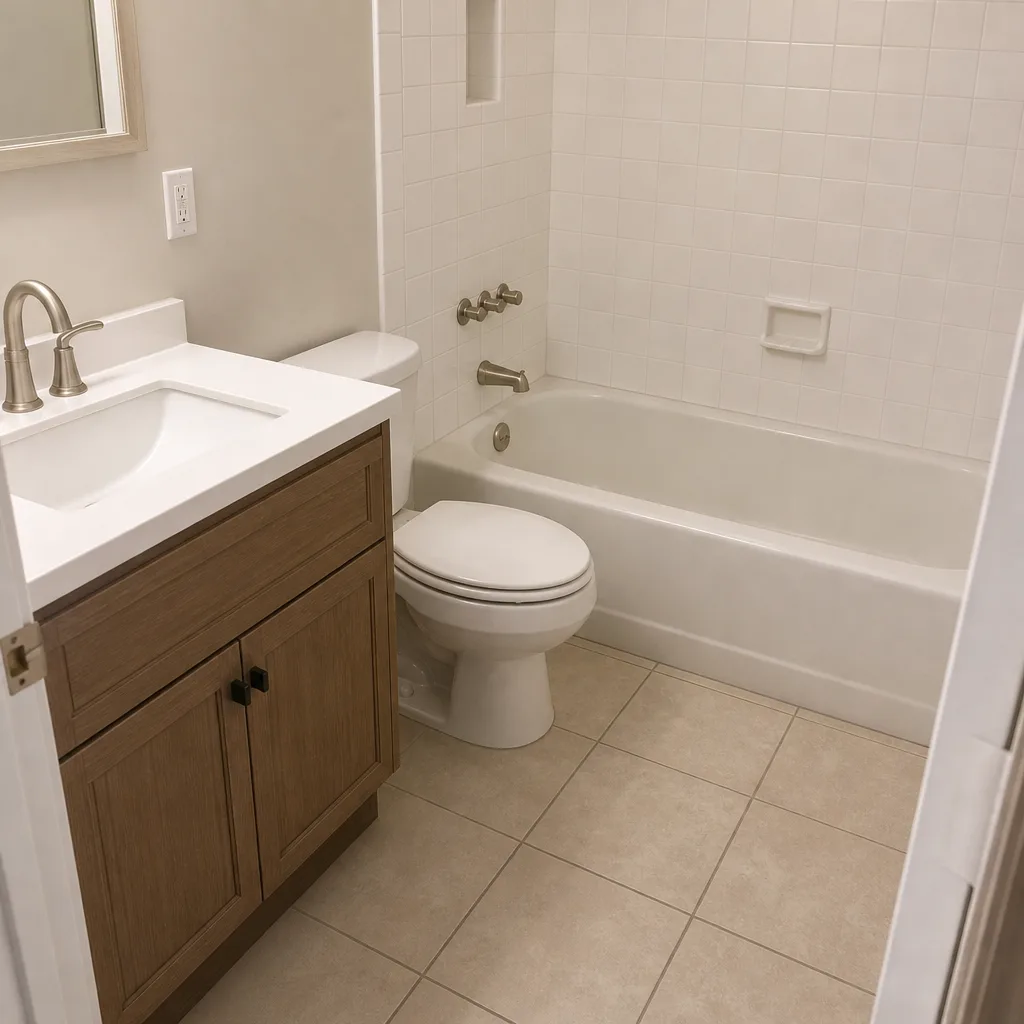
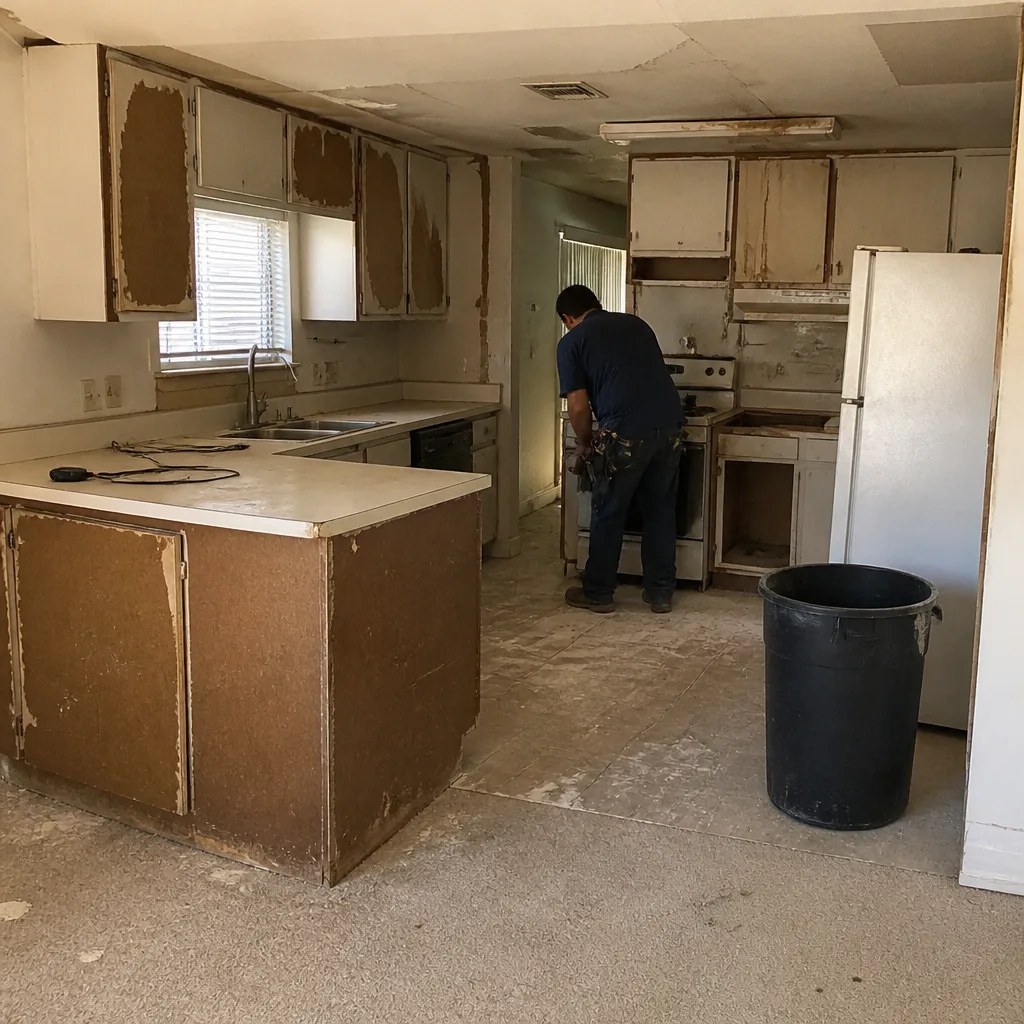
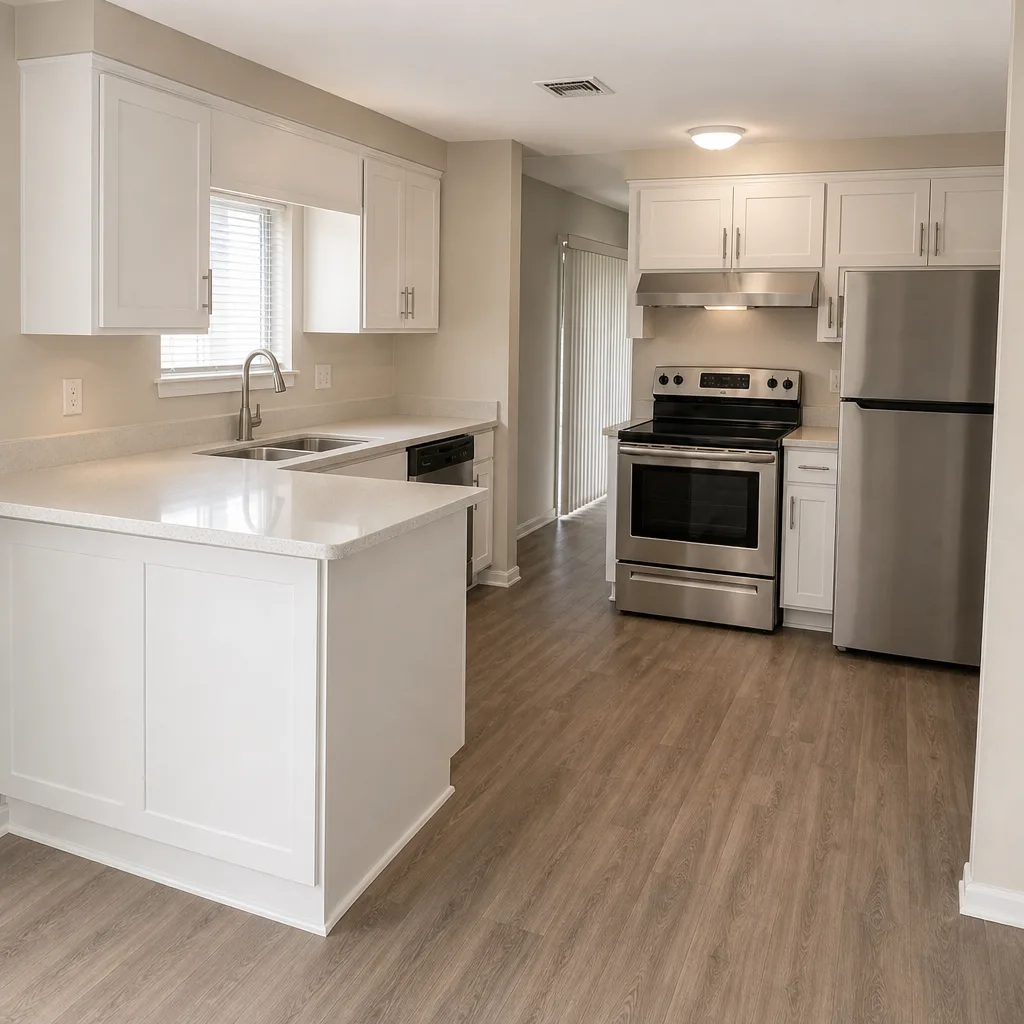
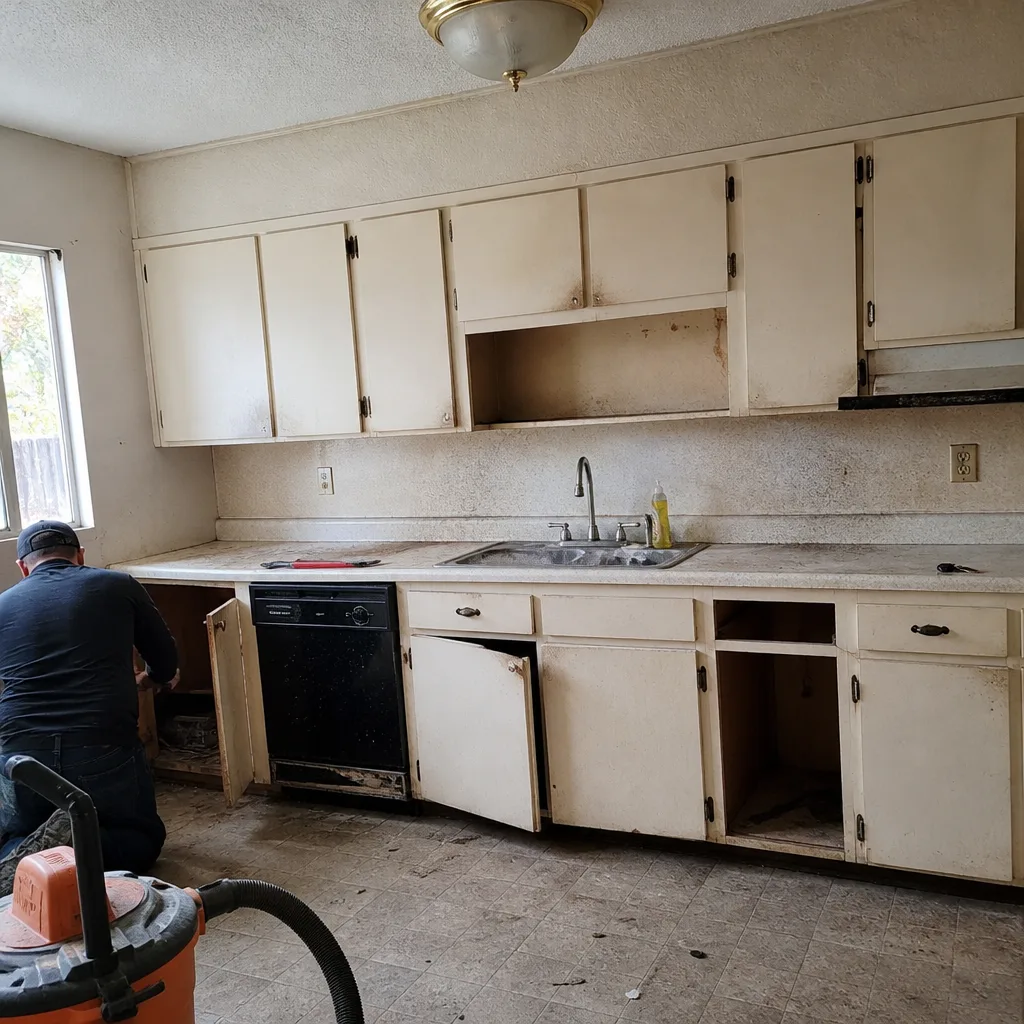
See the difference
 Before
 After
 Before
 After
 Before
 After
When to Call a Professional
Call a professional when the pavers rock underfoot, when a straight-line crack spans multiple pavers, or when a depression holds more than an inch of water after a rain. Those three signals point to base failure, and no amount of re-sanding will fix the cause. Call us too if the driveway is over 800 square feet and the joint sand is depleted – stripping and re-sanding at that scale is a crew job, not a Saturday. If you already have a written quote from another paver contractor and you want it reviewed line by line before you sign, that’s free. Rowan Construction Group Las Vegas offers free estimates in Las Vegas – call (833) 467-9123. Every quote is a flat written price with a written scope, and every visit includes a documented photo record of what we found and what we did.
Frequently Asked Questions
Every 18 to 24 months, not the 36 months that most product labels advertise. The UV load in Las Vegas breaks down penetrating sealer faster than northern-climate test data suggests. Test with a cup of water: if it doesn’t bead for at least 30 seconds, it’s time.
Professional re-sanding runs $1.50 to $2.50 per square foot, and a one-time penetrating sealer application runs roughly $0.75 to $1.50 per square foot. On a typical 600-square-foot driveway, that’s $900 to $2,400 total for both. A full reset with base repair is $8 to $14 per square foot, which is why maintenance pays for itself. Call (833) 467-9123 for an exact quote – estimates are free.
Efflorescence – calcium carbonate salts carried to the surface by evaporating moisture. If it brushes away and fades over a season, it’s cosmetic. If it recurs in the same spot and the paver underneath sounds hollow, water is entering the base and needs to be traced to its source before any cleaning.
Under 600 square feet with clean, dry joints, re-sanding is a reasonable DIY job. Above that scale, or if the old sand has to be stripped out with a shop vac and pick, hire it out – the labor is where the time and quality difference live.
It depends on the type. Hairline cracks that don’t open under pressure stay put for years. Any crack wider than a business card, or one that runs in a straight line across multiple pavers, will grow fastest during the first monsoon after it appears – that’s when a base repair is worth doing.
Permit requirements depend on the scope of the work and the jurisdiction – new driveway construction and certain changes to drainage often trigger one, while re-sanding on an existing field usually doesn’t. We’ll tell you upfront whether your project needs a permit and include it in the written scope when it does. Call (833) 467-9123 and we’ll confirm what applies to your address.
The Bottom Line
Las Vegas pavers fail because of the 70°F range between summer and winter, not because the pavers were bad. Inspect every spring and fall. Re-sand with a product rated above 110°F. Re-seal every 18 to 24 months. Watch irrigation overspray like a hawk. Distinguish surface efflorescence from subsurface. And treat straight-line cracks as a call to a contractor, not a “wait and see.” The maintenance list on a 600-square-foot driveway runs $900 to $2,400 a season-pair; the reset it defers runs $4,800 and up. That’s the whole argument.
When you’re ready for a written number, call (833) 467-9123 for a free estimate. Every job gets a flat price in writing before anyone picks up a tool, a documented photo record when the crew leaves, and the 365-Day Done Right Promise – if it isn’t done right, we make it right. Start with our Rowan Construction Group Las Vegas home for the full list of trades we cover.
Written by the team at Rowan Construction Group Las Vegas.