Last updated November 18, 2026
Free written scope consultation - allowances, timeline, and change-order rules on paper before a single trade is scheduled
Driveway & Pavers Troubleshooting: Common Problems and How to Fix Them
A sunken paver in the middle of a driveway is not a paver problem. It is almost always a base problem, and resetting that paver without fixing what’s underneath guarantees the same dip back within 18 months. The same logic runs through every failure we see in Las Vegas: the visible symptom points at the paver, but the cause lives in the caliche layer, the sand cure, or the edge restraint holding the field together. This guide walks through the three root causes behind most paver failures, how to diagnose which one you’re looking at, what each repair actually costs, and the dollar thresholds where targeted repair stops making sense and full removal starts. If you’ve got a dip, a crack, or a white stain spreading across your driveway, you’ll know what you’re dealing with by the end.
Quick Answer
Most driveway paver failures in Las Vegas come from three root causes: wrong base depth for the soil conditions, incomplete polymeric sand cure, or failed edge restraint. Each one produces a different visible symptom and a different repair scope, and each is cheaper to fix if you catch it before the second summer of monsoon heat. A paver that’s simply settled can usually be reset for a few hundred dollars; a base failure that’s pulled the whole field out of plane can run several thousand.
Styles & brands we work with
- Kitchen remodeling
- Bathroom remodeling
- Home additions & ADU
- Roofing
- Windows & doors
- Driveway & pavers
- Fence
Table of Contents
- The Three Root Causes Behind Most Paver Failures
- How to Diagnose Sinking Pavers: Base Failure vs. Caliche Blockage vs. Edge Pull-Out
- What Cracked Pavers vs. Cracked Joints Tell You
- How to Reset a Single Sunken Paver Without Disturbing the Field
- Efflorescence: Why Las Vegas Hard Water Leaves White Stains
- Targeted Repair or Full Removal? The Dollar Thresholds
- Preventing the Second Failure
- What Paver Repairs Cost in Las Vegas
The Three Root Causes Behind Most Paver Failures
Nearly every failed paver driveway in Las Vegas traces back to one of three problems, and the reason matters more than the symptom. The first is wrong base depth. Las Vegas sits on caliche in a lot of neighborhoods, and caliche is a cemented calcium-carbonate layer that doesn’t drain the way normal subgrade does. A base compacted to 4 inches that would hold up in a wet climate will shear under a 6-inch compacted base the moment water starts pooling on top of an impermeable layer. Proper base depth for caliche conditions is typically 6 to 8 inches, compacted in 2-inch lifts, and builders who skip that step leave the pavers sitting on a shelf that will settle.
The second cause is incomplete polymeric sand cure. Polymeric sand is the joint material that locks each paver to its neighbors. It has to cure undisturbed for 24 hours after a light mist, with no rain, no irrigation, no traffic. When a homeowner waters the lawn and pushes sprinkler overspray onto a fresh driveway, the sand skin hardens on top while the joint underneath stays loose. Six months later the joints are washing out at the first corner.
The third is failed edge restraint. Every paver field needs a fixed border, and in Las Vegas the sun and heat-cycle movement pull more edge failures than anything else. If the restraint has backed off an inch, the entire field spread with it.
How to Diagnose Sinking Pavers: Base Failure vs. Caliche Blockage vs. Edge Pull-Out
You can narrow the cause down before anyone touches a paver. Start with where the sinking is. A single dip in the middle of a field is usually a localized base failure – one spot where the subgrade wasn’t compacted or where caliche cracked and formed a void. Sinking along one edge or along the entire perimeter is almost always edge-restraint pull-out. Sinking that appears after every heavy monsoon season, in the same spots, is a caliche drainage blockage: water is pooling under the pavers because it has nowhere to go.
The second test is water behavior. Spray the driveway with a hose and watch where the water runs. If it pools in the dip for more than a few minutes, you either have a low spot that needs re-grading or an intact caliche layer trapping moisture below. If it runs off the edge and pours onto the adjacent turf or landscape bed, the field is still graded but the border isn’t holding.
The third test is the quarter test. Set a contractor’s level or a straightedge across the affected area. A quarter-inch gap under four feet is normal settlement. A half-inch or more means the field has lost grade, which points back to base.
Once you know which of the three you’re looking at, the repair scope narrows considerably. Here’s the decision tree we use:
- Dip in center of field, no edge movement: localized base failure. Reset pavers and re-compact that section only.
- Dip along one border, pavers spaced out at the edge: edge restraint pull-out. Re-set the border and re-fasten the restraint.
- Dips reappear after rain, no visible edge damage: caliche drainage blockage. Requires subgrade assessment before repairs.
What Cracked Pavers vs. Cracked Joints Tell You
A crack in the paver and a crack in the joint are two different conversations. When the paver itself cracks – a single paver split across the middle – the fault is usually in the paver, not the driveway. Hairline cracks from the manufacturing press, a paver that was laid over a high spot in the base and got point-loaded, or a paver that absorbed a dropped trailer hitch. One or two cracked pavers over ten years is normal wear. A dozen cracked pavers spread across the driveway within two years points at the base.
When the joint cracks or washes out – the sand between pavers disappears and the pavers start touching each other – the fault is almost always in the substrate or the sand. Polymeric sand that cured too fast, sand that was installed wet instead of dry, or a base that’s shifting enough to widen and close joints on the summer-to-winter heat cycle. In Las Vegas the swing from 110 degrees in July to the high 30s in January is enough to open and close joints more than most polymeric sand is designed to handle if the base isn’t stable. Techo-Bloc and Unilock pavers have a tighter dimensional tolerance than most commodity pavers, which helps – but the tolerance doesn’t fix a base that’s moving under the stone.
The practical rule: crack count in the stone tells you about material and installation touch, and crack count in the joints tells you whether you can repair at the surface or whether the base has to come up.
How to Reset a Single Sunken Paver Without Disturbing the Field
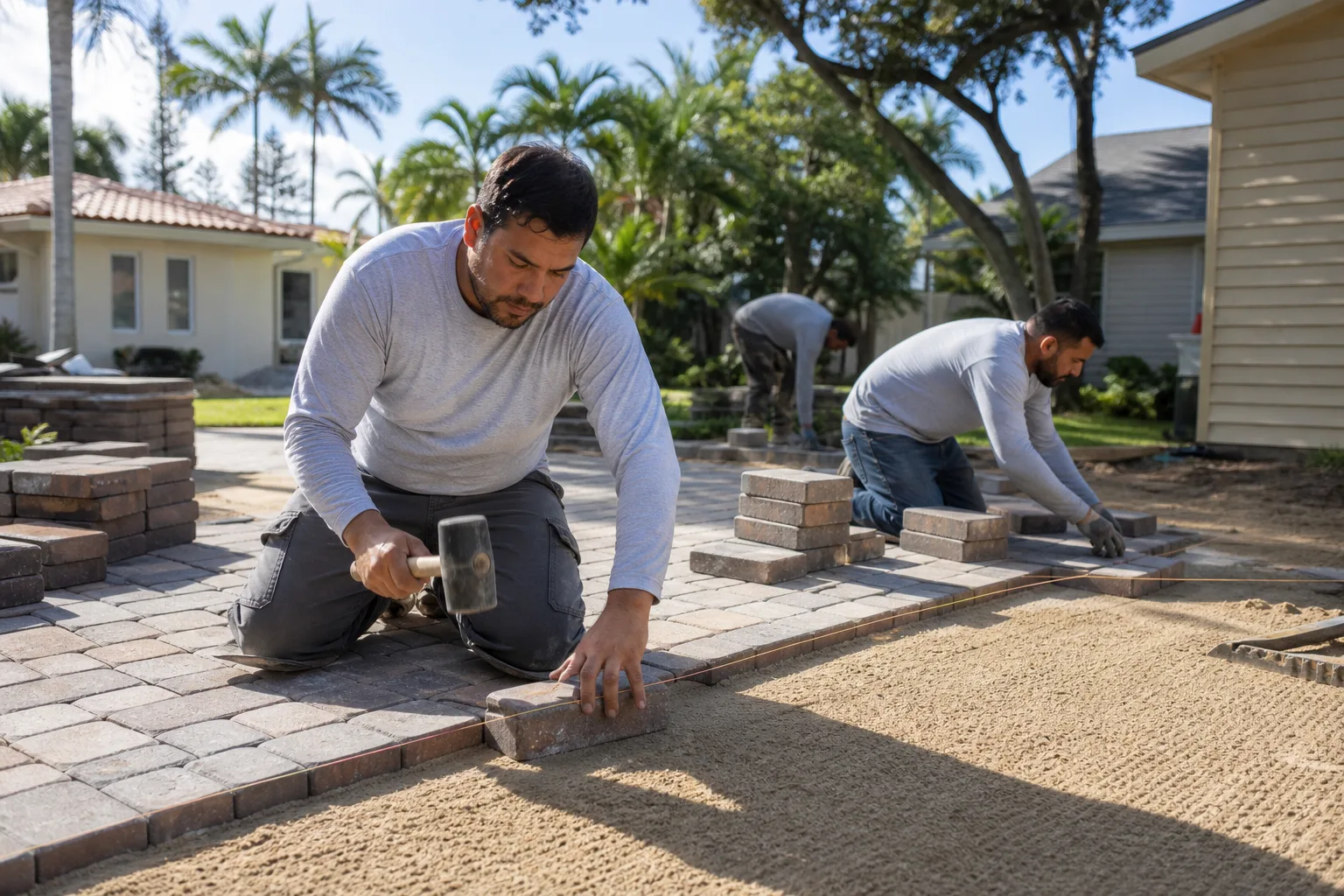
Resetting one paver is a small job with a specific sequence. Done wrong – just lifting the paver and dropping it back on a handful of sand – the paver sinks again within a few months, sometimes within a few weeks. The correct sequence recompacts everything the paver sits on. This is a repair a homeowner can do on a low-traffic walkway; on a driveway under vehicle load we recommend having it done right, but here’s the process so you understand what you’re paying for:
- Soak the joint line: mist the pavers around the target with water and let them sit for 10 minutes. This softens polymeric sand so the adjacent pavers don’t chip when you lift the target.
- Use two pry bars, not one: a single pry bar will tip the target paver and shear the paver next to it. Two flat pry bars on opposite sides lift it clean.
- Excavate to the base: remove the bedding sand down past the loose layer until you hit firm, compacted base. Do not just add sand – a paver sitting on loose sand will sink.
- Recompact the base in 2-inch lifts: a plate compactor, run in short passes, over the exposed bedding and base until the surface doesn’t yield under a knuckle press.
- Re-bed the paver: a 1-inch sand bedding layer, screeded flat, and the paver set back in plane with its neighbors using a straightedge to check.
- Refill the joint: dry polymeric sand swept in and misted until the joint is level, then left alone for 24 hours.
What most reinstall jobs skip is step four. That’s the step that determines whether the paver holds or comes back to the same dip next spring.
Efflorescence: Why Las Vegas Hard Water Leaves White Stains
Efflorescence is the white, powdery mineral bloom that appears on paver faces and joints. It’s salts migrating from inside the paver or the base and crystallizing at the surface as moisture evaporates. In Las Vegas, the water supply carries a higher mineral load than most of the country, and the combination of hard water, evaporation, and 5 percent annual humidity pushes efflorescence faster than paver manufacturers’ published guidance accounts for. A paver that never blooms in Seattle will bloom within two summers here.
On a new installation, some efflorescence in the first six months is normal – it’s the manufacturing moisture escaping. Efflorescence that appears after year two is usually water intrusion: the base is capturing moisture the surface can’t shed fast enough. That’s the caliche drainage problem again, and cleaning without fixing drainage only buys a few months.
For cleaning, the effective products are efflorescence removers built on mild acid – most of them are labeled “efflorescence remover” and contain hydrochloric or phosphoric acid at a low concentration. The wrong product is muriatic acid at full strength, which will etch the face of the paver permanently and take off any factory sealer. Cambridge Pavers’ guidance and most manufacturers’ lists name acid-based cleaners at the diluted ratio. Apply, dwell 3 to 5 minutes, scrub with a soft-bristle brush, and rinse thoroughly. Never let it dry on the surface.
If the efflorescence returns within weeks of a cleaning, the problem is moisture coming up from below. Cleaning will not fix that, and neither will sealing; the water has to be given somewhere to go.
Targeted Repair or Full Removal? The Dollar Thresholds
The decision to repair or replace comes down to how much of the driveway is out of plane. A single paver reset in a targeted repair typically runs $150 to $300 in the Las Vegas market, depending on how much base has to be exposed. A field of six to fifteen pavers being reset – what we’d call a localized section – runs $400 to $900. Edge restraint repair, where the border is re-set and re-fastened, runs $300 to $700 depending on linear feet. Efflorescence cleaning runs $300 to $600 for a typical two-car driveway.
Full removal and re-install for a two-car Las Vegas driveway (roughly 400 to 600 square feet) runs $6,000 to $12,000 depending on material choice and how much caliche has to be broken out of the subgrade. Professional installation of a new paver driveway with proper base depth, restraints, and polymeric sand cure for a 500-square-foot driveway runs $9,000 to $18,000 in the current Las Vegas market, with the spread driven mostly by paver selection (Tremron’s entry lines sit at the lower end, Techo-Bloc and Unilock at the upper).
The threshold we use: if more than 20 percent of the driveway has lost grade or if three or more repair visits have happened within five years, full replacement is the better financial bet. Below that, targeted repair makes sense. Also worth noting – if a full replacement is on the horizon, this is often a good moment to think about how the driveway ties into the rest of the exterior. We cover that in our overview of Driveway & Pavers in Las Vegas, and it’s common to pair driveway work with Fence Installation in Las Vegas if the side yard access is being re-cut anyway.
Preventing the Second Failure
Once a paver has been reset or the field has been repaired, the second failure is preventable – but only if the fix addressed the actual cause. Three things matter. First, the polymeric sand joint has to be re-sanded and re-cured correctly after any repair; if you can pick sand out of the joint with a fingernail after 48 hours, the cure was rushed. Second, the edge restraint has to be checked on any repair; we re-tap the restraint on every repair visit because a restraint that’s backed off will pull the repaired section out next.
Third, and most overlooked in Las Vegas – irrigation setbacks. If a lawn sprinkler is throwing water onto the paver surface, that water is going into the joints, and the joint is the point of failure. Adjusting a sprinkler head or adding a drip conversion is a $50 fix that prevents $500 of joint re-sanding.
The 365-Day Done Right Promise exists because repairs fail; if a repaired section sinks again within a year of the crew leaving, we come back. That’s under our guarantee, and the details are on the terms page, not an asterisk. We don’t ship a repair that’s just a lifted paver top-dressed with sand; the process above is what we run on every reset.
What Paver Repairs Cost in Las Vegas
Prices below are for a typical two-car driveway in Las Vegas. If your driveway runs larger, or is on a slope that complicates the base work, expect the upper end of each range.
- Single paver reset: $150 to $300
- Localized section reset (6 to 15 pavers): $400 to $900
- Edge restraint repair: $300 to $700
- Efflorescence cleaning (400 to 600 sq ft): $300 to $600
- Full removal and reinstall (400 to 600 sq ft): $6,000 to $12,000
- New paver driveway with fresh installation (500 sq ft): $9,000 to $18,000
Every project we quote comes with a written flat price and a written scope before anyone picks up a tool – under Clause 1 of The Haven Standard, that’s the whole point of the quote. Bring a competing estimate and we’ll review it line by line at no charge, as part of our Free Second Opinion offer. If you’re comparing a full-replacement bid against a repair bid, that second opinion is where the numbers usually settle. For homeowners looking further out at what an exterior package looks like, our overview of Home Additions & ADU in Las Vegas shows how a driveway scope fits into a larger site plan, and our Rowan Construction Group Las Vegas home page lists every trade we run.
Common Mistakes to Avoid
- Top-dressing a sunken paver with sand. Sand covers the symptom for three months and adds to the base failure underneath – the paver will sink deeper, not stay level. The base is what failed; fix the base.
- Watering new polymeric sand instead of misting it. A hard spray breaks the sand skin, exposes loose sand, and washes the joint out before the cure is done.
- Cleaning efflorescence with full-strength muriatic acid. It etches the paver face permanently. Diluted at the label ratio, it’s safe and effective; at full strength on a driveway, it’s a full replacement.
- Ignoring a single failing edge restraint. A backed-off restraint moves an inch and the whole field follows within a season. It’s the cheapest repair on this page and the most expensive to skip.
- Sealing a driveway that’s still efflorescing. Trapped moisture reroutes to the surface elsewhere and the bloom comes back harder. Clean, dry, cure, then seal.
- Letting sprinkler overspray hit a new install. In Las Vegas hard water leaves mineral deposits on the paver face inside a month. Adjust the heads before the paver crew leaves the site.
- Choosing pavers by price alone and skipping the base spec. Techo-Bloc and Cambridge pavers will fail the same way a commodity paver fails if they’re on 4 inches of base over caliche. The stone is the visible part; the base is what you’re buying.
See the difference
 Before
 After
 Before
 After
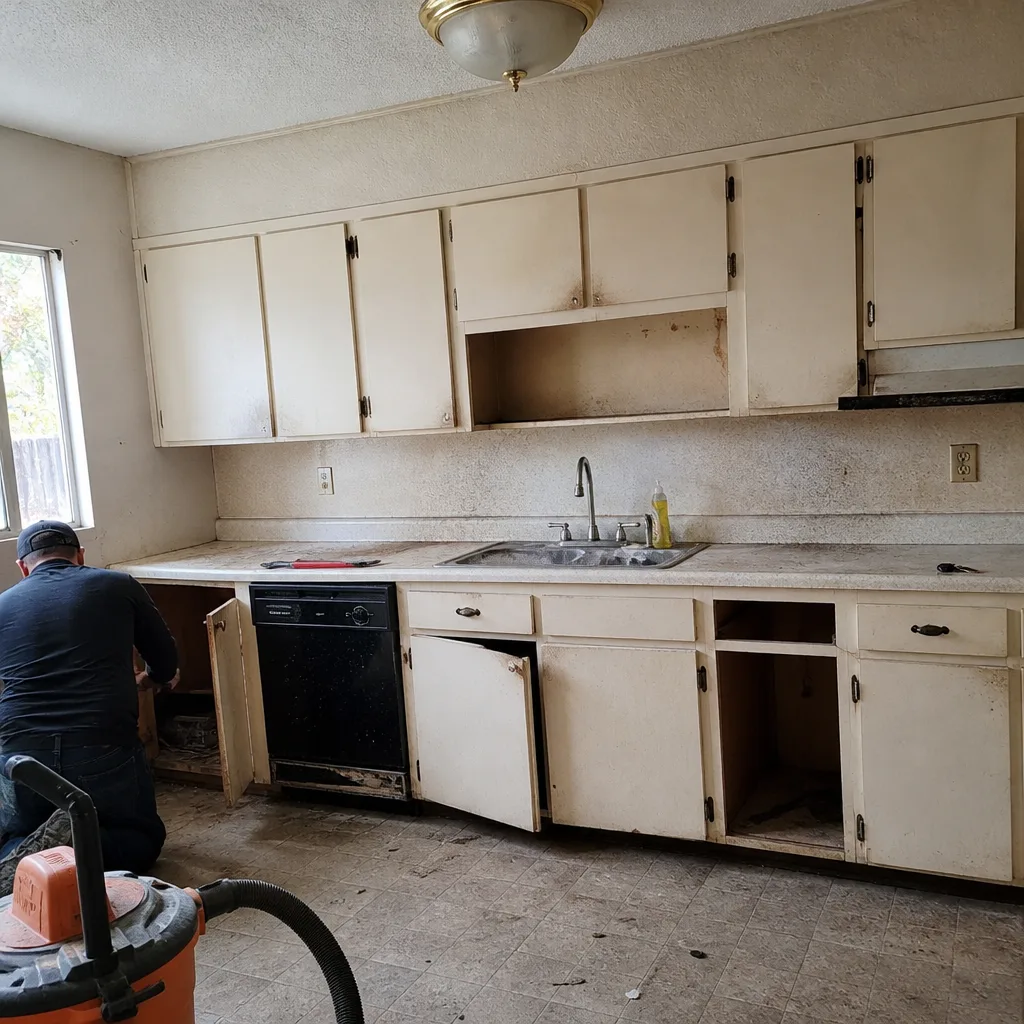 Before
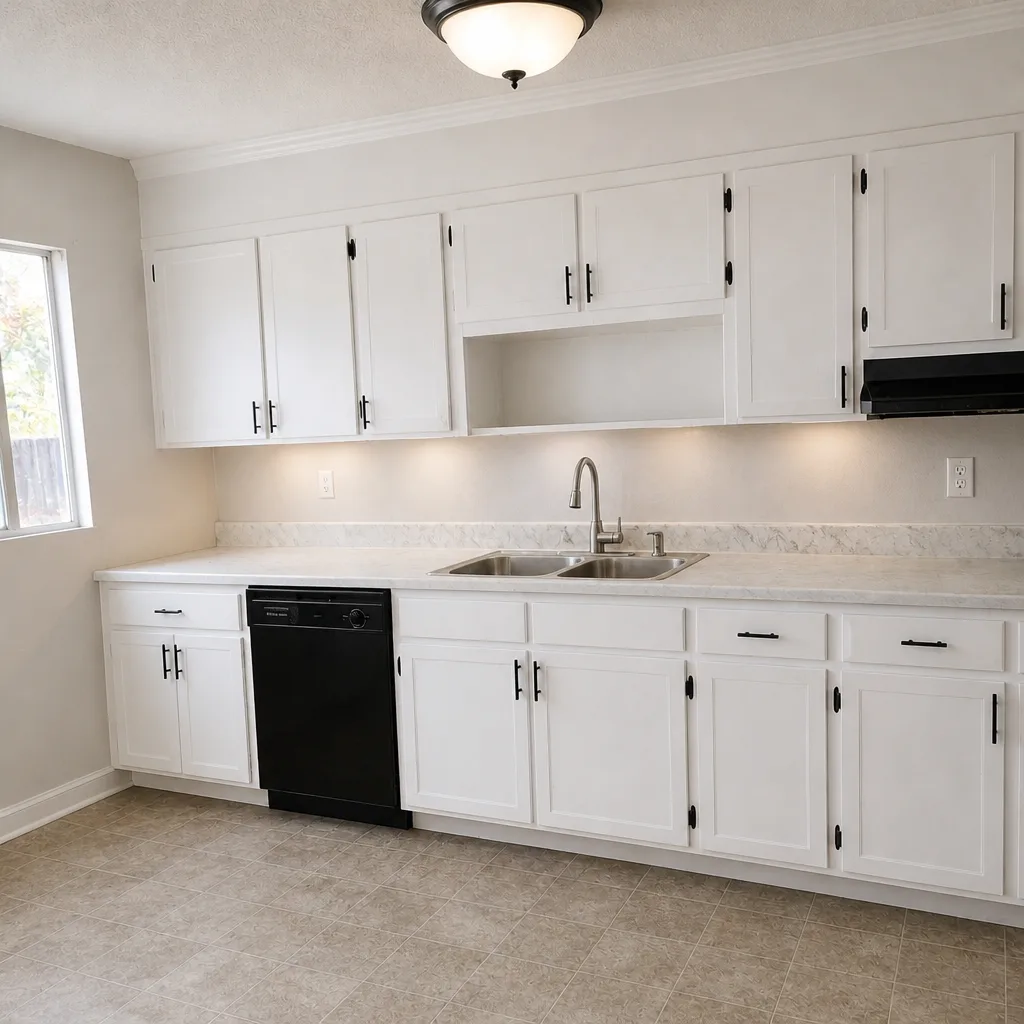 After
When to Call a Professional
Most single-paver resets can be a homeowner project on a low-traffic area; base failures, edge-restraint repairs on a driveway under vehicle load, and any sinking over caliche should be diagnosed by someone who can evaluate the subgrade. Specifics that warrant a call: dips that return after rain, a driveway that’s lost grade across more than a quarter-inch in four feet, efflorescence that returns within weeks of cleaning, three or more cracked pavers in one area, or a repair that failed the first time it was attempted. Any of those scenarios means the underlying cause wasn’t addressed. Rowan Construction Group Las Vegas offers free estimates in Las Vegas – the price comes in writing before work starts, and every visit includes a documented photo record of what was found and what was done. Call (833) 467-9123 to schedule your free estimate.
Frequently Asked Questions
Driveway paver repair in Las Vegas typically runs $150 to $300 for a single-paver reset, $400 to $900 for a localized section, and $300 to $700 for edge restraint repair. Full removal and reinstall runs $6,000 to $12,000 for a typical two-car driveway. Call (833) 467-9123 for an exact quote – estimates are free.
Sinking in the middle of the driveway is almost always a localized base failure, usually where the subgrade wasn’t compacted or where caliche cracked and formed a void. Resetting the paver without recompacting the base guarantees the same dip back within 18 months. Call (833) 467-9123 and we’ll diagnose it before anyone picks up a tool.
No. The written price is delivered before any work starts, and no change proceeds without a signed change order – under The Haven Standard, that’s the discipline that keeps projects within a few percent of the agreed number. Call (833) 467-9123 to schedule your free estimate.
In most cases, yes. If less than 20 percent of the driveway has lost grade and the repair history is light, targeted repair is the better financial decision. Beyond that threshold, full replacement starts to cost less over a ten-year window. Call (833) 467-9123 to get a written diagnosis.
Efflorescence on Las Vegas pavers is removed with a diluted acid-based efflorescence remover, applied, allowed to dwell 3 to 5 minutes, scrubbed, and rinsed thoroughly. Full-strength muriatic acid etches the paver face permanently and shouldn’t be used. If the stain returns within weeks, the cause is moisture from below and the drainage has to be addressed. Call (833) 467-9123 for a free assessment.
Efflorescence keeps returning when moisture is coming up from the base rather than evaporating off the paver surface. In Las Vegas, the hard water supply and a caliche layer that traps water combine to push salt bloom faster than most paver surfaces in other climates. Cleaning alone doesn’t fix it; the water needs a path to drain. Call (833) 467-9123 to have the subgrade checked.
The Bottom Line
Almost every paver failure in Las Vegas comes back to three causes: base depth under caliche, polymeric sand cure, or edge restraint. The symptom is never the cause, and the repair cost tracks directly to which one you’re looking at – a $200 single reset or a $10,000 removal. Reset a sunken paver by recompacting the base in 2-inch lifts, not by adding sand on top. Clean efflorescence with a diluted acid product, not full-strength muriatic. And replace rather than repair when more than 20 percent of the driveway has lost grade. Each of those calls is cheaper when made before the second summer.
If you’ve got a dip you can’t explain, a stain that keeps coming back, or a repair that failed once already, call Rowan Construction Group Las Vegas at (833) 467-9123 for a free estimate. The price comes in writing before work starts, the crew is background-checked and uniformed, and every visit includes a documented photo record of what was found and what was done. A live person answers the phone around the clock, and if you’ve got a competing estimate, we’ll review it line by line at no charge as part of our Free Second Opinion offer.
Written by the team at Rowan Construction Group Las Vegas.