Last updated November 18, 2026




Free written scope consultation - allowances, timeline, and change-order rules on paper before a single trade is scheduled
Fence Installation Maintenance Schedule: What to Do and When
Manufacturers of wrought iron fence paint publish a recoat interval of roughly every three years. That number was written for coastal climates where humidity moderates temperature swings and soil chemistry stays closer to neutral. In Las Vegas, it’s the wrong interval by a wide margin. Alkaline desert soil meeting the grade line, plus 300-plus sunny days a year baking the same metal, pushes rust initiation at the base of a wrought iron post onto a roughly 12-month inspection cycle. Miss that window twice and you’re repairing pitted steel instead of scuffing and recoating it.
What follows is the maintenance calendar we’d hand a Las Vegas homeowner if we could only hand them one page: a month-by-month sequence built around the two events that actually drive fence failure here, the July-September monsoon wind season and the April-October peak UV window. You’ll get the pre-monsoon inspection list, the post-monsoon repair priorities, wood sealing schedules split by which side of the fence gets irrigation, and the specific prep steps for grade-line rust.
Quick Answer
A Las Vegas fence maintenance schedule runs on two anchors, not four seasons: a pre-monsoon inspection in June (post footings, gate hardware, panel fasteners) and a post-monsoon repair pass in October, with UV-driven work like wood sealing, wrought iron recoating, and vinyl inspection slotted between April and October. Wrought iron needs paint inspection every 12 months in Las Vegas, wood needs oil-based sealing every 12-18 months on the dry side and more often on an irrigated side, and vinyl needs a UV/chalking check each spring. Everything else is a small monthly walk-around.
Styles & brands we work with
- Kitchen remodeling
- Bathroom remodeling
- Home additions & ADU
- Roofing
- Windows & doors
- Driveway & pavers
- Fence
Table of Contents
- The June Pre-Monsoon Inspection Checklist
- The October Post-Monsoon Repair Priority List
- Wood Fence Oiling and Sealing in Desert Conditions
- Wrought Iron and Steel: Rust, Prep, and the 12-Month Cycle
- Vinyl Fence UV Maintenance: Chalking and Oxidation
- The Monthly 10-Minute Walk-Around
- Common Mistakes to Avoid
- Frequently Asked Questions
The June Pre-Monsoon Inspection Checklist
Monsoon season in Las Vegas brings the wind before it brings the rain. Gusts that roll through the valley in July and August do their damage to fences that were already loose in June, which is why the inspection matters more than any repair made after the storm. This is the single most valuable hour a Las Vegas homeowner can spend on fence upkeep all year.
Work through these three items in order, because each one predicts a different failure mode:
- Post footing exposure check. Dig down 4-6 inches at the base of every post with a trowel or hand. You’re looking for soil that has eroded away from the concrete collar, or concrete that’s cracked, tilted, or sitting proud of the soil. A post with an exposed or undermined footing is the one that snaps in a 50 mph gust. In newer Las Vegas subdivisions where lots were graded and backfilled, footing erosion is common within the first several summers.
- Gate hardware tension. Open and close every gate and watch the hinge line. Sag is a footing or hinge problem, not just a latch problem. Check that hinge screws bite firmly; on wood gates, a loose hinge screw in sun-dried cedar or redwood is a two-minute fix in June and a torn gate panel in August. Confirm the latch strikes cleanly without lifting the gate.
- Panel fastener tightness. Walk the fence line and test the fasteners holding panels to posts and rails. On wood fences this means checking for backed-out screws and split rails; on vinyl and composite it means checking for fasteners that have wallowed out their holes. Loose panels are sails in monsoon wind, and a panel that catches wind transfers load straight into the posts.
Write down what you find. A photo record from June is what lets you tell in October whether a gate sagged further or a post shifted. Our crews take a documented photo record on every visit for exactly this reason, and a homeowner can do the same thing with a phone.
The October Post-Monsoon Repair Priority List
By early October the monsoon has passed and you can see what it did. The mistake is treating every bit of storm damage as equally urgent, or treating all of it as something that can wait until spring. In Las Vegas the split is clear: concrete and footing work wants to happen before winter, and it can happen comfortably because October and November ground temperatures are still workable, while cosmetic issues can safely sit until March or April without getting worse.
Address before winter:
- Any post that shifted, tilted, or showed a cracked footing collar. Loose posts get worse with winter wind and the repair is cheaper while the surrounding soil is still easily broken out and repoured.
- Torn or separated panels and gates that no longer latch. These are security items, and the fix is mechanical, not weather-dependent.
- Grade-line rust that has broken through paint on wrought iron. October is the right month to prep and recoat, because the 12-month cycle runs from this pass and you want the cool, low-humidity window for paint cure.
- Split rails or posts on wood fences where water can get into end grain. End-grain water intrusion is slow this time of year, but a split left through winter opens further with each temperature swing.
Can safely wait until spring: faded or chalky vinyl panels that are still structurally sound, cosmetic stain touch-ups on wood that isn’t taking on water, and gate hardware that’s tight but due for replacement. None of these worsen materially over the winter months in Las Vegas, where winter is mild and dry.
If the post-footing damage is extensive, replacing a run rather than patching it is often the honest call. Our Fence Installation in Las Vegas service covers that decision with a written scope and flat price before any work starts, which is more useful than a verbal “we’ll see once we dig.”
Wood Fence Oiling and Sealing in Desert Conditions
Wood fencing in Las Vegas fails from the inside out, and the inside is where the water goes. The desert’s low humidity and intense sun pull moisture out of the wood fast, opening checks and splits along the grain. Those splits become the path for the one thing the desert does deliver in volume: irrigation overspray and drip-line moisture on the yard side.
The consequence is that the two sides of the same fence need different schedules.
- The irrigated-yard side (typically the inside, facing your landscaping): this face sees regular moisture from sprinklers, drip emitters, and lawn watering. Wood here cycles wet-dry constantly, which is what accelerates rot at the bottom rail and post base. Oil-based penetrating sealers should go on every 12-18 months on this side, and the bottom 12 inches of every post and bottom rail deserve a closer look each spring.
- The desert-dry side (typically the street-facing or neighbor-facing side): this face sees almost no liquid water and mostly fights UV. Oil-based sealers here can last a bit longer between coats, closer to 18-24 months, but the UV exposure means the finish fails by fading and flaking rather than by wearing thin.
Oil-based penetrating sealers generally hold up better than film-forming water-based products in Las Vegas because they soak into the wood and move with it as it expands and contracts; film-forming finishes crack under the same temperature swings. The best application window is spring (March-April) or fall (October), when temperatures are moderate and the finish has time to penetrate before the summer heat flashes off the carrier. Never seal over wood that’s already checked or split without addressing the split first.
Wrought Iron and Steel: Rust, Prep, and the 12-Month Cycle
Wrought iron in Las Vegas rusts from the bottom up. The grade line is where alkaline soil, irrigation splash, and standing moisture from monsoon runoff all meet the coating, and that’s where the first rust blister forms – almost always on the post base, not on the decorative pickets up high.
Paint manufacturers writing for general markets recommend recoating every three years. In Las Vegas that’s too long by a factor of about three. On a 12-month inspection cycle, here’s the sequence for grade-line corrosion:
- Inspect and probe in late spring. Run a putty knife along the base of every post and the bottom rail. If the paint is intact and there’s no bubbling, you’re done for the year – a light scuff and a recoat within the next 12 months.
- Remove loose paint and rust. Wire brush or sand down to bare metal in the affected area. Any rust left under new paint keeps spreading.
- Treat with a rust converter. A phosphoric-acid-based rust converter chemically converts iron oxide into a stable, paintable surface. This is the step most homeowners skip, and it’s the one that actually stops the corrosion rather than temporarily hiding it. Apply to bare, brushed metal per the product label; most need 24 hours to cure before topcoat.
- Prime and topcoat. Use a primer rated for bare or converted metal, then a topcoat formulated for high-UV exposure. Finishes billed as UV-stable or exterior metal coatings hold up better against 300-plus sunny days than general-purpose enamel.
The same grade-line rule applies to steel gate frames and metal posts supporting wood or vinyl panels. Check the base of any metal element on the 12-month calendar and you’ll catch corrosion before it needs a cut-and-weld repair.
Vinyl Fence UV Maintenance: Chalking and Oxidation
Vinyl fencing doesn’t rot, but it does fade, and in Las Vegas it fades faster than the product literature suggests. The white chalky film that shows up on a sun-facing panel is the surface of the vinyl breaking down under UV. That chalking is cosmetic at first. Left long enough, it becomes oxidation that reaches deeper into the material and stops cleaning up.
How to tell the difference:
- Surface chalking: a white powder wipes off on your finger, and a wash with mild soap and a soft brush restores a uniform color. This is cleanable and preventable – a spring wash and a UV-blocking vinyl protectant each year will slow the process considerably. Do not use abrasive pads or harsh solvents, which scratch the surface and create new places for UV to attack.
- Depth oxidation: the fading doesn’t lift with washing, the surface feels chalky or slightly rough, and the color is measurably lighter in patches that face the afternoon sun. Once the fade goes deeper than the surface layer, no cleaner brings it back; at that point you’re looking at panel replacement rather than restoration.
Inspect vinyl panels each spring, especially the panels that face west and take the peak afternoon sun. The sun-facing side usually shows the problem first, and replacing a handful of panels is far cheaper than replacing the whole run once the fade is general. Las Vegas summers are the test for any vinyl product, so a UV-stable grade of vinyl lasts noticeably longer than a low-cost one.
The Monthly 10-Minute Walk-Around
The whole schedule above works only if nothing surprises you between the June and October passes. Ten minutes once a month catches most of it. Walk the fence line and check:
- Any post that moves when you push on it.
- Any panel that rattles or flexes in wind.
- Gates that drag, sag, or fail to latch.
- New rust blisters, especially at grade line.
- Wood splits or checks that have widened since last month.
- Vinyl panels that look visibly paler than their neighbors.
- Sprinkler heads aimed at the fence line (a common trigger of wood rot in Las Vegas yards).
Keep a couple of notes each month. By the time June arrives, you’ll know which sections are actually moving and which are stable, and the pre-monsoon inspection becomes a targeted check rather than a full survey.
Common Mistakes to Avoid
- Following the manufacturer’s 3-year recoat interval on wrought iron. It was written for milder climates. In Las Vegas, grade-line rust starts within 12-18 months, and treating it on a 3-year cycle lets pitting begin before you ever notice.
- Sealing wood on a hot afternoon. Oil-based sealers and Las Vegas summer heat don’t mix; the finish flashes off before it penetrates, and you get a patchy coat that fails within a season. Seal in spring or fall, in the morning.
- Skipping the post footing check. Homeowners inspect the pickets and rails and never dig down. The footing is what holds the fence up in a monsoon gust, and it’s the one thing a visual walk-by won’t reveal.
- Painting over rust without a converter. Paint over active rust traps moisture against the metal and the corrosion keeps spreading underneath. Sand, convert, then prime and topcoat.
- Letting vinyl chalk go unwashed for seasons. Surface chalking cleans up; depth oxidation doesn’t. A spring wash buys years of life on a vinyl run.
- Ignoring sprinkler overspray on the fence line. A misaimed head wetting a wood post base every morning is one of the most common causes of premature rot in Las Vegas yards, and it’s a five-minute fix.
- Patching a run that needs replacing. If several posts have failed footings in the same section, patching one at a time costs more over a few seasons than a single replacement. Get a written scope before committing either way.
See the difference
 Before
 After
 Before
 After
 Before
 After
When to Call a Professional
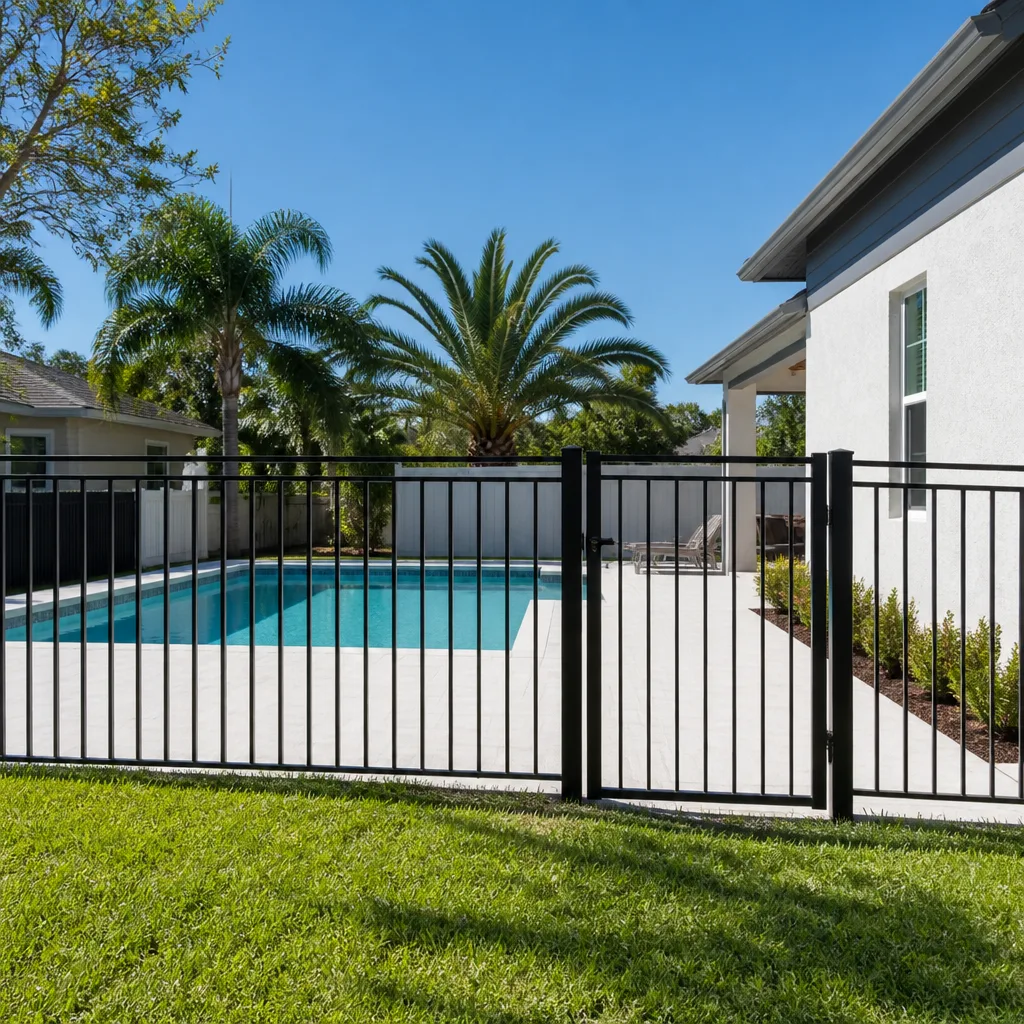
Most of the calendar above is homeowner work: inspection, washing, sealing, and touch-up painting. Call a professional when any of these show up. Multiple posts with failed or undermined footings. A fence section leaning after monsoon wind where the lean is structural, not just a loose panel. Rust that’s pitted through the steel or reached a welded joint. Gates that won’t stay aligned after hardware adjustment. Wood posts rotted at the base below grade. And any fence where you’re deciding between repair and replacement and want an honest number rather than a guess.
Companion work matters too. A fence that borders a driveway or patio usually meets pavers at grade, and footing repairs often go hand in hand with Driveway & Pavers in Las Vegas work to keep the transition clean. Rowan Construction Group Las Vegas offers free estimates in Las Vegas and a written flat price with scope before any work begins. Call (833) 467-9123 to schedule yours.
Frequently Asked Questions
Inspect the paint every 12 months, not the 3-year interval most manufacturers recommend. Las Vegas’s alkaline soil contact at grade and 300-plus annual sunny days accelerate rust at post bases, so an annual inspection in late spring catches corrosion while it’s still a scuff-and-recoat fix. Call (833) 467-9123 for a free estimate if you’re seeing pitting or bubbled paint at the grade line.
Spring (March-April) or fall (October) is the right window. Seal the irrigated-yard side every 12-18 months and the dry desert-facing side every 18-24 months, using an oil-based penetrating sealer. Skip sealing on a hot afternoon; the finish flashes off before it soaks in. Call (833) 467-9123 for a written quote on sealing or repair.
Yes, mostly through wind before rain. Monsoon gusts find any loose post, panel, or gate and load it hard. That’s why the June pre-monsoon inspection, focused on post footings, gate hardware, and panel fasteners, prevents more damage than any October repair. Call (833) 467-9123 for a free estimate if a post or panel shifted.
That’s UV chalking, the surface of the vinyl breaking down under sun exposure. A spring wash with mild soap and a soft brush restores surface chalking. If fading doesn’t lift with washing and the surface feels rough, you’re into depth oxidation and panel replacement is the honest call. Call (833) 467-9123 for a written quote on replacement panels.
First check whether the posts themselves are sound and still set in concrete. A panel that popped off intact is usually a fastener repair. A post that’s tilted or lifted out of its footing is a footing repair or replacement. Call (833) 467-9123 to schedule a free estimate; a written scope will tell you which one you’re facing.
Inspection, washing, sealing, and touch-up painting are reasonable homeowner work. Structural repairs like resetting footings, replacing rotted posts, cutting and welding rust-pitted steel, and replacing multiple panels are best handled by a professional with a written scope. Call (833) 467-9123 for a free estimate.
The Bottom Line
Las Vegas fences don’t follow a four-season calendar. They follow two anchors: the June pre-monsoon inspection that prevents wind damage, and the October post-monsoon pass that repairs what the wind did before winter sets the ground. Around those, wrought iron gets a 12-month paint and rust inspection rather than the manufacturer’s 3-year cycle, wood gets oil-based sealing on a side-by-side schedule, and vinyl gets a spring UV check. Do the monthly walk-around, keep a photo record, and the big-ticket failures stop showing up. When a repair gets structural, get a written number first.
If your October pass turns up more than a weekend of work, or you want a second set of eyes on a repair estimate, we offer free estimates and a free second opinion on any written quote, reviewed line by line. Whether you’re moving on fence repair now or planning ahead, the Rowan Construction Group Las Vegas home page lays out what we cover across all seven trades. Our technicians bring up to 19 years of experience, every crew member is background-checked and uniformed, a live person answers calls around the clock, and every visit includes a documented photo record as standard. Call (833) 467-9123 for your free estimate.
Written by the team at Rowan Construction Group Las Vegas.