Last updated November 18, 2026


Free written scope consultation - allowances, timeline, and change-order rules on paper before a single trade is scheduled
Fence Installation Warning Signs Every Homeowner Should Know
Here’s the part most homeowners don’t hear until it’s too late: a fence installed without a utility locate can sever a gas or water line and turn a $4,000 project into $10,000 – $50,000 in repairs. Nevada law requires the locate call before anyone breaks ground. If your contractor hasn’t mentioned Nevada 811 by name, that silence is the first warning sign. We’ve walked behind enough failed fences in Las Vegas to know that almost every problem announces itself in the paperwork, the permit process, and the concrete mix ratio long before the first post goes in. This guide turns those red flags into plain checkpoints you can use before you sign anything.
Quick Answer
The biggest warning signs in a fence installation are a contractor who can’t show you a pulled permit, a quote with no concrete bag count per post, “galvanized hardware” with no G90 or G185 spec grade, wide post spacing disguised as standard, and a verbal-only change order process. In Las Vegas, add one more: no mention of the Nevada 811 utility locate before excavation. Any one of these is worth asking about. Two or more together is your cue to walk.
Styles & brands we work with
- Kitchen remodeling
- Bathroom remodeling
- Home additions & ADU
- Roofing
- Windows & doors
- Driveway & pavers
- Fence
Table of Contents
- The Permit Omission Test: Verifying What Your Contractor Actually Filed
- Utility Locates and the Nevada 811 Requirement
- Concrete Mix Red Flags: The 60-Pound Bag Rule
- Post Spacing Irregularities and On-Site Quality Signals
- Reading the Material List for Brand Substitution Risk
- What a Verbal-Only Change Order Process Signals
- How Las Vegas Climate Stress Exposes Shortcuts
The Permit Omission Test: Verifying What Your Contractor Actually Filed
Fence projects above a certain height and length in unincorporated Clark County require a building permit, and fences over the height limit in the City of Las Vegas require a permit as well. If your contractor says a permit “isn’t needed” without checking, that’s not confidence – it’s a shortcut. Pulling a permit costs the contractor a few hundred dollars and a couple of hours. Skipping it costs you the ability to sell your house without a correction notice from a buyer’s inspector, and it can force a full removal if a neighbor files a code complaint.
Here’s how to verify it yourself, in this order:
- Ask your contractor for the permit number and the jurisdiction that issued it – County or City, which are different portals.
- Go to the Clark County Department of Building & Fire Prevention public portal (or the City of Las Vegas Accela portal, depending on where you live) and search by address or by permit number.
- Confirm the permit scope matches the fence described in your written quote – height, linear feet, material type, and footing detail.
- Check the inspection history. A permit with a final inspection signed off means the fence was inspected once it stood. No inspection log means the permit was pulled and abandoned.
- Ask for the inspection sheet on completion. If your contractor can’t produce one, the permit was likely pulled to satisfy a neighbor and never inspected.
In Las Vegas, this matters even more because the Clark County development code and individual HOAs often layer their own fence height and material restrictions on top of the building code. A contractor who doesn’t know whether you’re in county or city jurisdiction is a contractor who has never had a permit rejected – because they don’t pull them. That’s the tell.
Utility Locates and the Nevada 811 Requirement
Nevada 811 is the free, state-mandated system that marks underground utilities – gas, water, electric, fiber – before anyone digs. The call is required by law, it’s free to the contractor, and it takes 48 hours for marks to be completed. There is no legitimate reason a fence contractor skips it. Yet the shortcut exists because the marks cost two days of schedule, and two days of schedule costs a crew’s productivity.
What the consequences look like when the locate is skipped:
- Gas line strike: Southwest Gas responds, evacuates the block, and the repair bill lands on the excavator or the homeowner. In a metro core subdivision built in the 1990s or 2000s – think Summerlin or Green Valley – the gas service lateral often runs shallower than a post hole.
- Water service strike: The main from the meter to the house can sit 18 inches down in older parts of Las Vegas. A post dug at 24 inches goes right through it.
- Fiber or irrigation lines: CenturyLink and Cox fiber laterals, and the irrigation mains that run along the rear property line in newer subdivisions, are not always on plat maps your contractor can read.
Ask your contractor to forward you the 811 ticket number. It arrives by email after the call and includes the address, the request date, and the scheduled mark completion. If they can’t produce a ticket, they didn’t call. That is a hard stop.
Concrete Mix Red Flags: The 60-Pound Bag Rule
A single 60-pound bag of concrete mix per post is the minimum spec for setting a 4×4 post in a 10 – 12 inch diameter, 24 – 30 inch deep hole – which is standard for a 4-foot fence in Las Vegas soil. For a 6-foot privacy fence, most engineered footings call for 80 lb. bags, sometimes two per post. When a crew “eyeballs” the concrete or skips the bag count entirely, they are under-engineering every single footing in your fence with no record of what went in.
We see this play out in Las Vegas with the summer wind events. A fence with underfilled footings stands fine through the calm months and then folds at the base during a monsoon microburst in July or August. The post doesn’t break. The whole post pulls clean out of the ground because there wasn’t enough concrete mass to hold it.
Signs the concrete is being skipped or watered down:
- No bag staging on site. A 100-foot fence at 8-foot spacing needs about 13 posts. That’s 13 to 26 bags of mix. If the crew shows up with two bags and a wheelbarrow, do the math.
- Concrete mixed by eye in a bucket. Without a proportion spec, the water-to-mix ratio is whatever gets the concrete to flow easiest, which is the weakest mix.
- Footings finished below grade with no mound. A properly crowned footing sheds water. A flat-to-grade footing collects it, and in Las Vegas, that means the soil around the post stays damp for a day or two after rain, which is when the post rots.
- Post bases set with expanding foam instead of concrete. Foam is a valid product for fence post bases in some manufactures’ specs, but if you were quoted concrete and got foam, that’s a spec substitution that should be in a signed change order, not a surprise.
Ask for a written footing spec before work starts: hole diameter, depth, bag count, and mix type. If the contractor can’t articulate it in writing, they don’t have a spec – they have a habit.
Post Spacing Irregularities and On-Site Quality Signals
Standard panel fencing – the preassembled wood or composite panel sections most Las Vegas homeowners install – requires posts at 6 to 8 feet on center. Some engineered systems allow 8-foot spacing for a 6-foot height with a specific wind rating. Anything wider is a material-saving shortcut. A crew that sets posts every 9 or 10 feet uses one or two fewer posts per 100 feet, saves $30 – $50 per post in material, and the fence sags at mid-panel within 18 to 24 months. That sag is the visual proof.
Walk your fence line mid-project with a tape measure. Here’s what to look for:
- Measure post-to-post spacing at several points. Consistency matters as much as distance. If the first three posts are 8 feet apart and the fourth gap is 9 feet 4 inches, the crew is filling to the nearest property corner and skipping a post.
- Check post plumb with a spirit level. Plumb posts set straight. Crooked posts were set, then wedged, then backfilled – and they’ll lean further as the soil settles.
- Check the depth mark on the post. Many crews mark the post before digging. If you see a pencil mark 18 inches up from the concrete line, that’s a shallow set. Standard is 24 to 30 inches for a 6-foot fence in Las Vegas soil.
- Look at the rail attachment. Rails should hit the post with two fasteners minimum, staggered. One fastener per rail end is a speed shortcut that shows up as sagging rails within a season.
If you’re building a masonry wall or a hybrid block-and-panel fence instead, the paver and block work follows the same principle – consistent coursing and proper footings. Our Driveway & Pavers in Las Vegas team applies the same base-prep and joint-spec standards to hardscape that a quality fence crew applies to posts.
Reading the Material List for Brand Substitution Risk
A quote that names “galvanized hardware” without a spec grade is a quote with no protection against substitution. G90 is the standard hot-dip galvanized coating for exterior fasteners; G185 is the heavier coating used where corrosion risk is higher. In Las Vegas, G90 is acceptable for most fence hardware because the air is dry, but a quote that doesn’t specify either grade lets the contractor swap down to electro-galvanized (much thinner than G90) without technically lying. That’s the loophole, and the fence industry uses it.
The same test applies across the material list:
- Fence panels and pickets: a spec grade and a brand. If your quote lists “composite panel” with no manufacturer, you can’t verify what arrives. Belgard and Techo-Bloc both publish their material specs and warranty terms; ask to see them.
- Posts: pressure-treated wood should carry a UC3B or UC4A rating and a treatment brand (Wolmanized, YellaWood). Bare “pressure treated” tells you nothing about treatment depth.
- Concrete mix: “concrete mix” without a brand or a PSI is a mixer’s discretion. Sakrete, Quikrete, and the bag weight should appear.
- Gates and hinges: a brand and a load rating. Gate hardware is the single highest-load component on a residential fence, and cheap hinges fail first.
- Stain or sealant: a brand and a V.O.C. rating. A “coat of stain” is a coat of something. Spec it.
For homeowners doing hardscape at the same time – a paver border along the fence base, or a Belgard column at the driveway gate – the same substitution test applies. Our Home Additions & ADU in Las Vegas team sees this constantly: the quote names a brand, the install uses a house brand, and the homeowner finds out at warranty claim time.
What a Verbal-Only Change Order Process Signals
Change orders aren’t a fence-industry formality – they’re the record of what happened when the project ran into a surprise. Fence projects run into surprises regularly in Las Vegas: unexpected caliche (the hard calcium-carbonate layer under much of the valley floor), tree roots from a mature mesquite, an unmarked irrigation line, or an unmaintained block wall footing that has to be pinned before a new fence can attach. Every one of these is a legitimate cost. The question is whether the conversation about it gets documented.
A contractor who runs change orders verbally will – not might – settle disputes by memory. When a $1,200 rock-breaking charge appears on a final invoice with no signed change order, the contractor’s version of the conversation becomes the only record. The homeowner’s recollection of “you said it was included” carries no weight.
Ask before you sign:
- “Show me your change order form.” A real contractor has one. It has signature lines, date lines, and a description field.
- “What happens if we hit caliche?” The answer should be a stated per-linear-foot or per-hour rate you agree to in advance, not a shrug.
- “What happens if my neighbor’s fence is out of square?” Tie-in points at a shared fence line are a routine complication and should have a written approach.
- “Is the written price flat?” Under Clause 1 of the Haven Standard, the answer is yes – the price is written, with a written scope and a written warranty, before work starts.
If the answer is “we’ll work it out,” understand that you will be working it out with the final invoice in hand and no leverage.
How Las Vegas Climate Stress Exposes Shortcuts
Las Vegas is a fence-stress test. Summer surface temperatures push past 150°F on metal posts and dark composite panels. The dry air desiccates wood and opens up joints at the top rail. Winter nights dip into the 30s, which is enough thermal cycling to work a poorly set post loose over three or four seasons. And the monsoon season – July through September – delivers straight-line wind gusts that can exceed 60 mph in cells over the west valley. Every climate stress here exposes a shortcut that would have been invisible in a milder market.
Where the climate shows up most:
- Underfilled footings fail in the first wind event. Wind load on a 6-foot fence at 60 mph is meaningful. A post set in 30 lb. of concrete instead of 60 lb. is a post that pulls clean in a microburst.
- Cheap stain fails in one summer. Las Vegas UV degrades a low-grade exterior stain in less than a year. A brand-spec stain or a factory-finished composite resists it. If your quote says “stain included” with no brand, that’s a summer’s worth of protection, not a decade’s.
- Galvanized hardware rust-welds in the wrong application. Dry air slows corrosion, but irrigation overspray on the fence base accelerates it. G90 versus electro-galvanized matters most where the sprinklers hit.
- Wood post rot at the soil line. In Las Vegas, it’s not from rain – it’s from irrigation overspray and the two days the soil stays damp after a monsoon. A UC4A-rated post handles this. A bare “pressure treated” post may not.
Our Fence Installation in Las Vegas work is built around these specifics because we’ve seen how fast a shortcut reveals itself in this climate. The same principle applies to a roof or a paver driveway – the local conditions expose weak specs. If you’d like a sense of how the firm approaches specifications across trades, the Rowan Construction Group Las Vegas home page lays out the standard.
Common Mistakes to Avoid
- Hiring without a permit number in hand. “We don’t need a permit” is the single most common false statement in fence contracting. Verify on the Clark County portal before work starts. In Las Vegas, a fence over six feet in a residential zone often requires one regardless of jurisdiction.
- Accepting a verbal utility locate. Ask for the 811 ticket number by email. If the marks weren’t completed, don’t let the crew break ground. Damage to a Southwest Gas line in a Green Valley subdivision can evacuate the block and turn a fence project into a claim.
- Signing a quote with no footing spec. “Standard concrete footings” is not a spec. It’s a placeholder. You need bag count, hole diameter, depth, and mix type in writing before excavation.
- Ignoring the hardware grade in the quote. “Galvanized” without G90 or G185 is a substitution loophole. In Las Vegas, where irrigation overspray accelerates corrosion at the fence base, the coastal-grade hardware spec matters.
- Letting change orders go verbal. Caliche, tree roots, and out-of-square neighbor fences are routine on Las Vegas jobs. Each should be a signed change order with a stated rate. A verbal change on the front end is a verbal denial on the back end.
- Accepting “eyeball” post spacing. Measure the spacing yourself. 6 to 8 feet on center, consistently. Any wider and you’re paying for a fence that will sag before the warranty period expires.
- Skipping the photo record. Ask your contractor for photos of footing holes before concrete, utility marks before digging, and post plumb before backfill. A contractor who can’t provide a documented photo record cannot prove what went in.
See the difference
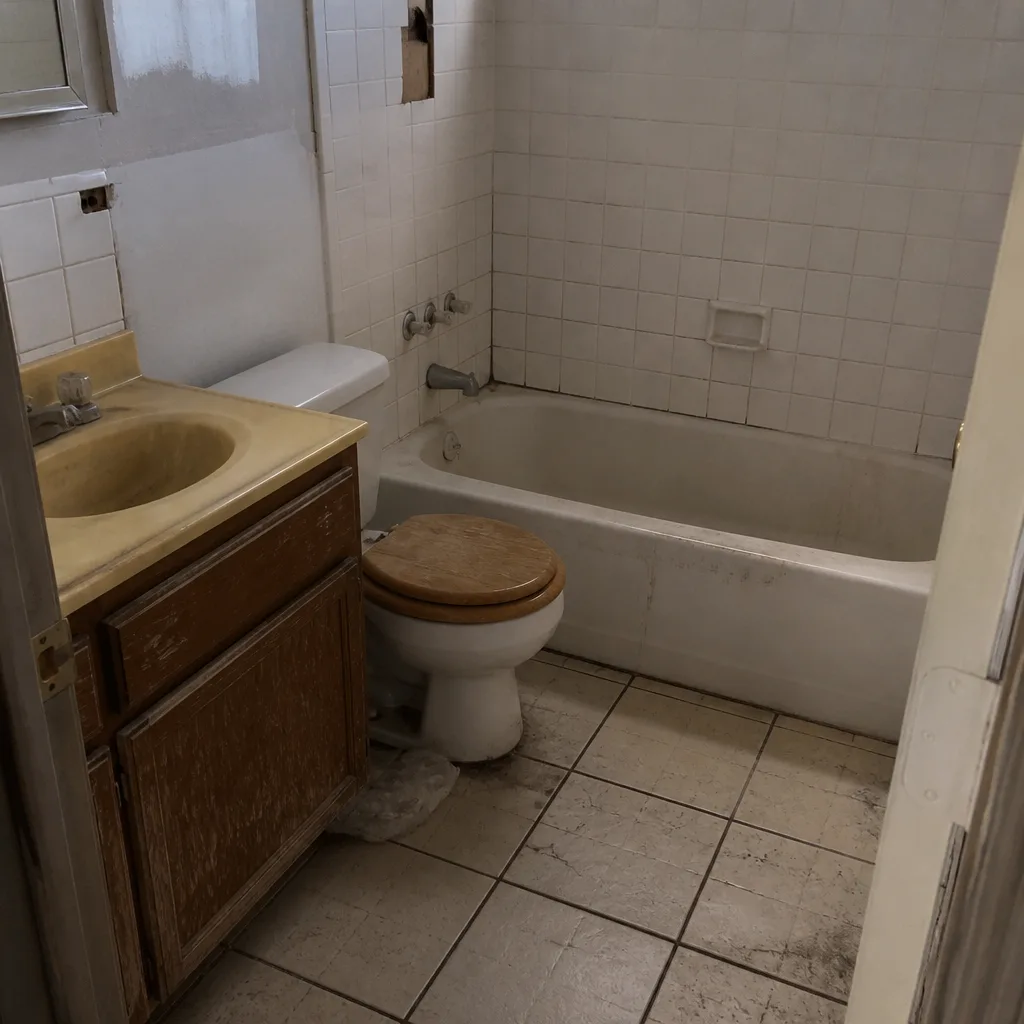 Before
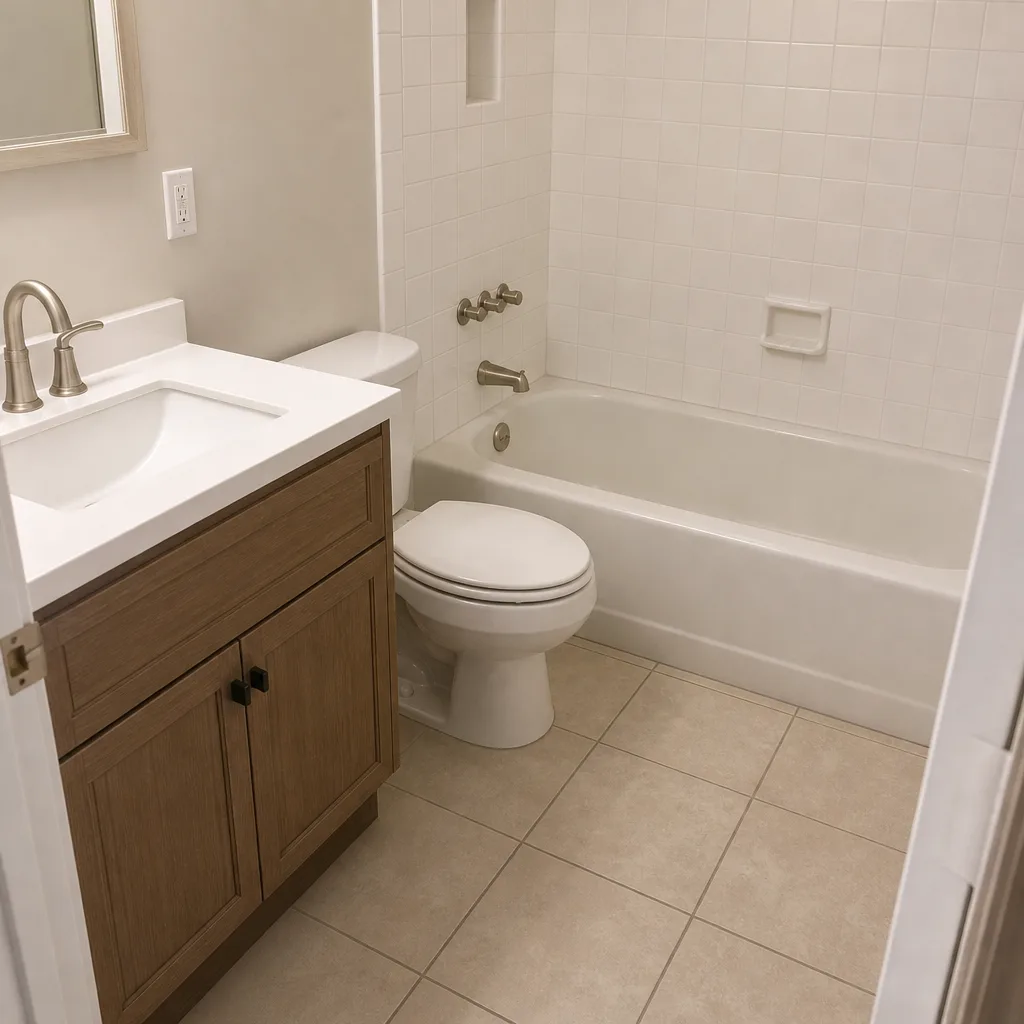 After
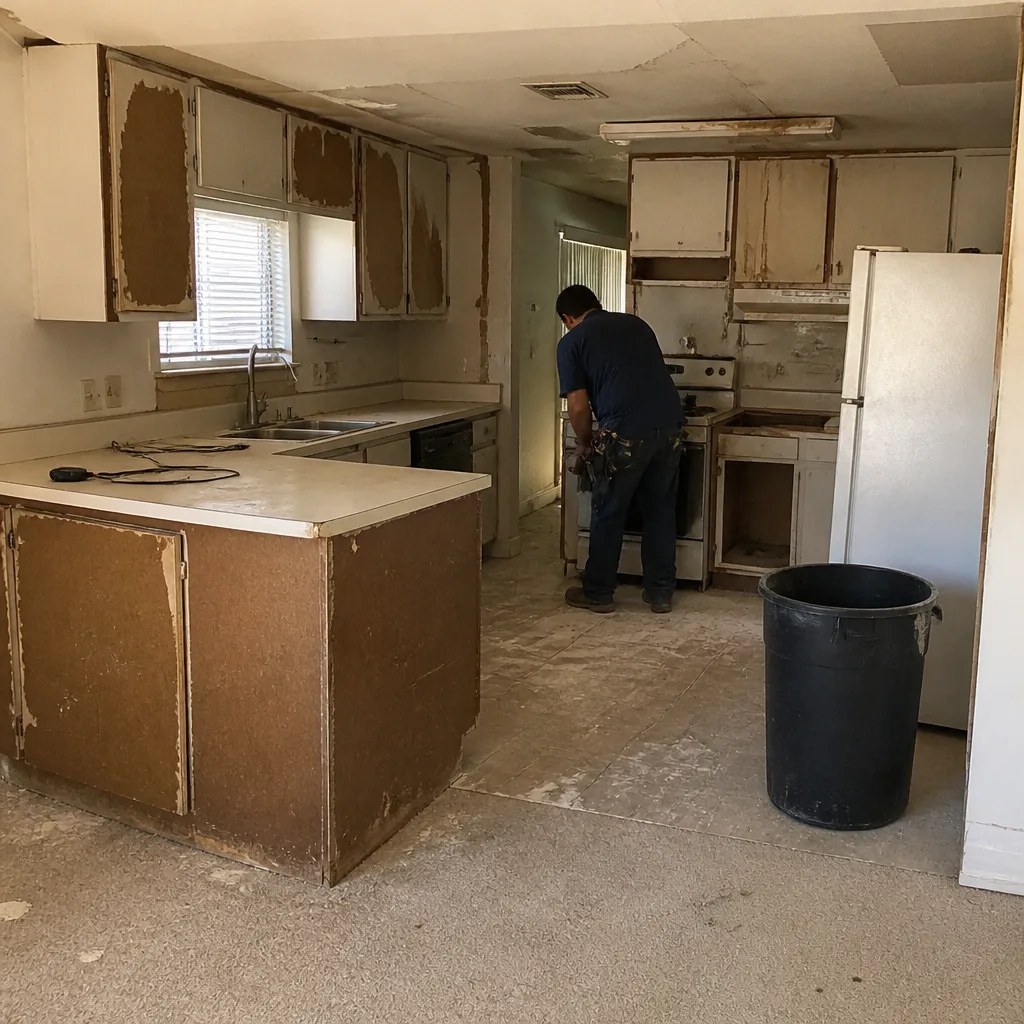 Before
 After
 Before
 After
When to Call a Professional
A fence is a footing-and-fastener project masquerading as a carpentry project. The parts that fail are underground and rarely visible – the concrete mix, the post depth, the hardware grade – which is why a written spec before work starts is not a formality. If your existing fence is leaning after a monsoon event, if a post has pulled clean out of the ground, if you’re replacing a shared boundary fence with a neighbor and the tie-in points are unclear, or if your property has caliche or an unknown utility layout, professional site assessment is the right first step. Rowan Construction Group Las Vegas offers free estimates in Las Vegas – call (833) 467-9123. We put the price in writing before anyone picks up a tool, and every visit comes with a documented photo record of what we found.
Frequently Asked Questions
Expect roughly $28 – $45 per linear foot for a standard 6-foot wood privacy fence installed in Las Vegas, $40 – $65 per linear foot for composite panel, and $55 – $95 per linear foot for masonry block. A 150-foot lot line typically lands between $4,200 and $9,000 depending on material and gate count. Call (833) 467-9123 for an exact quote – estimates are free and the price comes in writing before any work starts.
Usually yes, depending on height, material, and location. Fences over six feet in a residential zone, masonry fences, and fences on a corner lot with a sight-triangle restriction typically require a permit in unincorporated Clark County and in the City of Las Vegas. The permit requirement is verifiable on the public portal, and a contractor who claims “no permit needed” without checking should be asked to prove it. Call (833) 467-9123 and we’ll walk you through the specific requirement for your address.
One 60-pound bag of concrete mix per post is the minimum for a 4×4 post in a 10 – 12 inch diameter hole 24 – 30 inches deep. For a 6-foot privacy fence under Las Vegas wind loads, 80-pound bags or two bags per post are common. If your contractor can’t state the bag count in writing, they don’t have a footing spec. Call (833) 467-9123 for a written footing detail on your project.
Ask for the permit number, then look it up on the Clark County Building & Fire Prevention public portal or the City of Las Vegas Accela portal by address. Match the permit scope to your written quote, then request the inspection sheet after the final inspection. A permit pulled but never inspected is not a completed permit. Call (833) 467-9123 if you want a second set of eyes on what your contractor filed.
Underfilled footings are the most common cause. A post set in 30 pounds of concrete instead of 60 offers half the mass holding it in the ground, and the first 60 mph microburst of the monsoon season pulls it clean out. Post depth, hole diameter, and bag count are the three variables. A fence built to spec survives the wind that folds the shortcuts. Call (833) 467-9123 if you’d like a written spec review before the next season.
It means the subcontractor or crew can choose electro-galvanized (thin), G90 (standard hot-dip), or G185 (heavy hot-dip) at their discretion, and the homeowner has no recourse if the thinner grade is used. The grade should be named in the quote. In Las Vegas, the difference shows up fastest where irrigation overspray hits the gate hinges and rail brackets. Call (833) 467-9123 for a quote with the hardware grade named.
The Bottom Line
The warning signs in a fence installation are almost never about the fence itself – they’re in the paperwork before excavation. Ask for the permit number and look it up in Clark County’s public portal. Demand the 811 ticket number before ground breaks. Get the concrete bag count, hole diameter, and depth in writing. Read the material list for brand and grade, not just for the word “galvanized.” Insist on signed change orders for caliche, roots, and tie-ins, because that’s the record that decides who pays when the project hits an obstacle. Every one of these checkpoints is answerable in a phone call with a contractor who documents their work. A contractor without answers is the answer.
Rowan Construction Group Las Vegas offers seven trades, fifty-plus vetted material brands across fence, paver, and roofing categories, and a written price on every project before work starts. The 365-Day Done Right Promise is printed on every quote, backed by The Haven Standard, and free second opinions on any written estimate are available if you’re comparing bids. Call (833) 467-9123 to schedule your free estimate.
Written by the team at Rowan Construction Group Las Vegas.