Last updated November 18, 2026


Free written scope consultation - allowances, timeline, and change-order rules on paper before a single trade is scheduled
Driveway & Pavers Maintenance Schedule: What to Do and When
Applying polymeric sand in July in Las Vegas – when relative humidity can drop below 10% – produces a joint that looks set but crumbles by October. That single detail separates a paver driveway that holds for fifteen years from one that sheds sand into the gutter every summer. Las Vegas doesn’t follow the maintenance calendar printed in most manufacturer guides, because no other market combines monsoon sediment loads, winter freeze events above 3,000 feet, and a UV index that punishes sealers year-round. Here’s the schedule that actually fits this valley, month by month, with the products and checks that matter.
Quick Answer
In Las Vegas, paver driveway maintenance runs on a compressed calendar: inspect topdressing and edge restraints in May before monsoon, apply sealer only in the narrow February – March window when temperatures hold between 50°F and 85°F, check joint sand in October after monsoon saturation, and probe joint depth every six weeks through summer. Polymeric sand needs 48 hours of stable, moderate weather to cure – not a season. Miss that window and you’ll be redoing the work by fall.
Styles & brands we work with
- Kitchen remodeling
- Bathroom remodeling
- Home additions & ADU
- Roofing
- Windows & doors
- Driveway & pavers
- Fence
Table of Contents
- Why the Las Vegas Climate Calendar Is Not the Manufacturer Calendar
- The Month-by-Month Maintenance Schedule
- Applying Polymeric Sand: The 48-Hour Weather Event
- Which Sealers Are Rated for Las Vegas UV Levels
- The Five-Minute Joint Sand Probe Check
- Edge Restraint Spike Inspection After Monsoon
- What a 10-Year Maintenance Log Should Contain
Why the Las Vegas Climate Calendar Is Not the Manufacturer Calendar
Manufacturer maintenance guides are written for a national average that doesn’t exist. Las Vegas compresses the year into four distinct stress periods, and paver systems respond to each one differently.
First, the UV load. Las Vegas sits in a high-desert basin with roughly 290 sunny days per year and a summer UV index that regularly tops 11. Sealers that hold in San Diego’s marine layer break down here two to three years faster. Second, the monsoon: July through September brings sudden, intense rain events that run sediment off the surrounding desert and push water through the joints before it can drain. Third, freeze events. Below 3,000 feet the winter lows rarely threaten pavers, but at higher elevations – Summerlin’s upper edges, the foothills – overnight freezes expand moisture trapped in joints and edge bedding. Fourth, the dry-wet whiplash: relative humidity that drops below 10% in June and spikes to 60% during a monsoon cell the same week.
What this means in practice: your maintenance calendar is front-loaded in spring (pre-monsoon prep), concentrated in fall (post-monsoon repairs), and nearly frozen in summer (no sealing, no sanding, limited joint work). Manufacturer guides that recommend “seal in spring or fall” leave out that in Las Vegas, “spring” means February and March, not April and May. By April, ambient temperatures are already climbing past the cure window for most film-forming sealers.
If you’re planning a new installation rather than maintaining an existing one, our Driveway & Pavers in Las Vegas page covers base prep, geotextile, and the base depth that Las Vegas caliche soils demand.
The Month-by-Month Maintenance Schedule
Here’s the calendar we use on Las Vegas paver driveways. The dates are anchored to average temperatures and the historical monsoon window, not to a generic “spring or fall” recommendation.
- January: Post-winter inspection at elevations above 3,000 feet. Look for heaved pavers, loose joints, and any edge restraint spike lifted by frost. Low-elevation driveways: check drainage away from the garage slab.
- February – March: Sealer application window. Ambient temps hold between 50°F and 85°F, humidity stays moderate, and the surface dries evenly. This is the only reliable window for penetrating and film-forming sealers in Las Vegas.
- April: Deep-clean sweep and joint top-up with fine sand or polymeric sand in low-traffic areas. Weed emergence begins on driveways near irrigated landscaping.
- May: Pre-monsoon inspection. Check edge restraints, probe joint sand depth, verify that surface drainage channels haven’t been blocked by landscape rock or mulch migration. This is the most important inspection of the year.
- June: Skip all sealer and polymeric sand work. Humidity below 10% and surface temps above 120°F prevent proper cure. Do a visual only.
- July – August: Post-storm visual walk after each significant monsoon cell. Look for displaced sand in joints, sediment accumulations at the apron, and any lifted pavers at the driveway’s low point.
- September: Continued post-monsoon monitoring. Sediment removal with a stiff broom and a garden hose, not a pressure washer at full pressure.
- October: Post-monsoon joint check. Probe joint depth across the entire driveway. This is when you’ll find the joint erosion that started in August and isn’t visible from a walk-through.
- November – December: Re-sand eroded joints, re-set any displaced edge spikes, and photograph the driveway for the maintenance log. Low-elevation driveways may proceed with limited sealer touch-up if temperatures hold.
The single most-skipped step is May. Homeowners who inspect in May catch the joint erosion, edge restraint loosening, and drainage issues that would otherwise cost three figures to fix in October.
Applying Polymeric Sand: The 48-Hour Weather Event
Polymeric sand is a joint-stabilizing sand that hardens after water activation. It looks straightforward on paper: sweep sand into joints, wet it, wait. In Las Vegas, that sequence fails in July and August for a specific reason – the humidity is too low for the sand to activate fully before the water evaporates from the surface. The joint looks set within an hour. By October it crumbles under a hose test.
Here’s the application window that works in Las Vegas:
- Temperature range: Air temps between 50°F and 85°F for the full 48-hour cure. In Las Vegas, that’s February and March, and occasionally late October or early November.
- Humidity range: Above 30% for the activation stage. Summer applications below 20% humidity require special low-humidity formulations or additional wetting cycles that most installers won’t reliably execute.
- Rain hold: No measurable rain for 24 hours after application. In monsoon season, that means checking a 72-hour forecast, not a 24-hour one.
- Surface prep: Joints must be clean and dry, at least one-third the paver depth, and free of old sand or organic debris.
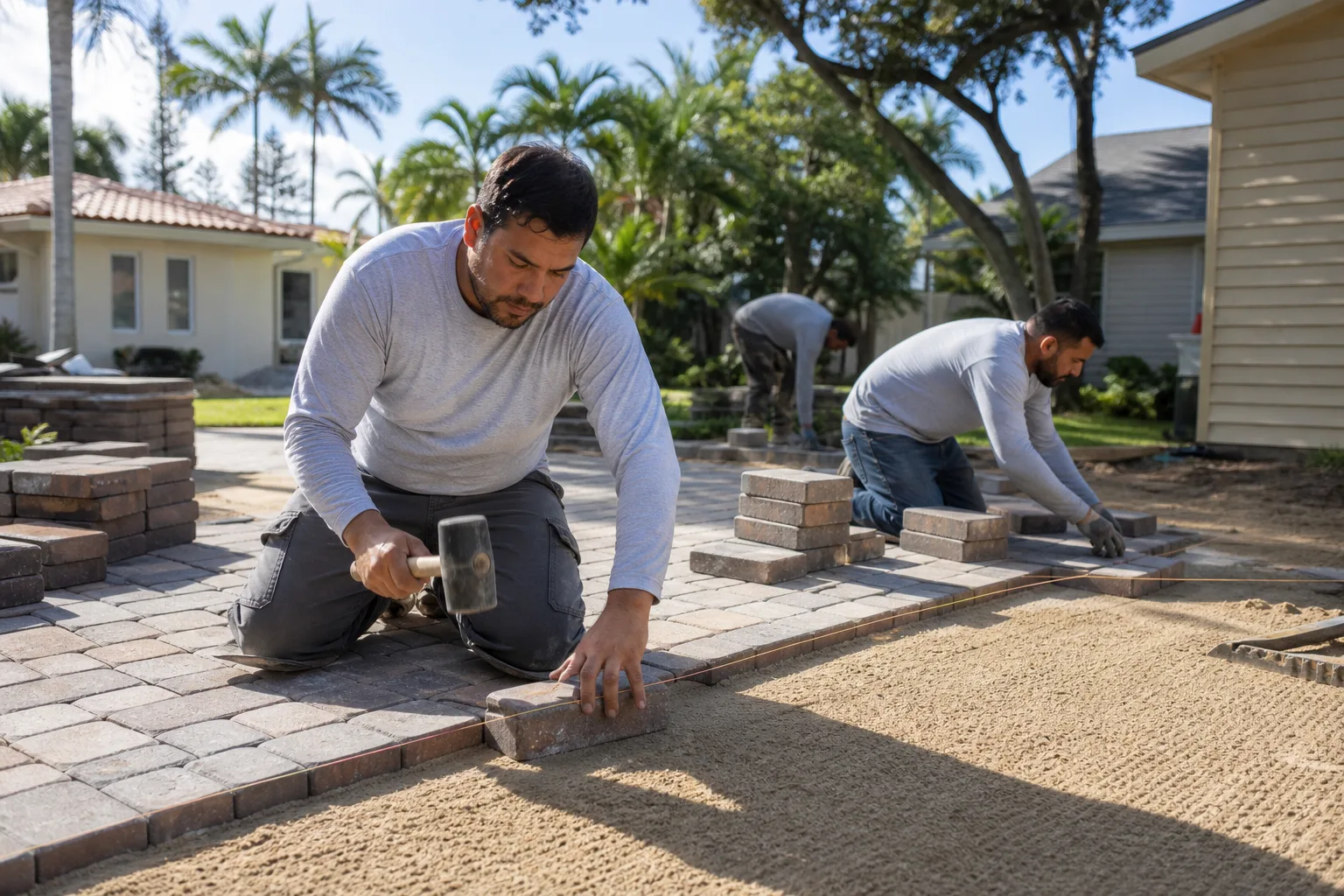
The two-step activation matters too. A light water mist to activate, then a controlled full wetting to complete cure, produces a different result than a single heavy soak. On Las Vegas pavers where surface temps can hit 130°F in direct afternoon sun, apply in the morning so the water has time to work before the surface reads hot.
We’ve seen polymeric sand applied in June in Las Vegas look like a job well done on the day. By October the joints are back to bare paver edges with sand pooled against the garage door. It’s not a defective product – it’s a missed weather event.
Which Sealers Are Rated for Las Vegas UV Levels
Not every paver sealer holds up to a UV index that reads 11+ for months at a time. The products that hold in Las Vegas are the ones explicitly rated for high-UV exposure. Here’s how the two most common lines compare, as we specify them on jobs. Your product data sheets are the final word, so match the spec sheet to your driveway’s paver type before you buy.
- Techniseal paver sealers: Techniseal makes both water-based and solvent-based sealers, and their product data sheets specify reapplication intervals based on climate. On Las Vegas driveways, expect reapplication on a shorter cycle than the manufacturer’s general “2 – 4 years” range – closer to 18 – 30 months for film-forming products under peak UV. Water-based is easier to apply and re-coats, but typically needs reapplication slightly sooner than a solvent-based product in this climate. Ask for the data sheet and check the UV stability rating, not just the “sealer” label.
- Alliance Gator paver sealers: Alliance Gator’s paver sealer line is also a common pick in high-UV markets. Their product sheets list the low and high temperature application range and the surface dry time – both need adjustment for Las Vegas summer conditions. Reapplication interval is shorter than the manufacturer’s general guidance in high-UV climates, and the wet-look products need more frequent top-ups than matte finishes because the film breaks down faster under UV.
Three rules we follow on every Las Vegas driveway:
- Match the sealer to the paver type. Concrete pavers (Belgard, Pavestone) take most sealers. Clay pavers and natural stone need different formulations.
- Avoid film-forming sealers on any driveway that drains poorly or sits at the bottom of a slope. Water trapped under a film is worse than no sealer at all.
- Apply only in the February – March window. Sealer applied in April or later in Las Vegas may not cure evenly, and the first monsoon will reveal it.
The Five-Minute Joint Sand Probe Check
You don’t need a contractor to tell you whether joint sand has eroded. A simple probe check takes under five minutes per 500 square feet and catches erosion before it becomes a trip hazard or a paver-shift problem.
- Pick five sample spots: one at the apron (driveway-street transition), one at the garage-door threshold, one mid-driveway, one near an edge restraint, and one in the lowest drainage area.
- Use a stiff piece of wire – a coat hanger cut to 4 inches works – or a small flathead screwdriver with a 1/8-inch blade.
- Push the probe straight down into the joint. Stop when it stops easily. Note the depth from the paver surface to the first resistance.
- Measure in inches. If the joint sand is 1/4 inch or more below the paver surface, the joint has eroded and needs re-sanding. If it’s 1/2 inch or more, the joint is failing and the perimeter pavers may move under load.
- Photograph the probe in place with the depth visible and label the location. That photo goes in the maintenance log.
At the driveway apron and the garage-door threshold – the two highest-traffic points – expect the joint to fall an eighth to a quarter inch over a monsoon season. Sand loss mid-paver is usually lower. If the entire driveway probes at 3/8 inch or more, don’t just add sand; check the edge restraints and base first.
Edge Restraint Spike Inspection After Monsoon
The edge restraint – the aluminum or plastic L-channel that pins the outermost row of pavers – is the most neglected component of a paver driveway. It’s also the one that fails first after monsoon saturation, especially in the sandy soils common in parts of the Las Vegas Valley and older neighborhoods like those around Rancho Drive.
Spike pull-out is the failure mode. The edge restraint is held by steel spikes driven into the base. After a monsoon saturates the base, the spikes can migrate upward or loosen entirely, especially in sandy or decomposed-granite base material. The visible symptom is a slight give when you press down on the outermost paver, or a gap between the edge restraint and the paver row.
Here’s the post-monsoon check, done in October:
- Walk the entire perimeter of the driveway, pressing each outer paver firmly with your foot or the heel of your hand.
- Look for gaps between the edge restraint and the first paver row – 1/8 inch or more is a flag.
- Inspect the spike heads. A spike that has moved up 1/4 inch from its original set depth has lost holding power.
- Check for any visible displacement of the edge restraint from its line.
If you find movement, don’t just hammer the spike back down. Pull the loose spike, refill the hole with fresh base material, and reset. Pre-drill if the base is dense. For any edge that’s moved more than 1/4 inch, the fix is to reset the entire edge section, not just the loose spike – otherwise it will fail at the next monsoon. On driveways around Las Vegas’s older ranch neighborhoods with original soil, we’ve seen spike pull-out after a single heavy monsoon cell.
If the paver work runs alongside a fence or gate post that the monsoon has pushed, our Fence Installation in Las Vegas page covers post setting in valley soils.
What a 10-Year Maintenance Log Should Contain
Paver manufacturers like Belgard and Pavestone require documented maintenance for certain warranty claims, especially those covering surface failure, color fade, and structural movement. Most homeowners never keep a log. That’s the gap that lets a legitimate warranty claim get denied for lack of documentation.
The log is simple. Keep it in a phone folder or a paper folder in the garage, and add to it every time you do anything – including just walking the driveway after a storm.
- Installation record: Installer name, installation date, paver product name and manufacturer (Belgard, Pavestone, or other), base depth specification, and any warranty paperwork.
- Sealer record: Product name, application date, batch number, temperature and humidity at application, and reapplication date. This one matters most for fade and surface claims.
- Sand record: Product name and application date every time joints are re-sanded. Include the weather at application.
- Probe check log: Dates and probe depth readings by location, with photos.
- Edge restraint inspections: Date, findings, and any repairs done.
- Post-storm photos: Dated photos of the driveway after any significant monsoon event.
- Repair log: What was fixed, when, by whom, and any warranty on the repair.
What most logs miss is the sealer application conditions. If a claim is filed for premature surface failure years later, the first question a manufacturer’s rep will ask is whether the sealer was applied in proper conditions. A log entry that says “sealed July 12, 87°F, humidity 14%” answers that question immediately. A log that says “sealed summer 2024” does not.
If you’d like to see how we structure maintenance records on driveways we install or restore, our Rowan Construction Group Las Vegas home page has the documentation we hand over on every visit.
Common Mistakes to Avoid
- Applying polymeric sand in summer. Low humidity and 120°F+ surface temperatures prevent proper cure. By October the joint is back to bare edges and the sand has migrated to the apron. Wait for February or March.
- Sealing with a film-forming product on a poorly draining driveway. Las Vegas driveways that slope toward the garage or sit at the bottom of a retaining wall trap water under film-forming sealers. Penetrating sealer or no sealer at all is the better choice.
- Pressure-washing at full pressure. High-pressure washing displaces joint sand and can chip paver edges, especially on Belgard or Pavestone concrete pavers that have aged. Use a garden hose with a stiff broom for routine cleaning, and reserve pressure washing for spot treatment at low pressure.
- Skipping the May inspection. Monsoon prep happens in May, not June. Homeowners who inspect in June have already missed the joint check, edge restraint check, and drainage sweep that prevent the October repair.
- Ignoring edge restraint because the pavers still feel solid. The outermost pavers can read solid through midsummer and fail after the first heavy monsoon. Spike pull-out in sandy valley soils is common, and a single lifted spike can let the entire edge row shift by fall.
- Using the wrong sealer for the paver type. Clay pavers and natural stone need formulations that differ from concrete pavers. A sealer specified for concrete pavers can produce a chalky film on clay.
- Not keeping a log. A warranty claim without a maintenance log gets denied, even on legitimate defects. Photographs and product names are the evidence that turns a no into a yes.
See the difference
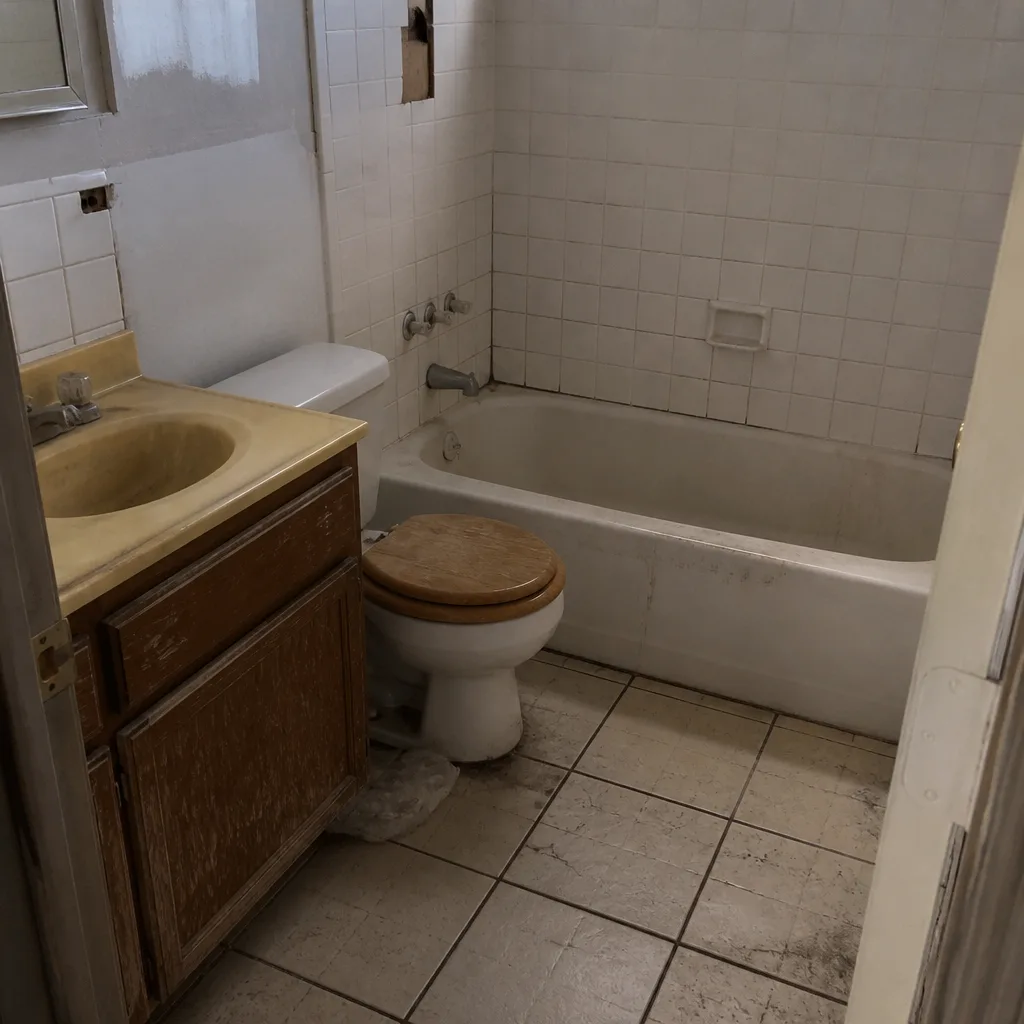 Before
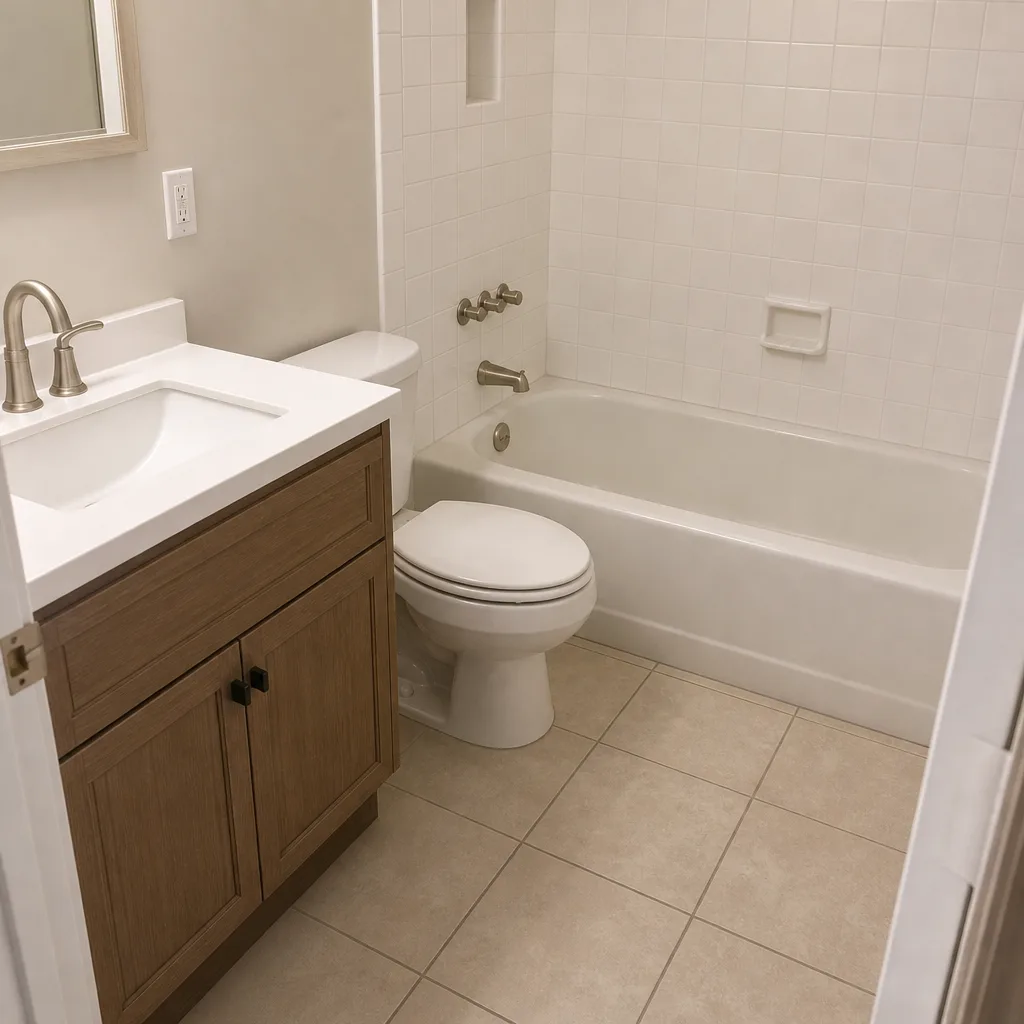 After
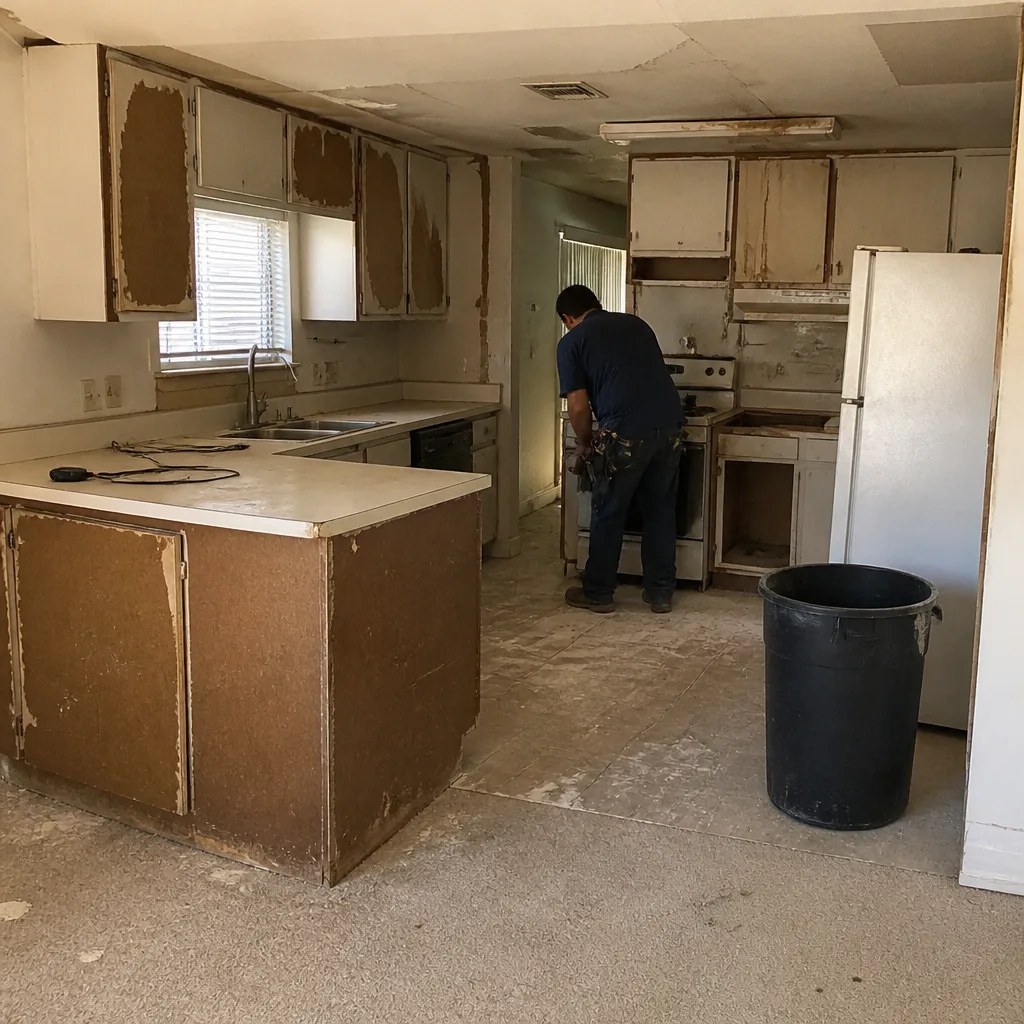 Before
 After
 Before
 After
When to Call a Professional
Some maintenance is homeowner work; some isn’t. Call a professional when the joint sand has eroded past 1/2 inch across more than a third of the driveway, when edge restraint spikes have pulled out in more than one section, when water ponds against the garage threshold after a monsoon, or when you see a paver row that has visibly shifted out of its line. Re-sealing or re-sanding over a moving paver system hides the problem for one season and doubles the repair cost the next.
For driveway issues that come with a new installation or a substantial repair, the quote should be a written flat price with a written scope before anyone picks up a tool – that’s Clause 1 of the Haven Standard. Work that changes along the way requires a signed change order first, which is why our projects finish within a few percent of the number the customer agreed to.
Rowan Construction Group Las Vegas offers free estimates on driveway and paver work in Las Vegas – call (833) 467-9123. Crews are background-checked and uniformed, calls are answered by a live person, and every visit includes a documented photo record as a standard deliverable, not an upgrade. If you have a written estimate from another contractor, we’ll review it line by line at no charge before you sign anything.
Planning an addition or casita alongside the driveway? Our team also handles Home Additions & ADU in Las Vegas, and the site work overlaps more than you’d expect.
Frequently Asked Questions
Every 18 to 30 months for most film-forming paver sealers in Las Vegas, and every two to three years for penetrating sealers. The shorter interval reflects the UV load, not a difference in product quality. Seal in February or March, the only reliable window when temperatures hold between 50°F and 85°F and humidity is high enough for proper cure. Call (833) 467-9123 to schedule a free estimate if you’re not sure when the driveway was last sealed.
No, not reliably. Polymeric sand needs humidity above 30% at activation and a 24-hour rain-free cure window, neither of which holds in July or August in Las Vegas. The joint looks set within an hour, but the sand crumbles by October. February and March are the application window; late October is a second option.
Edge restraint spike pull-out in sandy and decomposed-granite base soils. Monsoon saturation loosens the steel spikes that hold the aluminum or plastic edge channel, and the visible symptom is a slightly give to the outermost paver. The check is a foot-press walk around the perimeter in October. If you find movement, don’t just hammer the spike back down; it needs fresh base material and a reset, or the same spike will fail at the next storm.
Techniseal and Alliance Gator both make product lines rated for high-UV climates, and both are commonly specified on Belgard and Pavestone driveways in Las Vegas. The right product depends on the paver type – concrete, clay, or natural stone – and on whether your driveway drains well. Check the product data sheet for the UV stability rating and the maximum surface temperature, and apply in the February – March window. Call (833) 467-9123 for a free second opinion on any sealer spec you’ve been quoted.
Use a probe check. Push a stiff wire or small flathead screwdriver into the joint at five sample points and note the depth from the paver surface to the first resistance. Joint sand 1/4 inch or more below the paver surface means re-sanding; 1/2 inch or more means the perimeter pavers may be moving under load. The check takes under five minutes per 500 square feet and is the earliest detection method available.
Yes, for most Belgard and Pavestone warranty claims involving surface failure, color fade, or structural movement. Manufacturers require documented maintenance, and a claim without a log gets denied even when the defect is legitimate. The log should include the installation record, sealer and sand product names with application dates and conditions, probe check readings, edge restraint inspections, and dated photos after monsoon events.
The Bottom Line
Las Vegas paver maintenance is not a season, it’s a set of narrow windows: February – March for sealing, May for pre-monsoon inspection, October for post-monsoon repair. Applying polymeric sand in July produces joints that look set and fail by fall. Sealers need a UV rating matched to this climate, not to a national average. Probe-check joints every six weeks through summer, inspect edge restraints after every major monsoon, and keep a maintenance log that would satisfy a Belgard or Pavestone rep years later. Get those four habits right and a Las Vegas driveway holds for fifteen years or more.
Written by the team at Rowan Construction Group Las Vegas.