Last updated November 18, 2026

Free written scope consultation - allowances, timeline, and change-order rules on paper before a single trade is scheduled
Home Additions & ADU Troubleshooting: Common Problems and How to Fix Them
If your addition has a roof leak, the first place to look isn’t the roof, it’s the building permit inspection record. A framing or sheathing inspection that was never called in means the work was never verified to code, and the contractor’s verbal assurance is the only thing standing between you and a full tear-off. Most of what homeowners describe as “contractor failure” is really a documentation failure: a change order nobody signed, a material grade nobody specified, an inspection sign-off nobody checked. This guide traces the common problems in Las Vegas additions and ADUs back to the paper trail, then tells you how to fix each one and what the repair runs.
Quick Answer
Most home addition and ADU problems trace back to three documentation gaps: missing inspection sign-offs, unsigned change orders, and material grades that were never specified in writing. Pull your inspection history first, because it tells you whether the work was ever verified to code. Then diagnose the visible symptom, framing settlement, water intrusion, HVAC shortfall, or electrical overload, and match it to the repair path and cost range below.
Styles & brands we work with
- Kitchen remodeling
- Bathroom remodeling
- Home additions & ADU
- Roofing
- Windows & doors
- Driveway & pavers
- Fence
Table of Contents
- How do I pull my addition’s inspection history?
- Why is my addition cracking? Normal settlement vs. soil movement
- Why is my addition always too hot or too cold?
- How do I find and fix water intrusion where the addition meets the house?
- Why does my ADU trip breakers now that someone lives in it?
- How do I rebuild the paper trail I should have had?
- What do these repairs actually cost in Las Vegas?
How Do I Pull My Addition’s Inspection History?
Clark County keeps a public record of every permit and every inspection on your property, and you can read it yourself in about fifteen minutes. Go to the Clark County Department of Building and Fire Prevention online portal, search by your address or permit number, and open the inspection tab. You’ll see a dated line for each inspection the contractor called in, and a status next to it. Anything marked “partial” or missing an entry for a stage that should exist is your starting point.
A correctly run addition in Las Vegas should show a clean sequence through these stages:
- Foundation: pre-pour inspection of rebar, forms, and anchor bolt placement, then a separate inspection after the pour.
- Framing: shear nailing, hold-downs, and header sizing verified before walls are closed.
- Rough MEP: rough plumbing, rough electrical, and rough mechanical, each inspected while the walls are still open.
- Insulation: checked against the energy code before drywall goes up.
- Final: the all-clear that lets the job close out.
If the framing inspection never happened, no one verified that the walls are braced to the local seismic and wind requirements. If the rough MEP entries are missing, the plumbing and wiring in your walls were never inspected at all. That gap is the paperwork version of a red flag, and it stays on the record until it’s corrected. A missing sign-off doesn’t automatically mean the work is bad, but it means nobody with authority confirmed it was good. In our experience across Las Vegas additions, a skipped framing inspection is the single most common documentation hole, and it’s the one that costs the most to discover late.
Why Is My Addition Cracking? Normal Settlement vs. Soil Movement
Concrete cracks. A new slab in a Las Vegas addition will almost always show hairline cracking somewhere in the first year, and that’s normal curing. The question isn’t whether it cracked, it’s whether the crack is active. A hairline crack that’s narrow, runs roughly straight, and looks the same size six months later is cosmetic. A stair-step crack that walks up the corners of the addition, or a door frame that suddenly racks out of square, points to differential settlement or expansive soil movement, and that needs a foundation evaluation before you repair anything above it.
Las Vegas sits on a lot of expansive clay and caliche, and the soil here moves more than most homeowners expect when it swings between wet winter and dry summer. That’s why the diagnosis matters more than the cosmetic patch:
- Hairline, non-progressive cracks: typically cosmetic. Monitor with a pencil line across the crack and measure width yearly.
- Stair-step cracks at corners: often differential settlement or soil movement. Needs a structural evaluation.
- Doors and windows racking out of square: the frame is moving, not just the drywall. Same path, structural evaluation first.
For the largest additions, the fix ranges from crack monitoring and cosmetic re-pointing at the low end to underpinning or helical piers at the high end, and the number depends entirely on how much movement is active. Don’t let anyone sell you a cosmetic drywall patch on an active crack. The patch hides the evidence and the movement continues underneath.
Why Is My Addition Always Too Hot or Too Cold?
A 400 sq. ft. addition tied into an existing HVAC system is almost always undersized, because nobody ran a load calculation. The original system was sized with a Manual J load calculation for the original house, then the addition added square footage and conditioned volume on top of it, and often a west-facing wall with full Las Vegas summer sun on it. The result is an addition that cooks in July and freezes in January while the rest of the house feels fine.
You can confirm the shortfall before you call anyone. On the hottest afternoon, take a thermometer to the supply register in the addition and then to a register in the original house. A drop of more than about 3 to 5 degrees between the two tells you the addition isn’t getting its share of the air. While you’re up there, check whether the addition’s supply duct runs off a single branch shared with an existing room. That’s the tell.
The fix usually isn’t a bigger unit, it’s a zoning solution: a dedicated zone with its own thermostat and damper, or a ductless mini-split serving the addition on its own. A zoning retrofit for a typical Las Vegas addition runs in the low-to-mid thousands, and a ductless system in that square footage can land in a similar range. Either beats replacing a whole system that was never the problem.
How Do I Find and Fix Water Intrusion Where the Addition Meets the House?
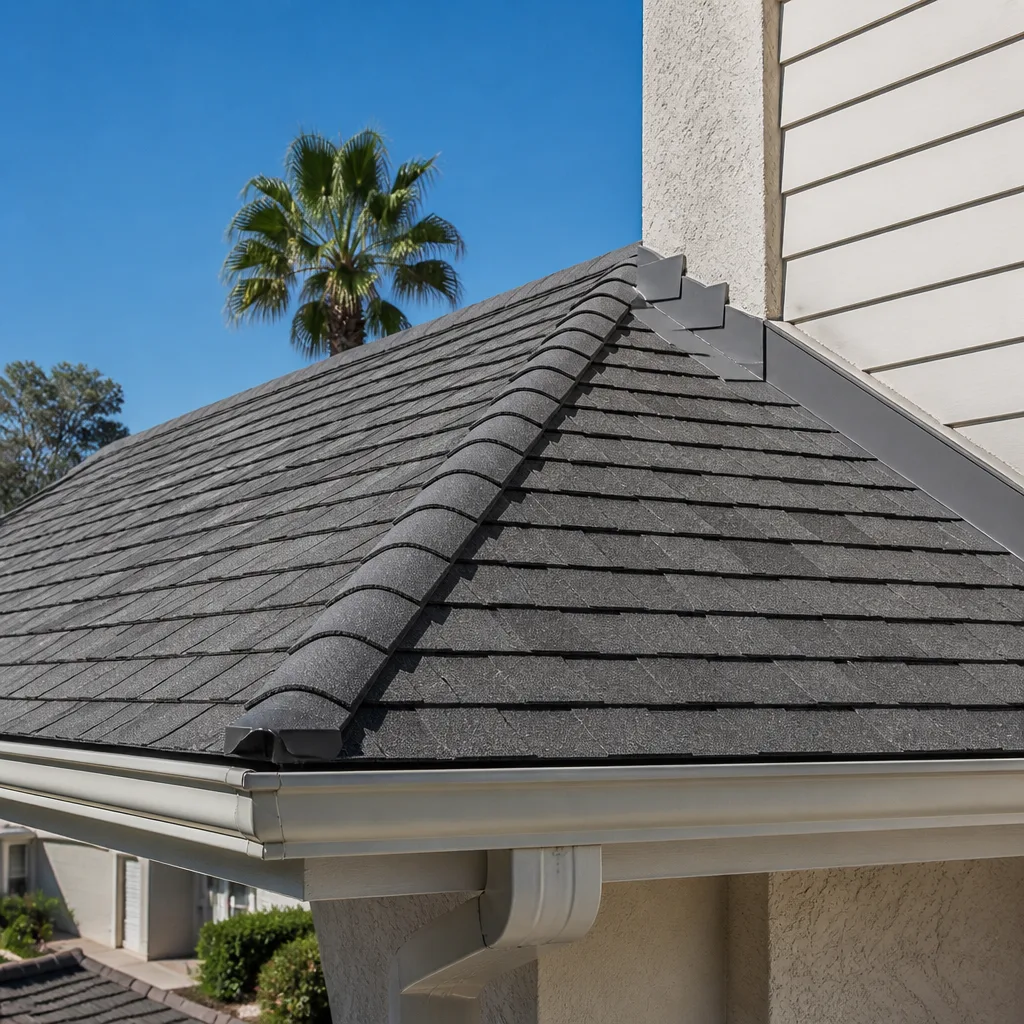
The seam where new construction meets old is where most addition leaks start, and it’s almost always a flashing problem, not a roofing-material problem. The detail that fails most often is step flashing that was installed as continuous flashing, or step flashing that was nailed flat to the wall instead of woven into the shingle courses. Water gets behind it, runs down the wall cavity, and shows up as a stain on the inside wall days after the rain. That delay is the clue.
If you can open the wall cavity a little, look for rusted fasteners, dark staining on the sheathing, or staining at the bottom plate. Those point to water that’s been running inside the wall for a while, not just condensing. Then check the outer detail against these rules:
- Step flashing: individual L-shaped pieces woven into each shingle course, correct where the roof meets a vertical wall.
- Continuous flashing: a single piece tacked to the wall. It works on a short run, but it depends on perfect sealant and sealant fails.
- Kick-out flashing: required at the bottom of a roof-to-wall junction so water gets pushed out, not down the wall.
Repair sequencing matters as much as the flashing detail. Fix the flashing and re-roof that junction first, then repair the interior water damage, not the other way around. Pulling the drywall before the leak source is corrected just means replacing it twice. We use step flashing woven in by hand on every addition tie-in, and the fix is documented in the photo record so the homeowner can see what was actually corrected under the surface.
Why Does My ADU Trip Breakers Now That Someone Lives in It?
An empty ADU draws almost nothing. An occupied one draws everything at once, and that’s when panel capacity problems surface. Before you call an electrician, you can read the panel yourself. Open the cover and look at two numbers: the main breaker amperage stamped on the main breaker, and the count of open breaker slots. A 100-amp panel feeding an ADU with a range, a water heater, a dryer, and a heat pump is usually already at its limit, even if the breakers never tripped while the unit was empty.
Here’s how to read it in order:
- Find the main breaker amperage. Common Las Vegas homes have 100, 150, or 200-amp service.
- Count open slots. A sub-panel needs two open slots, and a full panel has none.
- Add up the big loads: range, water heater, HVAC, dryer, EV charger. Each one is a heavy draw when it cycles on.
- Compare the total load to the main amperage with the continuous-load rule in mind. This is the step an electrician confirms, but you can see the risk yourself.
If there’s headroom and open slots, a sub-panel for the ADU is the cheaper path. If the service is already near its limit, a full panel upgrade is the honest answer. In Las Vegas, additions and ADUs that were permitted and wired correctly usually have the headroom documented, and the ones that were done without proper inspection are where these surprises live. Nationally recognized fixtures and hardware are one thing; the breaker headroom behind the wall is another. The right answer is to verify it in writing before anyone turns a screwdriver.
How Do I Rebuild the Paper Trail I Should Have Had?
If you’re dealing with an addition you didn’t build and a paper trail full of holes, the recovery path is methodical and it starts with assembling what exists. Request the permit file from Clark County, collect every change order, invoice, and contract you have, and photograph the current condition of the work, including inside the wall cavities if any are open. That package is what any reputable contractor or inspector needs to give you an honest assessment.
Then get a second opinion in writing. We offer a free second opinion on any written estimate, and we review it line by line at no charge. If the original quote had no material specifications, that’s a documentation gap you should ask about directly. A quote that lists a countertop but not who makes it, or a window but not the manufacturer, is a quote with a hole in it. Our written quotes name the actual products, from cabinet lines like KraftMaid and Wellborn to window and door hardware, because a product name is the first thing a written price should include.
The point of rebuilding the paper trail isn’t blame. It’s having a documented record when a future buyer’s inspector, or your own insurance adjuster, asks what was done and when. A written price before any work starts, and a documented photo record after every visit, is the standard we hold ourselves to under the Haven Standard.
What Do These Repairs Actually Cost in Las Vegas?
The repair numbers below are typical Las Vegas ranges for the problems covered in this guide. They’re here so you can tell a fair price from an inflated one, and so you can request a written quote on the right scope.
| Repair | Typical Las Vegas range |
|---|---|
| Flashing correction at addition tie-in, including interior repair | $2,500 – $6,500 |
| Cosmetic crack repair and repointing | $500 – $1,500 |
| Structural evaluation (engineering report) | $600 – $1,200 |
| Underpinning / helical piers (per pier, range varies by movement) | $1,200 – $3,000 per pier |
| HVAC zoning retrofit for a typical addition | $2,500 – $6,000 |
| Ductless mini-split for the addition | $3,500 – $7,000 |
| Sub-panel for ADU with existing headroom | $1,200 – $2,500 |
| Full electrical panel upgrade to 200 amps | $2,500 – $5,000 |
Get the scope in writing before you sign anything, and get the number in writing before anyone picks up a tool. Call (833) 467-9123 for a free estimate on any of these repairs.
Common Mistakes to Avoid
- Fixing the visible symptom without fixing the source. Patching drywall over an active leak or an active crack means the repair fails and you pay twice. Find the source first.
- Skipping the inspection portal. Before you spend anything, pull the Clark County record. A missing framing or rough MEP inspection changes the whole scope.
- Trusting a verbal quote on the HVAC tie-in. If nobody ran a load calculation for the addition, assume the system is undersized until proven otherwise.
- Adding loaded circuits to a full panel. An occupied ADU changes the load on a panel that was fine empty. Read the amperage and open slots before you add anything.
- Accepting a quote with no material grades. A written quote should name the product and the spec, not just the category. No product name means no comparison and no accountability.
- Paying for a change without a signed change order. Signatures are the only thing that keeps a project within a few percent of the agreed price, and they’re what protects you when the scope creeps.
- Assuming the roof is the leak source. At an addition tie-in, it’s usually the step flashing. The roof material itself is rarely the problem.
See the difference
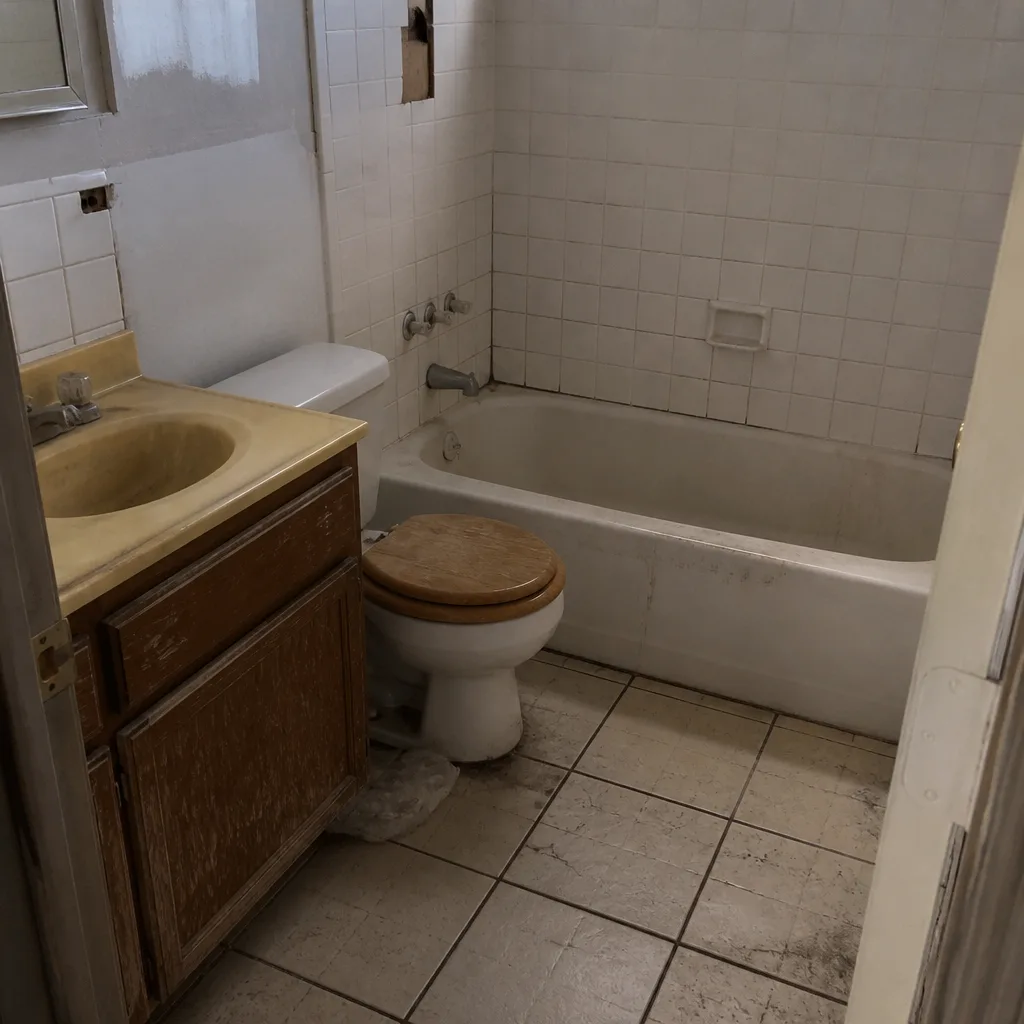 Before
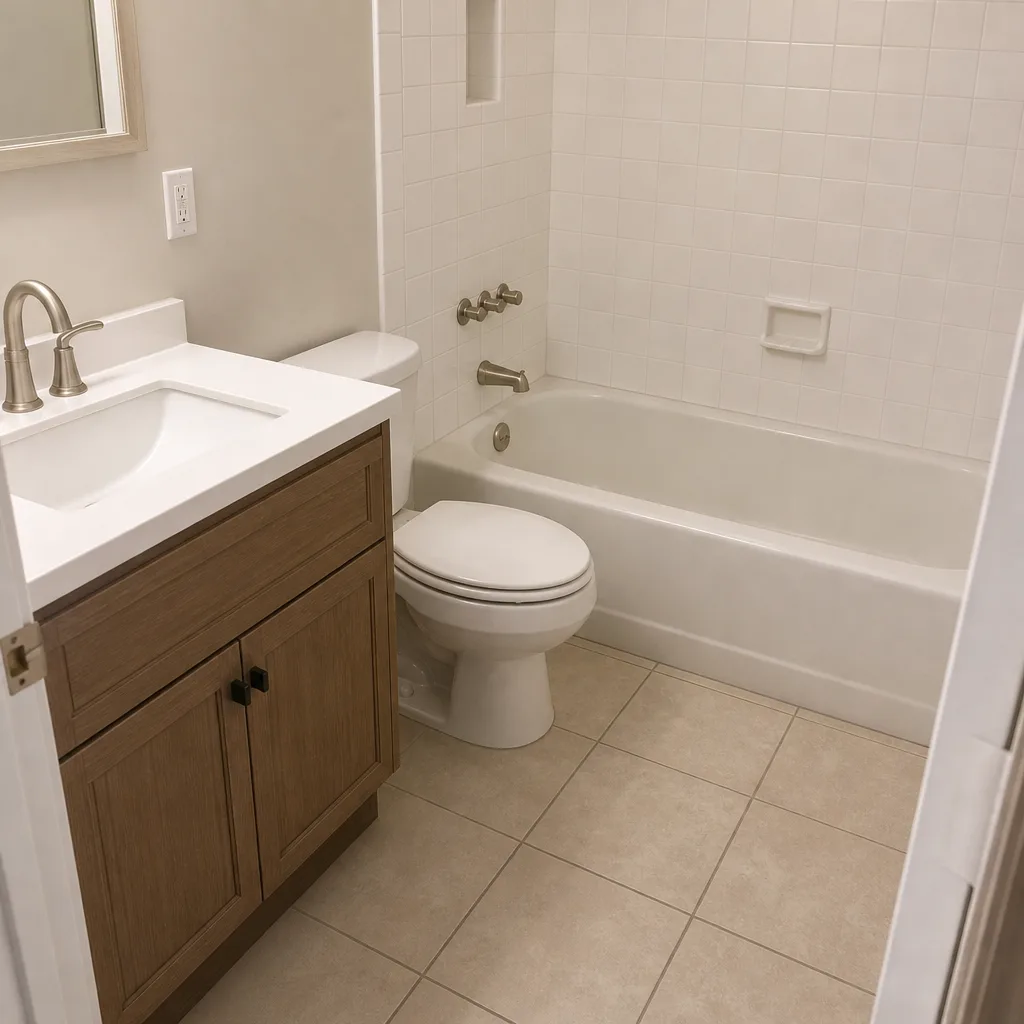 After
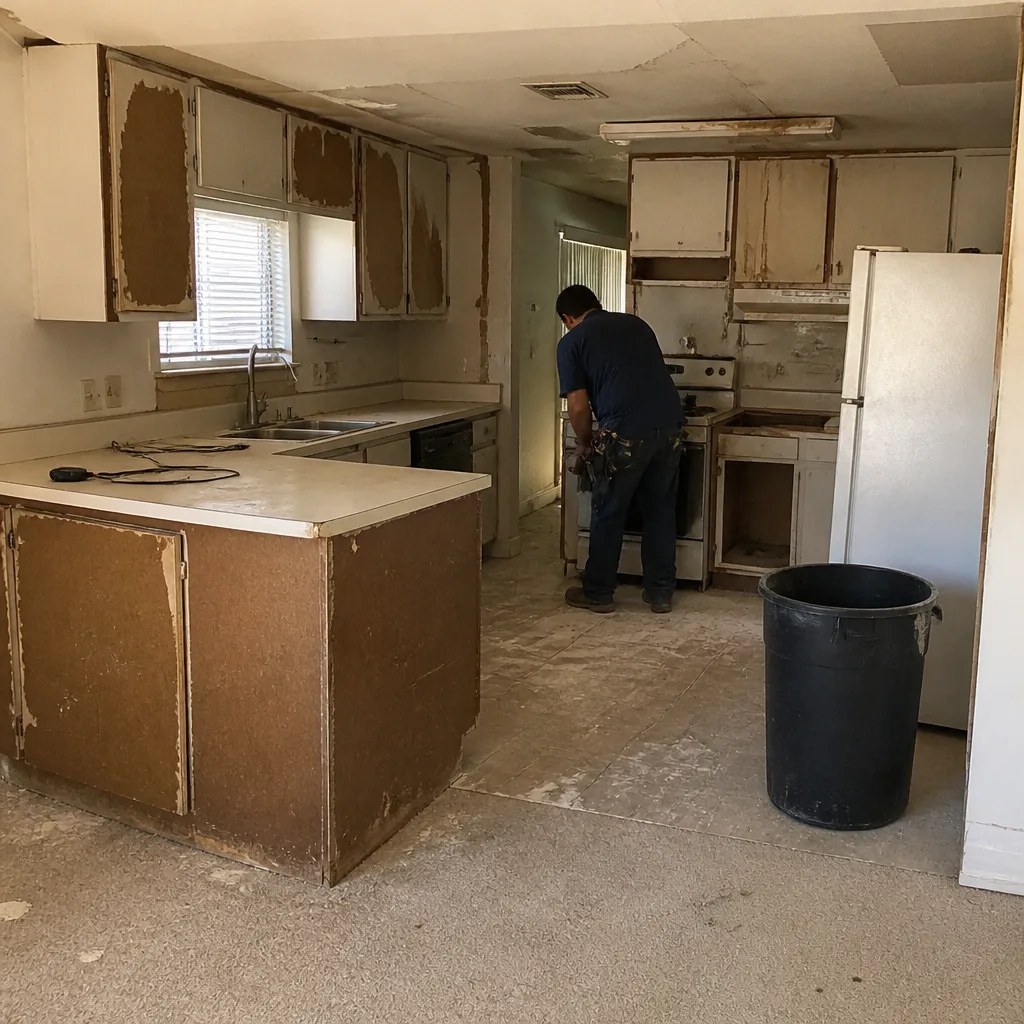 Before
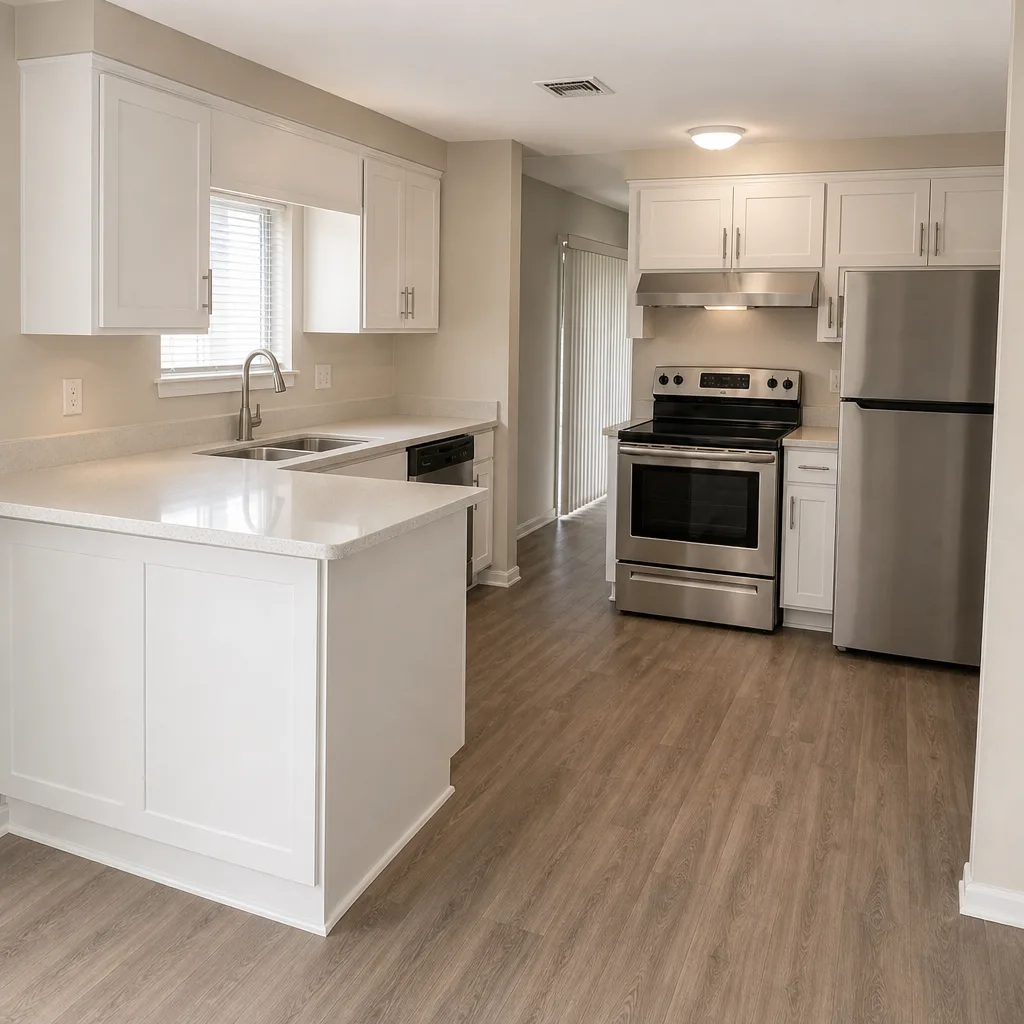 After
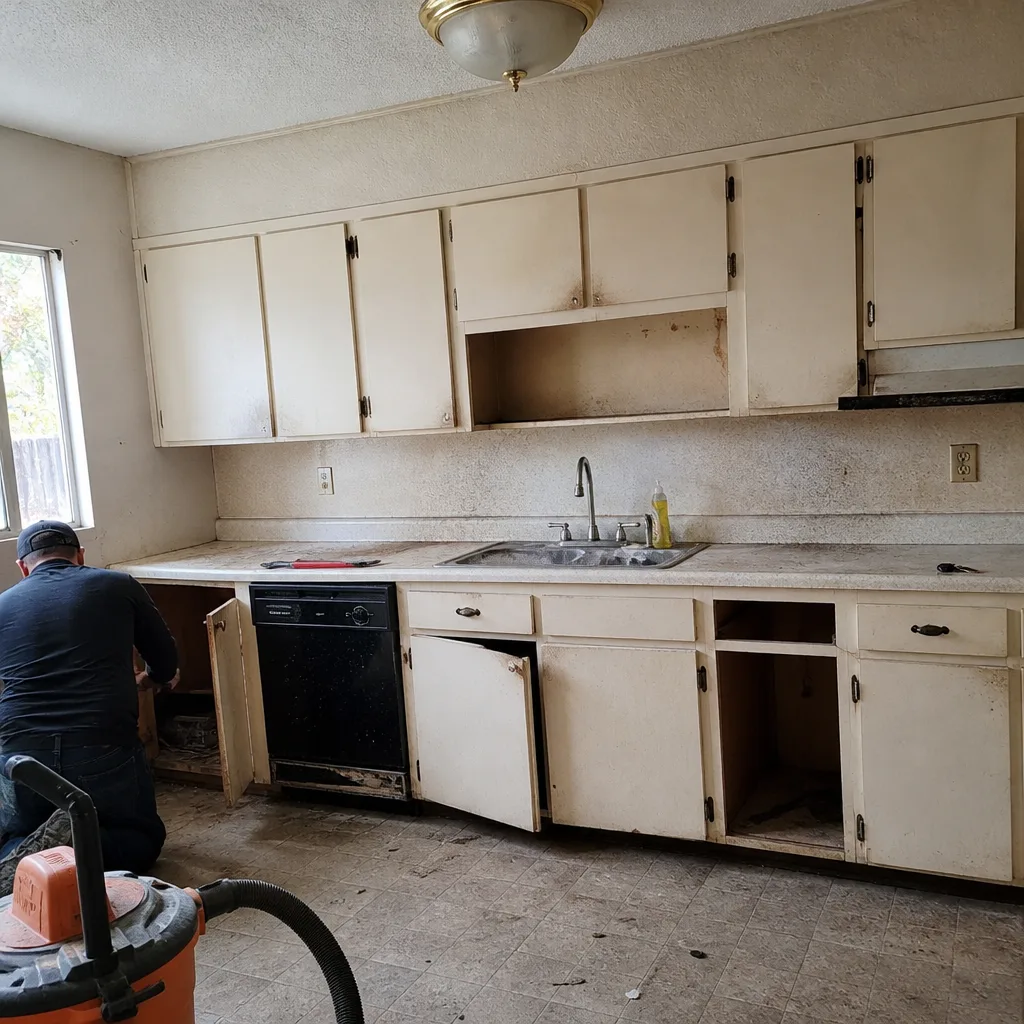 Before
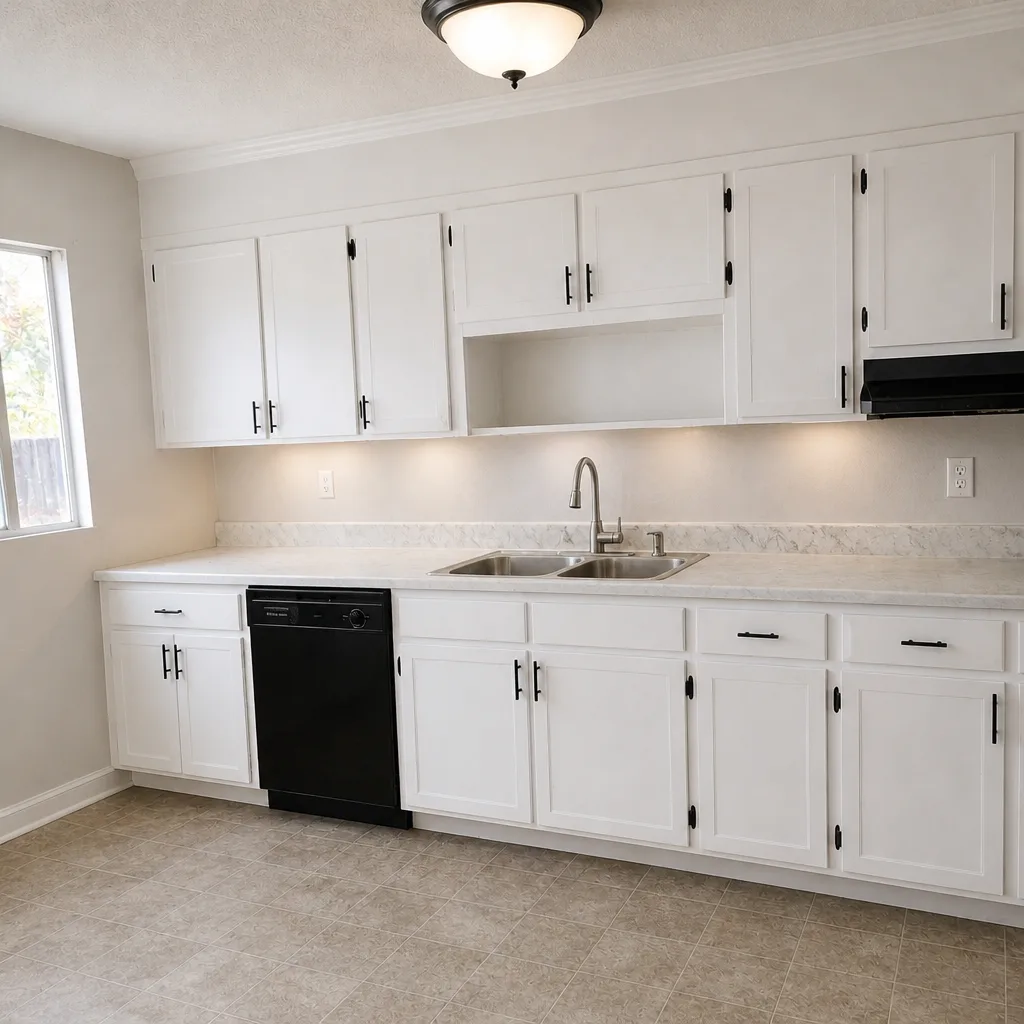 After
When to Call a Professional
Call a professional the moment the symptom points to structure, water inside a wall, or electrical capacity. Racking door frames, stair-step cracking, a stain on the inside wall that appears days after rain, or breakers that trip only when someone lives in the ADU are all signals you should not diagnose through a patch and a coat of paint. The trade vocabulary matters here, so we explain it in plain terms and document the condition we find with a photo record on every visit. We’re licensed and insured, we quote a flat written price before work begins, and we don’t proceed on any change without a signed change order.
Rowan Construction Group Las Vegas offers free estimates in Las Vegas, including a free second opinion on any written estimate you already have. Call (833) 467-9123 and we’ll review it line by line with you.
Frequently Asked Questions
It depends on what the county requires to close the permit, but homeowners typically face $3,000 to $12,000 to bring an unpermitted addition into compliance, covering plan review, required inspections, and any code corrections the inspector flags. The first step is pulling the Clark County record to see what was actually permitted and what wasn’t. Call (833) 467-9123 for a free estimate on the correction scope.
Not without your signature. Our standing rule is that a written price is delivered before any work starts, and no change proceeds until the change order is signed. That discipline is how a repair stays within a few percent of the number you agreed to. Call (833) 467-9123 and we’ll put the scope and the price in writing first.
Yes. We pull the required permits and pass the inspections on permitted repair work, because the inspection record is exactly what protects you when you sell the house. If your original addition is missing inspections, we can walk you through what the county needs to close it out. Call (833) 467-9123 for a free estimate.
A flashing correction or a zoning retrofit is usually a few days to about a week of active work, while foundation underpinning and electrical panel work stretch longer depending on permits and inspection scheduling. Weather in Las Vegas rarely slows the work, but inspection scheduling does. Call (833) 467-9123 for a written timeline with your estimate.
You’re hitting a panel capacity limit that an empty unit never reached. Read the main breaker amperage and count the open slots, add up the big loads like the range, water heater, and HVAC, and compare. If there’s headroom, a sub-panel is the cheaper fix; if the service is already maxed, a full 200-amp upgrade is the honest answer. Call (833) 467-9123 for a free estimate on either.
Check the temperature drop between the addition’s supply register and the original house’s on a hot Las Vegas afternoon. More than 3 to 5 degrees warmer in the addition usually means the system wasn’t sized for the added square footage, which happens whenever nobody ran a Manual J load calculation. A zoning retrofit or a dedicated mini-split fixes it without replacing the whole system. Call (833) 467-9123 for a free estimate.
The Bottom Line
Most addition and ADU problems are documentation problems wearing a structural disguise. Pull the Clark County inspection record first, because a missing framing or rough MEP sign-off tells you more about the work than any visual inspection. Then match the symptom to the right repair: stair-step cracks need a structural evaluation before a patch, hot and cold rooms usually mean an undersized system, wall stains after rain usually mean failed step flashing, and occupied ADUs trip breakers because the panel was never sized for real loads. Get every price in writing before work starts. That’s the whole guide.
When you’re ready to see where your addition stands, our Las Vegas Home Additions & ADU page covers the build side from the ground up, and our Driveway & Pavers service in Las Vegas handles exterior hardscape tie-ins. For perimeter work, see Fence Installation in Las Vegas, and for larger structural changes, the Rowan Construction Group Las Vegas home page is the place to get oriented.
Call (833) 467-9123 for a free estimate. We’ll pull the record, walk the property, and put the flat price and written scope in front of you before any work starts. Every visit includes a documented photo record, crews arrive background-checked and uniformed, and a live person answers the phone 24/7.
Written by the team at Rowan Construction Group Las Vegas.