Last updated November 18, 2026
Free written scope consultation - allowances, timeline, and change-order rules on paper before a single trade is scheduled
The Complete Driveway & Pavers Guide for Las Vegas Homeowners
A standard 4-inch compacted base is code-compliant in most of the country. In Las Vegas, where caliche can sit six inches below grade and block drainage entirely, that same base can heave a $15,000 driveway within two monsoon seasons. That single fact separates a paver job that lasts twenty years from one that looks like a washboard by the second August. This guide covers what we’ve learned installing and repairing hardscape across the valley: how caliche behaves, which pavers stay cool enough to walk on barefoot, which joint sand survives our UV load, and how Clark County, Henderson, and the City of Las Vegas each handle permits differently. You’ll finish knowing how to read a driveway quote in Las Vegas and spot the line items that get cut.
Quick Answer
A driveway paver installation in Las Vegas costs roughly $14 to $28 per square foot installed, depending on material (concrete pavers run lowest, travertine and porcelain highest), and the single biggest factor in whether it lasts is how the installer handles caliche. Any base layer compacted on top of undisturbed caliche will trap water and fail. The second factor is joint sand: standard polymeric sand cracks out within a year in Clark County’s low humidity and intense UV unless it’s a specifically formulated flexible polymer. Get those two right and the driveway holds. Get them wrong and no material choice saves it.
Styles & brands we work with
- Kitchen remodeling
- Bathroom remodeling
- Home additions & ADU
- Roofing
- Windows & doors
- Driveway & pavers
- Fence
Table of Contents
- Why Caliche Decides Whether Your Las Vegas Driveway Lasts
- Concrete vs. Travertine vs. Porcelain: Surface Temperature and Barefoot Safety
- How to Build a Base That Survives Las Vegas Summers
- Polymeric Sand That Actually Holds in Clark County
- HOA Submittals in Summerlin, Henderson, and Rhodes Ranch
- Permits: Clark County, City of Las Vegas, and Henderson Differ
- What Driveway Pavers Cost in Las Vegas
- Maintenance and Repair for Las Vegas Pavers
Why Caliche Decides Whether Your Las Vegas Driveway Lasts
Caliche is a calcium carbonate-cemented soil layer, common throughout the Mojave, that forms a natural concrete-like crust below grade. In some Las Vegas lots it sits right at the surface. In others it’s six to eighteen inches down. Its depth varies block to block, which is why a neighbor’s install tells you nothing about yours. When a contractor excavates four inches of soil, hits caliche, and stops, they’ve created a shallow pan that cannot drain. Water pools on the impermeable layer, the base saturates, and under summer heat the slab heaves and joints spread.
Identifying caliche before you excavate is the first step of any honest estimate. We probe with a spade or auger at several points across the footprint, not just one. If the blade won’t bite, you’re on caliche.
- Probe the footprint first. Walk the drive and push a spade in at the corners, the center, and near the street apron. Mark where it stops.
- Excavate below the caliche layer, not just to spec depth. If caliche is at ten inches, you may be removing ten to fourteen inches before base goes down.
- Choose the right tool. A rotary hammer with a chisel bit handles thin or fractured caliche. Continuous, thick caliche calls for a jackhammer or a mini-excavator with a breaker attachment. That decision affects the quote, and a good contractor tells you which one you’re getting.
- Install a drainage path. Even below caliche, add crushed aggregate (Class II or 3/4-inch minus) as a capillary break so water moves away from the base.
Excavation of caliche adds real cost and time. On a 400-square-foot drive, expect $1,500 to $4,000 in additional excavation line items in Las Vegas when caliche is present. Any quote that doesn’t mention caliche at all, on a lot where it’s present, is not a quote you can rely on.
Concrete vs. Travertine vs. Porcelain: Surface Temperature and Barefoot Safety
The choice of paver in Las Vegas is not just a style choice. Surface temperature is a real variable. On a 112°F afternoon, unshaded hardscape surface temps run 25 to 45 degrees above air temperature. That’s the difference between a driveway you can walk on in flip-flops and one you cannot.
Here’s what we see on shaded and unshaded surfaces across the valley:
- Concrete pavers (including the Belgard and Techo-Bloc lines we work with): surface temps can hit 150°F to 165°F on unshaded south and west exposures. Light colors (limestone, cream, sand) run 10 to 15 degrees cooler than dark charcoals.
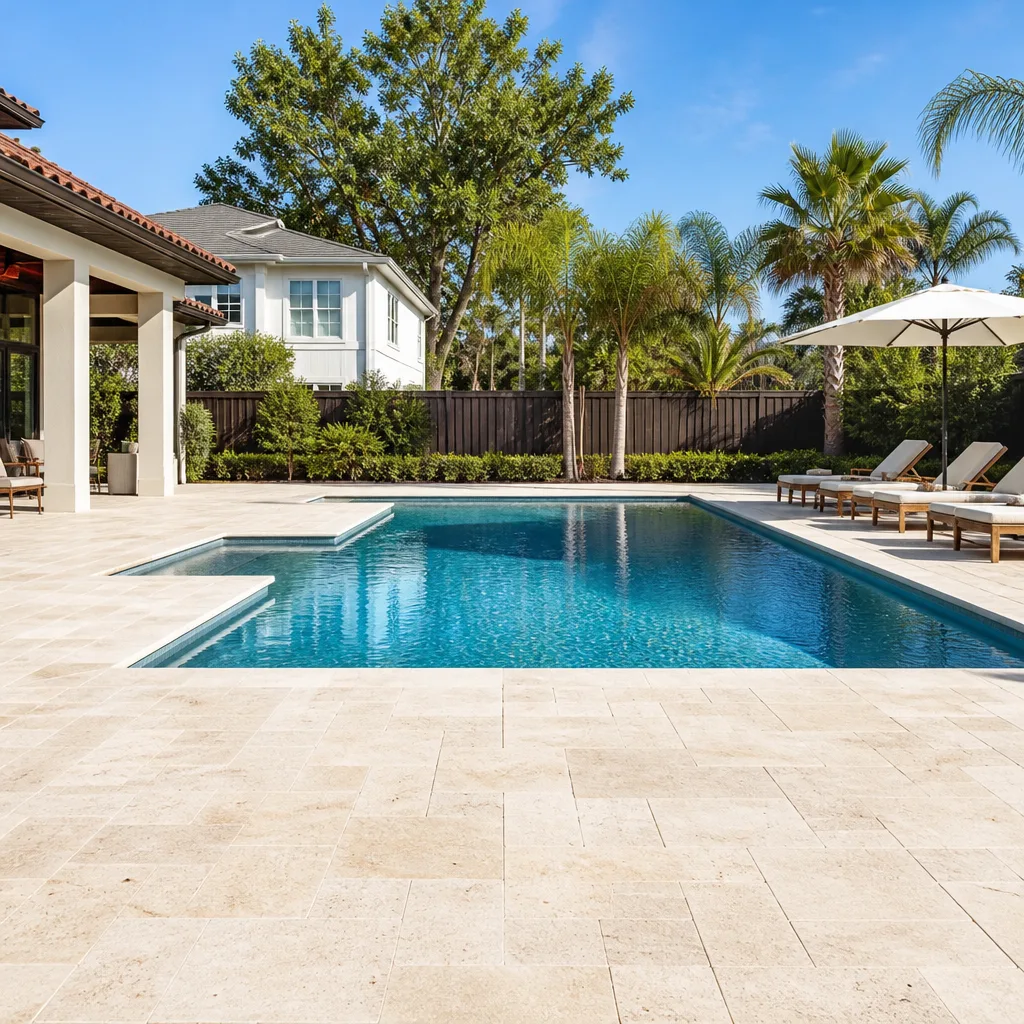
- Travertine: an open-pore natural stone, runs 8 to 12 degrees cooler than concrete pavers because the pores retain less heat and reflect more. Becomes preferable if you’re barefoot frequently, but does require periodic sealing in our climate.
- Porcelain pavers: 20mm exterior-grade porcelain is the coolest of the three. It runs 15 to 22 degrees below concrete because of its low thermal mass and light reflectivity. Premium price, but on a south-facing drive in Summerlin it changes the everyday feel.
Thermal expansion matters too. Every paver expands under heat and contracts at night. In Las Vegas, swings from 108°F daytime to 76°F overnight are routine. The joint spacing has to accommodate that. We use 2 to 3mm joints (never tight-butt) on concrete and porcelain and 3 to 4mm on travertine, which is the spec most likely to survive a decade of swings without spalling at the edge.
How to Build a Base That Survives Las Vegas Summers
The base is 80% of the job. In our experience, every paver driveway that has rippled, settled, or heaved in Las Vegas was a base problem, not a paver problem. Here’s the base we build, and why.
- Excavate to below caliche (see above) plus the base depth plus the paver thickness. On a standard drive, that’s typically 11 to 13 inches of excavation.
- Subgrade compaction. Compact the exposed subgrade to 95% relative density with a plate compactor. If the subgrade is soft or loamy, add 4 inches of Class II and compact it in 2-inch lifts.
- Geotextile separation fabric. Lay a woven separation fabric over the subgrade. This is not optional here. It prevents the caliche fines from working up into the base and creating a drainage block.
- Base in lifts, not one pour. Install 6 inches minimum of compacted Class II aggregate in 2-inch lifts, compacting each lift to refusal. Every lift compacted separately. A base installed in one 6-inch pass never compacts below the top two inches.
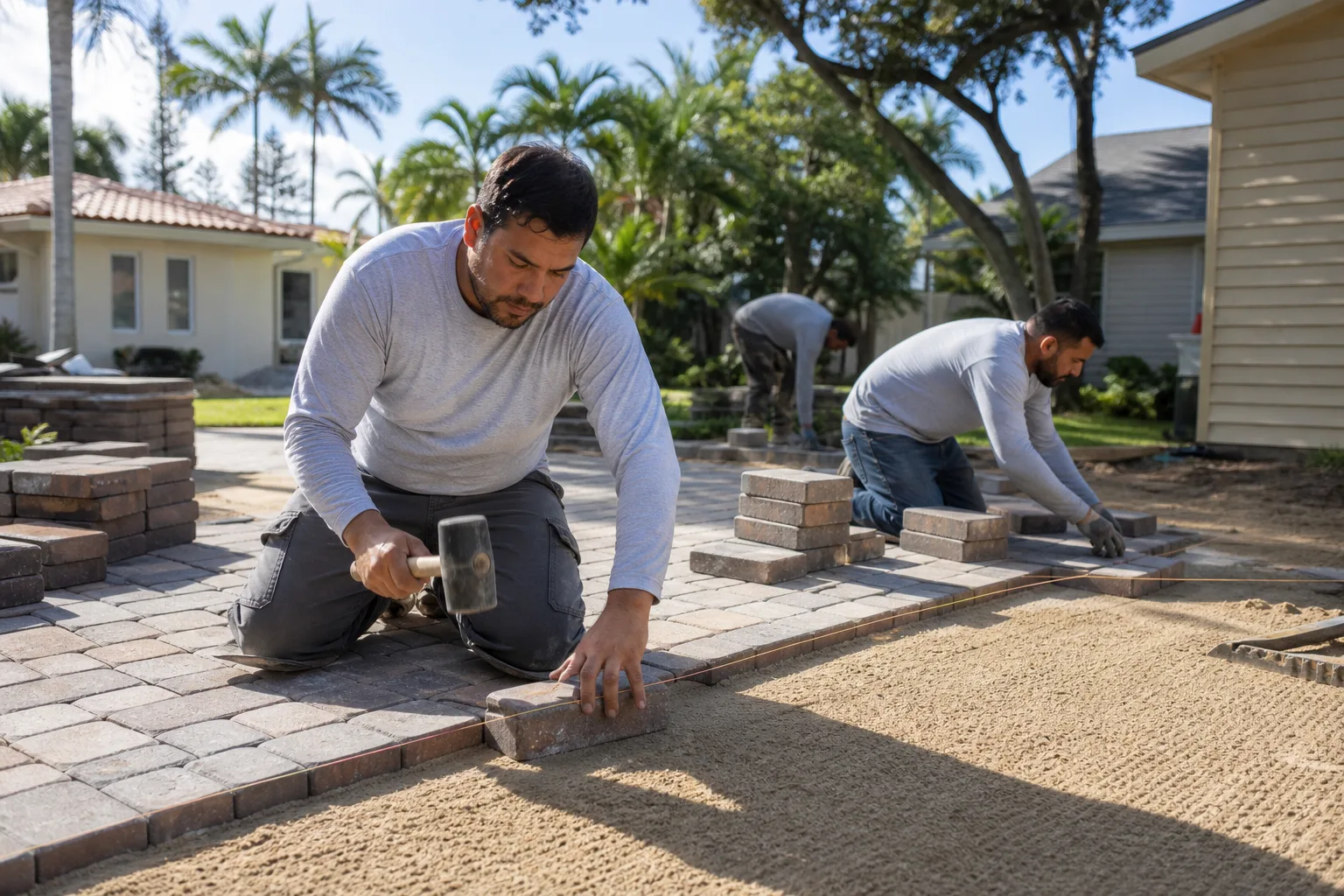
- Edge restraint, set into the base. Aluminum or PVC edge restraint pinned on both sides, so the pavers cannot walk under thermal expansion.
- Bedding sand at 1 inch, screeded flat, then pavers set and compacted with a rubber pad over the plate.
A 4-inch base is code-compliant in most states for residential driveways. On Las Vegas caliche it is not a spec anyone should sign off on. Ask any contractor bidding your job what base depth they’re planning and how they’ll handle caliche. The answer tells you almost everything.
Polymeric Sand That Actually Holds in Clark County
The joint sand is a runoff control and structural component, not a cosmetic finish. In most of the country, a basic polymeric sand will last several years. In Clark County, humidity sits below 20% most of the year and UV is intense. That combination causes a class of failure most homeowners have never heard of: polymeric sand that cures brittle and cracks out in vertical strips within a single summer, especially on joint lines that get direct sun.
What we specify instead:
- Flexible, high-polymer formulations (e.g., Alliance Gator’s G2 series, Techniseal HP NextGel, SRW EasyJoint). These tolerate the thermal movement a rigid sand can’t.
- Activated with the right amount of water. Under-activation leaves unreacted polymer; over-activation washes the binder out. Strictly follow the manufacturer’s water spec, and never apply in direct 100°F+ sun. We water-activate after the driveway has fully shaded, typically in the evening.
- Haze removal within 24 hours, per the manufacturer’s window, with a soft brush.
- Refill schedule. In Las Vegas, expect to top off joints every 18 to 24 months on south and west exposures. It’s a small job, and skipping it lets water into the joints where freeze-free winters still produce thermal erosion.
If your current driveway has sand that has cracked out in channels, it’s not a paver choice problem. The joint sand formulation was wrong for this climate. Re-sanding with a flexible polymer is a $1 to $3 per-square-foot fix, and much cheaper than re-lifting pavers.
HOA Submittals in Summerlin, Henderson, and Rhodes Ranch
If your property is inside a master-planned community, the HOA architectural committee gets a vote on your driveway before the county does. In Summerlin, Henderson’s Seven Hills and Anthem, Rhodes Ranch, Southern Highlands, and Mountain’s Edge, we’ve pulled submittal requirements from each. They differ in ways that matter for material and size selection.
- Summerlin: strict on color palettes. Dark charcoals and dark reds are commonly restricted on visible-from-street hardscape; the approved palettes run limestone, tan, and warm gray. Submission typically requires two material samples and a scaled site plan showing paver pattern and color.
- Henderson communities (Seven Hills, Anthem, MacDonald Ranch): HOA-driven but also stricter on lot-coverage limits than the county. Expect driveways that abut common areas to require a drainage plan demonstrating runoff stays on the lot.
- Rhodes Ranch: HOA review commonly requires a copy of the county permit application at the same time as the design submittal, not sequentially. Missing that step can delay approval by weeks.
Paver size matters for HOA approval in a way few guides mention. Many Las Vegas communities require a minimum surface element size (e.g., pavers no smaller than 4×8 inches in main drive areas, with smaller accent sizes reserved for borders) so that visible-from-street pattern reads as “valuable” not “busy.” Read the CC&Rs before selecting materials. Ordering after HOA approval, not before, is the standard order of operations in Las Vegas.
Permits: Clark County, City of Las Vegas, and Henderson Differ
Which permit applies is determined by where the lot sits, and this trips up first-time applicants more than anything else. Las Vegas is county-governed well outside the city line, and a homeowner in the southwest valley may be under Clark County jurisdiction even though their mailing address says Las Vegas.
- CLARK COUNTY (unincorporated): A residential driveway replacement with no grade change and no right-of-way impact usually does not require a building permit, but right-of-way work (apron, sidewalk, curb cut) requires a separate ROW permit. Inspections typically focus on the apron and ROW.
- CITY OF LAS VEGAS: Permits are triggered for new driveways and for any change to drainage or grade. When the apron changes, the city inspects for sidewalk slope, ADA compliance on any adjacent walks, and drainage. Approval typically runs 10 to 15 business days, longer during the spring season.
- CITY OF HENDERSON: Henderson’s thresholds differ from Clark County’s in that grade changes of even a fraction of an inch can require an over-the-counter permit, and grade-change driveway permits pull a drainage review. That matters when the base excavation is deeper than 11 inches.
Practical advice: pull the permit before demolition. A crew that starts ripping up a driveway before permit approval can be forced to stop mid-excavation. This is one of the reasons we deliver the written price and the permit status in writing before work starts on any Driveway & Pavers in Las Vegas job.
What Driveway Pavers Cost in Las Vegas
Here’s the range homeowners should expect on a residential driveway. Every number is what we see in the Las Vegas market.
- Concrete pavers (Belgard, Techo-Bloc, similar): $14 to $20 per square foot installed
- Travertine: $18 to $26 per square foot installed
- Porcelain pavers (20mm exterior grade): $22 to $28 per square foot installed
- Caliche excavation surcharge: $1,500 to $4,000 per job when present
- HOA submittal assistance: included in most quality quotes; some contractors charge $250 to $500 separately
- Re-sanding with flexible polymer: $1 to $3 per square foot
On a 400-square-foot drive in the southwest valley with caliche excavation, expect $8,000 to $15,000 fully installed. On the same drive in Summerlin with a premium travertine pattern and HOA-compliant palette, the range runs $12,000 to $20,000. A bid that comes in dramatically below these ranges is not competition. It’s a scope cut. The missing line items show up two summers later.
Written price before work starts is not optional. On every Rowan construction job, including driveway work, the quote is a flat written price with a written scope and a written warranty. No change order moves forward until the homeowner signs it.
Maintenance and Repair for Las Vegas Pavers
Las Vegas pavers need less water care than a driveway in a wet climate and more thermal care. A short seasonal rhythm keeps them stable:
- Twice a year (spring and fall): sweep decomposed granite or sand back into joint lines where it has settled and top off with flexible polymer if any cracks show.
- Every 18 to 24 months: re-sand with a flexible polymeric formulation. Budget a few hundred dollars for a typical drive.
- Annually: wash with a garden hose, not a pressure washer above 1,500 psi. High pressure strips the joint sand binder and accelerates joint failure.
- Every 3 to 5 years (travertine only): re-seal with a penetrating sealer formulated for outdoor high-UV.
Weather detail worth knowing: Las Vegas gets its water in two monsoon pulses (roughly July – September) and winter rains. Right after the first summer storm, check the low side of the driveway for standing water. A paver job that drains properly won’t pond. If it does, the drainage path in the base wasn’t built correctly and needs to be corrected at the base, not on the surface.
Common Mistakes to Avoid
- Approving a 4-inch base without asking about caliche. It’s the single most common cause of heaving in Las Vegas driveways. The spec is fine in most of the country and wrong here.
- Skipping the geotextile separation fabric. On caliche-rich lots, fines pump upward over time and turn the base into a drainage block. The fabric is a few hundred dollars of material and saves the entire base.
- Accepting standard polymeric sand. It cures brittle in Clark County’s humidity and cracks out within 12 months. Specify a flexible formulation, activated with the manufacturer’s water spec, in the shade.
- Ordering pavers before HOA approval. In Summerlin, Henderson master-planned communities, and Rhodes Ranch, colors and sizes are often restricted. Material ordered early sits in the garage or gets sold at a loss.
- Pulling the wrong jurisdiction’s permit. A southwest Las Vegas address may be under Clark County jurisdiction. Pulling a City of Las Vegas permit on a county lot means a re-pull and a delay.
- Tight-butt joints. With 30-plus-degree day-night swings, pavers set tight crack at the edges. Demand 2 to 3mm joints.
- Pressure washing with a 3,000 psi unit. It removes the joint sand binder and the surface fire, accelerating joint failure. Garden hose or low pressure only.
See the difference
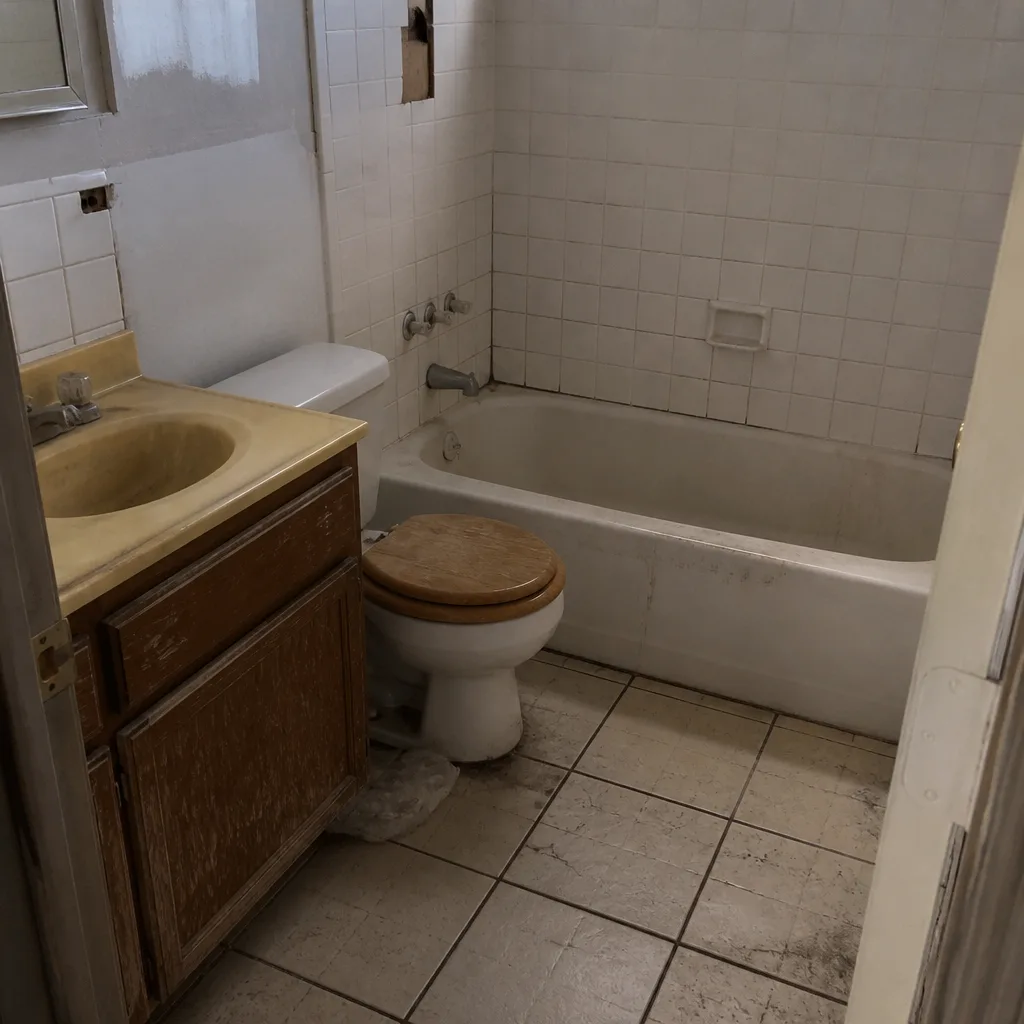 Before
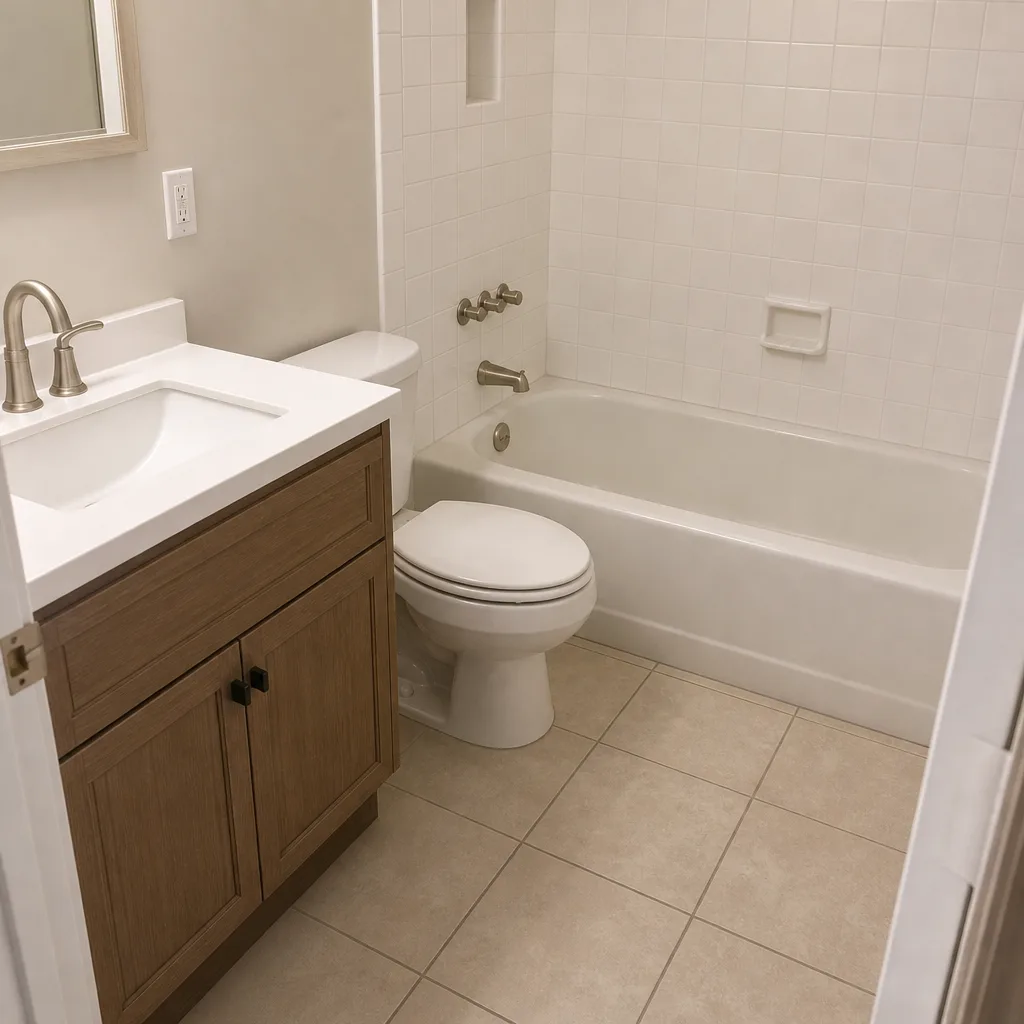 After
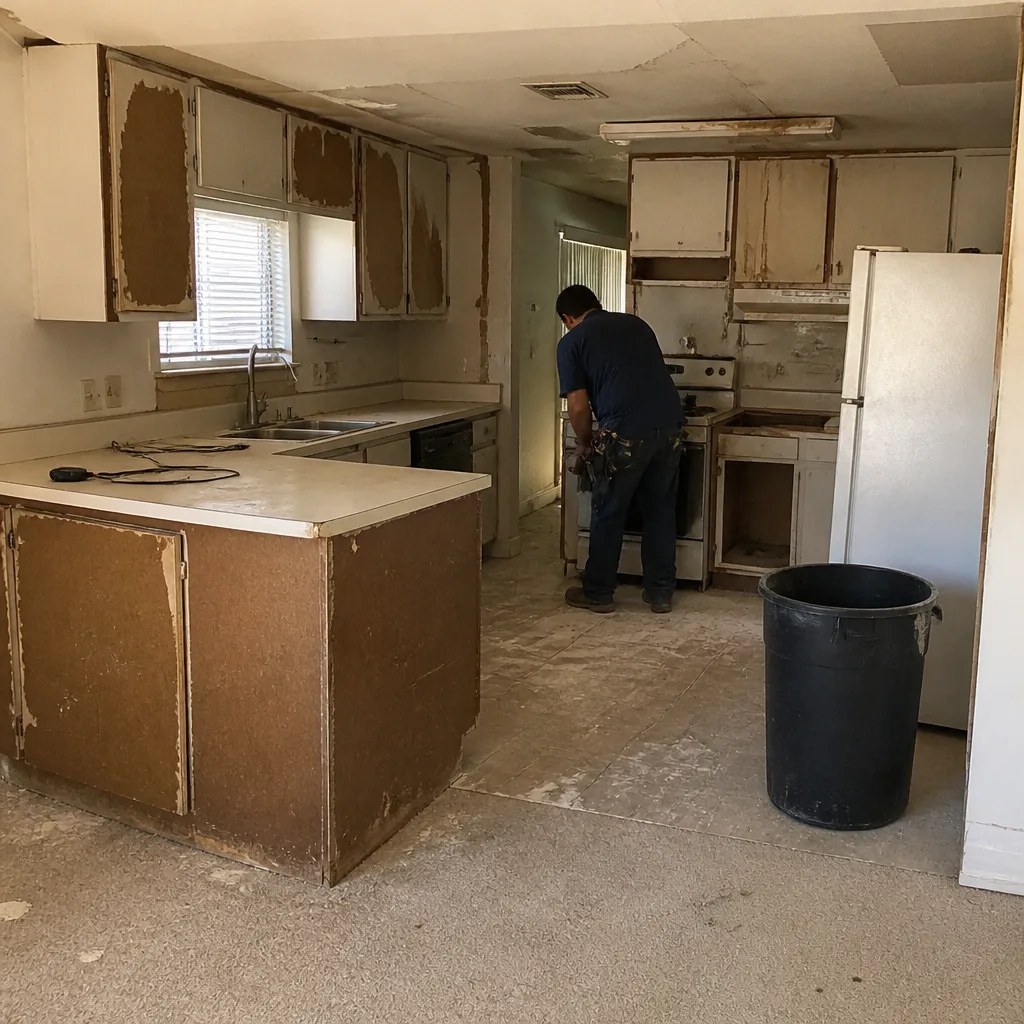 Before
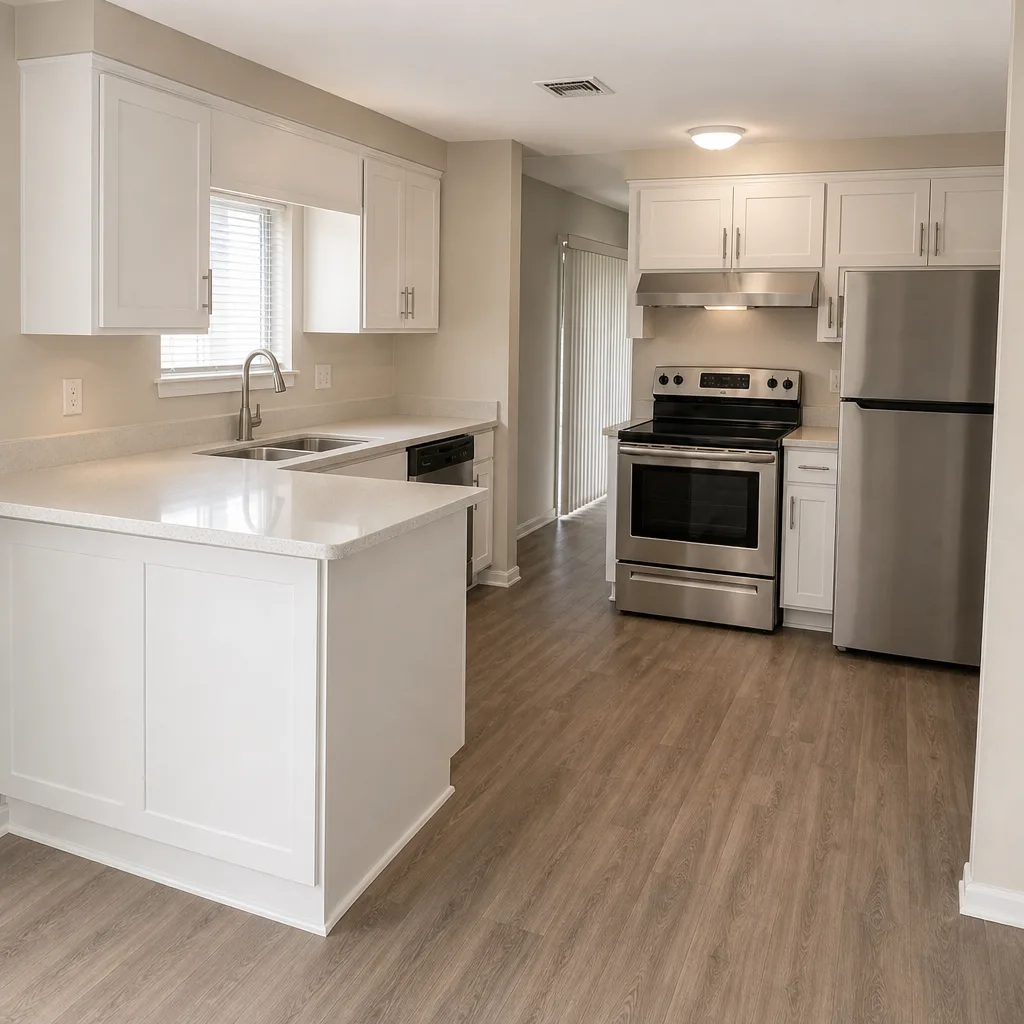 After
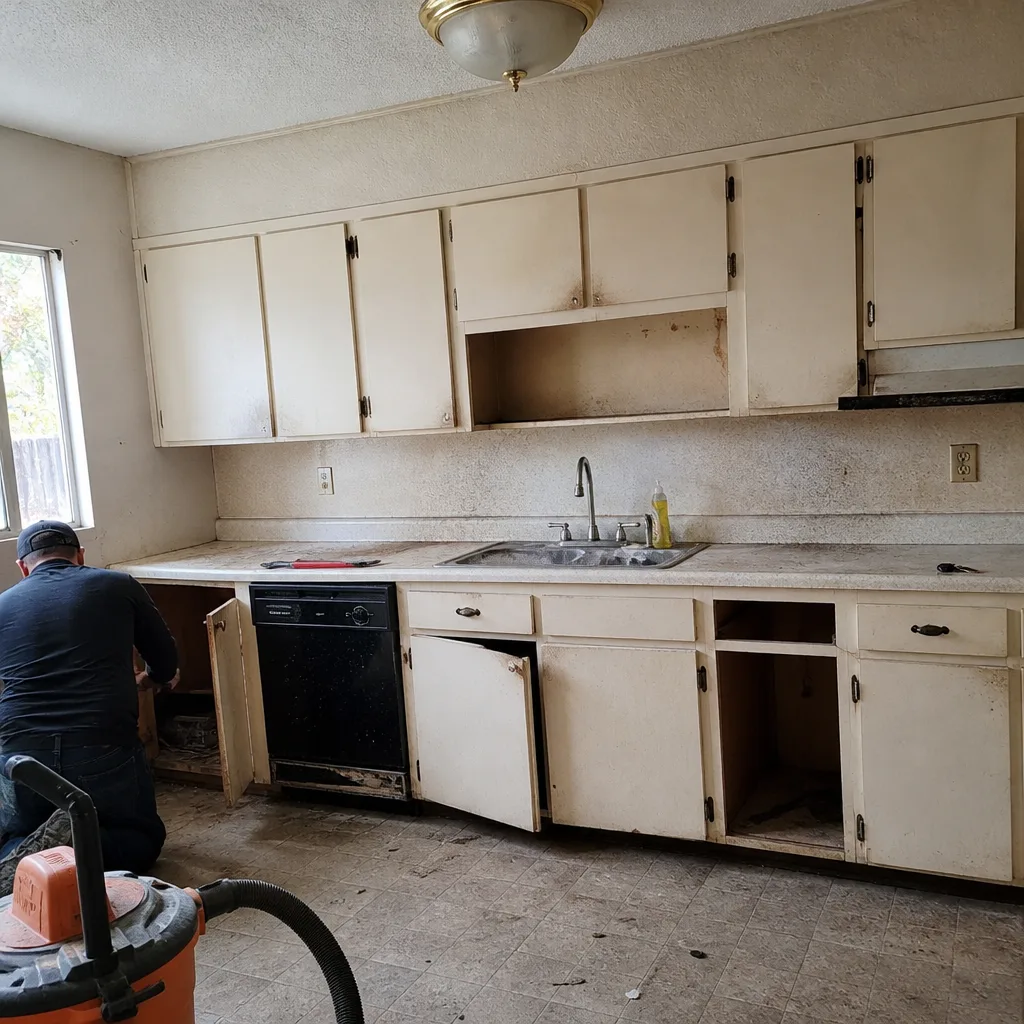 Before
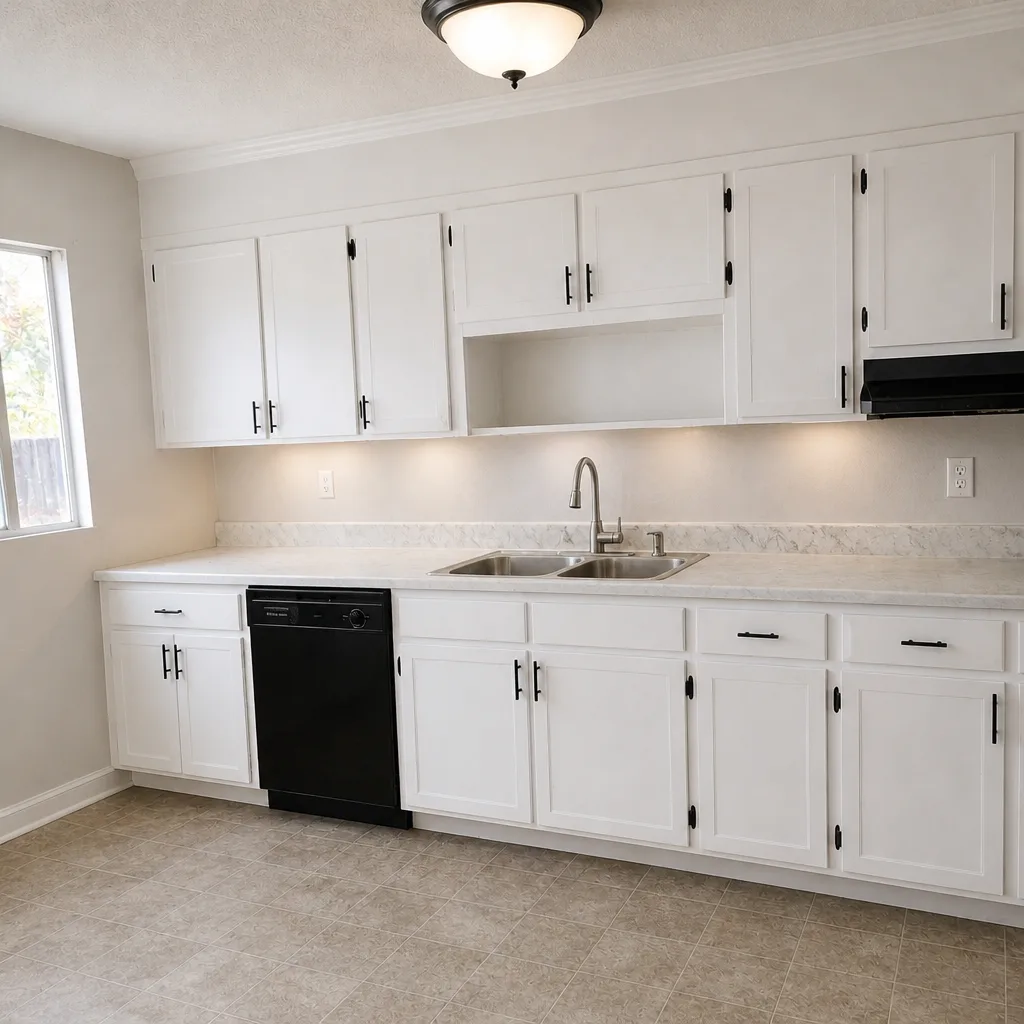 After
When to Call a Professional
Surface repairs and re-sanding are homeowner work. Base excavation below caliche is not. When the driveway has heaved, has sunken sections, drains toward the house, or when you’re planning a full replacement over a caliche layer you’ve already located within a foot of grade, the excavation and compaction work needs a crew with a plate compactor, an excavator, and a rotatable breaker attachment. HOA submittal work, permit pulls across Clark County, City of Las Vegas, and Henderson, and thermal expansion planning across material choices are the three planning decisions best made by someone who has already done them in Las Vegas. Rowan Construction Group Las Vegas offers free estimates in Las Vegas – call (833) 467-9123. Every estimate is a written price before work starts, with a written scope.
Frequently Asked Questions
Residential paver driveways in Las Vegas run $14 to $28 per square foot installed, with concrete pavers lowest, travertine in the middle, and 20mm porcelain highest. A typical 400-square-foot drive costs $8,000 to $15,000 fully installed. Caliche excavation adds $1,500 to $4,000 when present. Call (833) 467-9123 for an exact quote – estimates are free.
It depends on jurisdiction. Clark County usually does not require a building permit for a residential driveway replacement with no grade change, but does require a right-of-way permit if the apron changes. The City of Las Vegas and City of Henderson have different triggers, and Henderson frequently requires an over-the-counter permit for even small grade changes. Always confirm the governing jurisdiction before demolition.
Concrete pavers in unshaded south and west exposures reach 150°F to 165°F surface temperature on a 112°F day. Travertine runs 8 to 12 degrees cooler, and 20mm porcelain 15 to 22 degrees cooler. Light-colored pavers within each product line run cooler than dark colors. If barefoot comfort matters, porcelain or travertine on sun-exposed sections is the practical choice.
A properly built paver driveway in Las Vegas, with base excavation below caliche, geotextile separation fabric, and flexible polymeric joint sand, lasts 20 to 30 years with routine re-sanding every 18 to 24 months. The failures we see at 5 to 10 years are almost always base problems, not paver problems.
Standard polymeric sand cures brittle in Clark County’s low humidity and intense UV. A flexible, high-polymer formulation (Gator G2, Techniseal HP NextGel, SRW EasyJoint, or equivalent), activated with the manufacturer’s water spec in the shade, holds much longer. Re-sanding with the correct formulation typically costs $1 to $3 per square foot.
They approve specific color palettes, minimum surface element sizes, patterns, and drainage plans. Summerlin commonly restricts dark charcoals and reds on street-visible hardscape. Rhodes Ranch commonly requires the permit application at the same time as the design submittal. Read the CC&Rs first, then order materials. Call (833) 467-9123 if you’d like help walking through the HOA packet.
The Bottom Line
Three things decide whether a Las Vegas paver driveway lasts: how the installer handled caliche (excavate below, not just to spec), what base was compacted (6 inches in 2-inch lifts, geotextile fabric, edge restraint), and which joint sand was specified (flexible polymer made for low humidity and intense UV). Material choice is fourth, and the only real decision there is surface temperature and HOA palette. Any contractor who puts a number on these questions in writing before work starts is the one worth signing. Any contractor who doesn’t, isn’t. Our technicians have up to 19 years of experience and every one of these items is a written line in the quote, not a verbal promise.
If you’re ready to price the actual job, gather your drive measurements and call (833) 467-9123 for a free estimate. If you already have a competing quote, we’ll review it line by line at no charge as a Free Second Opinion – the caliche and joint sand line items are usually where the difference lives. Related work across the property is covered in our guides to Fence Installation in Las Vegas and Home Additions & ADU in Las Vegas, and a complete view of what we build is on our Rowan Construction Group Las Vegas home page.
Written by the team at Rowan Construction Group Las Vegas.