Last updated November 18, 2026
Free written scope consultation - allowances, timeline, and change-order rules on paper before a single trade is scheduled
Construction Cost Breakdown: The Las Vegas Homeowner’s Reference for 2026
The national average cost-per-square-foot for a room addition in 2025 sits around $150-$250. In Las Vegas, that same scope lands at $175-$310 once Clark County permit fees, desert-rated materials, and summer scheduling premiums are folded in. That gap is not a sales tactic. It’s the part of the invoice that national cost guides never see. What follows is the local number sheet: line-item ranges by trade, the formula Clark County uses to calculate residential permit fees, the real premium for products built to survive 115-degree summers, what change orders actually cost Las Vegas homeowners, and how to spot the clauses in a bid that quietly hand you the risk after the ink dries.
Quick Answer
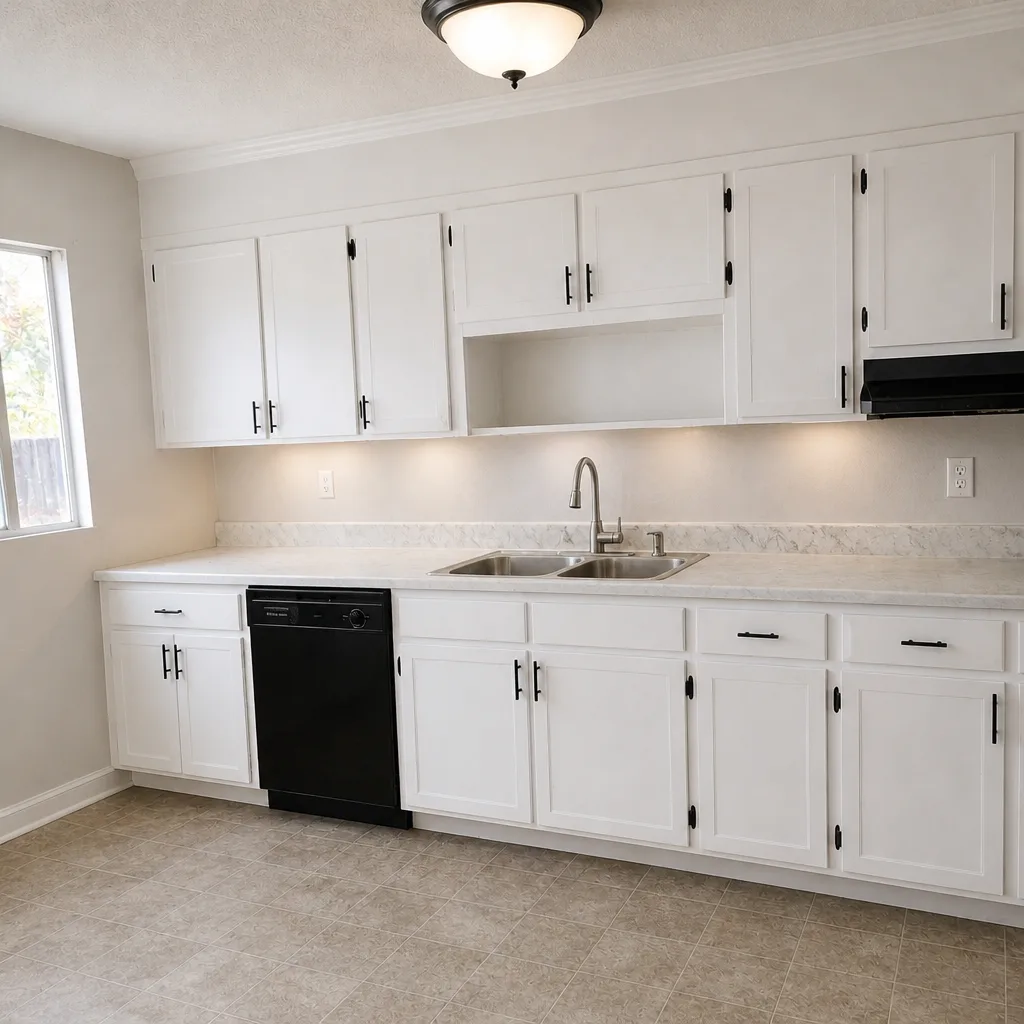
Construction in Las Vegas in 2026 runs roughly 15-30% above national averages for the same scope, driven by Clark County permit fees, heat-rated material specs, and June-through-September labor premiums. A typical kitchen remodel in Las Vegas costs $68,000-$155,000, a 400-square-foot addition runs $70,000-$124,000, and a re-roof on a 2,000-square-foot house lands at $14,500-$28,000.
Styles & brands we work with
- Kitchen remodeling
- Bathroom remodeling
- Home additions & ADU
- Roofing
- Windows & doors
- Driveway & pavers
- Fence
Table of Contents
- Why the National Number Is Wrong
- Line-Item Cost Ranges by Trade
- Clark County Permit Fees: The Formula
- The Desert-Rated Material Premium
- What Change Orders Actually Cost
- How to Read a Bid for Cost-Shifting Language
- Common Mistakes to Avoid
- When to Call a Professional
Why the National Number Is Wrong for Las Vegas
Three cost drivers separate a Las Vegas build from a build in Columbus or Charlotte. The first is climate. Materials that survive here are not materials that survive there, and the price difference is real. The second is Clark County’s permit and inspection schedule, which attaches fees to valuations most homeowners don’t know exist. The third is seasonal labor. Framing, stucco, and roofing crews charge premiums in summer because a stucco scratch coat applied at 4 p.m. when the ambient temperature is 108°F cures too fast and cracks. That premium is baked into every bid you receive between June and September.
Then there is Nevada’s prevailing wage rule. It applies to public works projects primarily, but it filters into residential construction when contractors are bidding both types of work in the same period and carry the labor rate through their pipeline. A Las Vegas framing crew whose rate is anchored to public-sector wage scales will bid your addition higher than the same crew would in a state without those rules.
The combined effect is a real, repeatable 15-30% premium over national averages. Any guide quoting you a flat national number for a Las Vegas project is quoting you the wrong number. We publish the local ranges because our customers deserve to walk into a contractor conversation with a screenshot of a price, not a vague sense of “it depends.”
Line-Item Cost Ranges by Trade
The seven trades below cover the majority of residential construction scope in Las Vegas. Use these ranges to sanity-check any bid. If a bid is materially below the low end, expect a scope reduction. If it’s above the high end, ask what specifically justifies the number.
Framing
Framing runs $9-$18 per square foot for labor and material on standard stick-frame walls and floor systems. A 400-square-foot addition with a typical pitched roof header and single-layer subfloor lands at $3,600-$7,200 for framing alone. Truss systems (pre-engineered, delivered) add cost per unit but reduce install labor by roughly 25%.
Concrete Flatwork
Standard concrete driveways, patios, and walks run $8-$16 per square foot, including demolition and haul-off of existing slabs. Decorative finishes add $6-$14 per square foot. In Las Vegas, concrete must be poured with control joints placed more frequently than in cooler climates (roughly every 8-10 feet vs. 10-12) to control thermal expansion cracking. That’s a real cost difference of $400-$900 on a 600-square-foot driveway.
Roofing
A full asphalt shingle re-roof on a 2,000-square-foot single-family home runs $14,500-$28,000, including tear-off, underlayment, and new flashing. Tile roofs (common in Las Vegas) run $22,000-$42,000 for full replacement. The Clark County permit adds $350-$900. GAF and Owens Corning both carry Class A shingles rated for the thermal cycling this climate produces; unrated builder-grade shingles fail faster here and cost more over a 20-year window.
Stucco
Three-coat stucco (scratch, brown, finish) runs $8-$16 per square foot on new wall area. In Las Vegas, stucco is nearly universal on exterior walls. It requires a weep screed at the base of every wall and proper kick-out flashing at every roof line, and both are frequently missing on tract-built homes from the 2005-2015 construction boom. Retrofitting a missing weep screed costs $400-$1,200 per wall run.
Electrical
Standard electrical rough-in for a 400-square-foot addition runs $3,200-$6,800, including panel capacity adjustment if needed. Panel upgrades run $2,400-$5,800 depending on whether the service line needs to be relocated. Nevada follows the 2023 NEC, which requires AFCI and GFCI protection on nearly all residential circuits. A bid that omits AFCI breakers does not meet code.
Plumbing
Plumbing rough-in for an addition with a bathroom runs $4,800-$11,500, including DWV (drain-waste-vent) lines, water supply, and connection to existing stack. Repiping a 2,000-square-foot house with PEX runs $4,200-$8,900. Copper runs $9,500-$18,000. Copper lasts longer but PEX handles the hard water typical in Las Vegas without scale buildup.
HVAC
New HVAC install (equipment plus ductwork) runs $8,500-$18,500 depending on tonnage. Las Vegas homes need 15-20 SEER2 rated units to handle peak summer loading. Replacement-only installs (existing ductwork in good condition) run $6,200-$12,500. Ductwork replacement alone runs $3,400-$7,800.
Clark County Permit Fees: The Formula
Clark County calculates residential permit fees using a valuation-based formula, not a flat rate. Understanding the formula lets you estimate your permit cost before you file, which means you can budget accurately instead of waiting for the county to tell you what you owe.
The core formula for a residential permit is: (Total project valuation ÷ 1,000) × the applicable fee rate per $1,000 of valuation, plus a plan review fee and applicable surcharges. As of 2026, the base fee rates for standard residential work fall in the $9-$16 per $1,000 of valuation range depending on permit type, with plan review adding roughly 35-50% of the base permit fee on top.
- Determine project valuation. This is contractor-declared value of labor and materials, not contractor margin or fees. The county will adjust your declared valuation upward if it is materially below market range.
- Apply the fee rate per $1,000. Standard residential addition permits run roughly $9 per $1,000. Electrical, plumbing, and mechanical permits are separate and carry their own minimum fees, typically $90-$180 each.
- Add plan review. Add 35-50% of the base permit fee. Plan review is mandatory for additions over 200 square feet and for all new ADU construction.
- Add surcharges. A state-mandated surcharge (typically a few dollars) and a technology fee (typically 1-2% of the permit total) are added at issuance.
Practical examples: a 400-square-foot addition with a valuation of $90,000 runs roughly $1,200-$1,700 in total permit and plan review fees. An ADU with a valuation of $180,000 runs $2,400-$3,500. A re-roof on a 2,000-square-foot house runs $350-$900. Adding a covered pool enclosure usually runs $850-$1,400 depending on the structural scope. Pull the correct permits every time; unpermitted work surfaces at resale and can be ordered removed.
The Desert-Rated Material Premium
Products built for temperate climates fail faster in Las Vegas. The premium to spec for desert conditions is real, documented, and worth every dollar over a 15-20 year horizon. Here are three examples with actual price differences.
- Roofing membrane. Standard 30-pound felt underlayment runs about $0.14 per square foot. A heat-rated synthetic underlayment (like Owens Corning RhinoRoof or GAF Tiger Paw) runs about $0.22-$0.28 per square foot. On a 2,000-square-foot roof, that’s roughly $160-$280 additional. The synthetic resists the thermal cycling that pulls felt apart at year 8-10 in full Las Vegas sun.
- Exterior paint. Standard acrylic latex runs $32-$48 per gallon. Elastomeric paint rated for high UV exposure runs $55-$85 per gallon and is the correct spec for Las Vegas stucco. It expands and contracts with the substrate through the 40+ degree daily swing, where standard acrylic cracks within 2-3 seasons. On a 2,500-square-foot exterior wall area, the elastomeric upgrade typically adds $1,800-$3,200.
- HVAC equipment. A standard 14.3 SEER2 single-stage condenser runs $4,800-$6,500 for a 4-ton unit. A variable-speed condenser rated at 18-20 SEER2 runs $8,200-$11,500 for the same tonnage. In Las Vegas, the variable-speed unit pays back the price premium in 4-6 years through reduced runtime during the June-September peak, when a single-stage unit runs near-continuous and a variable-speed unit modulates to actual load.
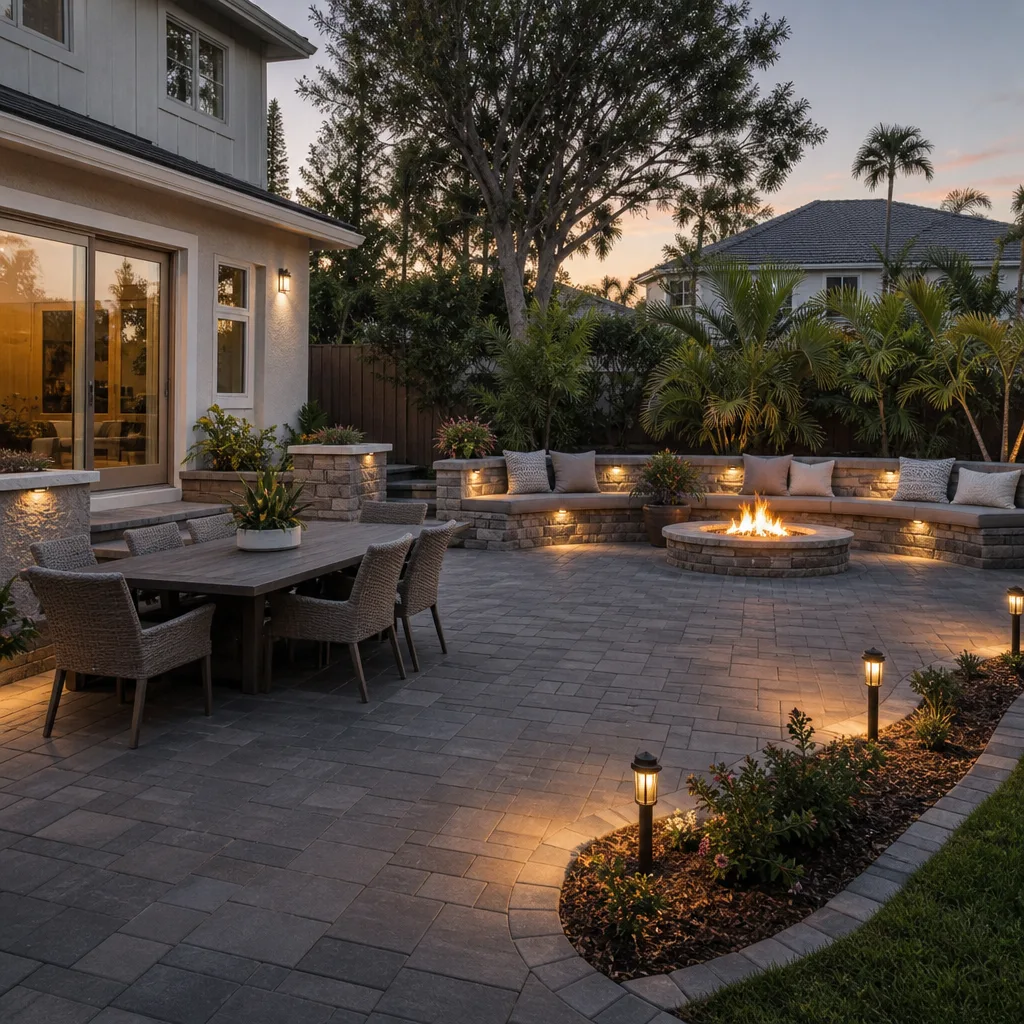
The pattern repeats across windows (dual-pane with low-E mandatory by Clark County energy code for new construction and major remodels), landscaping materials, and paver selections. When you source Belgard or Tremron pavers for a driveway, choose a color and finish rated for high UV stability; darker colors absorb more heat and the color fastness matters more here than in cooler climates.
What Change Orders Actually Cost Las Vegas Homeowners
Roughly 35-45% of residential construction projects in Las Vegas incur at least one change order, according to trade data we track across our own projects and competitive bid comparisons. The average change order runs $3,800-$12,500. The trades that generate the most change orders are, in order: electrical (hidden panel capacity issues), plumbing (unexpected repipe needs), and framing (discovered structural deficiencies behind drywall).
The pattern is predictable. Older Las Vegas homes (pre-2000 construction) generate more change orders than newer ones, because more adaptation is needed. Homes built between 2005 and 2015 generally have cleaner hidden conditions but sometimes carry builder-grade shortcuts that surface during renovation. Homes in neighborhoods like Summerlin and Green Valley, where original build quality was higher, generate fewer change orders on structural work but more on finish-level upgrades, since owners in those areas tend to add scope after demolition reveals possibilities.
The single biggest driver of change-order cost in Las Vegas is a slow permit process. When a project stalls waiting for Clark County plan review (which can run 4-8 weeks for complex additions), material prices move and the contractor’s labor pipeline shifts. The cost of that movement lands on the change order when the project resumes. Projects with tight, verified, pre-reviewed plans incur fewer change orders than projects that submit incomplete drawings.
Under Clause 1 of the Haven Standard, no work proceeds on a change until the change order is signed. That single administrative discipline is why our projects finish within a few percent of the number the customer agreed to. If your contractor’s process does not include a signed change order for every scope adjustment, expect the final invoice to look nothing like the bid.
How to Read a Bid for Cost-Shifting Language
The bid is not the contract, but the bid tells you what the contract will say. Two clauses quietly hand your financial risk to your contractor after the ink dries: unit price clauses and allowance line items.
A unit price clause says something like “additional electrical outlets: $185 each.” That’s not a price; it’s a placeholder. The clause lets the contractor add scope mid-project at a price set by them, not you, and you have already signed. The clause is fine in isolation (you might genuinely need more outlets) but read it carefully. A fair unit price is anchored to actual market rate and is included with a signed change order. A predatory unit price is 2-3x market, and it exists to recover margin lost on the base bid.
An allowance line item says “cabinet allowance: $18,000.” That number is not the cabinet price. It is the contractor’s placeholder for the cabinet price. If the actual cabinets (KraftMaid, Wellborn, or similar) come in at $24,000, you pay the difference. If they come in at $14,000, you get a credit-but many contractors will not issue the credit unless specifically required by contract to do so. The allowance is the place where a bid that looks tight on paper becomes loose in practice.
A fair bid has these properties: line-item dollars per scope item (not allowances or unit prices), a written scope describing exactly what is and is not included, a clear statement of who pulls permits and who pays for inspections, and a written change-order process with a signed-approval requirement before any work proceeds. If any of those four are missing, the bid is not ready to sign.
Common Mistakes to Avoid
- Budgeting from a national cost guide. A guide that quotes a flat $150-$250 per square foot for additions does not know that Clark County permit fees and desert-rated specs add 15-30%. Budget from local ranges, then hold the contractor to the actual numbers.
- Ignoring the Clark County permit fee schedule. Half of homeowners we review past bids for find permit costs (often $1,200-$3,500 on additions) missing from the original quote entirely. Permits are not optional and they are not small.
- Specifying builder-grade materials for Las Vegas sun. A standard 14.3 SEER2 HVAC and standard acrylic paint will cost more over 15 years than the desert-rated upgrade costs up front. Spec for the climate or pay to replace.
- Accepting a bid full of allowance line items. Allowances are the single most common way a tight-looking bid becomes a loose invoice. Ask for line-item dollars with brand names and model numbers, not placeholders.
- Skipping the signed change order. Any contractor willing to proceed on a handshake has just told you that you have no written record of what you agreed to. Demand a signed change order every time scope moves.
- Starting a summer project without heat-schedule planning. Framing and stucco crews in Las Vegas are booked tighter and charge more in June-September. If your project can shift to October-April, you’ll save 5-12% on labor without losing quality.
- Failing to check that the contractor pulls the permits. Homeowner permits put you on the hook for code compliance. Verify before work starts that your contractor is the permit holder on any structural, electrical, plumbing, or HVAC work.
When to Call a Professional
Call a licensed contractor when the work involves structural changes, electrical panel work, gas line alterations, HVAC replacement, or any scope that requires a permit and inspection. Old-house surprises (rotted framing, undersized panels, cracked slabs) in older Las Vegas neighborhoods are the places where DIY cost savings disappear into code violations and re-inspection fees. Any addition over 200 square feet, any new ADU, and any re-roof requires permits that must be signed for by a licensed contractor. For driveway and hardscape decisions, Driveway & Pavers in Las Vegas covers the specs and installation sequencing worth reading before the bid. If the boundary condition matters as much as the build, Fence Installation in Las Vegas speaks to the Clark County codes and the paver base prep that keeps a fence standing through monsoon season. If the project is an addition or an ADU, Home Additions & ADU in Las Vegas is the right starting point. Rowan Construction Group Las Vegas offers free estimates in Las Vegas. Call (833) 467-9123 to schedule yours.
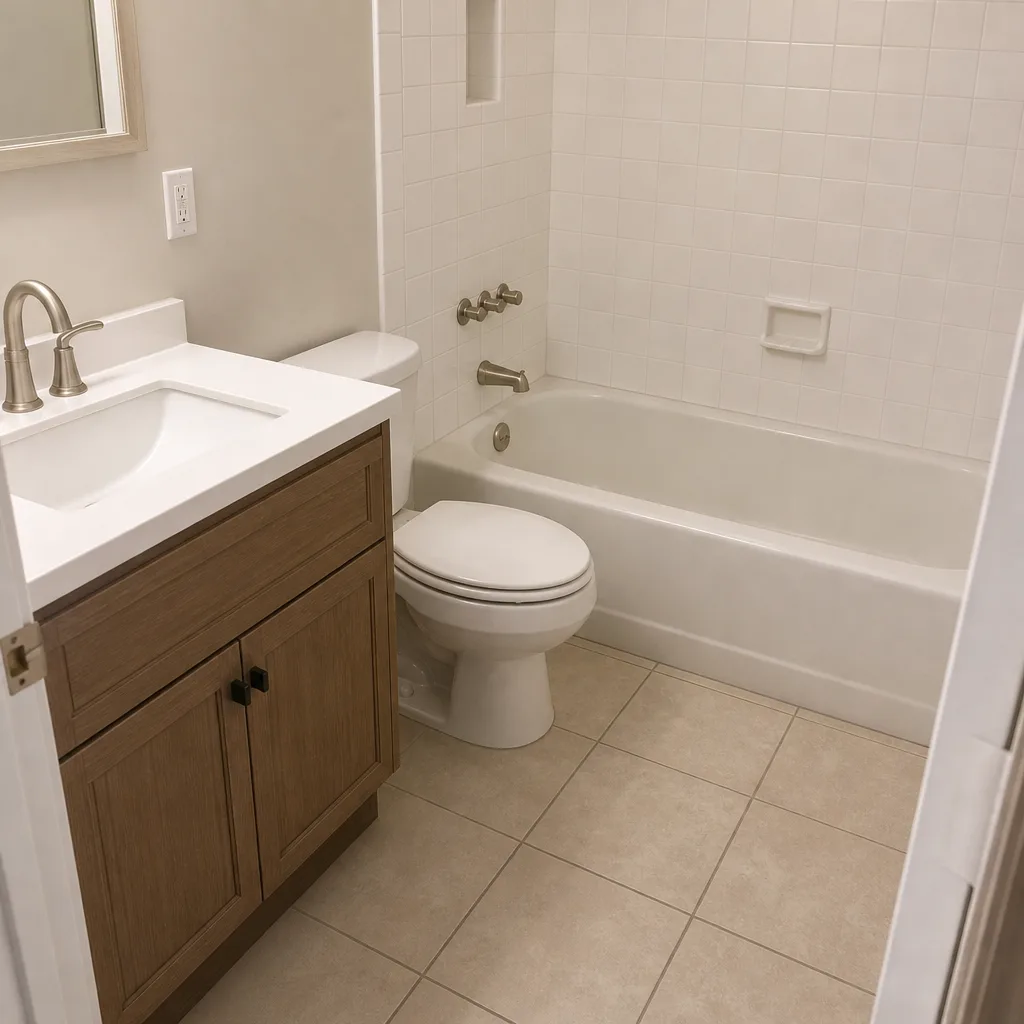
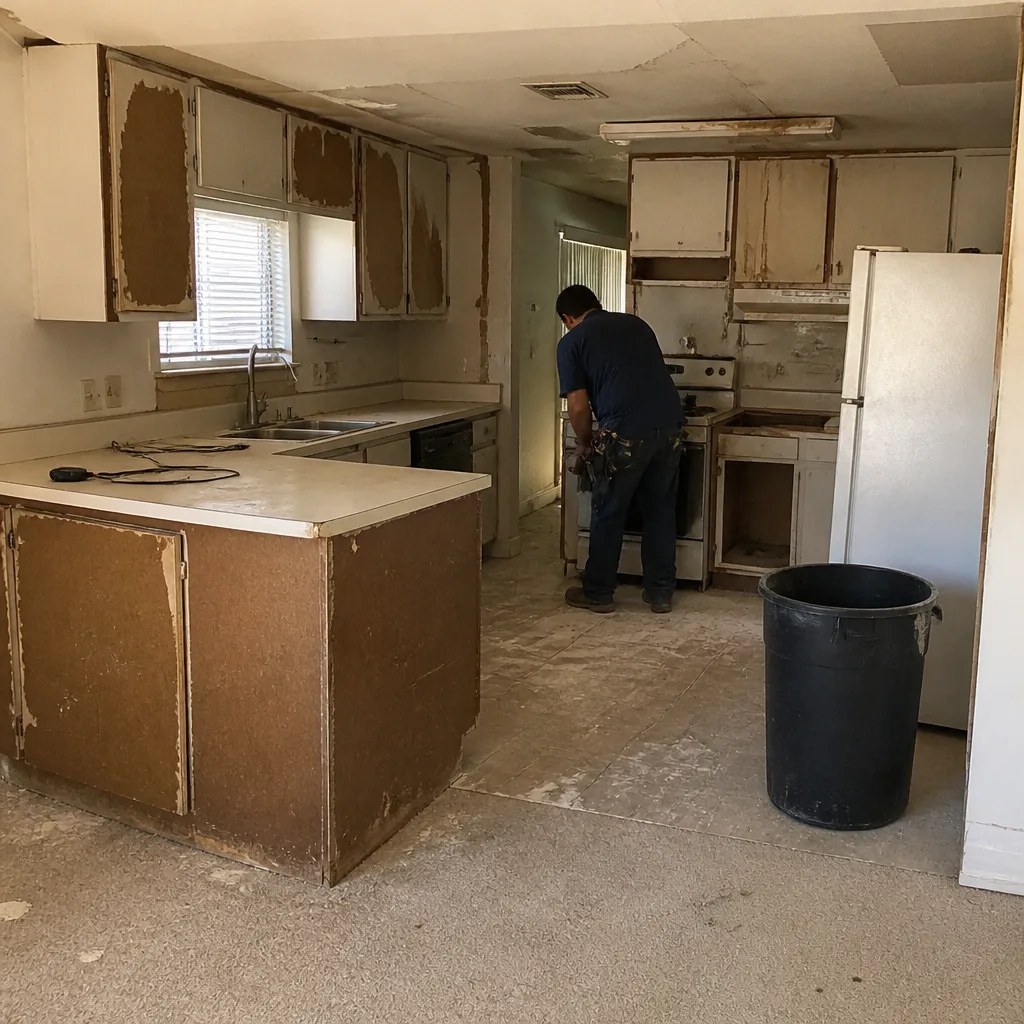
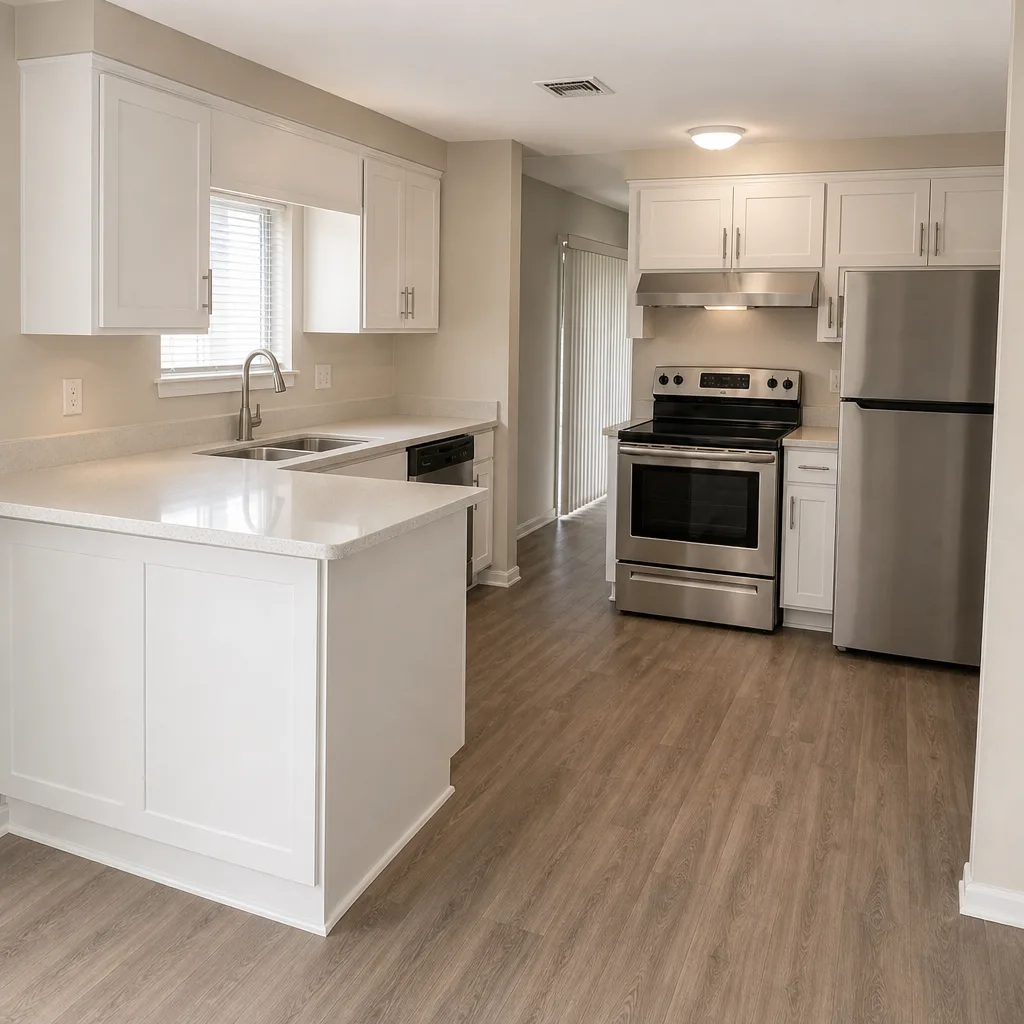
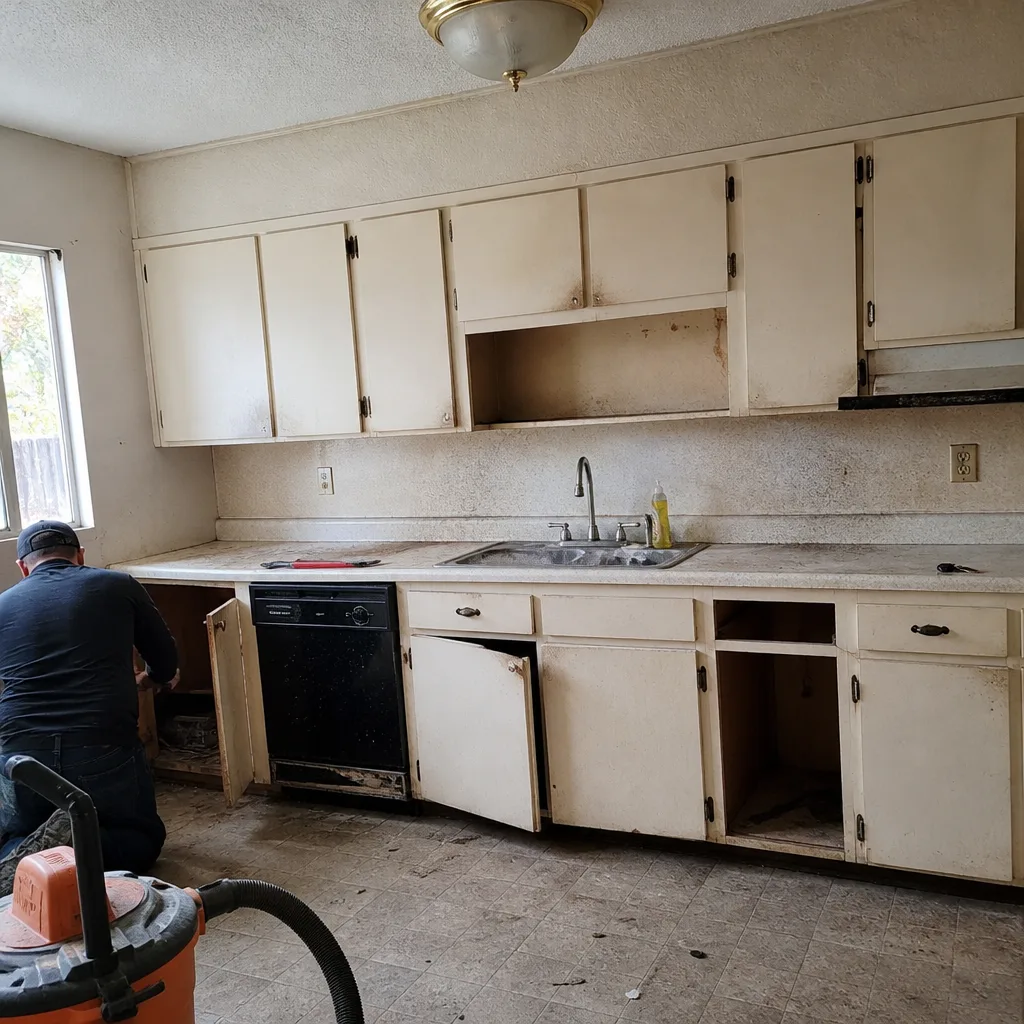
See the difference
 Before
 After
 Before
 After
 Before
 After
Frequently Asked Questions
A 400-square-foot room addition in Las Vegas runs $70,000-$124,000 as a complete project, which reflects $175-$310 per square foot including permit fees, desert-rated materials, and labor. Smaller additions come in at the higher end per square foot; larger ones average down. Call (833) 467-9123 for an exact quote – estimates are free.
The written price should not change unless scope changes. The one exception is hidden conditions uncovered during demolition (rotted framing, undersized electrical panels, unpermitted prior work). Under the Haven Standard, no change proceeds without a signed change order, so you know the number before the work happens. Ask any contractor whether they operate on a signed change-order process before you sign.
Yes. On any scope that requires a permit in Clark County (additions, ADUs, re-roofs, electrical panel work, gas lines, HVAC replacement), the contractor is the permit holder and handles the application, plan review, and inspections. Homeowner-pulled permits put you on the hook for code compliance and are generally a red flag on the contractor’s side.
A re-roof on a 2,000-square-foot home takes 2-5 working days. A kitchen remodel takes 6-10 weeks. A 400-square-foot addition takes 14-20 weeks including Clark County plan review (which alone runs 4-8 weeks). An ADU takes 20-30 weeks. Summer timing adds 1-2 weeks for heat-related schedule adjustments.
Three reasons: Clark County permit fees and the plan review process, the material premium for products rated to survive 115-degree summers (roofing underlayment, elastomeric paint, higher-SEER2 HVAC), and summer labor premiums when framing, stucco, and roofing crews charge more per square foot. Combined, the effect is a real 15-30% premium over the same scope in a temperate climate.
Compare line by line, not total to total. A bid $15,000 lower on the bottom line often reflects a smaller scope (fewer electrical outlets, thinner shingle line, cheaper finishes) rather than a better price. Ask each contractor to break down the same line items in the same order: demolition, framing, electrical, plumbing, HVAC, finishes, permits. Difference between bids should be visible per line item, not just in the total.
The Bottom Line
Las Vegas construction costs run 15-30% above national averages, and the national guide you’re reading was never built for Clark County permit fees or desert-rated specs. The local ranges are: $175-$310 per square foot for additions, $68,000-$155,000 for a kitchen remodel, $14,500-$28,000 for a re-roof, and $1,200-$3,500 in permit fees on a typical addition. Three things protect your budget: request a bid with line-item dollars and no allowances, verify your contractor pulls the permits, and require a signed change order on every scope adjustment.
Rowan Construction Group Las Vegas delivers a written flat price before any work starts on every trade, from kitchen remodels to Home Additions & ADU in Las Vegas and Fence Installation in Las Vegas. Every project includes a documented photo record on every visit, background-checked technicians, and the 365-Day Done Right Promise. Call (833) 467-9123 to schedule your free estimate, or bring any competitor’s written quote for a free second opinion reviewed line by line. For everything we build across the Valley, start at the Rowan Construction Group Las Vegas home.
Written by the team at Rowan Construction Group Las Vegas.