Last updated November 18, 2026


Free written scope consultation - allowances, timeline, and change-order rules on paper before a single trade is scheduled
Construction Permits, Codes & Inspections in NV: What You Need to Know
Unpermitted work in Clark County doesn’t just risk a stop-work order. It can put a recorded lien risk on your title that surfaces years later, when a buyer’s title company runs its search and finds an open permit the contractor walked away from after cashing the final check. We’ve seen closings stall for weeks over a patio cover nobody pulled a permit for. The address of your property, not your preference, decides which of three overlapping jurisdictions governs your project in the Las Vegas metro. This guide walks you through the jurisdiction lookup, the Nevada amendments to the 2021 IBC, the residential inspection sequence, over-the-counter approval versus plan review, and what NRS 624.031 really lets an owner-builder do. If you’re building in Las Vegas, knowing which rules apply before you break ground saves you money and title headaches.
Quick Answer
In Nevada, construction permits are issued by the local jurisdiction where the property sits, not by the state. In the Las Vegas metro that means Clark County Building Department for unincorporated areas, City of Las Vegas for properties inside city limits, and separate departments for Henderson, North Las Vegas, Boulder City, and Mesquite. Each enforces its own amendments to the 2021 International Building Code. Pull the wrong permit portal and your inspection won’t pass, no matter how good the work is.
Styles & brands we work with
- Kitchen remodeling
- Bathroom remodeling
- Home additions & ADU
- Roofing
- Windows & doors
- Driveway & pavers
- Fence
Table of Contents
- Which Jurisdiction Governs Your Las Vegas Property?
- Nevada’s Amendments to the 2021 IBC: What’s Different
- Over-the-Counter Permits vs. Plan Review
- The Standard Residential Inspection Sequence
- Owner-Builder Rules Under NRS 624.031
- What Permits Cost in Las Vegas
- Common Mistakes to Avoid
- Frequently Asked Questions
Which Jurisdiction Governs Your Las Vegas Property?
This is the first question on every project, and it isn’t rhetorical. The Las Vegas valley is stitched together from unincorporated Clark County land and six incorporated cities, and the boundaries don’t follow what locals call a neighborhood. A house in the 89123 ZIP code can sit in unincorporated Enterprise, while a house two miles away with the same mailing address is inside Henderson city limits. The county and the city each have their own building department, their own fee schedule, and their own counter staff who will tell you within thirty seconds that you’re in the wrong place.
Here’s how to find out before you fill out a single form.
- Pull your parcel number. The Clark County Assessor’s website lets you search by address and returns the parcel number and a map showing jurisdiction boundaries. This is the authoritative source. A realtor’s listing sheet is not.
- Match the parcel to its jurisdiction. Unincorporated Clark County is handled by the county’s Building Department. Properties inside the City of Las Vegas use the city’s Department of Building and Safety. Henderson, North Las Vegas, Boulder City, and Mesquite each run their own portals.
- Confirm on the department’s own lookup tool. Each jurisdiction has an address lookup or GIS viewer. Search the address and read the result. Don’t assume a “Las Vegas, NV” mailing address means City of Las Vegas. It very often means unincorporated county.
- Check for overlay districts or special plans. Some areas, especially around the resort corridor and certain redevelopment zones, carry additional design review requirements beyond the base code.
Here’s a quick reference for the major jurisdictions in the metro:
- Clark County (unincorporated): Enterprise, Spring Valley, Paradise, Sunrise Manor, Whitney, Winchester, portions of the southwest valley. Clark County Building Department portal.
- City of Las Vegas: Downtown, the Arts District, portions of the northwest and west valley inside city limits. Department of Building and Safety portal.
- Henderson: Most of the southeast valley including Green Valley, Anthem, and Inspirada. Henderson Building & Fire Safety portal.
- North Las Vegas: Northern valley including Aliante and portions of the 89030-89086 ZIP range. North Las Vegas Building Department portal.
- Boulder City and Mesquite: Smaller incorporated municipalities with their own departments and typically more limited counter hours.
Getting this wrong costs time. A submittal rejected at the wrong counter means resubmitting with a new fee schedule and a new intake queue. For a project in the southwest, an ADU on an unincorporated parcel behaves very differently from one inside Henderson city limits, which is one reason we walk through jurisdiction before we scope work on any Home Additions & ADU in Las Vegas.
Nevada’s Amendments to the 2021 IBC: What’s Different
Nevada adopts the International Building Code with state amendments layered on top, and each local jurisdiction adds another layer. Two amendments matter most for residential work in the Las Vegas valley: the seismic provisions and the desert-climate energy requirements.
Seismic. Southern Nevada isn’t California, but the state doesn’t treat it as a low-hazard footnote either. Shear-wall bracing, anchor-bolt spacing, and hold-down requirements for wood-framed structures are enforced with a stiffness you won’t find in the IBC’s base text. If you’re adding a second story, converting a garage, or building a detached structure, plan for braced-wall detailing that a plan reviewer will actually check. We’ve watched framers from other states assume residential seismic bracing is optional and get redlined on the first submittal.
Desert-climate energy code. Nevada enforces Title 20 of the Nevada Administrative Code, which in practice means the energy provisions track the IECC with amendments tuned to a hot, dry climate. What does that look like at the site level?
- Ductwork in unconditioned attics has to meet stricter sealing and insulation thresholds than a milder climate would require. In a Las Vegas attic that hits 140 degrees in July, a leaking duct joint isn’t a comfort issue, it’s a code failure.
- Window U-factors and solar heat gain coefficients are capped, which is why a name-brand low-E assembly matters more here than the marketing label. Thermally broken frames and proper SHGC ratings show up on the plan review checklist.
- Radiant barrier and attic ventilation specs are enforced, not suggested.
- Insulation R-values for walls, ceilings, and slabs are checked against the compliance path your designer selected.
None of that is theoretical. The plan reviewer will ask which compliance path you used, and if it’s a prescriptive path, the R-values and glazing numbers print out and go on the plans. Windows and doors, in particular, need manufacturer documentation on file. When we install a Therma-Tru or ViewLux unit as part of a project, the product spec sheet is part of the submittal packet, not an afterthought. That’s the difference between a first-pass approval and a bounce-back. You can see how we sequence that paperwork on our Rowan Construction Group Las Vegas home page.
Over-the-Counter Permits vs. Plan Review
Not every project needs a full plan review. Some qualify for “over-the-counter,” meaning you walk up to the permit counter, hand over a completed application, and leave with a permit the same visit, or get a correction sheet listing what’s missing. The difference between OTC and plan review is really about complexity: how many code considerations your project triggers, and whether anyone with a stamp needs to sign off on a set of drawings.
In the Las Vegas valley, OTC eligibility typically covers:
- Water heater replacements like-for-like (same capacity, same location, no relocation of gas or electrical)
- Re-roofing with no structural change, when the deck is intact and the assembly meets Title 20
- Fence and wall permits under the jurisdiction’s height threshold, typically six feet on residential parcels
- Flatwork like driveways, patios, and walkways within setback limits
- Window and door replacements that don’t change the rough opening size or add a new opening in the wall
- Minor electrical, plumbing, or mechanical repairs that stay within defined scope limits
What goes to plan review instead:
- Anything structural: additions, second stories, garage conversions, new openings in load-bearing walls
- ADUs and detached structures
- New construction or anything requiring an architectural and engineering stamp
- Pools and spas, which are typically reviewed separately
- Any project touching fire-rated assemblies or egress
What to bring to the counter: a completed application, the parcel number, scope narrative, a simple site plan drawn to scale, and for anything structural, stamped drawings. In our experience, the biggest cause of a bounced submittal is a fee estimate done at the wrong jurisdiction or a scope description that reads “replace windows” when the actual install changes a rough opening. Most of the metro’s building departments publish their submittal checklists online. Read the checklist for the specific department before you drive over. Pulling the correct form the first time saves a full trip through a queue that can run well past two hours on a Monday.
The Standard Residential Inspection Sequence
Every residential permit in the Las Vegas valley moves through a sequence of inspections, and each is a hard gate. You cannot cover a foundation before it’s inspected, you cannot drywall over framing before that inspection is signed off, and you cannot close a permit until the final inspection passes. Skips here are where unpermitted-work problems begin.
- Foundation. Rebar layout, formwork, and anchors inspected before any concrete is poured. In a swing arm (hot weather) pour, timing matters, and a failed inspection after the truck arrives means a wasted pour. Embed plates and anchor bolt spacing are checked against the seismic detailing.
- Framing and shear. Interior and exterior framing, shear-wall nailing, hold-downs, and header sizing, before any insulation or drywall. This is where the desert climate code gets an early look: duct routing and mechanical penetrations are reviewed.
- Rough MEP (mechanical, electrical, plumbing). Sometimes split into separate inspections by trade, sometimes combined. Meter releases and gas line pressure tests are confirmed here. In a valley where three trades are often on site within the same week, scheduling against the permit calendar is a real logistics job.
- Insulation and energy compliance. R-values, radiant barriers, and duct sealing verified against Title 20 before drywall closes the walls.
- Drywall and lath. Only after framing, rough MEP, and insulation pass. Screw patterns and fire-rated assemblies reviewed if applicable.
- Final inspections. Usually split into a final building inspection and separate final electrical, plumbing, and mechanical inspections. No occupancy and no closing of the permit until all finals pass.
The scheduling reality: Clark County’s residential inspection queue typically runs several business days out, and calling the day before rarely works. Some inspections book closer to a week during peak construction months (late spring through early fall, when remodels and re-roofs stack up before summer heat). If your project sits inside Henderson or City of Las Vegas, the queue and the online scheduler are separate systems. The practical takeaway: build inspection scheduling into the build calendar from day one, and don’t plan to hang drywall the day after your framing walk. Skipping a gate to save time is how you end up with an open permit at a title search.
Owner-Builder Rules Under NRS 624.031
Nevada allows homeowners to act as their own general contractor on their own primary residence without holding a contractor’s license, under NRS 624.031. That’s the letter of the rule, and it’s true. It also comes with teeth most homeowners never read past.
What NRS 624.031 permits:
- Pulling permits in your own name for work on your own primary residence
- Serving as the general contractor on that project, coordinating licensed subcontractors
- That’s it. The exemption is personal, for your own home, not for resale.
What it does not do:
- It does not exempt the work from code compliance. Every inspection gate still applies. A failed inspection at framing doesn’t get waived because you pulled the permit yourself.
- It does not exempt you from licensing your subs. Every plumber, electrician, and mechanical contractor working under your owner-builder permit must be licensed and permitted in their own right. An unlicensed sub working under your permit is your problem, not theirs.
- It does not travel with the house. If you sell within a defined window after completing the work, and the buyer’s title company finds an issue, the exemption can create disclosure and liability exposure the seller did not anticipate. Consult a Nevada real estate attorney for your specific situation; the contract terms and disclosure requirements are set by statute, not by what feels fair.
In our experience, owner-builder status rarely saves money once you count your own unpaid labor, the cost of pulling and scheduling permits you’re learning on the fly, and the risk premium a buyer’s inspector will attach when they know the general contractor was the homeowner. Where it makes sense is a single-trade project on your forever home where you have existing trade relationships. Where it goes wrong is multi-trade remodels and anything touching structure.
What Permits Cost in Las Vegas
Permit fees vary by jurisdiction and by valuation, so the only honest answer is a range, not a number. Across the Las Vegas metro, residential permit fees generally break down into a building permit fee scaled to the declared project valuation, plus separate electrical, plumbing, and mechanical fees, plus a plan review fee where review applies. For a mid-sized residential remodel in the $30,000 to $80,000 range, expect total permit and review costs in the low four figures. A re-roof on a typical single-family home in the valley runs a few hundred dollars. A new detached ADU moves into a higher tier because of the plan review and separate trade permits.
Most departments publish their fee schedules online. Ask for a written fee estimate before you submit, and expect the actual invoice to track your declared valuation. Under-declaring valuation to lower the fee is a common shortcut with consequences: it triggers a correction at final inspection, and it can look like misrepresentation to a lender or an insurer. The fee you save is never worth the re-inspection trip.
Common Mistakes to Avoid
- Pulling the permit at the wrong jurisdiction. Pulling at City of Las Vegas when the parcel is unincorporated Clark County means a rejected submittal and a wasted trip. Check the assessor’s parcel map first.
- Assuming a “Las Vegas, NV” mailing address means City of Las Vegas. Most of the metro is unincorporated Clark County. The mailing address tells you nothing about jurisdiction.
- Skipping a gate to save a week. Hanging drywall before the rough MEP inspection passes is the single fastest way to get a stop-work order. The red tag costs more time than the wait would have.
- Assuming Title 20 compliance is automatic. Duct sealing and window U-factor specs are verified at inspection. Verify the product you bought against the compliance path on your plans before it goes in.
- Covering inspection scheduling gaps. Clark County’s residential inspection queue runs several days to a week out in busy months. A build calendar that ignores this is a build calendar that slips.
- Under-declaring project valuation. A low declared valuation lowers the fee and raises the correction sheet at final inspection. Not worth it.
- Treating owner-builder status as an exemption from codes. NRS 624.031 doesn’t waive the code. It waives the GC license requirement for your primary residence. Every inspection still applies.
- Leaving a permit open and assuming it “grandfathers.” An open permit surfaces at a title search and can hold a sale. Close finals before you list.
See the difference
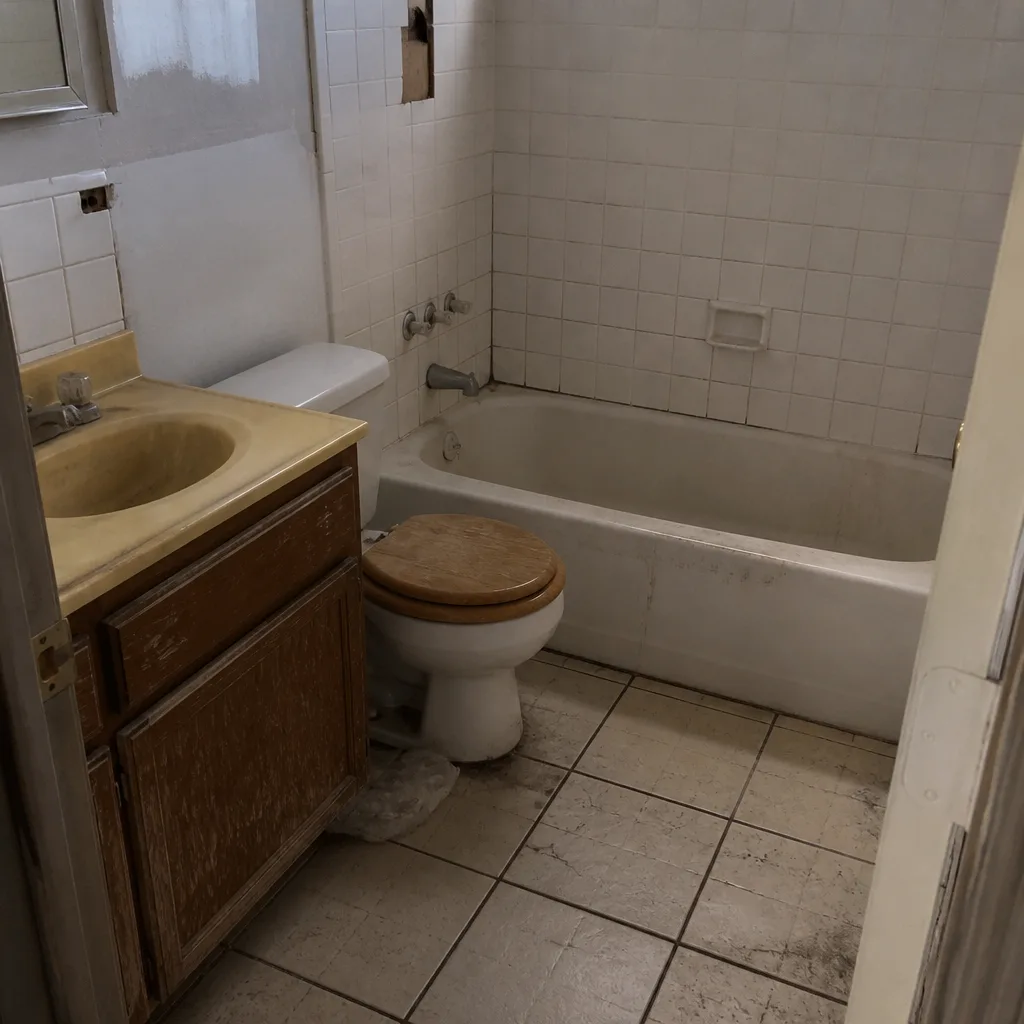 Before
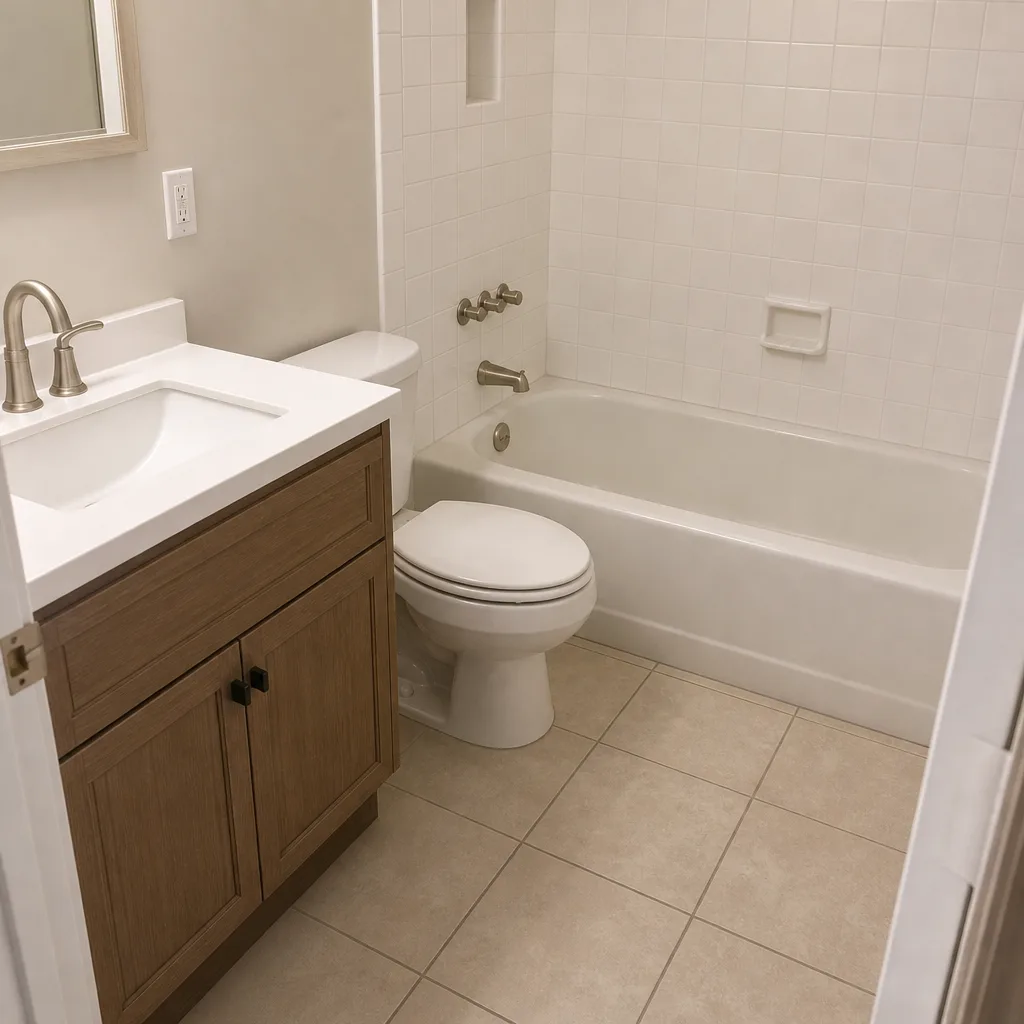 After
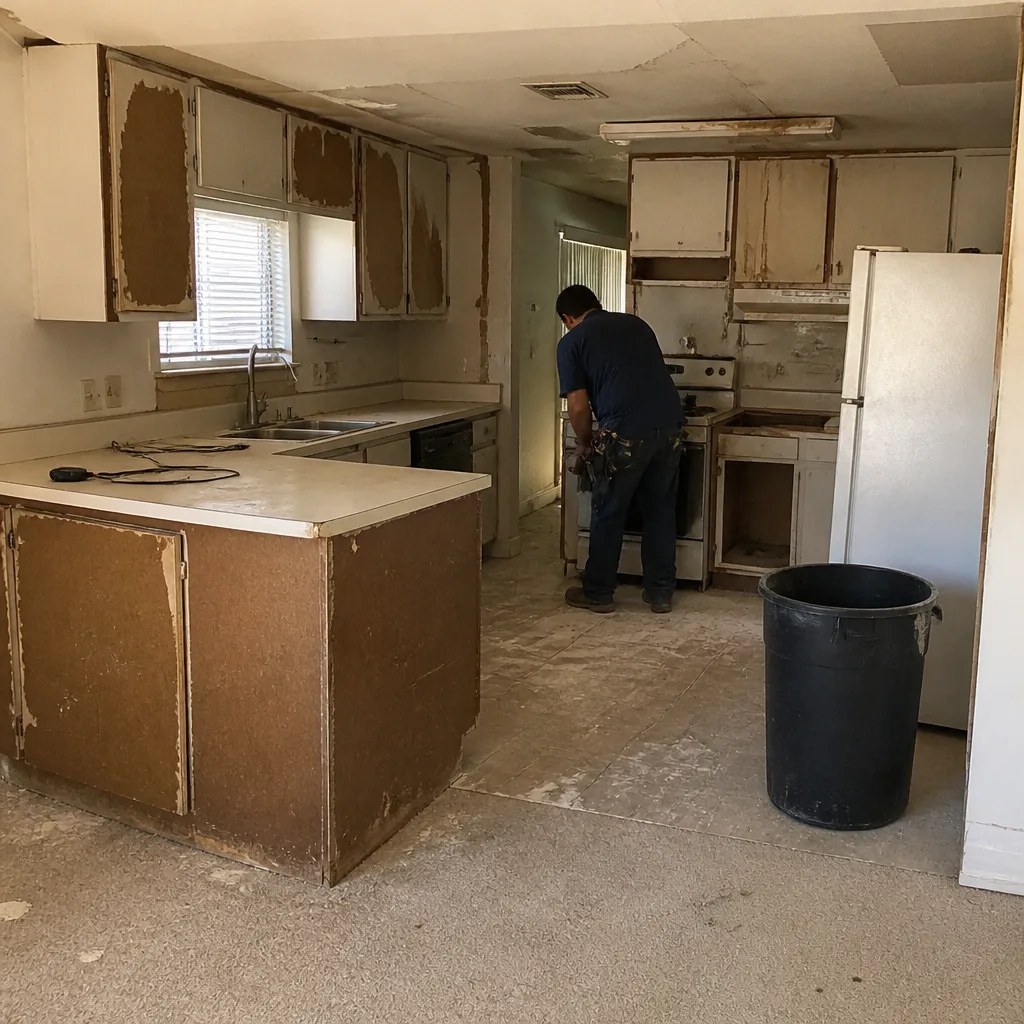 Before
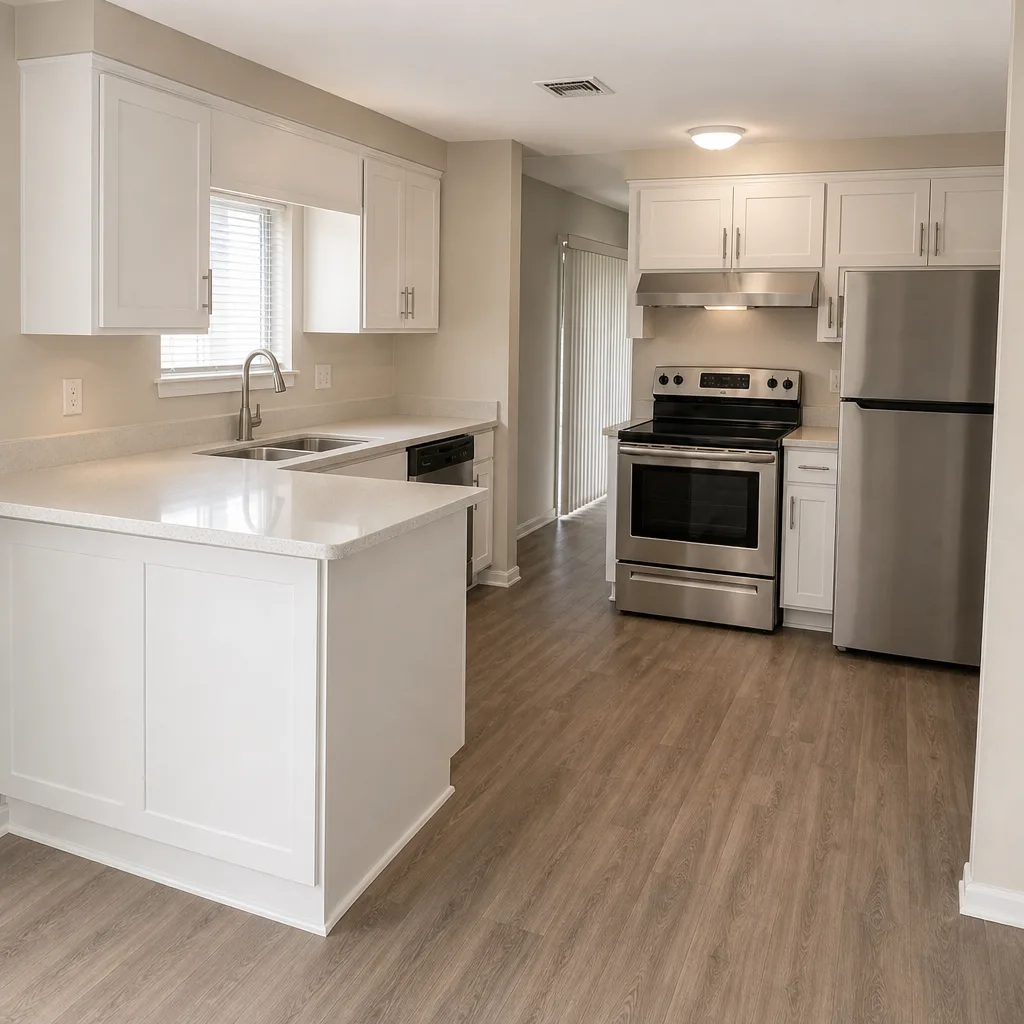 After
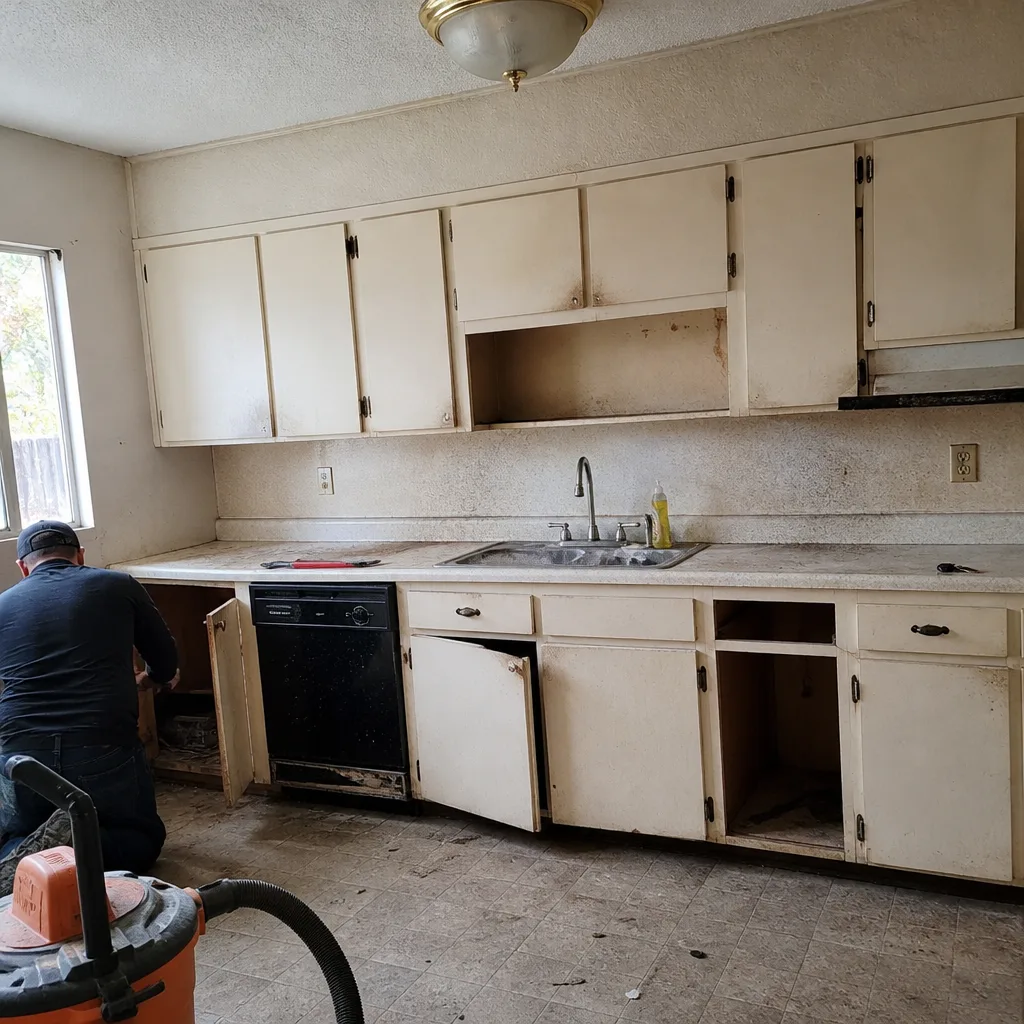 Before
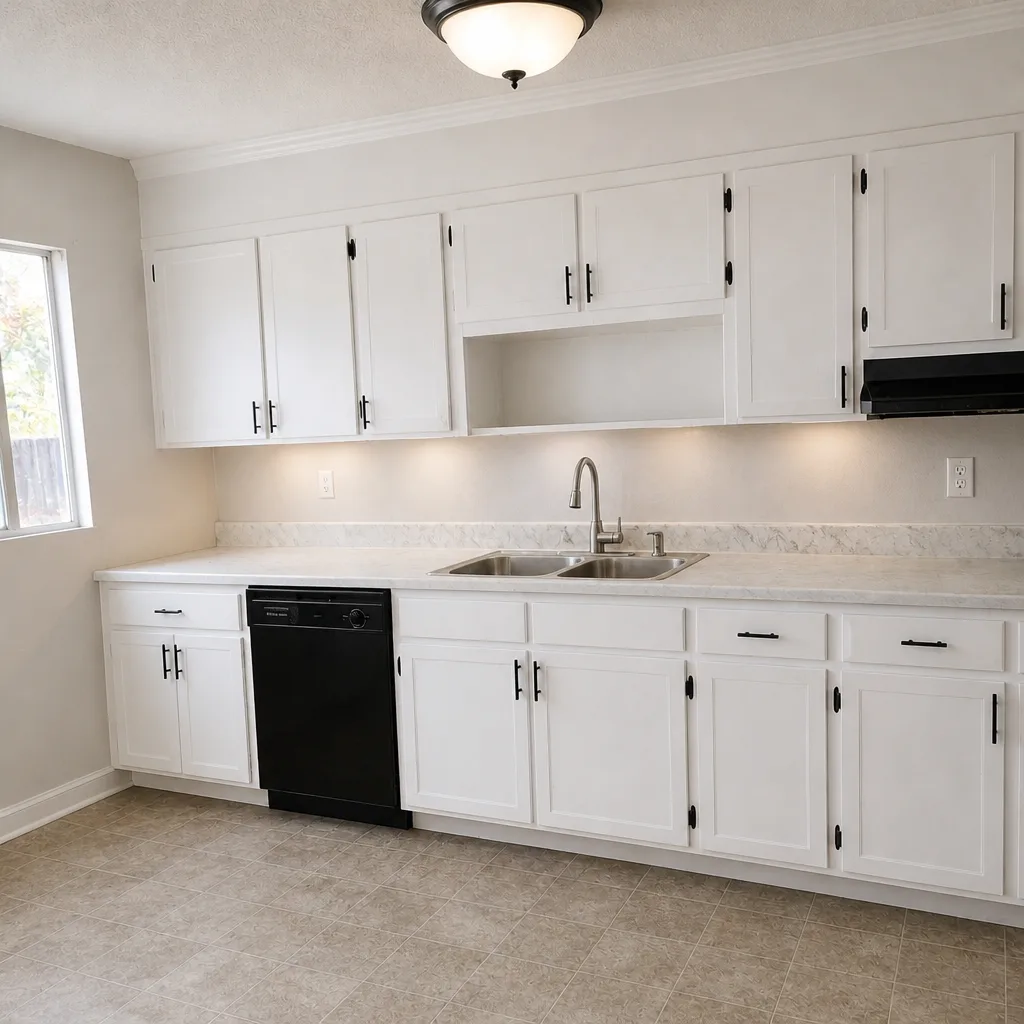 After
When to Call a Professional
Some permit work you can pull on your own. A water heater replacement or a like-for-like window swap is within the reach of a careful homeowner. Where it stops being a solo job: any project that touches structure, bears on the seismic detailing, or spans more than one trade. Additions, ADUs, garage conversions, second stories, and load-bearing changes all trigger plan review, stamped drawings, and a sequencing problem across inspection gates. Throw in the desert-climate energy code and the seismic amendments and the math gets thin. Fence installation and paver driveways sit at the simpler end, but they still have their own submittal rules and setback requirements worth understanding before the equipment shows up. Rowan Construction Group Las Vegas offers free estimates in Las Vegas. Call (833) 467-9123 and we’ll walk your address through the jurisdiction lookup, tell you what the permit sequence looks like for your project, and put the price in writing before anyone picks up a tool. Our technicians have up to 19 years of experience, and every crew is background-checked and uniformed.
Frequently Asked Questions
Fences and walls at or above the jurisdiction’s height threshold (typically six feet on residential parcels) require a permit, and setback rules apply. A lower fence usually does not, but the height and location on the lot both matter. Confirm at the correct jurisdiction for your parcel, then call (833) 467-9123 for a written scope and price on the install.
Over-the-counter permits like water heaters and simple re-roofs can be issued the same day at the counter. Plan-reviewed projects typically run several weeks from submittal to first review, then more time for corrections. The exact timeline depends on the department and how complete the submittal is. Ask for a written estimate from us and we’ll build the permit timeline into the build calendar before you commit.
You can usually retroactively permit existing work, but it depends on how far the project progressed and whether the covered work can still be inspected. Some assemblies have to be opened up for the inspector; others can be documented another way. This is a real cost, and it’s worth resolving before you list the property. Call (833) 467-9123 for a free second opinion on what the path forward looks like.
Nevada adopts the 2021 International Building Code with state amendments added on top, and each local jurisdiction enforces its own overlay. The two amendments most homeowners run into are the seismic detailing provisions and the Title 20 desert-climate energy requirements. Check your specific jurisdiction’s amendments page; they vary.
An ADU moves through the same gates as a house: foundation, framing and shear, rough MEP, insulation and Title 20 energy compliance, drywall, and finals for building, electrical, plumbing, and mechanical. Plan review is required. See how we sequence that work under Home Additions & ADU in Las Vegas, and call (833) 467-9123 for a written estimate.
Yes, under NRS 624.031, on your own primary residence while you live there. The exemption does not waive code compliance, does not license your subs, and does not travel cleanly when you sell. For anything beyond a single trade, we recommend a licensed GC. Call (833) 467-9123 for a free written estimate and a free second opinion on any written bid you already have.
The Bottom Line
The rules that govern your Nevada project are set by your parcel’s jurisdiction, not by your mailing address or your contractor’s preference. Clark County, City of Las Vegas, Henderson, and North Las Vegas each enforce their own amendments to the 2021 IBC, and each of those amendments touches real decisions on your build. The seismic detailing isn’t decorative, Title 20 isn’t a box on a form, and an open permit is a genuine title problem at resale. Pull the correct permit, respect every inspection gate, and don’t treat an owner-builder exemption as a shortcut. We put the price in writing before anyone picks up a tool, backed by the 365-Day Done Right Promise, and we’ll review any competitor’s written estimate line by line at no charge. Call (833) 467-9123, and we’ll get you the numbers and the inspection calendar that match your address.
Written by the team at Rowan Construction Group Las Vegas.