Last updated November 18, 2026
Free written scope consultation - allowances, timeline, and change-order rules on paper before a single trade is scheduled
DIY vs Professional Bathroom Remodeling: What’s Safe to Do Yourself
Painting a bathroom yourself saves $300. Rerouting a drain yourself without a permit can void your homeowner’s insurance and cost $8,000 to remediate when the next owner’s inspector finds it. Those two numbers sit on opposite ends of the same question, and most DIY-vs-pro advice gets the question wrong. It treats the decision as a matter of confidence or skill. It isn’t. In Las Vegas, the line runs along permit exposure and moisture management, and it’s drawn at the trade boundary, not at your comfort level. This guide lists every common bathroom task with a clear permit designation under Clark County code, separates what Nevada law restricts to licensed trades from what any homeowner can legally touch, prices out the real labor savings, and shows how conditions in older Las Vegas housing stock change the risk threshold.
Quick Answer
In Las Vegas, the safe DIY zone is paint, tile, fixtures, vanity replacement, and cosmetic demo. Anything that touches the wet stack, a drain or supply line, electrical within 6 feet of a water source, or structural framing requires a Clark County permit and a licensed trade. Skip the permit and the savings disappear the moment an inspector or a water leak finds the work.
Styles & brands we work with
- Kitchen remodeling
- Bathroom remodeling
- Home additions & ADU
- Roofing
- Windows & doors
- Driveway & pavers
- Fence
Table of Contents
- The Permit Map: Every Task in a Bathroom Remodel, Sorted
- Where Nevada Law Draws the Line
- What DIY Actually Saves: Tile, Paint, and Demo in Dollars
- The Warranty Voidance That Offsets the Savings
- The Sequencing Trap: Why Do-It-Yourself Demo Can Strand You Mid-Project
- The Decision Matrix: Three Bathroom Conditions That Change Your Risk Threshold
- Why Las Vegas Moisture Management Is Its Own Problem
- Common Mistakes to Avoid
The Permit Map: Every Task in a Bathroom Remodel, Sorted
Clark County’s building department treats a bathroom remodel as a series of separate scopes, each with its own permit trigger. The confusion most homeowners run into is assuming one permit covers everything or that a small job needs no permit at all. Neither is true. Here is how the common tasks sort.
No Permit Required
- Painting walls, ceilings, and trim
- Replacing a vanity cabinet and top without moving plumbing
- Swapping a toilet in the same location, same rough-in dimensions
- Replacing a light fixture on an existing switched circuit (not adding a circuit)
- Replacing a mirror, towel bars, or accessories
- Re-grouting and re-caulking existing tile
- Laying tile over sound, existing cement board or a properly prepped subfloor
Permit Required
- Moving or adding a drain, supply line, or vent (the wet stack)
- Relocating a toilet, sink, or shower
- Any electrical work inside the wet zone, plus any new circuit, added outlet, or GFCI replacement that requires opening walls
- Removing a wall or altering framing, including converting a tub to a walk-in shower with a new pan
- Installing a new exhaust fan where none existed (vent through the roof or wall)
- Waterproofing a new shower pan and liner
- Anything affecting structural load or egress
We’ve seen homeowners in Las Vegas tear out a tub, discover the drain is 2 inches off from where the new shower pan needs it, and then face a choice between an unpermitted drain relocation and stopping the project. That’s the sequencing trap, and it’s covered below. If all you’re doing is the no-permit list, the free-and-clear path exists. The moment you cross into the second list, you’re in licensed-trade territory, and the honest way to work with that is to plan the sequence before demo starts.
Where Nevada Law Draws the Line
Nevada’s contractor licensing rules are stricter than most homeowners expect, and they don’t care whether you’re paying someone or doing it yourself on a weekend. Any work that touches the wet stack, any plumbing that alters supply or drain lines, and any electrical installation within 6 feet of a water source is classified as work that must be performed under a licensed trade. Unpermitted or unlicensed work on those scopes is a code violation whether the homeowner swung the hammer or hired an unlicensed handyman. A homeowner can legally perform cosmetic and finish work on their own home. They cannot legally self-perform plumbing alterations or wet-zone electrical.
Why the 6-Foot Water Zone Matters
A bathroom is a wet room. A GFCI-protected outlet within 3 feet of a sink basin, a light fixture above a shower, or a fan mounted over a tub all sit in an environment where a small wiring fault becomes a shock hazard. A licensed electrician in Las Vegas isn’t just pulling a permit for the inspector; they’re sizing the GFCI protection and verifying the ground path in a room where water and electricity share walls. That’s the specific reason the code draws the line where it does. It is not administrative red tape. It is a life-safety boundary.
The Licensed-Trade List in One Place
- Any drain, waste, or vent line work (the wet stack)
- Any supply line alteration or relocation
- Any electrical work inside the 6-foot water zone, plus any new circuit
- Any structural framing change, wall removal, or header installation
- Any new shower pan, waterproofing membrane, and liner that require inspection before tile
If your project is limited to paint, tile on sound substrate, cabinet and fixture swaps, and accessories, you can legally and safely do it yourself. Everything on the list above should be planned with a licensed contractor, whether that’s us or another one. We deliver a written price and a written scope before any work starts, and every scope gets a documented photo record of what we found and what we did, so the condition of the substrate and the plumbing is on record. If you’re weighing a larger addition alongside the bathroom, our page on Home Additions & ADU in Las Vegas covers how permitting sequencing works when scopes overlap.
What DIY Actually Saves: Tile, Paint, and Demo in Dollars
Savings claims are only useful if they’re specific. Here’s the honest line-item view for a standard Las Vegas guest bathroom of roughly 40 square feet, based on real quotes we write and see. These numbers are labor only, since material cost doesn’t change whether you swing the trowel or we do.
Paint
Bathroom painting runs roughly $300 to $600 in labor for a room this size. DIY saves nearly all of it, because the work is straightforward and the risk is low. This is the clearest win in the whole project.
Tile Installation
Floor and wall tile labor in Las Vegas typically runs $8 to $15 per square foot. For 40 square feet of floor plus a shower surround, that’s usually $1,200 to $2,800 in labor. DIY can save that range, but only if the substrate is genuinely sound, the layout is planned before the first cut, and the waterproofing is right. In an older bathroom, that “if” is doing a lot of work.
Demo
Demo labor for a guest bathroom runs roughly $600 to $1,200. It’s tempting to do it yourself. It’s also where most homeowner-led remodels go wrong, because demo doesn’t just remove material; it exposes conditions that determine whether the rest of the plan survives.
The Savings That Offset Against Risk
- Tile labor saved: $1,200 to $2,800. Risk if substrate fails: $2,000+ to redo.
- Demo labor saved: $600 to $1,200. Risk if the wet stack is damaged during removal: a flood remediation that starts in the thousands.
- Paint labor saved: $300 to $600. Risk: the lowest of the three. This is the safe one.
When we write a bathroom quote, the labor line is a flat number and the scope is written. If a homeowner wants to self-perform the tile, we can scope to that and price the rough-in and waterproofing separately. It’s a proper way to keep costs honest. It also means the parts that need to be inspected get inspected. For context on how we price paving and finishes in this market, our Driveway & Pavers in Las Vegas page shows the same line-item discipline applied to a different trade.
The Warranty Voidance That Offsets the Savings
This is the part the labor-savings math doesn’t include. When a licensed contractor installs a shower pan, a membrane, or a waterproofed substrate, that installation typically carries a workmanship warranty. Tile itself may carry a manufacturer’s warranty from a brand like Schluter or from the tile maker. Those warranties are conditioned on proper installation to spec. Self-perform the pan and fail the water test, and both the workmanship coverage and the manufacturer warranty fall away.
The second layer is homeowner’s insurance. Every policy we’ve seen requires that any plumbing alteration be permitted and inspected. If an unpermitted drain is the cause of water damage that reaches a neighbor’s unit or a lower floor, the carrier can deny the claim. That’s not a hypothetical. In Las Vegas, where a growing share of bathrooms sit in condos and stacked townhouses, water damage from an unpermitted drain isn’t a bathroom problem, it becomes a shared-wall problem with costs that land in five figures. The value of a permit isn’t the piece of paper. It’s the inspection that catches the rough-in before drywall goes up, and the record that keeps your insurance valid.
The Sequencing Trap: Why Do-It-Yourself Demo Can Strand You Mid-Project
Here’s the failure mode that surprises most homeowners: you demo the bathroom yourself to save $900, tear out the shower and the vanity, and only then discover the drain needs to move 6 inches to fit the new shower pan. Now you need a plumber, a permit, and an inspection, but the wall is open, the old subfloor is gone, and the project is stalled while you wait on permits and a trade who can fit the work in. The crew that could have sequenced demo with rough-in and inspection is looking at a partially demolished room, and the timeline slips by weeks.
The Correct Sequence
- Get the permit before demo, not after.
- Demo the room to expose framing and the wet stack.
- Licensed trade relocates plumbing and electrical; the rough-in gets inspected.
- Waterproofing goes in and passes its test.
- Tile and finishes go down on an inspected, dry substrate.
- Final inspection, then fixtures and trim.
Every step after demo depends on the one before it passing inspection. When the homeowner handles the finishes and the contractor handles the sequence, the project moves. When the homeowner handles demo before anyone with a license has looked at the plumbing, the project can stall for the length of a permit cycle. If you’re considering this project alongside exterior work, our Fence Installation in Las Vegas page covers the same sequencing discipline as it applies to wind-rated installations along the west side of the valley.
The Decision Matrix: Three Bathroom Conditions That Change Your Risk Threshold
Not every Las Vegas bathroom carries the same DIY risk. The age and construction of the house shifts where the line sits. Here’s how the threshold moves based on what we find when we open up a bathroom.
Condition 1: Old Galvanized Supply Lines
In homes built before the mid-1970s, particularly in older pockets of the valley and the historic neighborhoods near downtown, galvanized supply piping is common. Once you open the wall for a vanity swap, there’s a strong chance the supply lines will need replacement in the same scope. That’s a licensed plumbing job, so a “simple” fixture swap in a galvanized-plumbed home can be the trigger for a larger, permitted scope. If you suspect galvanized, budget for plumbing and treat the DIY zone as cosmetic only.
Condition 2: Knob-and-Tube Wiring
Kitchen and bathroom remodeling in older Las Vegas housing can turn up knob-and-tube wiring behind the walls, particularly in homes built between the 1930s and 1950s. That wiring is incompatible with modern GFCI requirements in the wet zone, and any electrical work in that zone becomes licensed trade work plus a panel review. If you find knob-and-tube, the risk threshold drops to zero: all electrical is a licensed scope, and the DIY zone is paint and tile only.
Condition 3: Slab vs. Wood Subfloor
Most Las Vegas single-family homes sit on slab. A slab drain relocation means concrete cutting, a plumber, a permit, and inspection before patching and tile. Wood subfloor (more common in some second-story additions and older construction) involves a different set of framing corrections before tile can be safely laid. In either case, if the subfloor needs to change, tile becomes a licensed-scope-adjacent job, because the substrate the tile sits on has to be right first.
If you’re weighing whether the bathroom fits inside a larger scope or should stand alone, the Rowan Construction Group Las Vegas home page lays out the seven trades and how we handle projects that overlap. For a distinct exterior comparison on where DIY sits against professional work, our guide on fence installation cost in Las Vegas applies the same decision-matrix logic to a different trade.
Why Las Vegas Moisture Management Is Its Own Problem
Las Vegas is dry, and that changes the moisture math in a way that catches some DIYers by surprise. Ambient humidity in the valley runs under 30% most of the year, so a shower that would rot a bathroom in a coastal city may dry out before damage sets in. But that same low humidity drives homeowners to run the shower hotter and longer, and it means a failed shower pan can leak for months without the telltale mold that would alert a homeowner in a wetter climate. The water goes into the slab or subfloor and stays there, showing up later as a stain on the ceiling below or a soft spot near the toilet.
That’s the specific reason Las Vegas moisture management depends on a properly installed pan, intact waterproofing, and a working exhaust fan that vents to the exterior – not into the attic. If the fan is the older recirculating type, the humidity stays in the room. If the pan was tiled over without a water test, the leak won’t announce itself until it has done real damage. In our experience across Las Vegas remodels, the two conditions we most reliably find in a DIY bathroom are a shower pan that never held water and an exhaust fan that discharges into the attic.
Common Mistakes to Avoid
- Doing demo before the rough-in is planned. Demo is the cheapest part of a bathroom remodel and the most trapping. It exposes conditions that determine the whole scope, so plan the sequence before any wall comes down.
- Assuming one permit covers the project. Plumbing, electrical, and structural scopes each trigger their own inspection. Bundling them upfront keeps the timeline honest and avoids a failed-inspection loop.
- Tiling over an unverified substrate. In a Las Vegas slab bathroom, a small subfloor soft spot can be the difference between a 10-year tile floor and a floor that cracks within two summers.
- Replacing a toilet with a different rough-in measurement. The rough-in distance is fixed by the drain; a wrong swap means pulling the toilet again and relocating the drain, which puts you in permit territory.
- Venting an exhaust fan into the attic. It’s the single most common mistake we correct in Las Vegas bathrooms. The fan has to discharge through the roof or an exterior wall, or the moisture ends up in the framing.
- Skipping the water test on a new pan. The pan test is the whole reason the waterproofing layer gets inspected. Tile hides the evidence of a failed test.
- Relying on a handshake instead of a written scope. A written scope and a flat written price protect the homeowner from change orders that balloon mid-project.
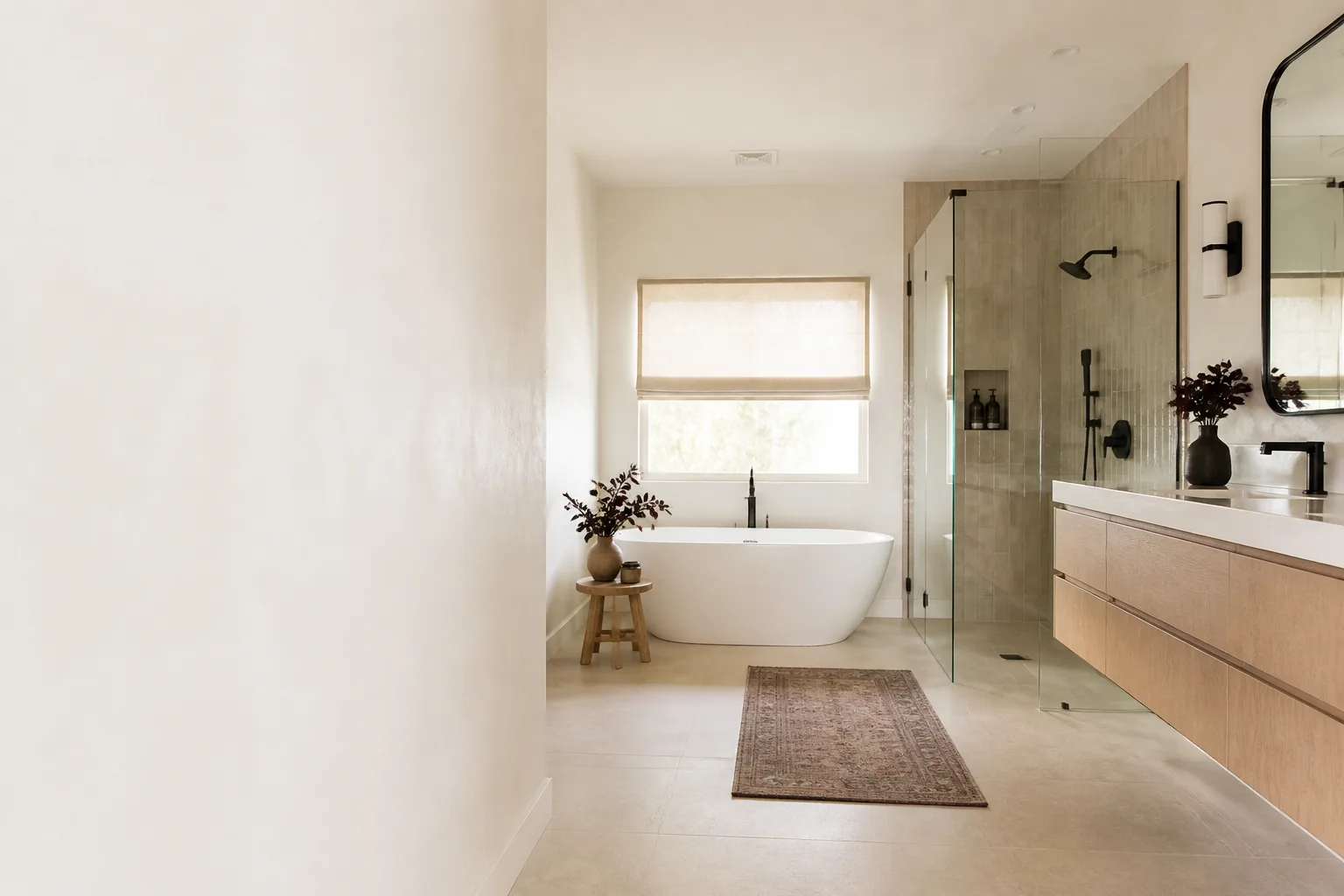
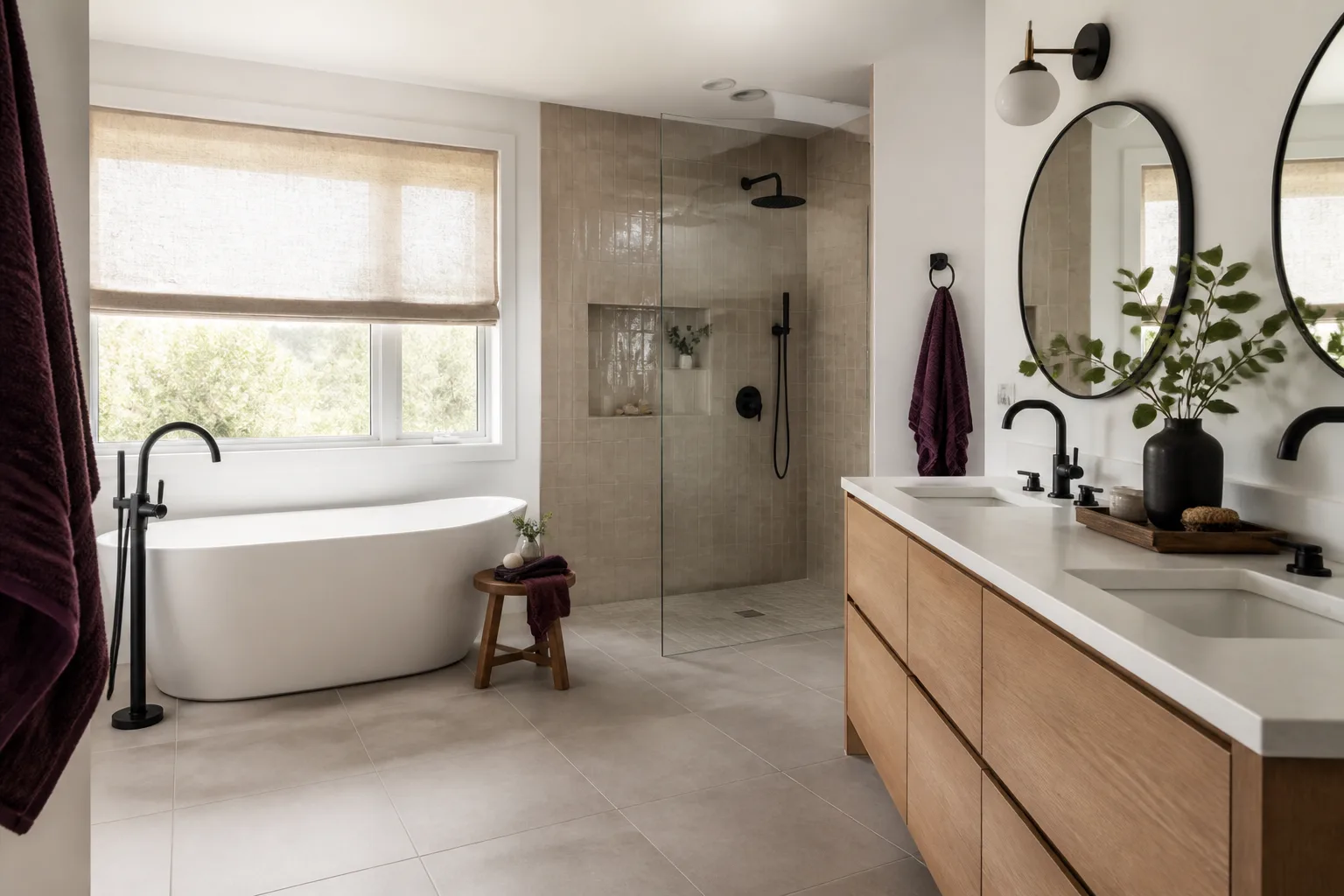
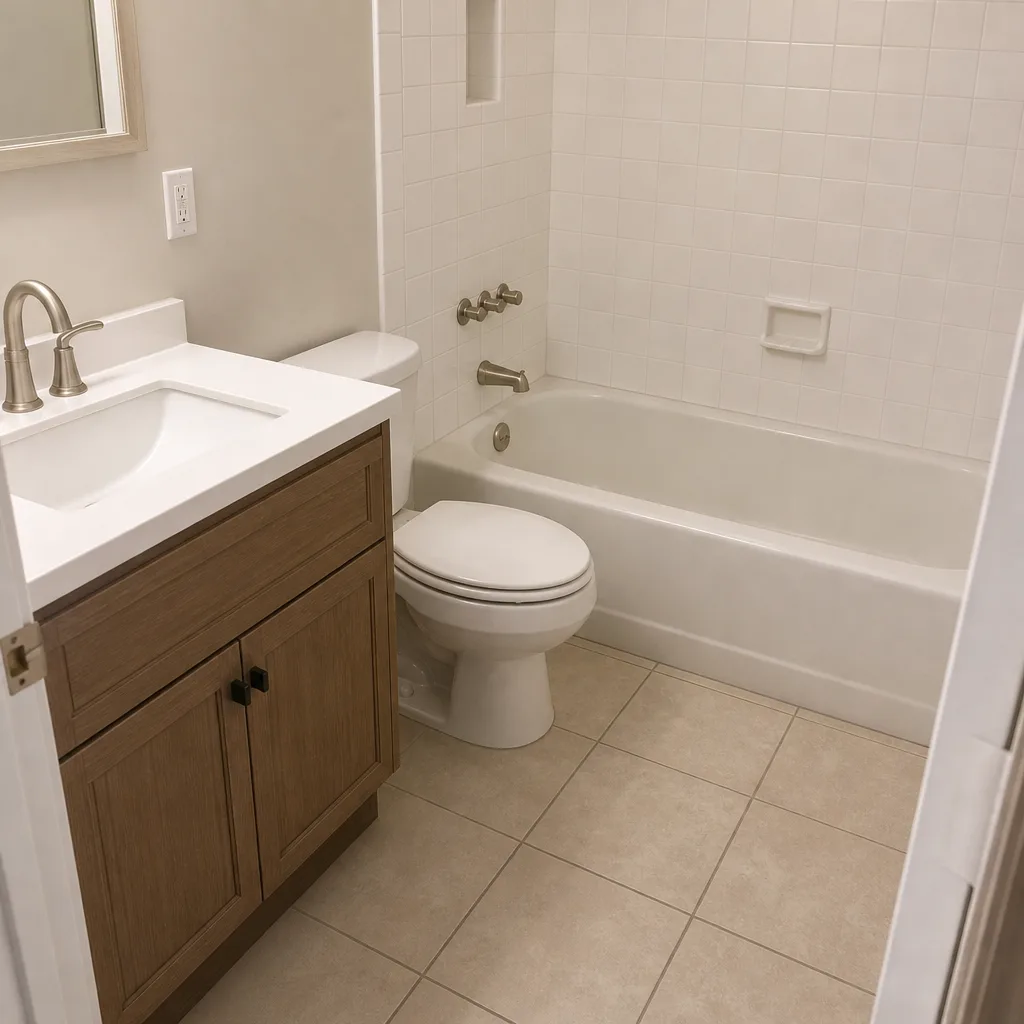
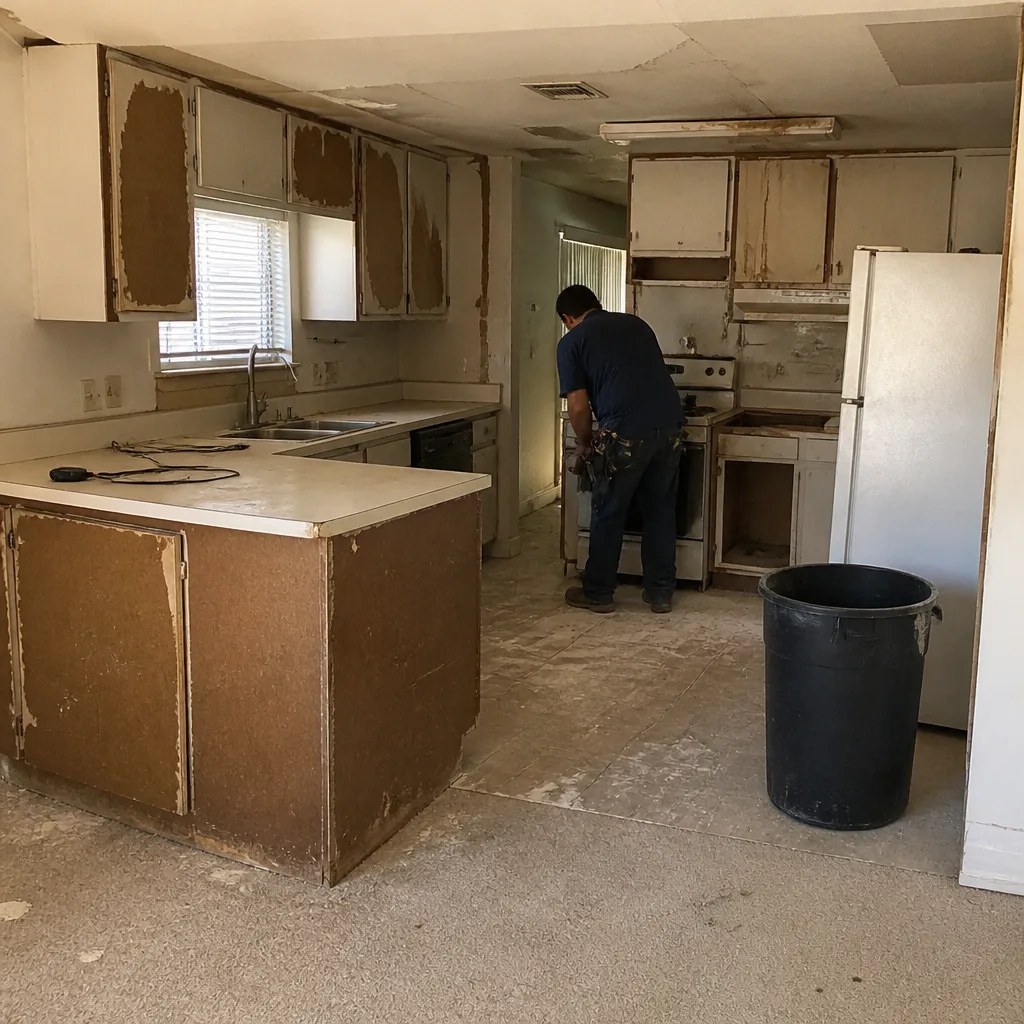
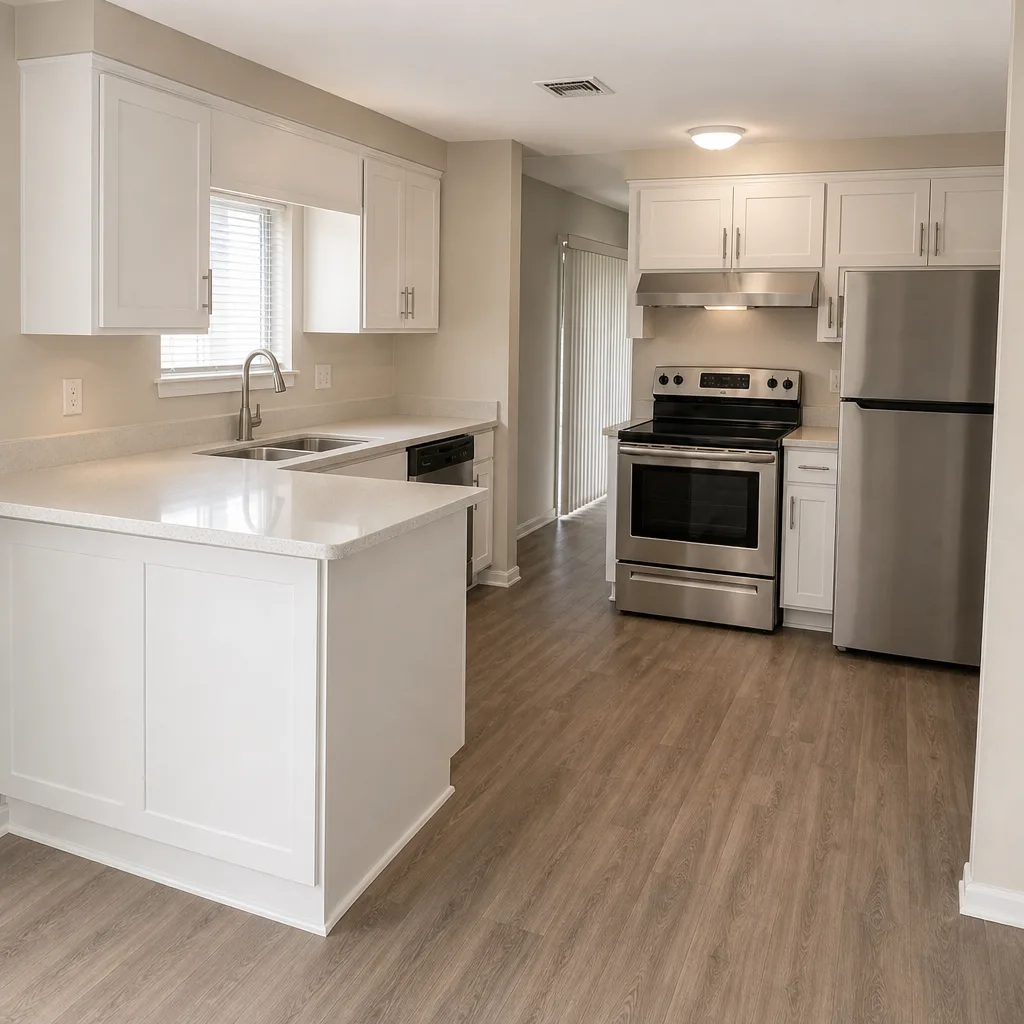
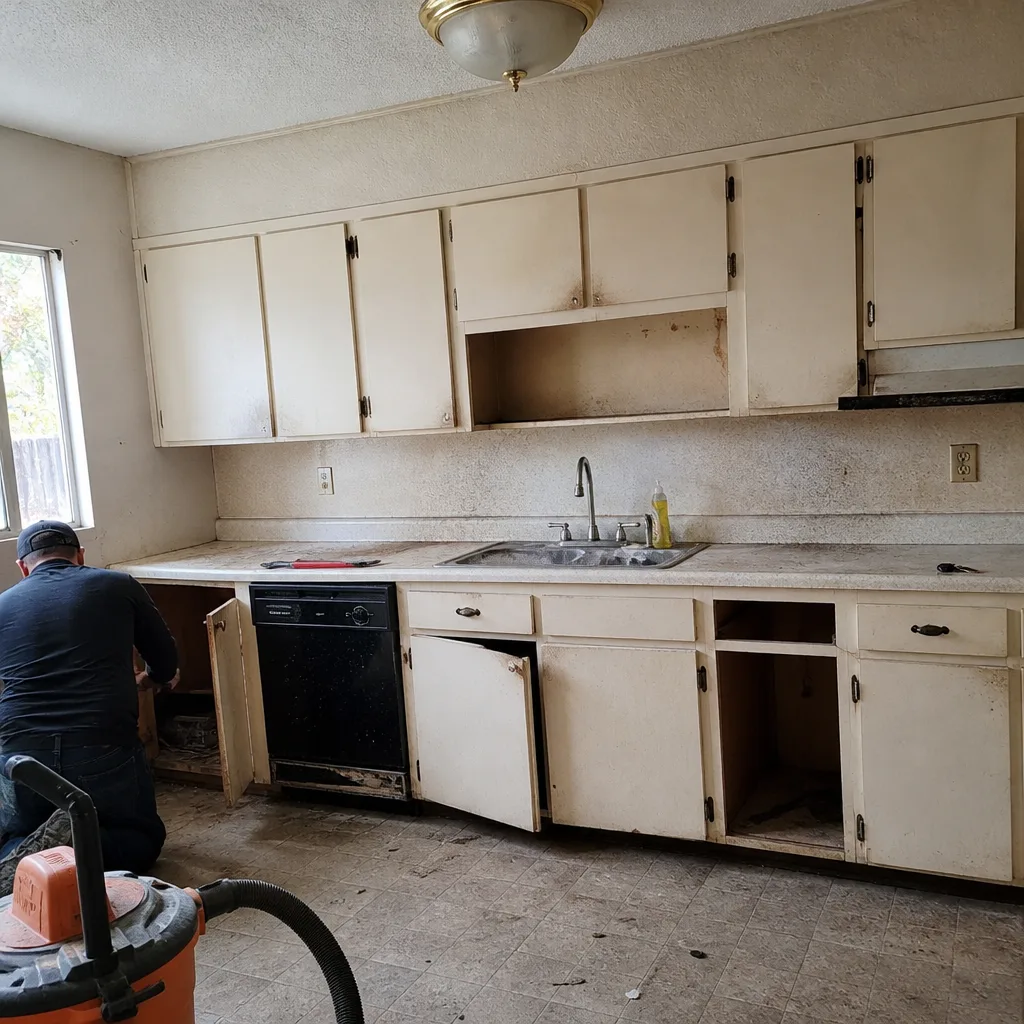
See the difference
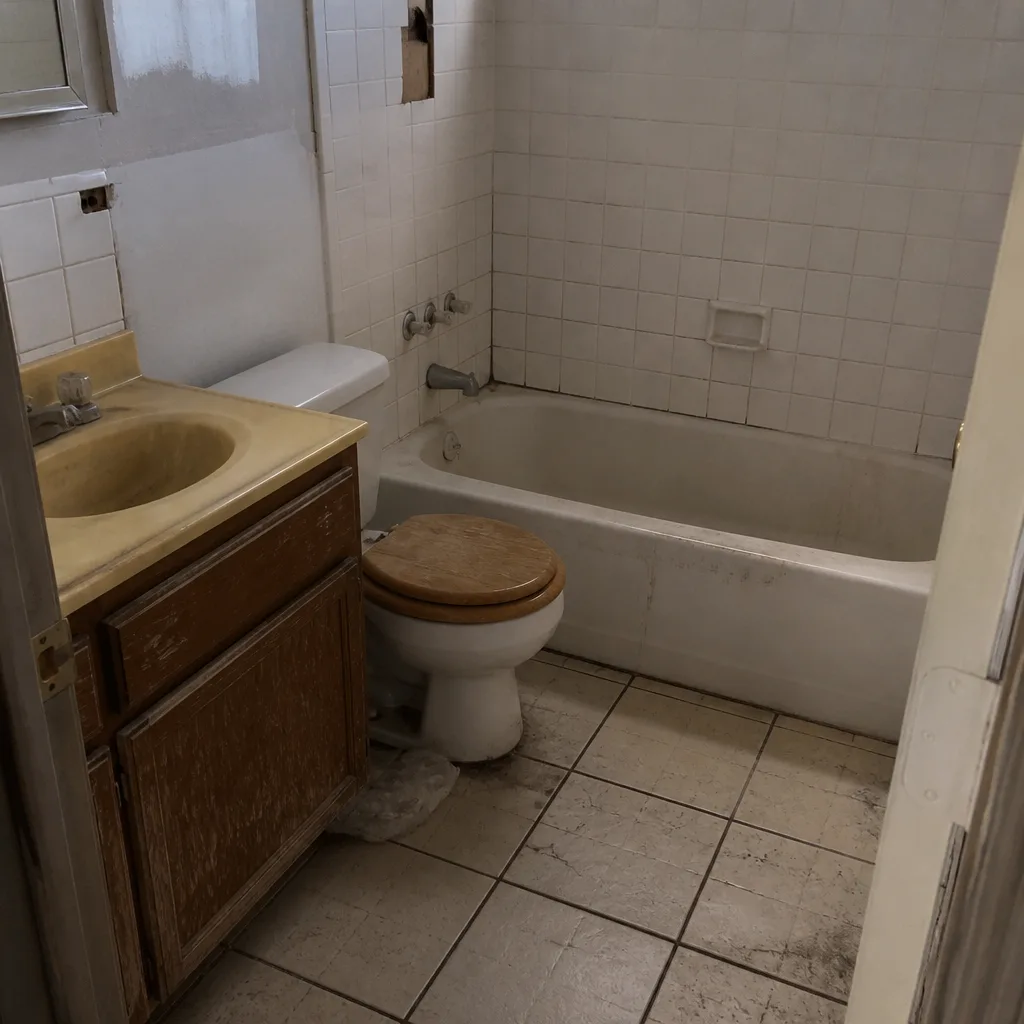 Before
 After
 Before
 After
 Before
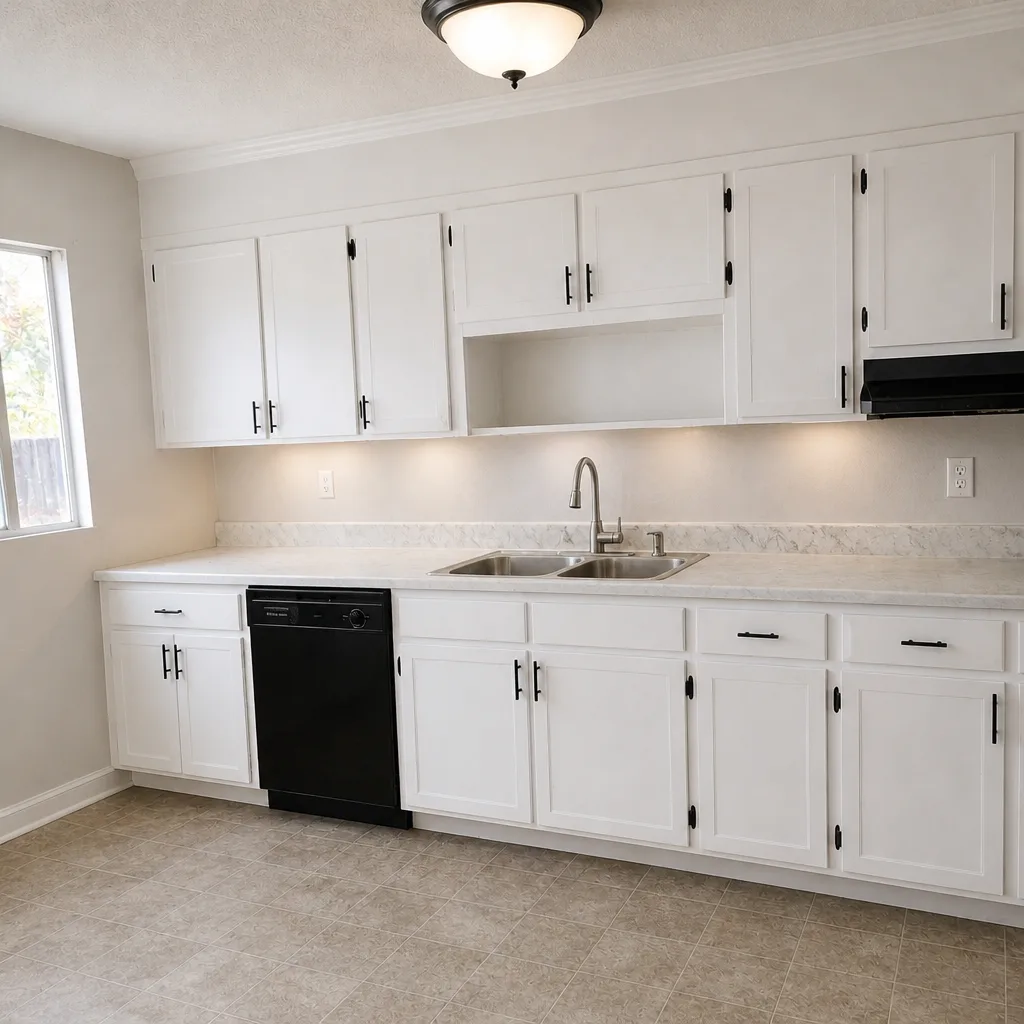 After
When to Call a Professional
Call a licensed professional the moment your project touches the wet stack, the electrical within 6 feet of a water source, framing, a new shower pan, or the structural scope. In Las Vegas, the specific conditions that should push you to a licensed trade are old galvanized plumbing, knob-and-tube wiring, a slab drain relocation, or a shower that needs a new pan and membrane. Those are the four triggers. If none of them apply and you’re staying in the paint, tile, fixture, and vanity lane, the DIY path is real and the savings are $1,500 to $3,000 for a guest bathroom. Rowan Construction Group Las Vegas offers free estimates in Las Vegas – call (833) 467-9123 and we’ll walk the room with you, put the price in writing, and photograph what we find before anyone picks up a tool.
Frequently Asked Questions
Yes, for cosmetic and finish work. Clark County permits are not required for paint, tile on a sound substrate, vanity and fixture swaps in the same location, and accessories. Plumbing alterations, wet-zone electrical, framing changes, and new shower pans require a permit and a licensed trade. If your project stays in the cosmetic lane, you can legally and safely do it yourself.
Tile labor runs $8 to $15 per square foot in Las Vegas, so a 40-square-foot floor plus a shower surround typically saves $1,200 to $2,800 in labor. But the savings hold only if the substrate is genuinely sound and the waterproofing is done to spec. If the substrate fails, redoing the tile costs more than the labor saved. Call (833) 467-9123 for a free written tile quote you can compare against your own labor plan.
Yes. A new shower pan involves a waterproofed liner and a water test inspection under Clark County code, and installing a pan without the inspection leaves you without the protection that makes the installation hold. This is one of the four triggers that should push a project to a licensed contractor. We include the permit and inspection in the written scope, so the price is the price before work starts.
The savings go away the moment the work needs to be discovered. Unpermitted drain relocations can void homeowner’s insurance coverage on the resulting water damage, fail an inspection at resale, and require demolition to correct. In a condo, water damage from an unpermitted drain can reach a neighboring unit and turn a small savings into a five-figure remediation. That’s the risk the permit exists to cap.
You can, but demo is the worst place to save. Demo is cheap – $600 to $1,200 in labor for a guest bathroom – and it exposes the conditions that determine every line item after it. Doing demo before the rough-in is planned and inspected can strand the project mid-way with an open wall and a stalled permit. We’d rather scope the demo into the licensed sequence and keep the timeline.
A guest bathroom remodel in Las Vegas ranges from roughly $12,000 to $28,000 depending on scope and finish. Self-performing paint, tile, and demo can trim $2,000 to $4,000 off the labor total when the substrate is sound. The parts that must stay with a licensed trade – rough-in plumbing, wet-zone electrical, a new pan, and any framing – typically account for the majority of the difference. Call (833) 467-9123 for a free written scope and a flat price before any work starts.
The Bottom Line
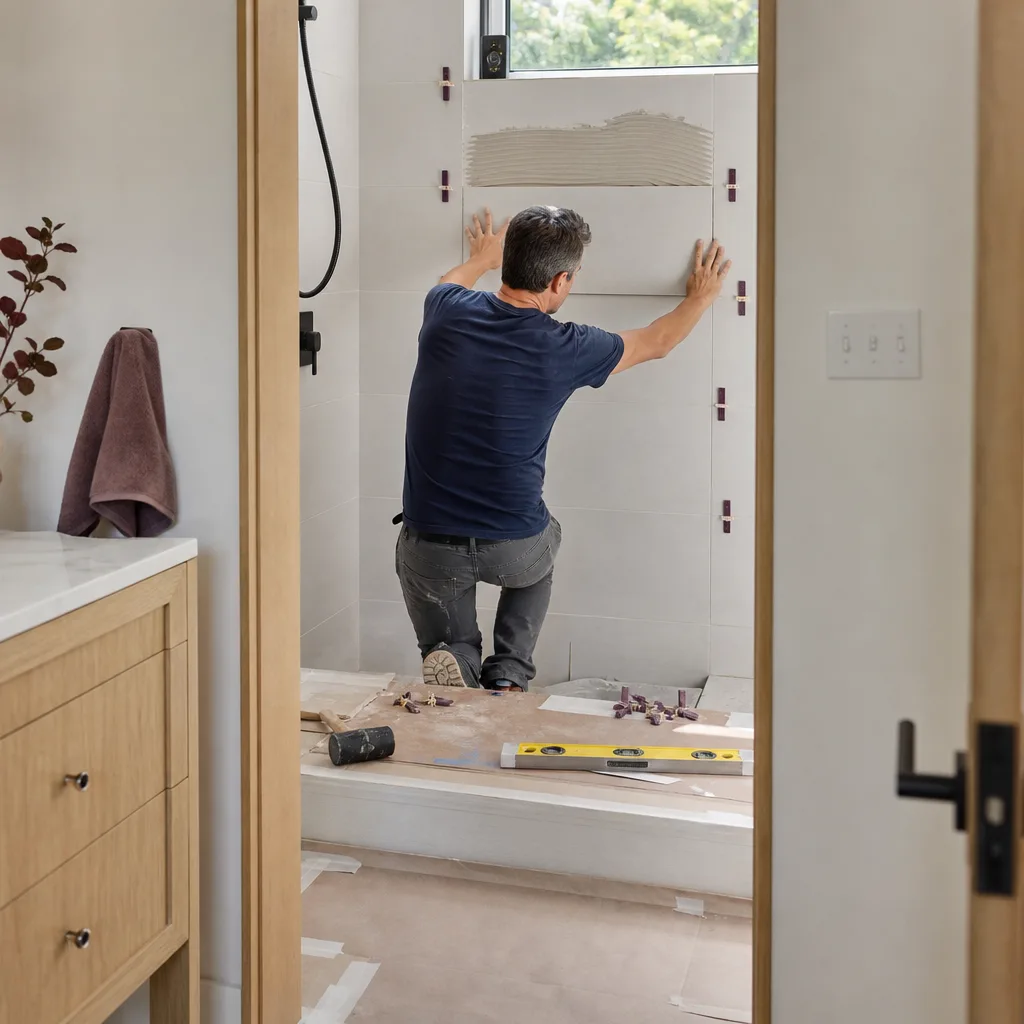
The DIY-vs-pro decision isn’t about how handy you are. It’s about permit exposure and moisture management, and the line is drawn at the trade boundary. Paint, tile, fixtures, and vanity swaps are safe to do yourself, and on a Las Vegas guest bathroom that saves $2,000 to $4,000 in labor when the substrate holds. The wet stack, wet-zone electrical, framing, and a new shower pan belong to licensed trades, and skipping the permit converts a $900 savings into a five-figure problem. Get the price in writing, get the scope in writing, and let the parts that need inspection be inspected.
Rowan Construction Group Las Vegas offers a free estimate and a Free Second Opinion on any written scope, whether that quote comes from us or someone else. Every project gets a flat written price before work starts, a documented photo record on every visit, and the 365-Day Done Right Promise. Call (833) 467-9123 to schedule your free estimate.
Written by the team at Rowan Construction Group Las Vegas.