Last updated November 18, 2026
Free written scope consultation - allowances, timeline, and change-order rules on paper before a single trade is scheduled
DIY vs Professional Construction: The Las Vegas Homeowner’s Decision Guide
Nevada’s owner-builder exemption lets you pull your own permit and do your own work. The same statute also requires you to disclose that fact for 10 years when you sell the home. Most Las Vegas homeowners never price that disclosure into their DIY savings estimate, and in a market where buyers read every line of a seller’s disclosure, it can cost more at resale than the project ever saved. This guide breaks the decision down the way it actually works here: separate legal categories by project type, the real cost of pulling your own permit through Clark County, what a failed inspection actually bills you, and the three jobs where doing it yourself genuinely wins.
Quick Answer
In Las Vegas, the DIY-versus-hire decision is a legal question before it is a skill question. Some residential work (interior painting, cabinet hardware, landscape prep) you can legally self-perform with no permit and no disclosure. Structural, electrical, plumbing and gas work generally requires a licensed Nevada contractor, and anything you pull under the owner-builder exemption must be disclosed to buyers for 10 years. Hire for permitted work; self-perform for finish and cosmetic work; and scope hybrid projects carefully so you don’t void warranty coverage on the portions a professional touches.
Styles & brands we work with
- Kitchen remodeling
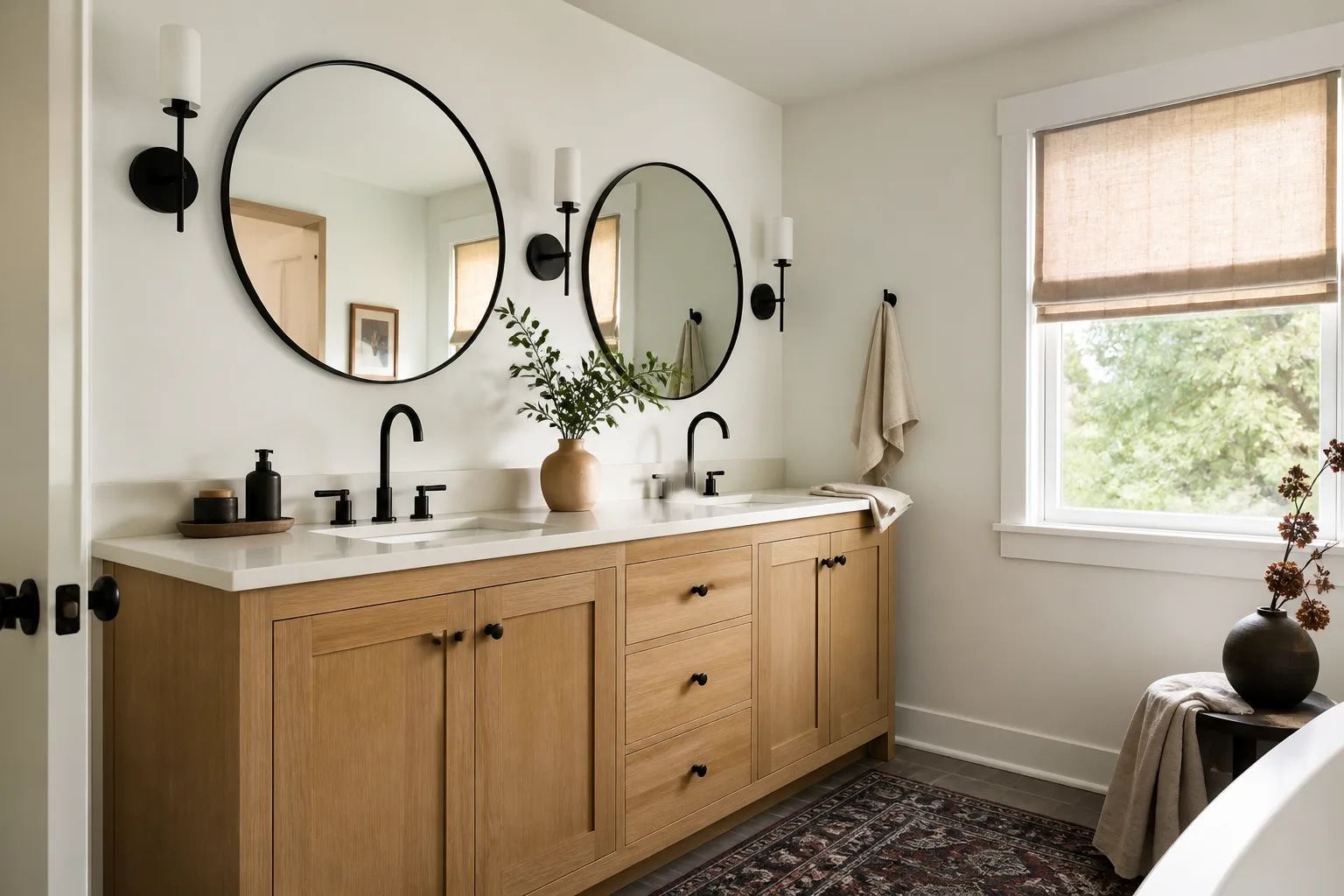
- Bathroom remodeling
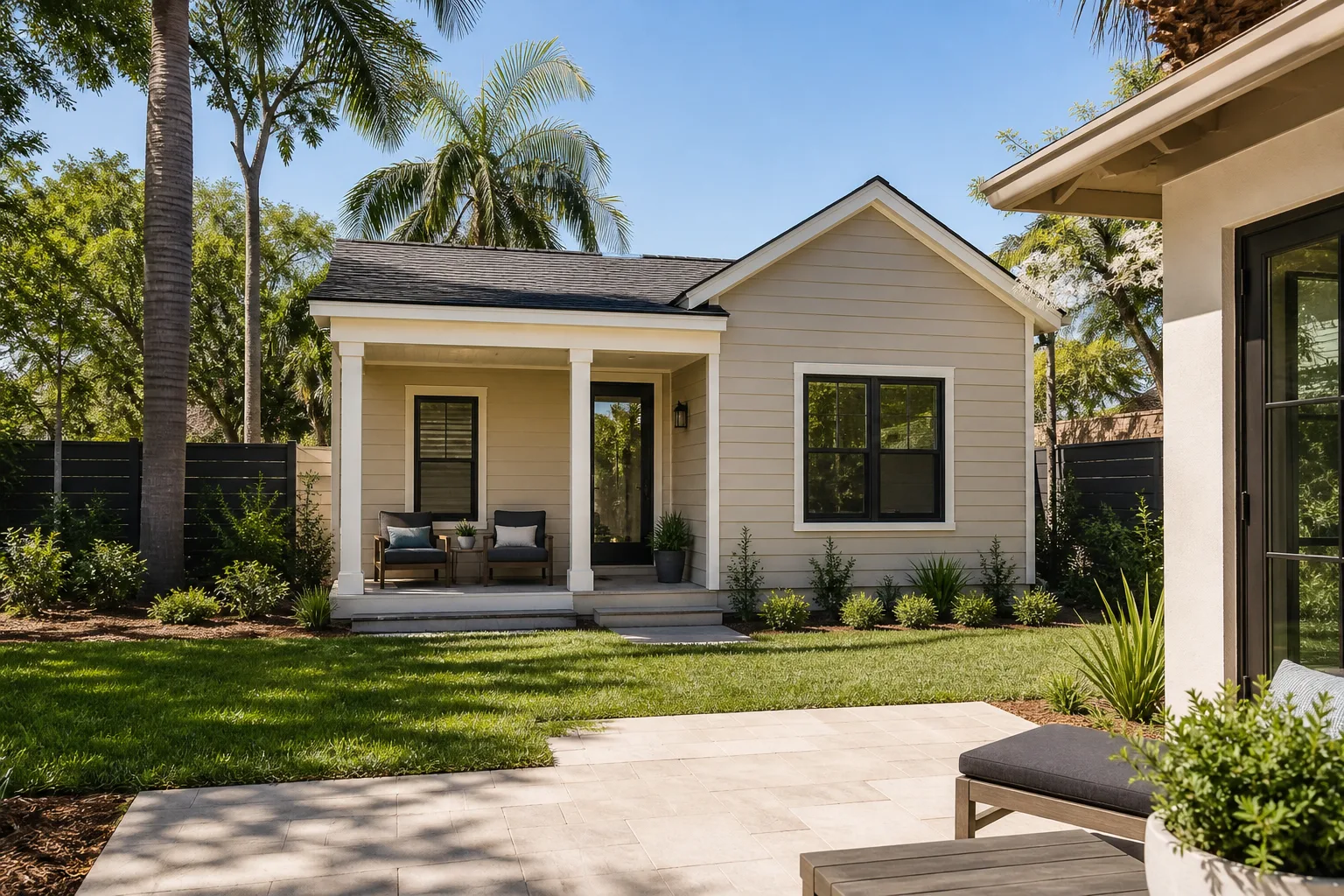
- Home additions & ADU
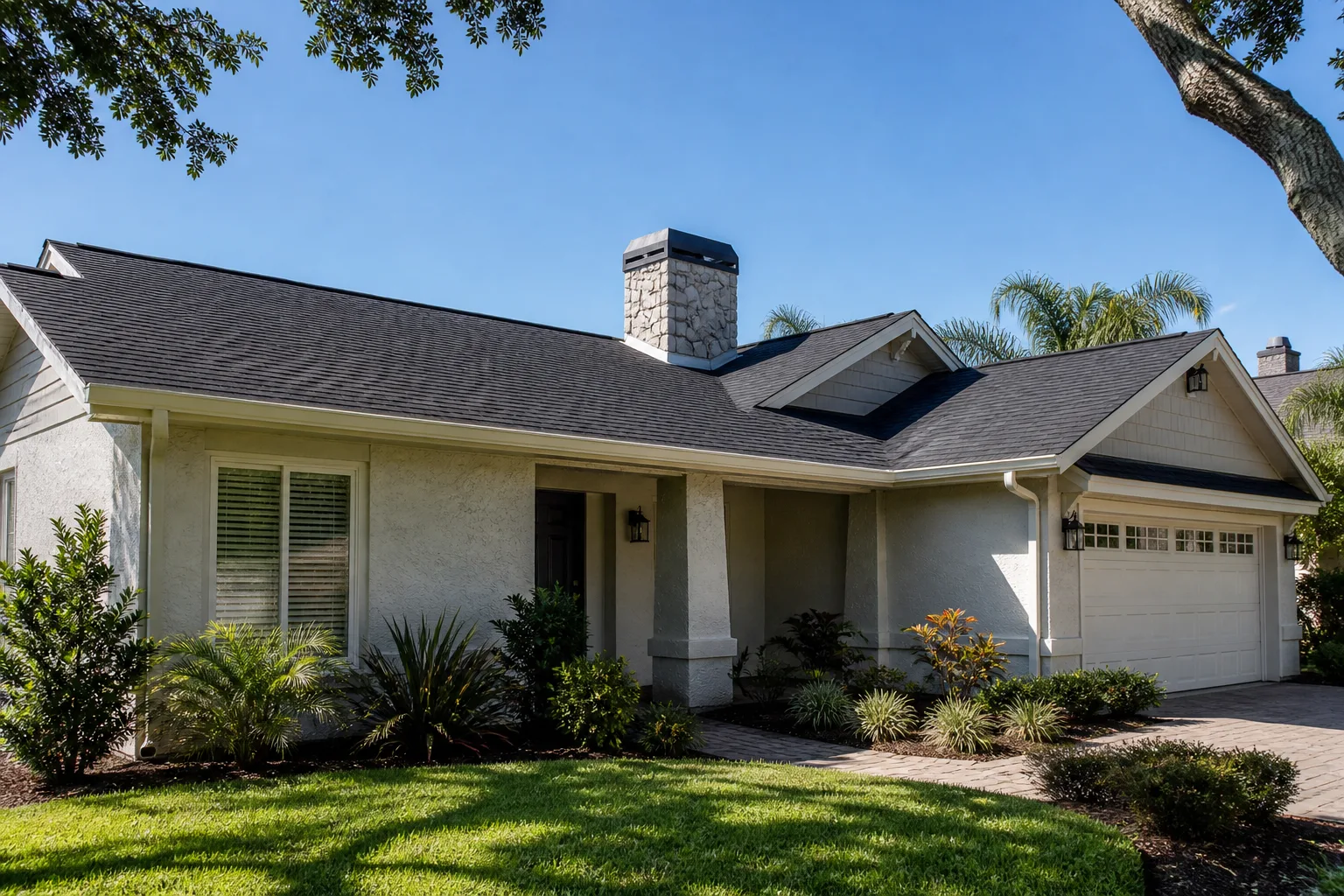
- Roofing
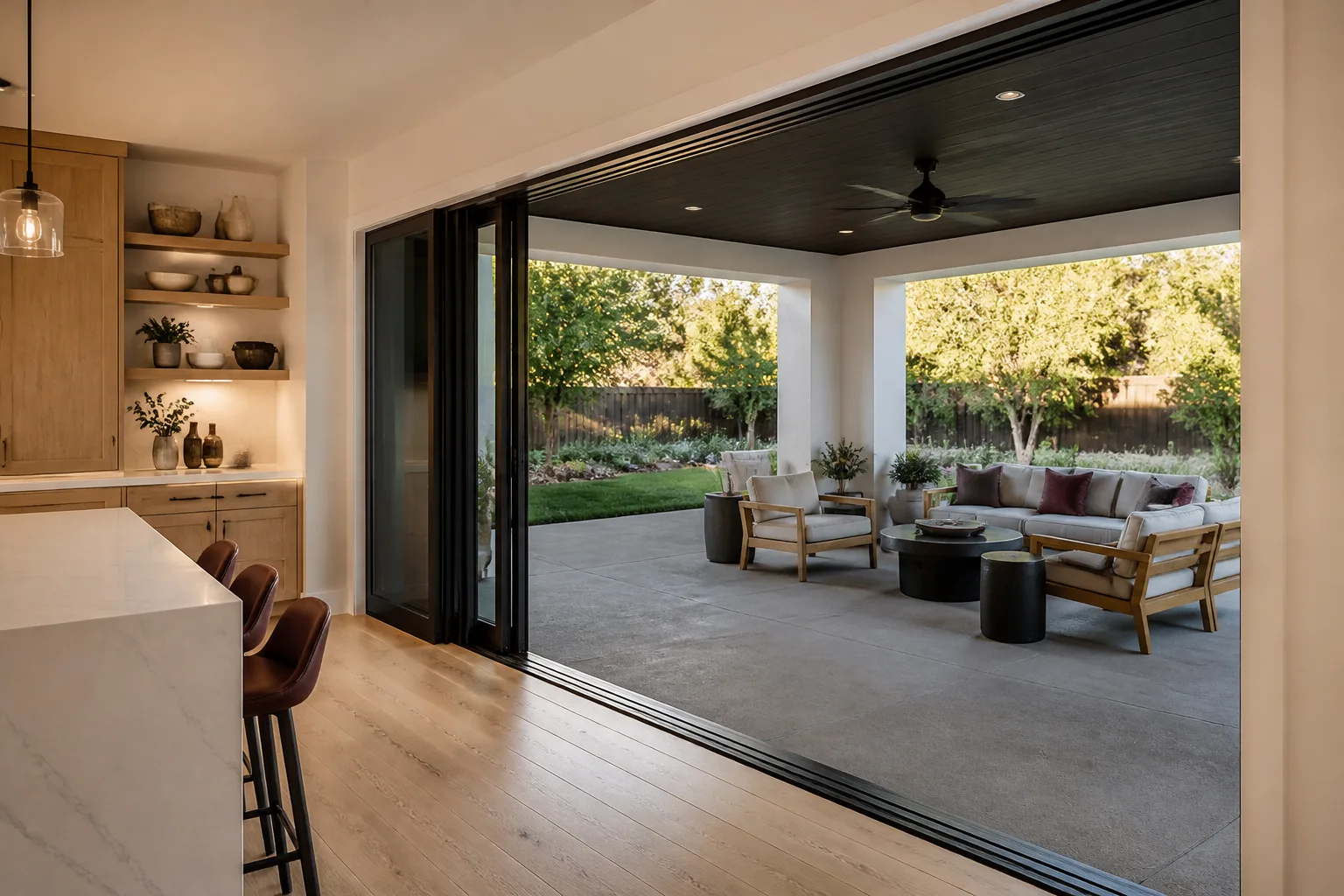
- Windows & doors
- Driveway & pavers
- Fence
Table of Contents
- The Project-Type Matrix: What Las Vegas Homeowners Can Legally Self-Perform
- The Owner-Builder Disclosure: The 10-Year Cost Nobody Prices In
- The Real Cost of Pulling Your Own Permit in Clark County
- What a Failed Inspection Actually Costs You
- Three Projects Where DIY Saves Real Money in Las Vegas
- Three Projects Where a Professional Is Cheaper Over Five Years
- How to Scope a Hybrid Project Without Voiding Warranties
- Why Las Vegas Climate Changes the Math
The Project-Type Matrix: What Las Vegas Homeowners Can Legally Self-Perform
Nevada separates residential work into three buckets: work you can do yourself with no permit, work that needs a permit and can be pulled under the owner-builder exemption, and work that Nevada law requires a licensed contractor to perform. Getting the bucket wrong is where most expensive mistakes start. Here is how the categories shake out for a typical Las Vegas house.
- No permit, no contractor required: Interior painting, cabinet hardware and refacing, flooring over existing subfloor, tile backsplash, landscaping groundwork (grading, soil prep, planting), fencing under six feet on your own property line, and cosmetic fixture swaps that don’t touch wiring or supply lines.
- Permit required, owner-builder allowed: Room additions, ADUs, structural wall removals, new window and door openings in a load-bearing wall, pools and spas, patio covers, and major re-roofs where the sheathing is being replaced.
- Licensed contractor required by Nevada law: New electrical circuits and panel work, gas line work, water heater replacement, sewer line work, anything involving the structural framing of an occupied home, and most work on a property you don’t live in.
That middle bucket is where the disclosure trap lives. If you pull a permit as an owner-builder on a room addition, you have personally assumed the role of general contractor, and that fact travels with the property for a decade. We’ve seen Las Vegas buyers walk away from a well-priced Summerlin listing once the disclosure surfaced, not because the addition was bad, but because the buyer’s inspector couldn’t verify who did the framing. The paperwork is as much a part of the build as the framing itself.
The Owner-Builder Disclosure: The 10-Year Cost Nobody Prices In
Nevada’s owner-builder exemption is real and useful. It lets a homeowner pull permits and act as their own general contractor on their own primary residence, which can save the general contractor markup. The catch is the disclosure requirement: when you sell, you must tell the buyer that the work was self-performed under the exemption, and that disclosure stays attached to the property’s history for 10 years.
Here’s what that means in dollars for a Las Vegas homeowner. Say you save $18,000 doing a 400-square-foot ADU frame-out yourself. Buyers in the current Las Vegas market are aggressive about inspection reports. A disclosure that says “owner-builder” opens the door to a buyer demanding a structural engineer’s letter, a full permit history pull, and a price concession that often runs $10,000 to $30,000 on a permitted addition. That wipes out most or all of the savings, and it can also stretch your days-on-market by weeks. Under Home Additions & ADU in Las Vegas, the paperwork trail matters as much as the framing.
There is also a resale-value angle that cuts the other way. When a licensed contractor pulls the permit, the buyer’s disclosure shows a licensed general contractor of record, and the buyer’s inspector can verify the permit number and final inspection. That is a small piece of documentation that does real work during negotiation. If you’re planning to stay in the home for 10-plus years, the owner-builder route is defensible. If you might sell within five years, price the disclosure into the math before you start.
The Real Cost of Pulling Your Own Permit in Clark County
Pulling a permit as an owner-builder is not free, and it is not just a filing fee. It’s a sequence of steps that many first-time DIYers don’t fully price. Here’s what the process actually looks like in Clark County, and what it costs in dollars and calendar time.
- Plan set and engineering. Most structural permits require stamped plans. A residential structural set from a Las Vegas engineer typically runs $1,200 to $3,500 depending on scope, plus revisions if the plan reviewer asks for changes.
- Permit application and submission fees. Clark County’s permit fees scale with valuation. A 400-square-foot addition commonly lands in the $800 to $2,200 range for the permit itself, before plan-check or technology fees.
- The review queue. Standard residential plan review in Clark County routinely takes several weeks, longer in peak spring construction season. A contractor who files regularly knows which corrections the reviewer always flags and submits a cleaner first pass, which typically saves a review cycle.
- Inspection scheduling. You’re the responsible party. If you don’t know when to call for a rough-in inspection, you risk pouring concrete over unreinspected plumbing, which is the expensive version of the mistake.
- Your time. This is the number DIYers leave out. Between submission, corrections, and inspection days, plan on 20 to 40 hours of your own labor across two or three months before a single nail goes in.
We see this pattern constantly in Las Vegas: a homeowner who saves $4,000 in general contractor overhead, then spends three extra weekends chasing corrections at the permit office. The overhead number on the invoice isn’t pure margin, either. It’s the accumulated knowledge of how the system works. For a smaller permitted job like a driveway, the trade-off can still favor the pro, which is one reason our Driveway & Pavers in Las Vegas work always comes with the permit pulled and the inspection passed before anyone gets paid.
What a Failed Inspection Actually Costs You
A failed inspection is not a scolding. It is a construction event with a dollar cost, and the cost depends entirely on when the failure happens. On owner-builder work, the homeowner eats the remediation and the schedule slippage, since there’s no licensed contractor of record to absorb it.
The worst failure is a rough-in failure caught after finishes are installed. A rough electrical inspection that fails because a box is buried behind drywall requires cutting the drywall open, correcting the wiring, patching, priming, and painting. In a Las Vegas house, that commonly costs $600 to $2,000 per affected wall and adds a week or two. A plumbing rough-in failure under a slab is worse: cutting and re-pouring concrete runs $2,500 to $6,000 and can’t be done in a weekend. A framing inspection that fails on missing hurricane straps or an undersized header typically costs $1,500 to $4,000 to correct, because the sheathing and cladding have to come off.
Two things reduce the odds dramatically. First, schedule the rough-in inspection before insulation and drywall, not after. Second, if you’re doing hybrid work with a licensed contractor on part of the project, ask them to walk the rough-in before you call the county. Any experienced contractor can spot a missing ground wire or an improperly vented drain in ten minutes, and that ten minutes is worth several thousand. Every job we run goes through that same checklist before the inspector sees it.
Three Projects Where DIY Saves Real Money in Las Vegas
Some work is genuinely better self-performed. The savings are real, the risk is low, and the upside doesn’t come with disclosure or warranty complications. These are the three where we routinely tell Las Vegas homeowners to keep the money in their pocket.
1. Interior painting
A 1,800-square-foot interior repaint in Las Vegas runs $3,500 to $5,800 professionally, and roughly $900 to $1,600 in materials as a DIY job. That’s $2,000 to $4,000 saved. No permit, no inspection, no disclosure. The one caveat: proper prep in this climate matters, and if the drywall has lath-and-plaster cracks from the summer heat cycle, address those first. Paint over a moving crack and it comes back in eight weeks.
2. Cabinet hardware and refacing prep
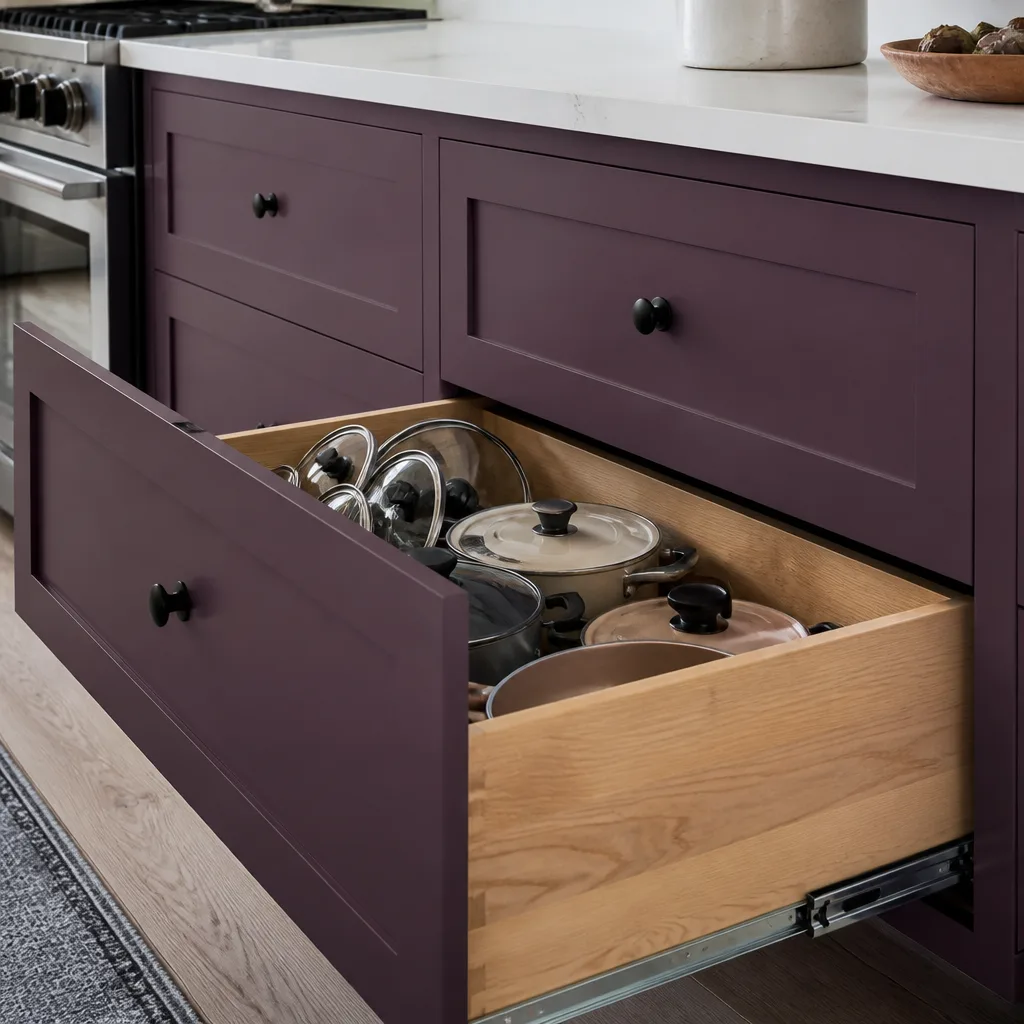
New pulls, hinges, and drawer slides on an existing Las Vegas kitchen typically cost $200 to $600 in parts, against $1,200 to $2,800 professionally. If your cabinet boxes are sound and the doors are square, this is a clean DIY win. When we handle a full kitchen remodel, we often spec KraftMaid or Wellborn boxes because they hold up in this climate, but if you’re keeping what you have, the hardware swap is a homeowner job.
3. Landscaping groundwork
Grading, soil amendment, gravel spreading, and planting in Las Vegas can be done yourself with a weekend and a rented tiller. A basic desert-tolerant landscape front yard runs $4,000 to $9,000 professionally, and roughly $1,500 to $3,500 DIY. Skip the irrigation rerouting and the paver work; keep the soil prep and planting for yourself, and bring in a professional for anything that touches a water line or the property line.
Three Projects Where a Professional Is Cheaper Over Five Years
The five-year view flips the answer on some jobs, because the DIY savings evaporate once you price in the failure modes this climate produces. These are the three where professional work pencils out cheaper over a five-year horizon.
1. Roofing
A DIY re-roof on a 2,000-square-foot Las Vegas house looks like a $4,000 to $7,000 materials bill. Five years out, the DIY version often costs $3,000 to $8,000 more in repairs because the underlayment and flashing were set wrong. Las Vegas heat cycling (110°F summers and 40°F winters on tile roofs) stresses seams that are set wrong. Professional installation using GAF or Owens Corning systems typically includes a 25- to 30-year manufacturer warranty on materials, which a homeowner-installed roof does not carry. Factor in a re-do and the DIY route loses.
2. Windows and doors
Windows are one of the highest-variance DIY jobs in the country, and in Las Vegas the variance is worse because of the intense UV and heat gain. A window installed with a poor air seal leaks cold air in summer and can fail early. On a set of six windows, professional installation using something like Therma-Tru doors or ECO Window Systems sliders costs $8,000 to $15,000, and DIY saves perhaps $2,500, versus $4,000 to $7,000 in re-seal and early replacement costs over five years when the flash and seal fall short. The window that doesn’t seal isn’t just a comfort problem in August.
3. Fenced perimeter and gate systems
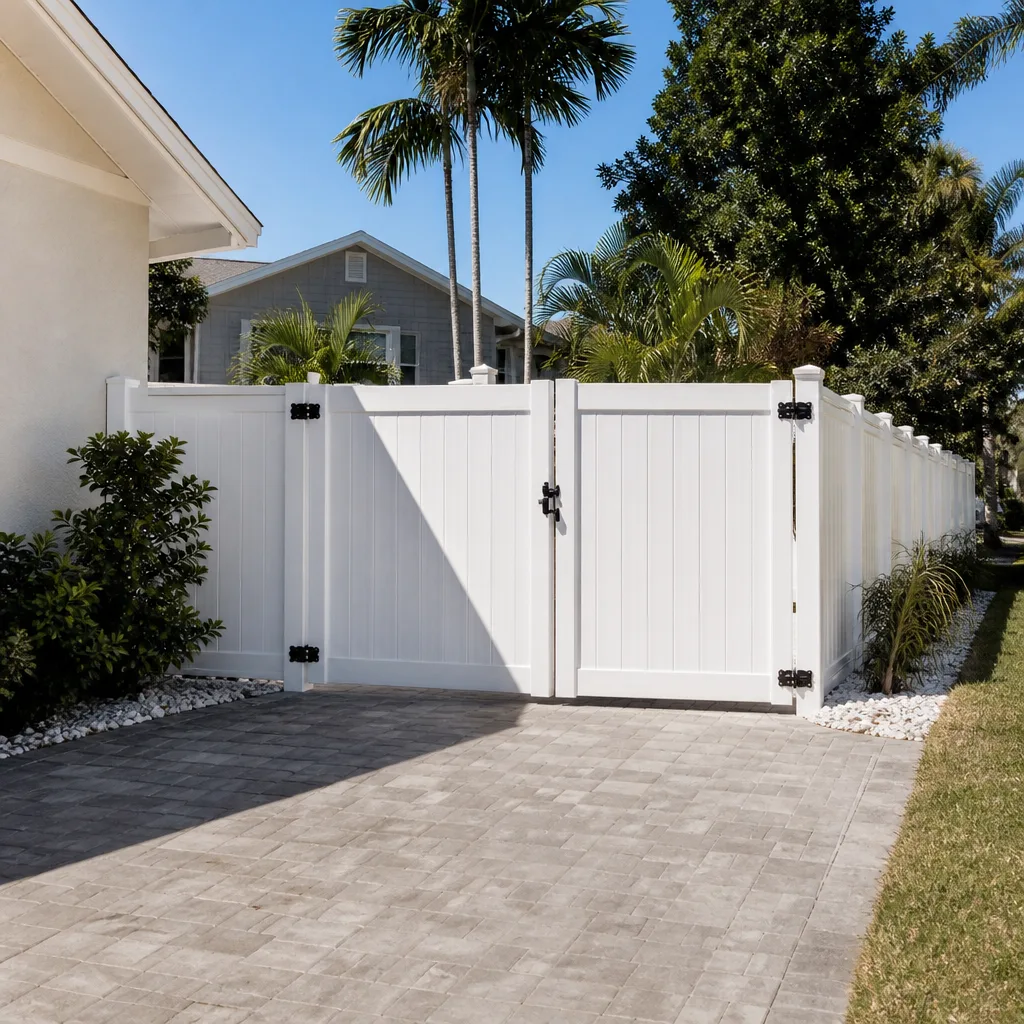
A Las Vegas side-yard fence looks like a straightforward DIY job, but the footing depth required in this soil profile and the high-wind uplift on gate posts are where it fails. DIY a $2,500 fence and you may see $2,500 to $4,500 in post replacement and re-set over five years, plus the risk on a wind event. A professional install on a block or steel post fence runs $5,000 to $12,000 for a typical lot, includes the footings and the permit where required, and it comes with a written warranty on top. That’s the Fence Installation in Las Vegas standard, and it isn’t a hard sell to make.
How to Scope a Hybrid Project Without Voiding Warranties
Hybrid is the fastest-growing category in Las Vegas construction work, and it’s the one where homeowners most often stumble. The idea: split a job between owner-performed portions and contractor-performed portions, so you capture the easy savings without taking on the riskier work. Done correctly, you can shave 10 to 20 percent off a large project. Done wrong, you void the warranty on the professional portion and lose every dollar you saved.
- Scope the split in writing before signing anything. Name exactly which rooms, which fixtures, and which finish categories you’re self-performing. Vague scopes are where disputes start.
- Ask the contractor which tasks affect their warranty. Baseline plumbing, waterproofing membranes in a bathroom, electrical rough-in, and structural work almost always sit inside warranty coverage. Painting, trim, hardware, and move-out cleanup usually don’t.
- Never touch rough-in of a system you don’t own the license for. You can paint the wall. You can’t run the wire through it and have the pro sign off.
- Keep the photographed record. We hand every customer a documented photo record of what was found and what was done. If you’re self-performing a portion, photograph that portion the same way, so the record is complete.
- Get the second opinion on the split before you start. Our free second opinion on any written estimate is exactly for this scenario: bring the competitor’s quote and we’ll review the split line by line, at no charge, before you commit.
For a larger job, the hybrid approach works especially well on home additions. We scope a lot of Las Vegas garages and side-yard additions where the homeowner keeps finish painting and landscaping, and the structural, electrical, and plumbing stay with us. Read the full breakdown at Home Additions & ADU in Las Vegas.
Why Las Vegas Climate Changes the Math
Generic DIY advice from a national blog is often wrong for Las Vegas specifically, because this climate punishes shortcuts that would survive elsewhere. The Mojave desert swings 60- to 70-degree daily temperature ranges in spring and fall, which sends cracks through improperly prepped drywall and stucco, and it bakes any exterior finish installed between May and September. Roof underlayment that would last 20 years in a mild climate dries and cracks in half that time if it’s the wrong product.
We see this concentrated in a few neighborhoods. In older central Las Vegas (the 1950s to 1970s stock around Huntridge and the Beverly Green area), the original galvanized plumbing and undersized electrical panels are the biggest hidden cost in any DIY remodel, and they surface the moment you open a wall. In newer builds out toward Summerlin and the western beltway, the failures are more often architectural: tile roofs with underlayment aging faster than the tiles, and window seals that dry out in less than a decade. If you’re about to open a wall on a Las Vegas house you bought between 2015 and 2025, assume the surprise is real and price a contingency of 10 to 15 percent.
One trade that’s whiter than it looks in this climate: window replacement. Between the desert heat gain and the occasional wind-driven dust storm, window seals are doing more work here than in most markets. When we quote window work, we spec systems like ViewLux or ECO Window Systems because the seal and the frame hold up under the temperature cycling, and short of pulling the seal off, you can’t visually inspect a failed seal. For a homeowner, that one fact alone usually settles the DIY question.
Common Mistakes to Avoid
- Pulling an owner-builder permit on a property you don’t live in. The exemption applies to your primary residence. Rent it out and the whole permit basis falls apart, which is the kind of problem that surfaces at the closing table rather than at the start.
- Booking a rough-in inspection after the drywall is up. In Las Vegas, this is the most expensive category of rework. Schedule the inspection when the studs are still exposed. It costs you a phone call and saves $600 to $2,000 per wall.
- Assuming your materials warranty covers your installation. GAF and Owens Corning warranties cover the product against manufacturing defect, not against a leak caused by the way it was installed. If you install it, you own the labor side of the warranty.
- Doing DIY work on a home you plan to sell within 5 years without pricing the disclosure. The 10-year owner-builder disclosure sits on the property record. Las Vegas buyers in the current market get inspection-happy about it, and “homeowner-built” can mean a $10,000 to $30,000 concession.
- Skipping the permit on a “small” structural change. A non-load-bearing wall removal can turn out to be load-bearing the moment you open the ceiling. Pulling a permit before you touch the wall costs a few hundred dollars; an engineered fix after the fact costs thousands.
- Starting the project in August. Las Vegas heat rules in summer construction for good reason: paint, stucco, concrete, and many sealants have temperature windows. A project that could go smoothly in April costs more to fix in August.
- Not getting a documented photo record before and after. If the contractor can’t produce before-and-after photos, you can’t prove the scope was met. This matters most on insurance claims, at resale, and in any warranty conversation.
See the difference
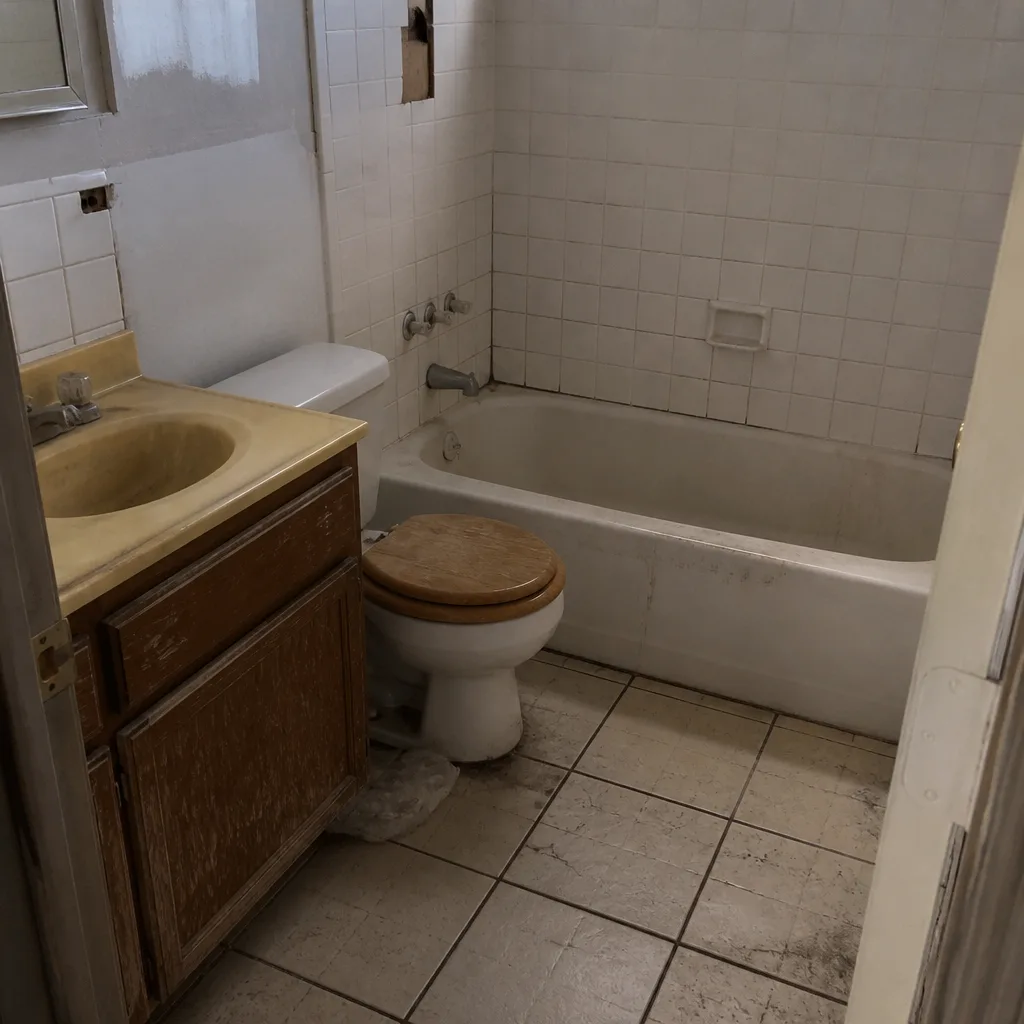 Before
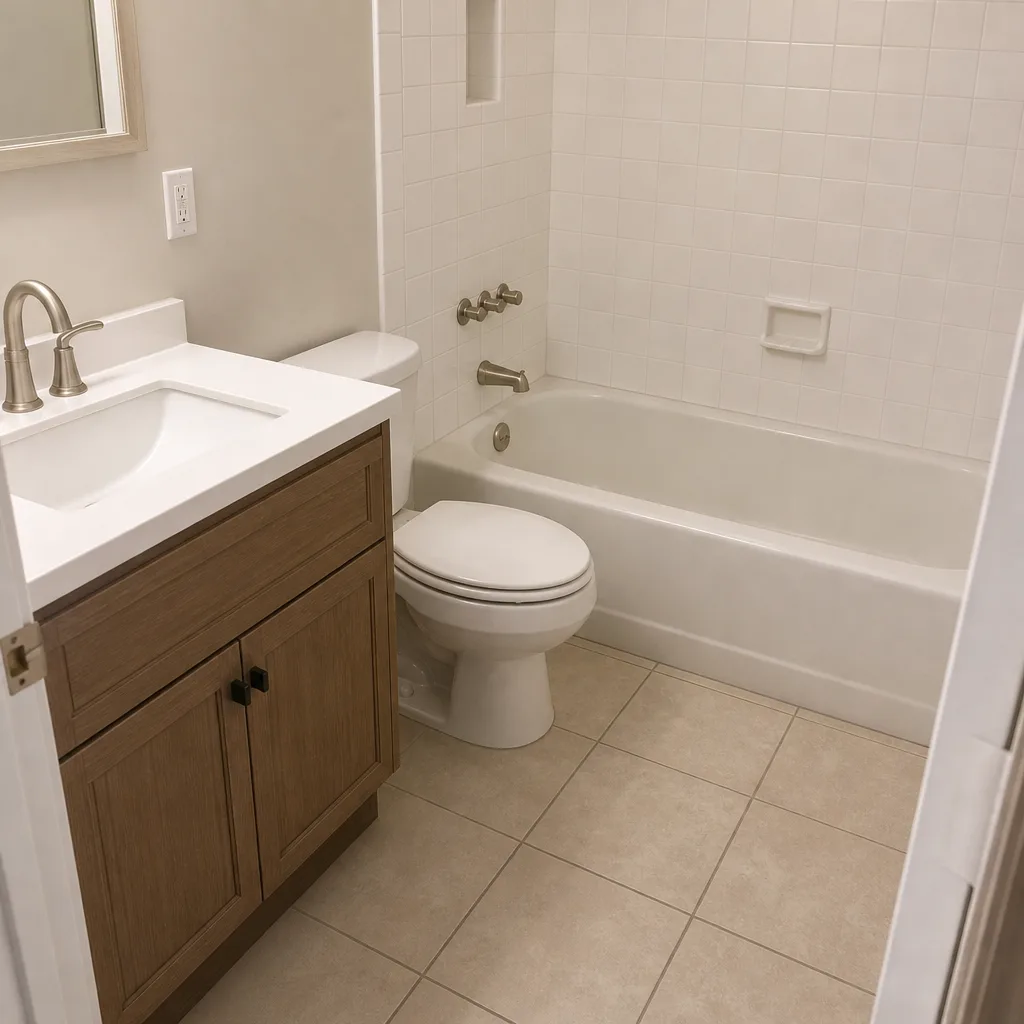 After
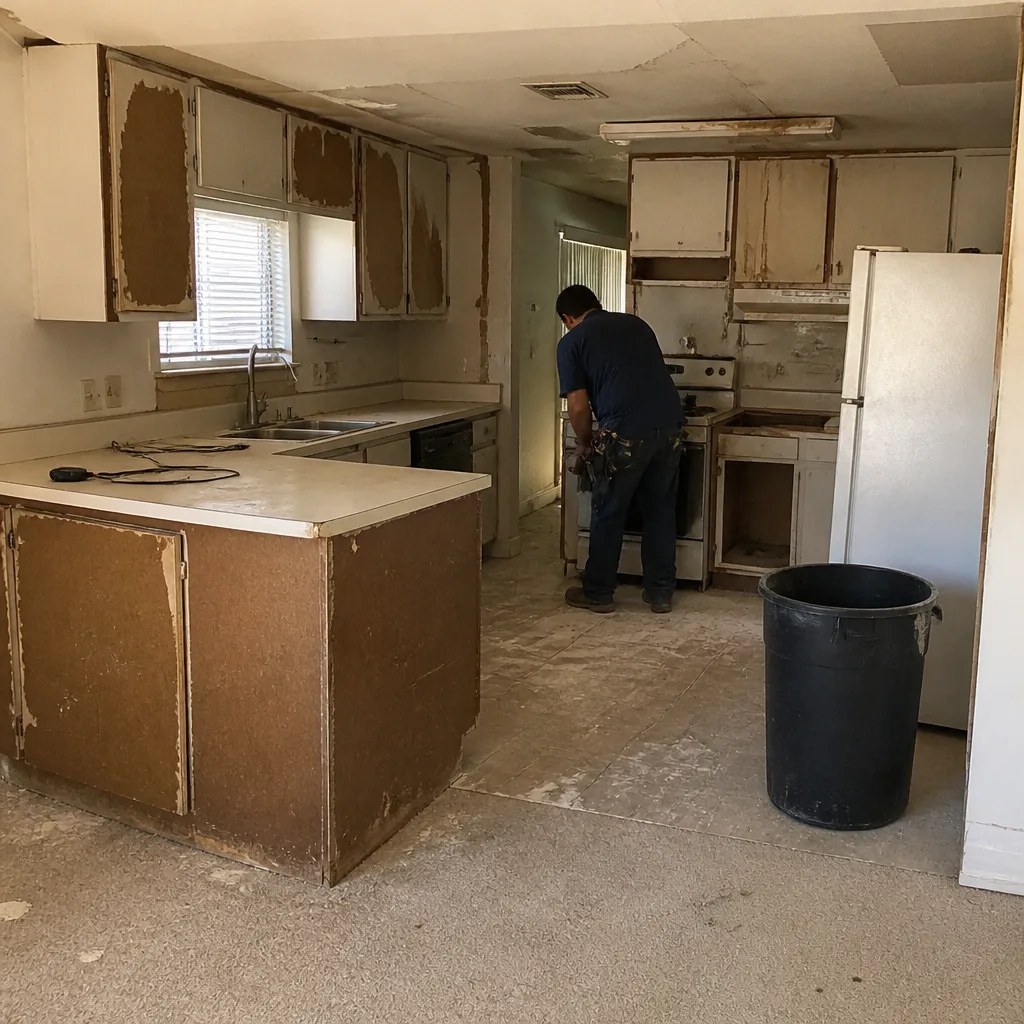 Before
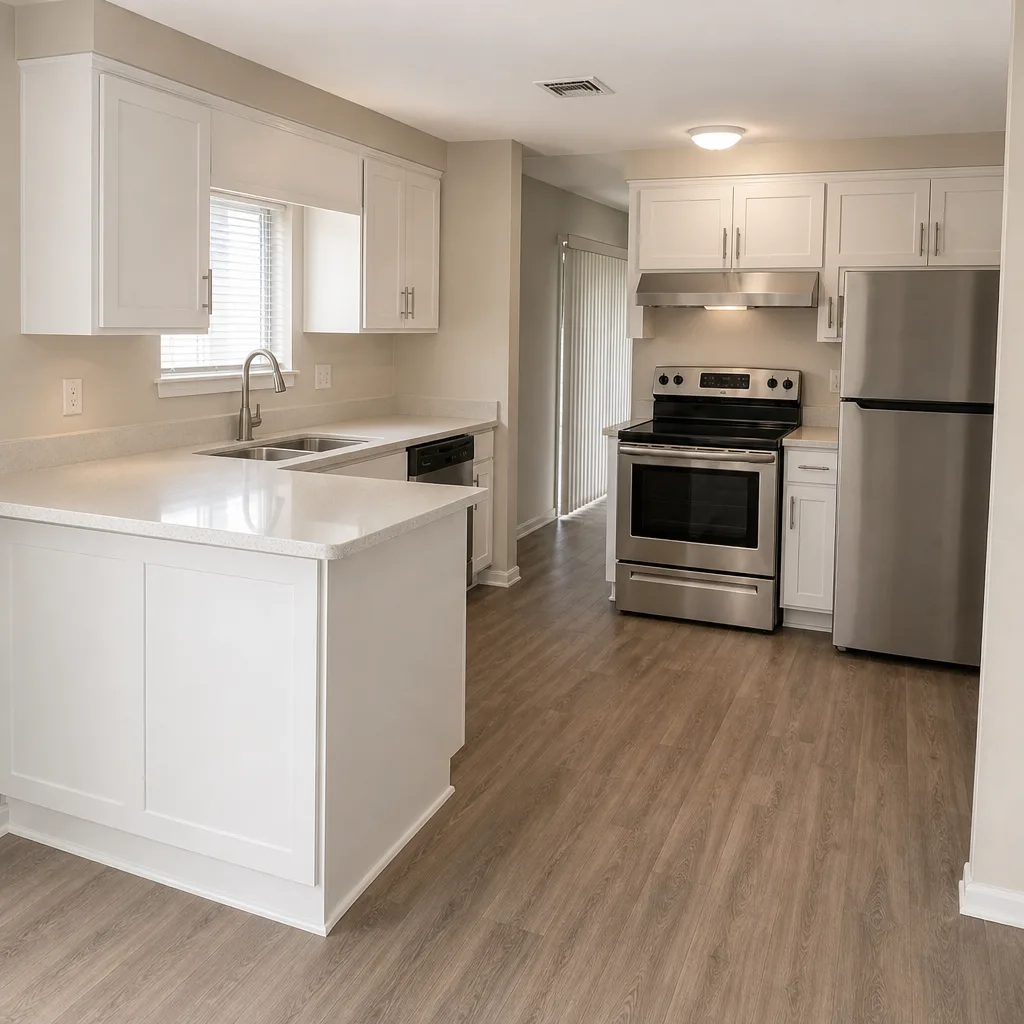 After
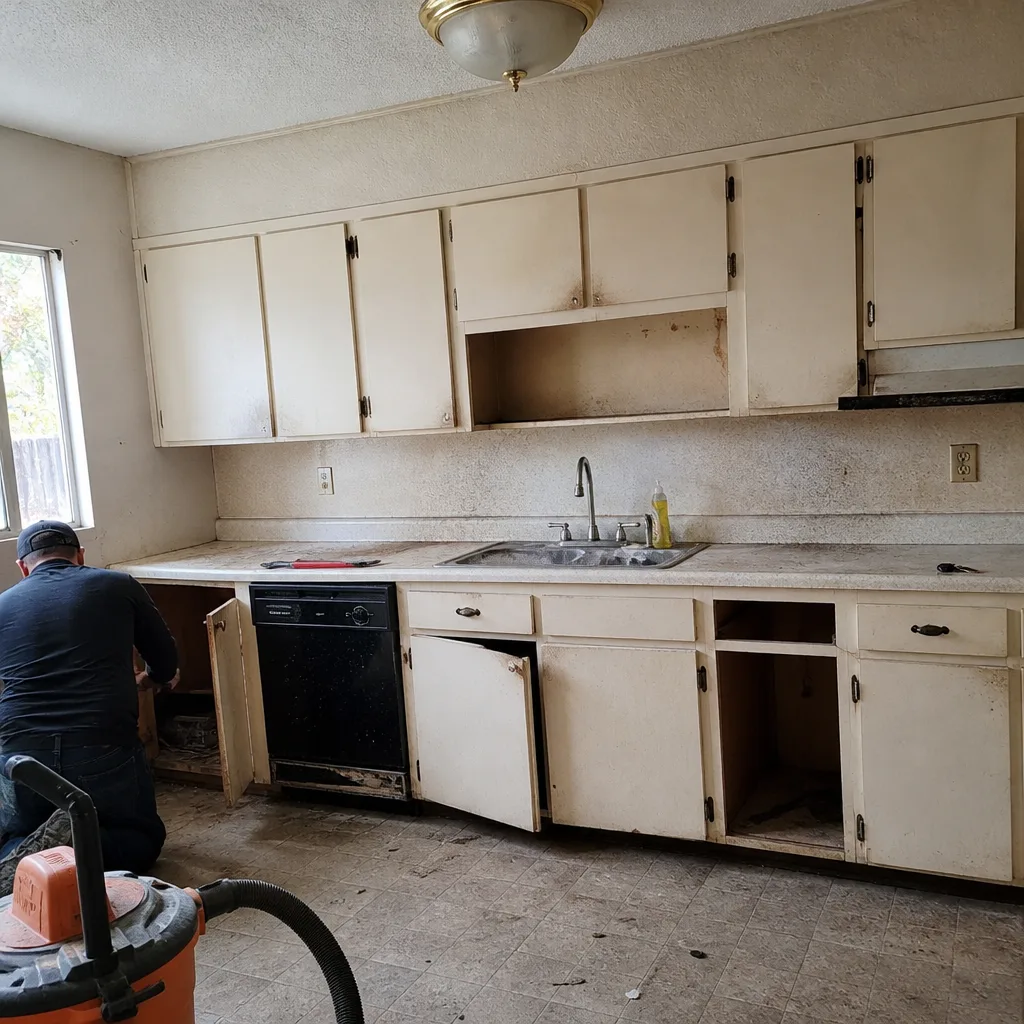 Before
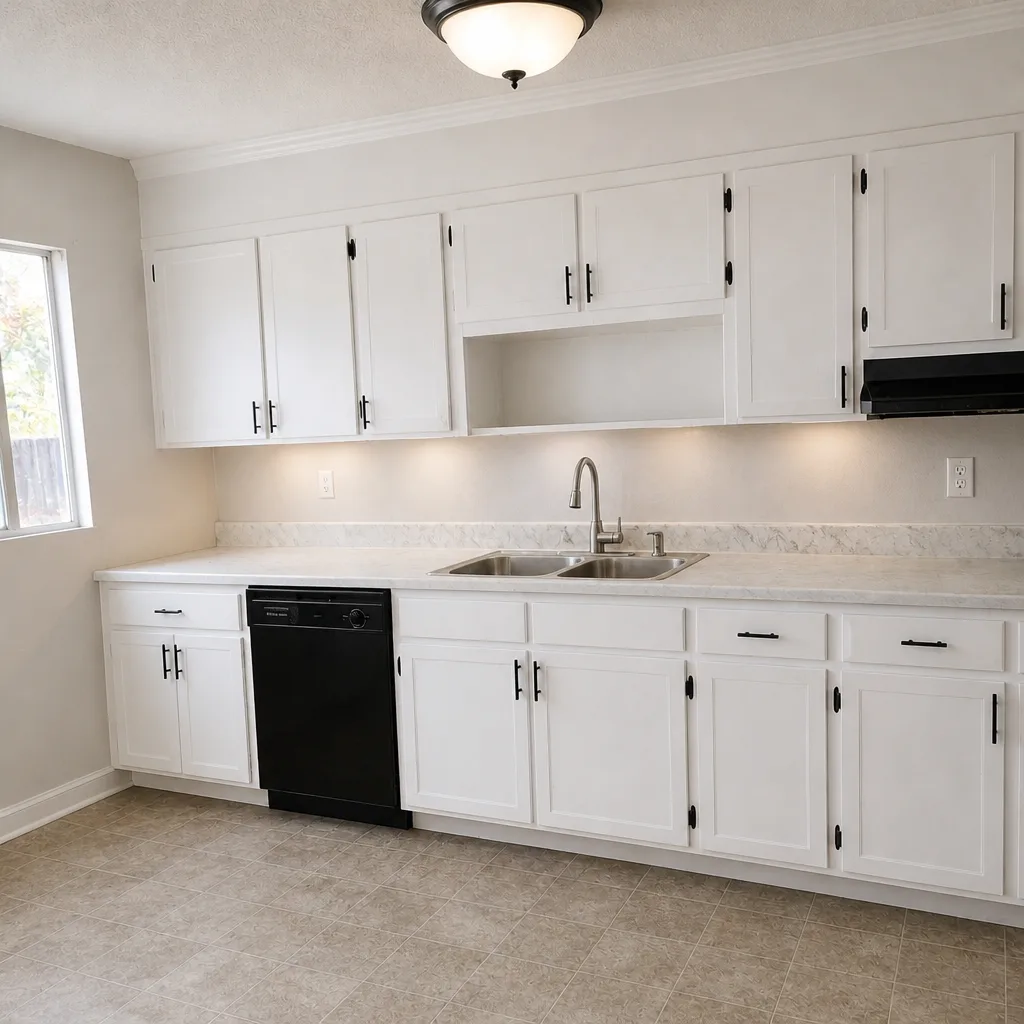 After
When to Call a Professional
Call a professional in Las Vegas when the work involves any of these: any permit that would require you to file as an owner-builder on a home you might sell within 10 years; any rough-in for electrical, plumbing, or gas; any structural change; any re-roof where the sheathing is being replaced; and any work on a rental property. Call a professional when the failure mode of the job is both expensive and hard to inspect, as with windows and roofing. Call a professional when you plan to sell within five years and want to avoid the owner-builder disclosure on the resale record. Also call if you’re considering a hybrid project: the free second opinion on any written estimate lets us review the split before you commit, so the warranty on the professional portion stays intact.
Rowan Construction Group Las Vegas offers free estimates in Las Vegas, with a written price and written scope before any work starts, and calls answered by a live person 24/7. Call (833) 467-9123 to schedule yours.
Frequently Asked Questions
Yes, on your own primary residence, under Nevada’s owner-builder exemption, for work that isn’t legally reserved to licensed contractors. Cosmetic work (painting, hardware, landscaping) needs no permit at all. Permitted structural work can be pulled by you, but the same statute requires you to disclose that fact to buyers for 10 years. Electrical, plumbing, gas, and most work on a rental property require a licensed Nevada contractor.
Typically $800 to $2,200 in permit fees on a mid-size addition, plus $1,200 to $3,500 for stamped engineering plans, plus several weeks in the plan-review queue. Budget 20 to 40 hours of your own time across two or three months before construction begins. Call (833) 467-9123 if you’d like a written estimate for exactly what a project would cost with the permit handled for you – estimates are free.
You’re responsible for the remediation, since you’re the general contractor of record. Rough-in failures caught before drywall typically cost $600 to $2,000 to correct. Failures caught after finishes are installed run $2,500 to $6,000 or more, depending on whether concrete or finished drywall has to be opened up. The fix is to schedule rough-in inspections before insulation and drywall, and to have any licensed contractor on the project walk the rough-in first.
It can, and the mechanism is the 10-year owner-builder disclosure. Cosmetic work (painting, landscaping) leaves no disclosure and no effect on value. Permitted structural work done under the owner-builder exemption does leave a disclosure, and Las Vegas buyers in the current market treat that with caution – often a $10,000 to $30,000 concession on a four-figure-square-foot addition. If you plan to sell within five years, price the disclosure before you start.
Rarely. A DIY re-roof saves roughly $3,000 to $5,000 in labor against a $12,000 to $18,000 professional install, but the first five years often produce $3,000 to $8,000 in early repairs due to seam and flashing failures in the desert heat cycle. Professional installation on a GAF or Owens Corning system also carries a manufacturer warranty that a homeowner-installed roof does not. Call (833) 467-9123 for a free written range on a re-roof before you price the materials – the comparison should be in dollars, not enthusiasm.
Yes, and it’s the best-value option on many large jobs. The trick is to scope the split in writing before signing anything, and to ask the contractor exactly which tasks sit inside their warranty. Painting, trim, hardware, and landscaping are usually safe to self-perform. Structural, electrical, plumbing, and waterproofing usually are not. We offer a free second opinion on any written estimate – bring the competitor’s quote and we’ll review the split line by line at no charge.
The Bottom Line
In Las Vegas, the DIY-or-hire question is decided by three things before it’s ever decided by skill: whether the work needs a permit, whether the work is legally reserved to a licensed contractor, and how the 10-year owner-builder disclosure affects the value of your home at resale. Cosmetic work (painting, hardware, landscaping) is a clean DIY win. Permitted structural work, rough-in trades, roofing, and windows usually lose their savings once the five-year view includes Las Vegas heat cycling and inspection failure. Where the project is large, a hybrid split works best; where the project is permitted, have it documented by someone who files with Clark County regularly.
If you’re on the fence about a specific project, call us at (833) 467-9123 for a free estimate. You’ll get the number in writing before anyone picks up a tool, and if you already have a competing quote, our free second opinion reviews it line by line at no charge. You can also start at our Rowan Construction Group Las Vegas home to see every trade we cover, from fence installation in Las Vegas to driveway and paver work and home additions and ADUs. Every job comes with the 365-Day Done Right Promise, a documented photo record, and background-checked, uniformed technicians. Under Clause 1 of the Haven Standard, the price is written before anyone starts.
Written by the team at Rowan Construction Group Las Vegas.