Last updated November 18, 2026



Free written scope consultation - allowances, timeline, and change-order rules on paper before a single trade is scheduled
Construction Emergency Preparedness Guide for Las Vegas Homes
During a Las Vegas summer, a failed roof membrane after a monsoon storm leaves the interior exposed to 115°F heat, and mold colonization in wet insulation can begin in under 48 hours in those conditions. The response window here is roughly half what it would be in a northern climate, where cooler air and slower evaporation give homeowners more time to react. That compressed timeline is what makes preparation, not reaction, the difference between a repair and a rebuild. This guide covers the emergencies that actually happen to Las Vegas homes, the documentation that speeds recovery, how to verify a contractor’s license mid-crisis, and the cost ranges that tell you whether an emergency quote is fair.
Quick Answer
Construction emergency preparedness for a Las Vegas home means documenting your systems before disaster hits: photographing roof assemblies, recording model and serial numbers for HVAC and water heaters, keeping warranty paperwork accessible, and knowing your insurance claim process. Because monsoon storms, extreme summer heat, and rare seismic events drive most local claims, the homeowners who recover fastest have a written inventory and a verified contractor contact ready before the first drop of rain or the first 118°F day.
Styles & brands we work with
- Kitchen remodeling
- Bathroom remodeling
- Home additions & ADU
- Roofing
- Windows & doors
- Driveway & pavers
- Fence
Table of Contents
- The Las Vegas Emergency Hierarchy
- Home Systems Documentation Checklist
- Nevada Contractor Licensing and Emergency Repairs
- Temporary Repair Standards Under Clark County Code
- Emergency Budget Benchmarks
- Seismic and Monsoon Season Prep by Season
- Working With Your Insurer After the Damage
- Common Mistakes to Avoid
The Las Vegas Emergency Hierarchy: What Actually Happens Here
Not every emergency deserves equal preparation. Clark County insurance claim data and our own project records show three categories dominate, and they rank by both frequency and urgency.
- Monsoon wind and rain damage (highest frequency). The July-through-September monsoon delivers sudden wind gusts paired with heavy rain that finds every weak point in a roof assembly, window seal, or stucco cladding. Tile underlayment that dried and cracked over years of UV exposure fails first. Wind-driven rain pushes under flashing at chimney and skylight penetrations.
- Summer HVAC failure (highest urgency). A dead air conditioner in July makes a Las Vegas home uninhabitable within hours, not days. Interior temperatures can climb past 95°F by mid-afternoon, which is dangerous for children, elderly residents, and pets. HVAC failure sits second in frequency but first in the speed required to respond.
- Exterior cladding breach (highest structural risk). Stucco blowouts, cracked window frames, and failed flashing turn a wall cavity into a water channel. In Las Vegas, where the stucco system often covers wood sheathing and framing, a breach that goes unaddressed lets moisture reach structural members within one monsoon cycle.
Seismic events are rare in the Las Vegas Valley, but the region does sit near active faults, and the 2024 and 2025 tremors reminded homeowners that unreinforced masonry and unstrapped water heaters are genuine liabilities. Frequency is low; the training value of preparation is high because the same documentation that helps after an earthquake helps after a monsoon.
Understanding which category your home is most exposed to shapes everything that follows. A 1990s Summerlin house with original tile underlayment is a monsoon risk. A Henderson home with a 15-year-old air handler is an HVAC risk. Know your exposure before the season starts.
Home Systems Documentation Checklist: The Prep That Actually Pays Off
When a storm tears open a roof at 9 p.m., the contractor standing in your driveway needs to know three things fast: what’s under the shingles, how old the system is, and what the manufacturer warranty covers. Homeowners who can answer those questions in the first five minutes get faster, cheaper repairs because the crew doesn’t spend a day doing a site survey.
Build a documentation file organized by trade. A physical folder in a waterproof box and a digital copy in cloud storage both work; do both.
- Roofing: Photos of the assembly at install (if you have them), the shingle or tile brand and product line, layer count, install date, and warranty paperwork. Name the brand explicitly. If it’s GAF or Owens Corning, the warranty terms differ substantially.
- Windows and doors: Model numbers from the frame label, brand (Therma-Tru and ViewLux both carry transferable warranties worth citing in a claim), and install dates.
- HVAC: Condenser and air handler model and serial numbers, install date, refrigerant type, and the last service record. This alone can save a day on a July emergency because the contractor can confirm part availability before arriving.
- Plumbing: Water heater model and serial, supply line material (copper, PEX, or galvanized), and the location of your main shutoff valve. Photograph the shutoff valve.
- Foundation and drainage: Photos of the perimeter grade, downspout discharge points, and any existing cracks with a ruler or coin for scale.
- Fencing and exterior: Fence material and brand (Barrette and Master Halco both have distinct warranty terms), plus the post spacing.
Take the photos on a clear day, not during a storm. Update the file every time you replace a system. This is the single highest-value hour a Las Vegas homeowner can spend on preparedness. For homeowners planning upgrades rather than reacting to failures, our Rowan Construction Group Las Vegas home page outlines how we quote each trade before work begins.
Nevada Contractor Licensing: How to Verify Credentials in Under Five Minutes
Nevada requires a contractor to hold an active license issued by the Nevada State Contractors Board (NSCB) to perform construction work, including emergency repair work. A storm-chaser who arrives in an unmarked truck after a monsoon with no verifiable license can legally be turned away, even mid-emergency. Hiring an unlicensed contractor exposes you to liability, voids many insurance claims, and often leaves you with work that fails inspection and has no recourse.
Verification takes minutes and should happen before anyone touches your roof.
- Ask for the license number in writing (text is fine). If they can’t produce one, that answers the question.
- Look up the number on the Nevada State Contractors Board website. Confirm the license is active and the classification matches the trade (roofing, plumbing, HVAC, and general building each have distinct classifications).
- Check the license for any disciplinary actions or complaints listed on the board record.
- Confirm the business name on the license matches the name on the written quote.
- Ask for a certificate of insurance and verify the policy is current by calling the insurer.
Do this now, with your preferred contractor, before you need them. Save the license number in your documentation file. When an emergency hits, you’re not doing research at midnight. Nevada’s licensing board publishes its complaint and discipline records publicly, which is exactly why a legitimate contractor expects you to check. In our experience, the contractors who resist verification are the ones with something to hide.
Temporary Repair Standards Under Clark County Code
When a roof is breached, you need a temporary fix that buys time without creating a permit violation. Clark County code distinguishes between emergency weatherproofing measures (allowed immediately) and permanent repairs (which require a permit and inspection). Getting that line right protects your insurance claim.
Acceptable temporary measures typically include:
- Heavy-duty tarps secured with battens or sandbags over a breached roof section, weighted and tied off to resist wind.
- Board-up using exterior-grade plywood over broken windows or doors, fastened and sealed.
- Securing loose flashing, gutters, and trim that could become windborne projectiles.
- Shutting off water at the main valve to prevent active leaks from spreading into wall cavities.
What crosses into permit territory:
- Replacing sheathing, underlayment, or shingles as a permanent fix without a permit.
- Structural repairs to framing or trusses.
- Altering drainage grading or adding permanent water-diversion structures.
- Electrical, plumbing, or HVAC repair work without the required trade permit.
The practical rule: temporary measures stop the water and secure the site; anything that changes building systems permanently should go through the county. If you’re unsure whether your fix is temporary or permanent, ask the contractor to state it in writing. For a broader look at how we handle exterior structural work, see our Fence Installation in Las Vegas page, which follows the same permit-first discipline.
Emergency Budget Benchmarks: Five Common Las Vegas Emergencies
Knowing what a fair emergency repair costs is your best defense against price gouging in a crisis. These are documented ranges for the five most common construction emergencies in Las Vegas. Emergency work always costs more than planned work because of dispatch urgency, after-hours labor, and temporary measures; treat these as your comparison anchor, and get a written quote before work starts even in an emergency.
- Roof breach (temporary tarping plus partial repair): roughly $450 – $1,800 depending on breach size and access. Full re-roof of a damaged section runs considerably higher and should be quoted as a planned project once the emergency is stabilized.
- Stucco blowout (patch and weatherproof): roughly $350 – $1,200 for the damaged area, depending on height and whether the sheathing behind it shows moisture damage.
- Broken supply line (emergency shutoff and repair): roughly $250 – $900 for typical residential repairs, higher if the line is under a slab.
- HVAC failure (diagnostic plus repair or component replacement): roughly $180 – $650 for common repairs like capacitor, blower motor, or refrigerant recharge; a full system replacement is a multi-thousand-dollar planned project.
- Foundation drainage failure (regrading, new French drain): roughly $1,200 – $4,500 depending on linear footage and site access.
These ranges exist so you can tell the difference between a real quote and a crisis markup. Anything more than 30% above the top of a range in an emergency warrants a second call. Under our Home Additions & ADU in Las Vegas process, we put a flat written price in front of you before any tool is picked up, and that discipline holds for emergency work too. When a storm-chaser gives you a number out of the air, that’s a signal, not a quote.
Monsoon and Seismic Season Prep: A Yearly Calendar
Las Vegas homeowners face two distinct prep windows. Monsoon readiness matters May through September; seismic and winter-wind readiness fits into the cooler months. Break the work into four quarterly tasks so it never piles up.
- Spring (April – May): Clear roof and gutters of debris, inspect flashing at penetrations, confirm roof underlayment age, and photograph the assembly. Confirm your HVAC is serviced before the first heat wave.
- Pre-monsoon (June): Trim overhanging branches, secure loose outdoor items, test sump and drainage function, and confirm your documentation file is current. Verify contractor contacts and license numbers.
- Monsoon (July – September): After each storm, walk the perimeter and photograph any change, no matter how small. Inspect the attic for staining after heavy rain.
- Fall and winter (October – March): Strap the water heater, check foundation perimeter grading, inspect fences for wind damage, and confirm windows and doors seal properly before cooler weather. If you’re considering a paver or driveway project, our Driveway & Pavers in Las Vegas team can quote it during the shoulder season.
The homeowners who get through monsoon season with minimal damage are the ones who did the spring and pre-monsoon work. The documentation and the maintenance go together.
Working With Your Insurer After the Damage
Your insurance claim moves faster when you hand the adjuster documents instead of descriptions. Before you call the insurer, have four things ready: the photo record of the pre-storm condition, the product model and install dates, the temporary measures you took (with photos and receipts), and the written quotes you’ve collected.
Three practices shorten a claim cycle. First, photograph everything twice: wide shots that establish context and close shots that show detail. Second, keep every receipt for temporary measures like tarps and board-up, because many policies reimburse those separately. Third, don’t sign a repair authorization before you have a written scope; the authorization is not the same as an approved claim, and signing it early can complicate the process. If a storm-chaser offers to “handle the insurance company for you,” that’s a red flag worth slowing down for.
Every visit from our crews includes a documented photo record as a standard deliverable, not an upgrade. That file goes to you, and you can hand it directly to your adjuster. It’s one of the practical reasons we built the Haven Standard around written records rather than verbal promises.
Common Mistakes to Avoid
- Waiting for business hours to shut off water or tarp a breach. In Las Vegas heat, mold can start within 48 hours. Shut off the water and tarp the roof the same hour you notice the problem.
- Hiring the truck that arrived first. Storm-chasers materialize after every monsoon. Verify the NSCB license before anyone climbs the ladder, even if they’re already there.
- Skipping the documentation file because “we’ll remember.” Nobody remembers the model number of a 12-year-old air handler at 10 p.m. on a 112°F night. Write it down and photograph it now.
- Confusing a temporary fix with a repair. A tarp is a weatherproofing measure, not a fix. Leaving it in place past the storm creates a mold problem under it, and the sun degrades the tarp fast in Las Vegas.
- Signing a repair authorization from an insurer without a written scope. The authorization is not an approved claim. Get the scope in writing first.
- Overlooking water heater strapping and foundation grading during prep. These are cheap upgrades that prevent expensive emergencies, and they rarely make anyone’s bug-out list.
- Not taking “after” photos. Without them, you have no baseline if a later storm causes damage in the same area and the insurer questions when it occurred.
See the difference
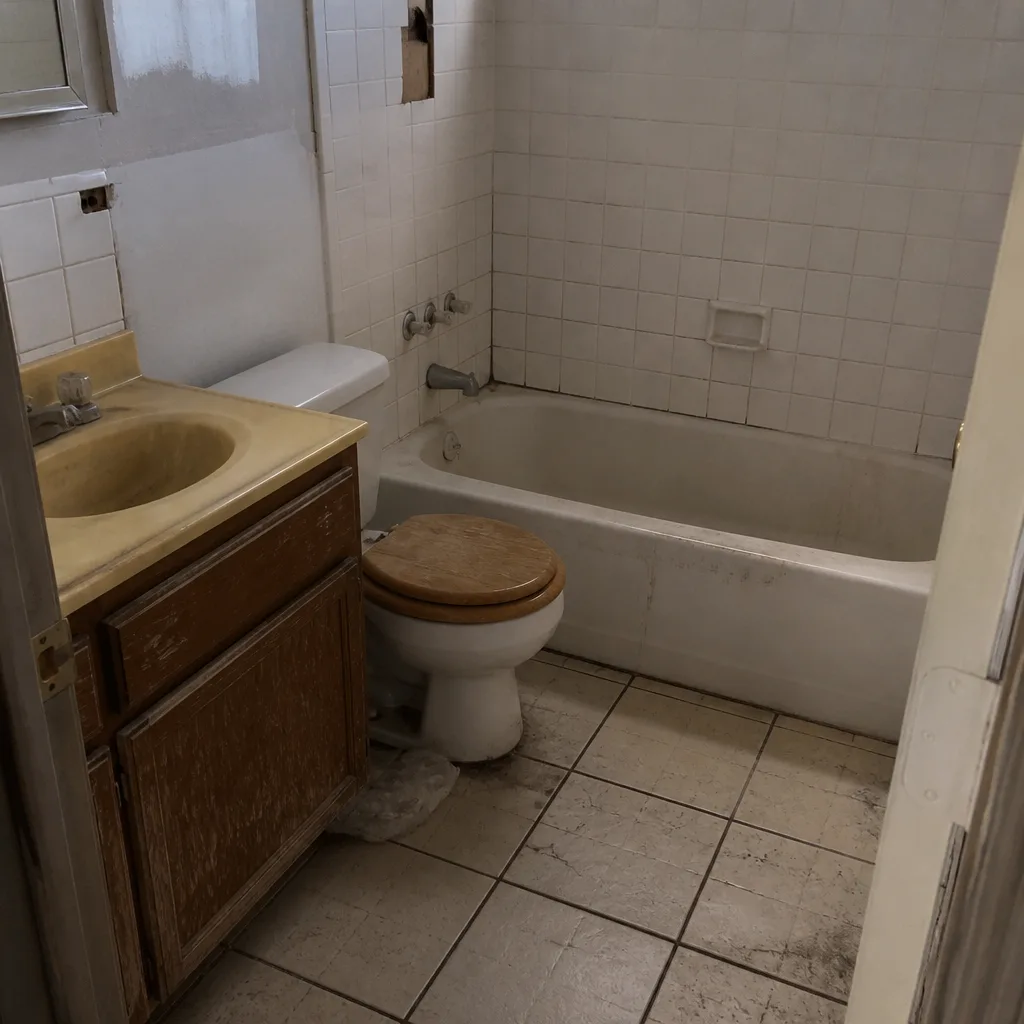 Before
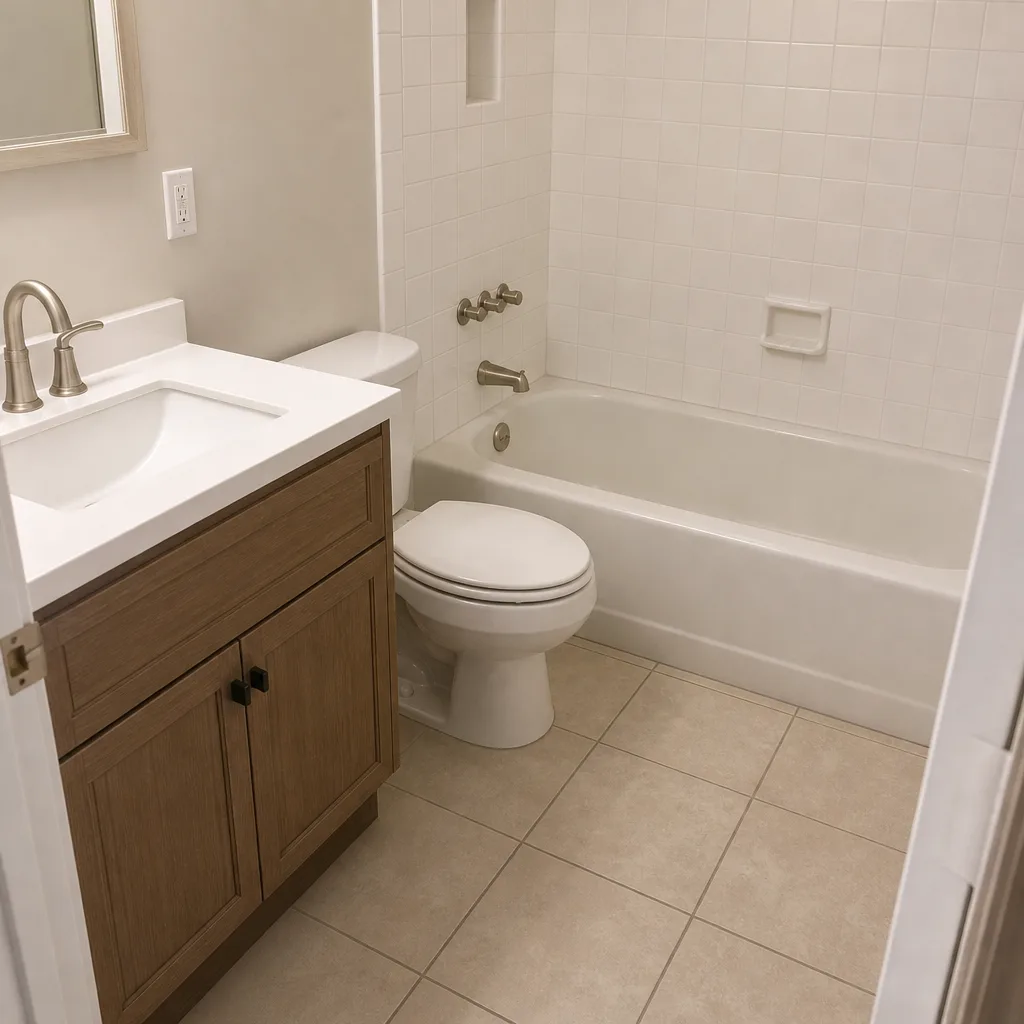 After
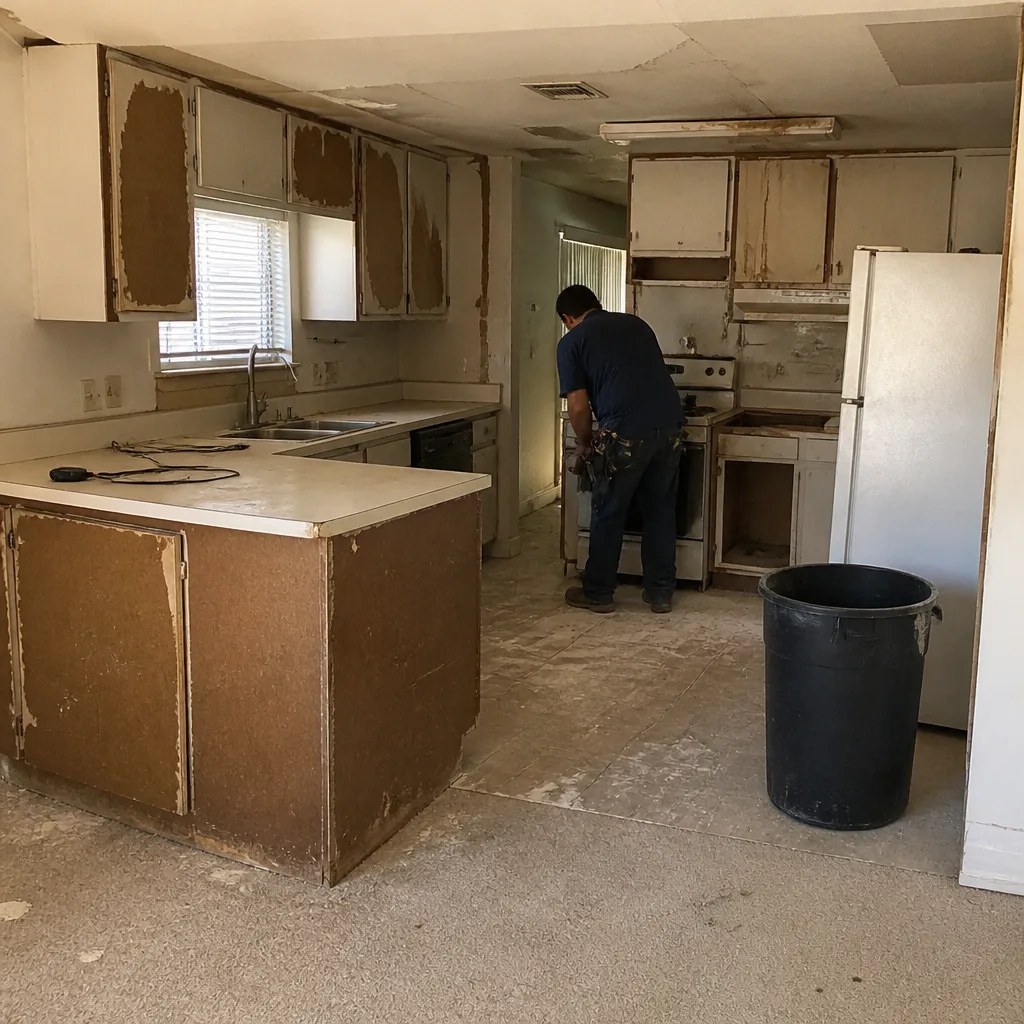 Before
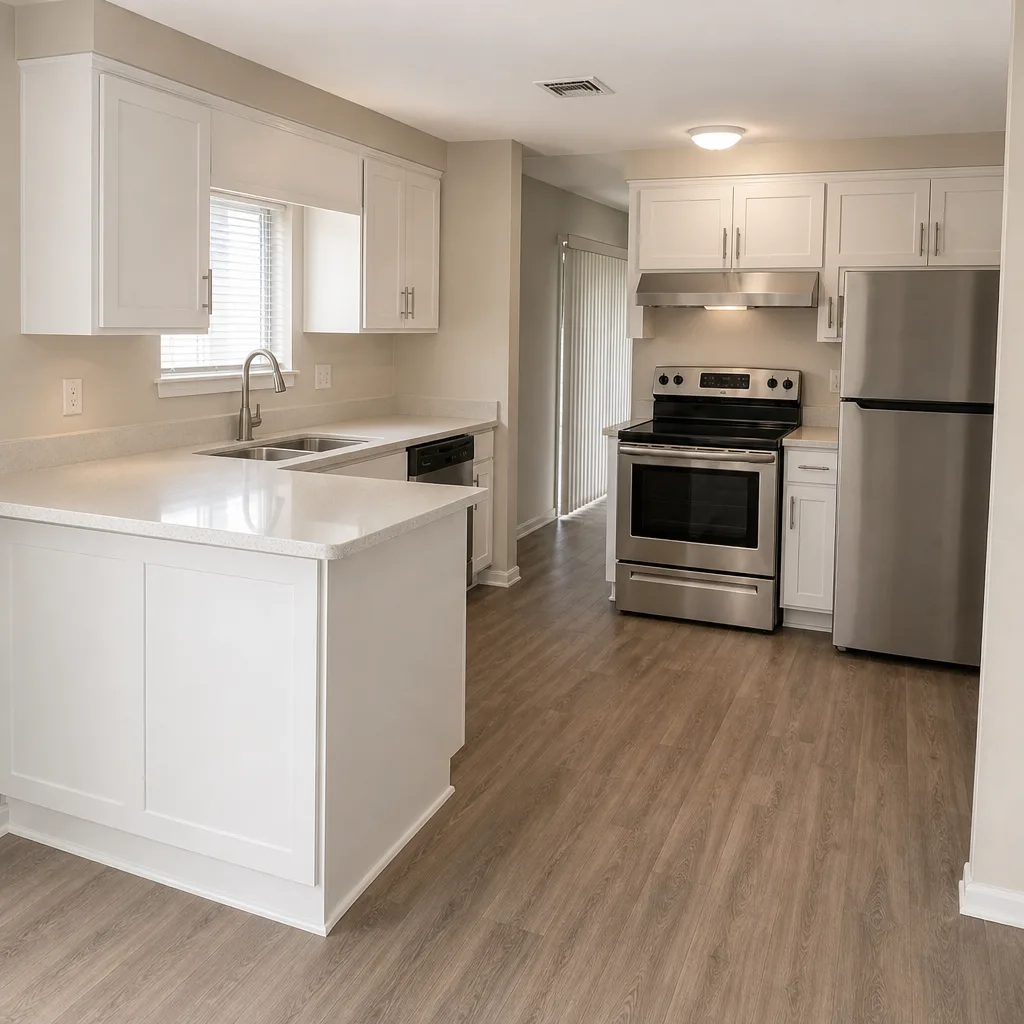 After
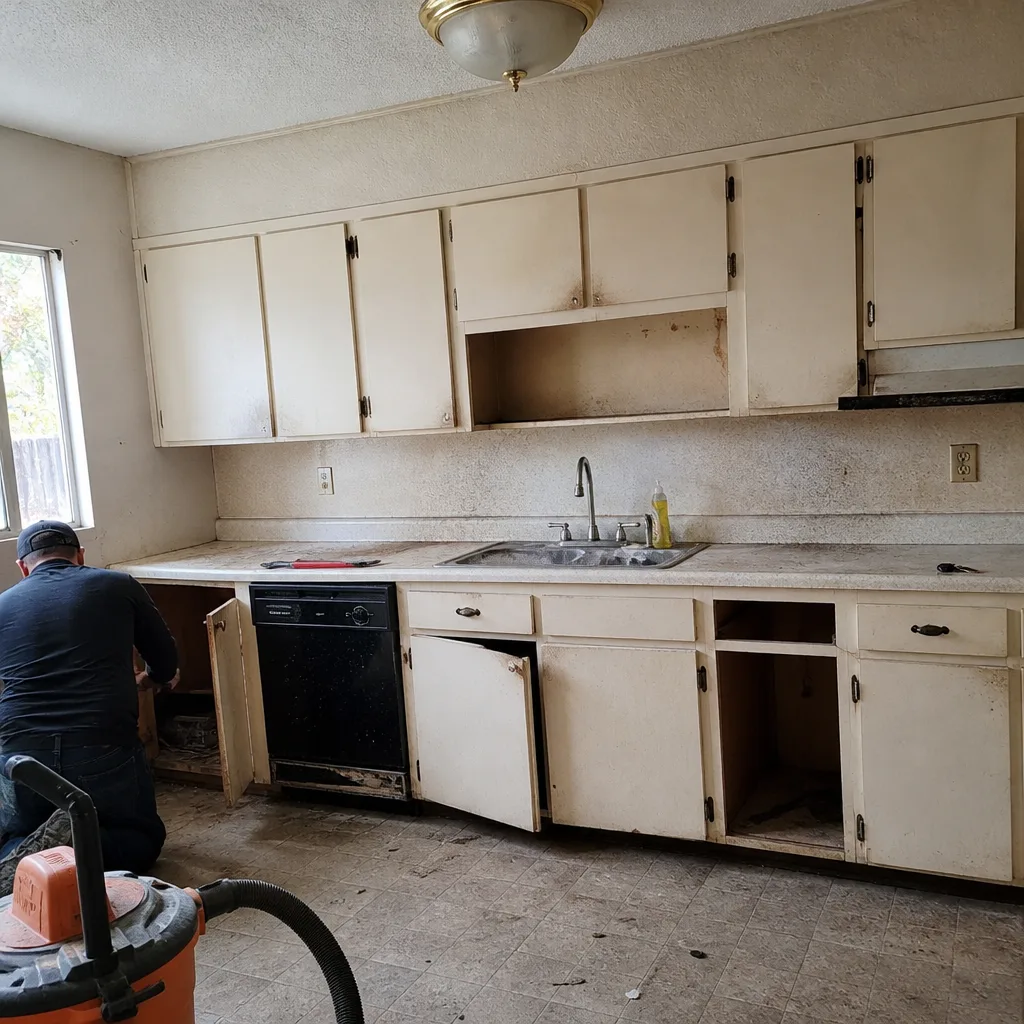 Before
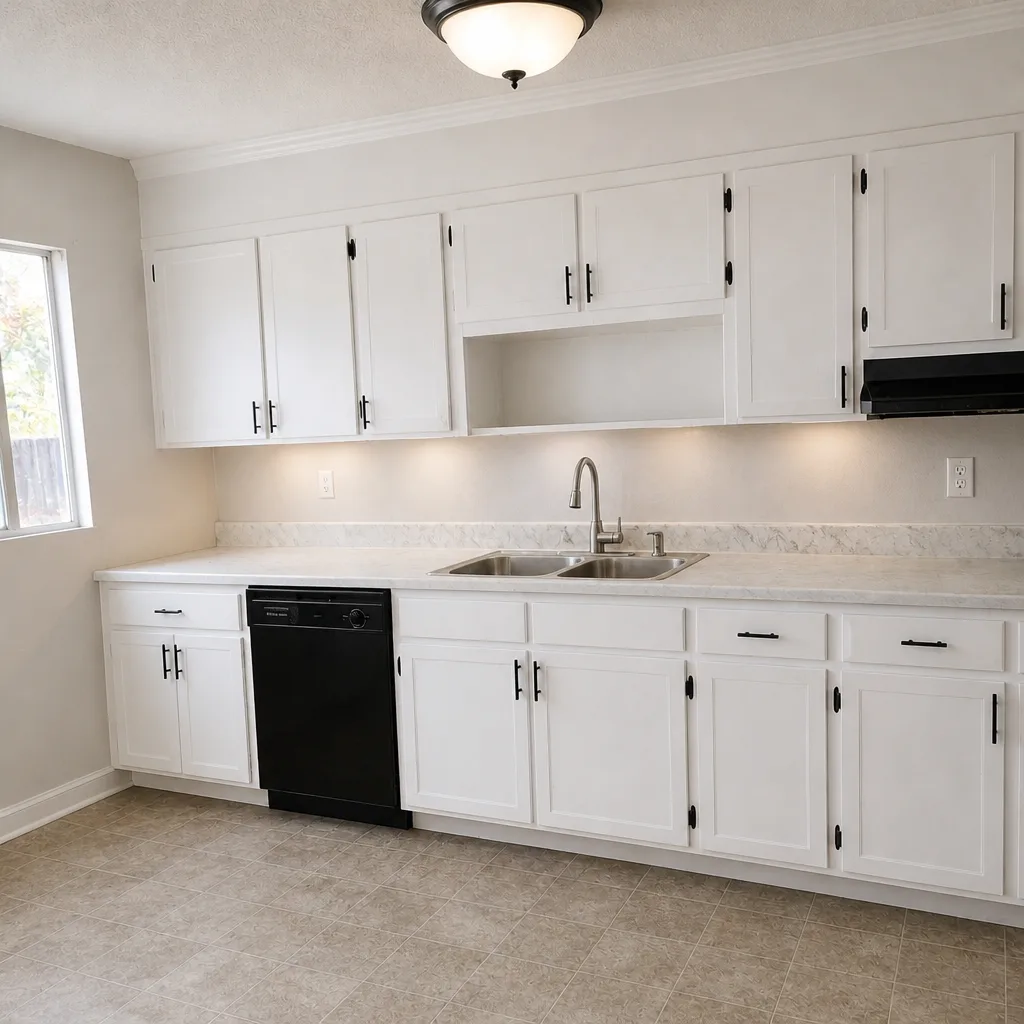 After
When to Call a Professional
Some emergencies are obvious calls: a roof breach after a monsoon, a wall cavity with active water intrusion, an HVAC failure in a heat wave, or a foundation drain backing up after a storm. Others are less obvious but equally important: cracked stucco with visible sheathing behind it, a water heater sitting unstrapped in a garage, or a window frame that no longer seals after wind exposure. When a structural system, electrical panel, gas line, or roof height is involved, call a professional. Roof work at height and any high-voltage component carry real injury risk, and the repair you’re tempted to DIY is the one most likely to hurt you or void a claim. Rowan Construction Group Las Vegas offers free estimates in Las Vegas for every one of these scenarios, and we put the price in writing before any work starts. Call (833) 467-9123 to schedule yours.
Frequently Asked Questions
Temporary tarping and partial repair of a roof breach in Las Vegas typically runs roughly $450 – $1,800, depending on breach size and roof access. Full section replacement is a larger planned project and should be quoted separately after the emergency is stabilized. Call (833) 467-9123 for a written quote; estimates are free.
Most standard homeowner policies cover monsoon wind and rain damage that enters through a breached roof or wall, but not damage from deferred maintenance that the insurer can show was pre-existing. Document the pre-storm condition with photos and product model numbers so the adjuster can distinguish storm damage from wear. A written scope from a licensed contractor strengthens the claim.
Mold colonization in wet insulation can begin within 48 hours in Las Vegas summer conditions, and often faster when interior temperatures stay above 100°F. That’s roughly half the response window you’d have in a cooler climate. Shut off the water, tarp the breach, and call a professional the same day.
Yes. Nevada requires an active Nevada State Contractors Board license for emergency repair work, including roof, stucco, plumbing, and HVAC repairs. An unlicensed storm-chaser can legally be turned away even mid-emergency, and hiring one can void your insurance claim. Verify the license number on the NSCB website before any work starts.
Tarping a breached roof, boarding up windows, securing loose flashing, and shutting off water at the main valve are acceptable temporary weatherproofing measures under Clark County code. Permanent repairs to sheathing, underlayment, framing, drainage grading, or trade systems require a permit and inspection. Ask the contractor to state in writing whether a fix is temporary or permanent.
Build a documentation file organized by trade with photos, model and serial numbers, install dates, and warranty paperwork for your roof, HVAC, plumbing, windows, and foundation drainage. Verify and save your preferred contractor’s NSCB license number. Service the HVAC before summer and clear roof and gutters before monsoon season. The one hour you spend on this file pays back many times over during an actual emergency.
The Bottom Line
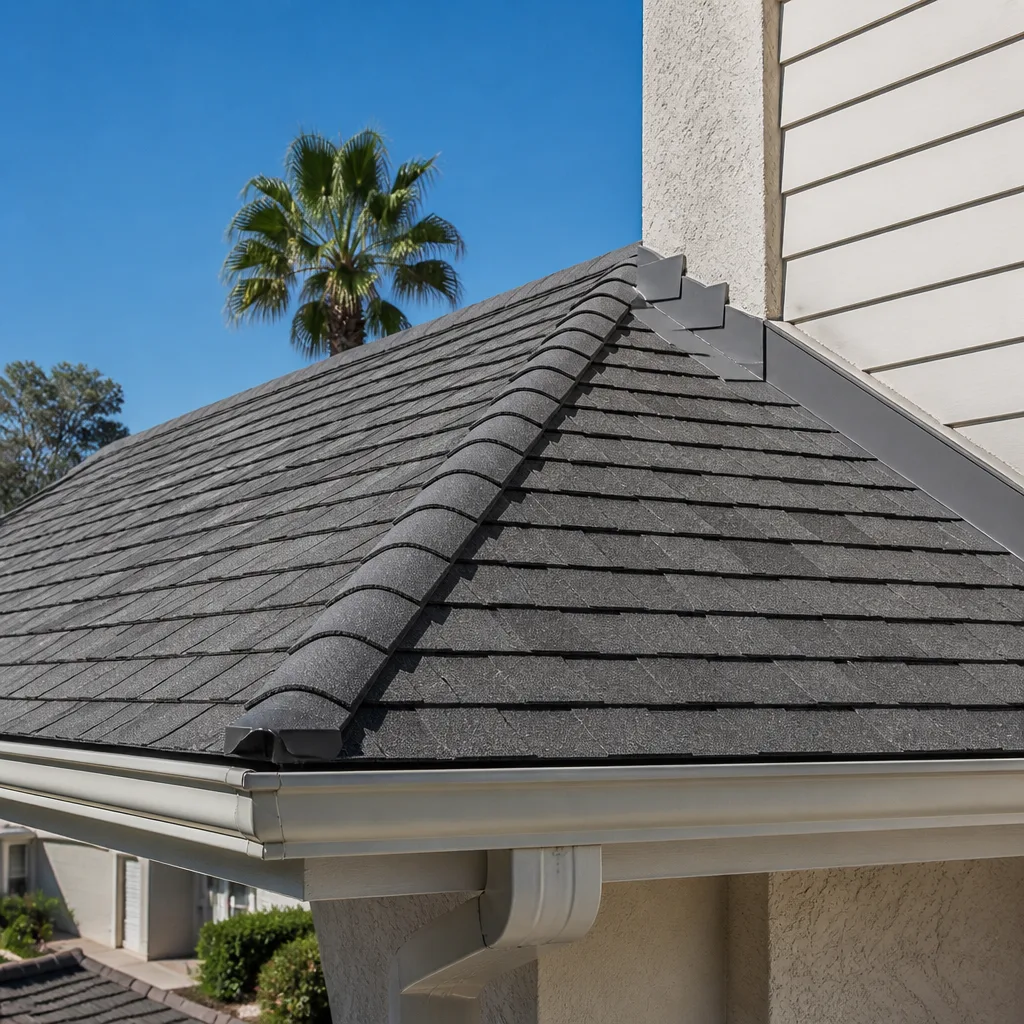
Las Vegas construction emergencies follow a pattern: monsoon roof and cladding damage, summer HVAC failure, and the rare seismic event, ranked by frequency and urgency. The homeowners who recover fastest are the ones who documented their home’s systems before the emergency, verified their contractor’s license in advance, and know the fair cost range for the five common repairs. That preparation file, plus a written quote discipline that keeps crisis markup out of the equation, is what turns a disaster into a repair. It’s the same principle behind the Haven Standard: written records, no change without a signature, and a documented photo record on every visit.
Rowan Construction Group Las Vegas offers free estimates across all seven trades, and we’ll review any competitor’s written estimate line by line at no charge if you want a second opinion before you commit. Call (833) 467-9123 to schedule your free estimate.
Written by the team at Rowan Construction Group Las Vegas.