
Last updated November 18, 2026






Free written scope consultation - allowances, timeline, and change-order rules on paper before a single trade is scheduled
Construction Warning Signs: A Las Vegas Homeowner’s Reference Guide
A contractor who quotes a Las Vegas flat roof without specifying the TPO membrane thickness and seam weld method isn’t cutting corners yet – but he has already set up the conversation where corners get cut invisibly. That’s the trouble with most warning-sign lists. They catch the obvious fraud and miss the quiet engineering decisions that fail three summers later. This guide is different. It’s built around the signals that only show up in the Las Vegas market: Nevada licensing records, Clark County permit thresholds, desert-climate material swaps, and payment schedules calibrated to how homes here are actually built and sold. We’ll show you how to read an NSCB license record, which materials get substituted most, and the one question about Clark County inspection pass rates that most homeowners never think to ask.
Quick Answer
The biggest construction warning signs in Las Vegas are a license record that doesn’t match the work being bid, a quote that omits material specifications like membrane thickness or concrete PSI, a scope worded to stay under permit thresholds, and an upfront payment request above 15 percent. Ask for the NSCB license number, the written material spec, and the permit number before you sign. A contractor who can produce all three without hesitating is usually the one worth hiring.
Styles & brands we work with
- Kitchen remodeling
- Bathroom remodeling
- Home additions & ADU
- Roofing
- Windows & doors
- Driveway & pavers
- Fence
Table of Contents
- Nevada Licensing Red Flags: How to Read an NSCB Record
- Material Substitution: Where Las Vegas Contractors Cut Invisibly
- The Permit-Avoidance Problem That Creates Title Trouble
- Payment Schedule Red Flags in Nevada Residential Contracts
- Inspection Pass Rates as a Vetting Tool
- Desert-Climate Failures That Point Back to the Builder
- The Documentation Every Las Vegas Contract Should Carry
Nevada Licensing Red Flags: How to Read an NSCB Record
Nevada licenses contractors through the Nevada State Contractors Board, and every active license has a public record you can pull in about two minutes. Most homeowners glance at the license number, see it’s “active,” and move on. The record holds more than that, and the details are where the useful signals live.
Here’s what to check, in order:
- License classification. Nevada issues separate classifications for different work. A residential remodeling classification doesn’t automatically cover a full addition or an ADU. If the classification on the record doesn’t match the scope being bid, ask why. A contractor bidding outside his classification is either planning to sub the work to someone else without telling you or misunderstanding his own license.
- Bond status. Nevada requires a surety bond, and the bond has an expiration date. An expired bond on an active license is a real problem – it means the consumer protection behind the license isn’t there right now. Check the bond date, not just the license status.
- Complaint history. The record shows complaints filed and how they were resolved. One complaint can happen to anyone. A pattern of unresolved complaints, or complaints that match the kind of work you’re hiring for, deserves a conversation.
- Disciplinary actions. Citations and disciplinary actions are listed. Read them. A citation for unlicensed activity or for abandoning a job tells you more than any review ever will.
Ask for the license number in writing before you call for a quote – a contractor who won’t put it in an email is telling you something. Under our Rowan Construction Group Las Vegas home practice, the license number goes on the written quote itself, not just the truck.
Material Substitution: Where Las Vegas Contractors Cut Invisibly
Material substitution is the quietest warning sign in construction, because the swap usually happens after the contract is signed and the customer never sees the box. In Las Vegas, three product categories get swapped more than any others, and each swap has a specific consequence in this climate.
- Roofing membrane. On a flat or low-slope Las Vegas roof, TPO membrane thickness is specified in mils – a 60-mil membrane and an 80-mil membrane look identical on the roll and cost differently. UV intensity here degrades a thin membrane faster than the manufacturer’s rating assumes. If your quote says “TPO” without a mil spec, you don’t know what you’re buying.
- Stucco mix. Stucco over a Las Vegas home takes a beating from thermal cycling – hot days and cool nights, dozens of times a summer. The mix specification (the ratio of cement to sand, and whether an acrylic additive is included) determines how it handles that movement. A spec that says “stucco” without a mix is a placeholder.
- Concrete PSI rating. Driveways and slabs are specified in PSI – pounds per square inch of compressive strength. A Las Vegas driveway spec’d at 2500 PSI instead of 3500 PSI will crack sooner under summer heat and heavy vehicles. The number should be on the quote: Driveway & Pavers in Las Vegas quotes state the PSI, the base depth, and the reinforcement before work starts.
To protect yourself: require every quote to list brand, product line, and specification for each major material. A quote that names Moen for the shower valve and American Standard for the toilet, plus a mil spec for the membrane, is doing the work. A quote that says “fixtures” and “roofing” is not.
The Permit-Avoidance Problem That Creates Title Trouble
Clark County requires permits for structural work, additions, most electrical and plumbing changes, and anything that changes the footprint of a home. Permits trigger inspections, and inspections catch bad work. That’s why contractors trying to protect a thin margin sometimes word a scope to stay just under the threshold that would require a permit.
The signals look like this:
- A “repair” that’s actually a rebuild. Replacing a whole roof structure but calling it a repair. Removing a wall but calling it “opening up.” Adding a bedroom but calling it a “den conversion.”
- Square footage numbers that hover just under the threshold. If your addition comes in at exactly the number just below the permit trigger, ask who measured it and whether the permit threshold applies.
- Wording that avoids the word “structural.” Any scope that touches load-bearing walls, rooflines, or foundations is structural. A contractor who won’t say the word in writing is signaling that he’s planning to skip the permit.
Why this matters more than it seems: unpermitted work becomes a disclosure problem when you sell. Buyers’ inspectors find it. Title companies flag it. Lenders may refuse to finance. In a Las Vegas market where homes trade quickly, a permit problem that surfaces at closing can cost you more than the work ever saved. Our own policy is simple – permits get pulled, inspections get passed, and the permit number goes on the documentation you keep. The same discipline applies whether the job is a bathroom, a fence installation in Las Vegas, or a full home addition or ADU in Las Vegas.
Payment Schedule Red Flags in Nevada Residential Contracts
Nevada residential practice is straightforward. A deposit in the 10 to 15 percent range is normal. It covers mobilization, permits, and the first material order. Anything materially above that is a cash-flow signal, not a scheduling convenience.
A typical, reasonable schedule for a Las Vegas project looks like this:
- 10 to 15 percent at signing – mobilization and permits.
- Progress payments tied to completed milestones – a payment after framing, after rough-in, after drywall. Each payment should correspond to work you can see.
- A final payment held until punch list and inspection passes – usually 5 to 10 percent. Don’t release it early.
A request for 40 or 50 percent upfront is the single most common warning sign in the local market. It usually means the contractor is using your deposit to fund a previous job or to pay a supplier who has put him on cash-in-advance. Either way, you’re the one holding the risk. A payment schedule should also never require a payment before the milestone it’s tied to is done. And no payment at all should go to a change that hasn’t been signed – under ours, no work proceeds on a change until the change order is signed, which is the discipline that keeps a project within a few percent of the agreed price.
Inspection Pass Rates as a Vetting Tool
Clark County inspection records are public. Contractors with strong histories know their pass rates and can talk about them; contractors with weak histories don’t want to. This is the single most useful question most homeowners never ask.
Ask directly: “What’s your Clark County inspection pass-rate history on roofs, framing, and electrical?” A reasonable answer sounds like this: “We pass roughly whatever percent on first inspection, and when we don’t, here’s why – and here’s what we do about it.” A vague answer, or a pivot to license age or review count, tells you the contractor either doesn’t know or doesn’t want you to know.
You can also pull the record yourself. Clark County’s online permitting portal lets you search by address or by contractor. Pull five completed jobs a candidate has worked in the last two years. Look for how many inspections it took to pass each stage. One failed inspection is normal on complex work. A pattern of second and third inspections on the same trade means the crew doesn’t know the local code well.
Our own crews are background-checked and uniformed, with up to 19 years of experience on the team, and a documented photo record on every visit – including the inspection report. That record is a standard part of the job, not an upgrade, and it’s what you’ll want in hand if you ever sell.
Desert-Climate Failures That Point Back to the Builder
Las Vegas construction failures have a signature, and the signature points back to decisions made on paper long before the failure. Knowing what the failures look like is another way to spot a contractor you shouldn’t hire.
- Stucco cracking along the south and west walls. Thermal cycling stresses the stucco on sun-facing walls far more than shaded walls. Cracking that appears within two years usually traces to a mix without acrylic additive or a missing weep screed at the base.
- Tile popping off a shower wall. In Las Vegas, hard water and heat combine to stress a poorly bonded membrane. Tile that comes loose within 18 months usually means the shower was built on backer board without a proper waterproofing membrane – a substitution that happens on the day the inspector isn’t there.
- Driveway cracks radiating from the corners. Concrete specified below 3500 PSI, poured on an under-prepared base, will crack from the corners in the first two summers. The fix requires removing the slab, not patching it.
- Roof blistering on flat sections. Thin TPO and a poor seam weld fail under the UV intensity here before the warranty period is out. A membrane spec on your paperwork protects you. A verbal promise doesn’t.
When a contractor can explain these failure modes in plain terms and tell you which ones he’s seen on which products, you’re talking to someone who’s actually been on Las Vegas roofs and inside Las Vegas showers. When he can’t, you’re talking to someone selling the job.
The Documentation Every Las Vegas Contract Should Carry
The paperwork is the job, in a real sense. What a contract carries tells you what the contractor will do when something goes wrong. Here’s what every Las Vegas residential contract should include, and any missing item is a conversation worth having before you sign.
- A flat written price with a written scope. Not “starting at,” not “call for a quote.” A number and a scope on the same page.
- A written warranty. Terms spelled out, not a promise in a cover email. Under our 365-Day Done Right Promise, if something isn’t done right, we make it right – and that’s printed on the page, backed by a written terms page, not an asterisk.
- The permit responsibility clause. Who pulls it, who pays for it, what happens if an inspection fails.
- The change-order process. Signed changes only, with a price and a schedule impact on each one.
- The photo record clause. Every visit documented with photos of what was found and what was done. Not optional, not extra.
- The materials spec. Brand, product line, and specification for each major material. If the quote mentions a vanity, name the faucet – Moen and Delta are both fine, but you should know which one.
Bring a competitor’s written estimate and we’ll review it line by line at no charge. That’s a standard offer, not a favor, and it’s the fastest way to spot a quote where the numbers don’t hold up against the scope.
Common Mistakes to Avoid
- Checking only license status, not bond status. An active Nevada license with an expired bond is technically active and practically useless. Pull the full NSCB record and check the bond date separately.
- Accepting a quote that says “TPO roofing” without a mil spec. A 60-mil and an 80-mil membrane look identical on paper. On a Las Vegas roof, they don’t perform the same way after five summers.
- Letting a contractor talk you past the permit threshold. A scope worded to stay just under the county trigger creates title problems that come back at resale. In this market, buyers’ inspectors find unpermitted work almost every time.
- Paying 40 or 50 percent upfront because the contractor said he needs to order materials. A 10 to 15 percent deposit covers materials. Anything higher is a cash-flow signal you should walk away from.
- Not asking for Clark County inspection history. It’s public. Pulling five recent jobs takes twenty minutes and tells you more than five hundred Google reviews.
- Signing off on materials “to be selected later.” The spec belongs on the contract before the work starts. Substituting stucco mix or concrete PSI after the fact is the most common invisible cut in the local market.
- Accepting a verbal warranty. Get it in writing with terms, not a handshake. If it isn’t printable, it isn’t a warranty.
See the difference
 Before
 After
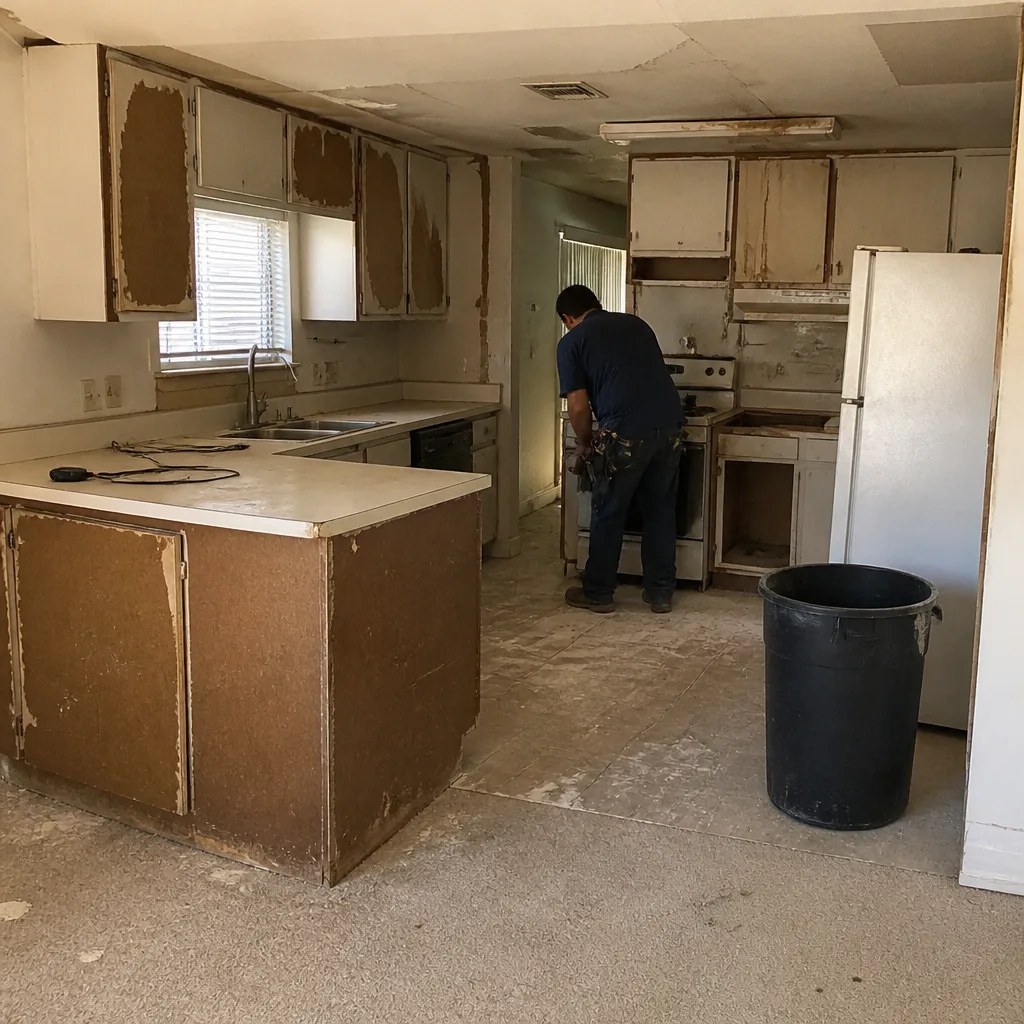 Before
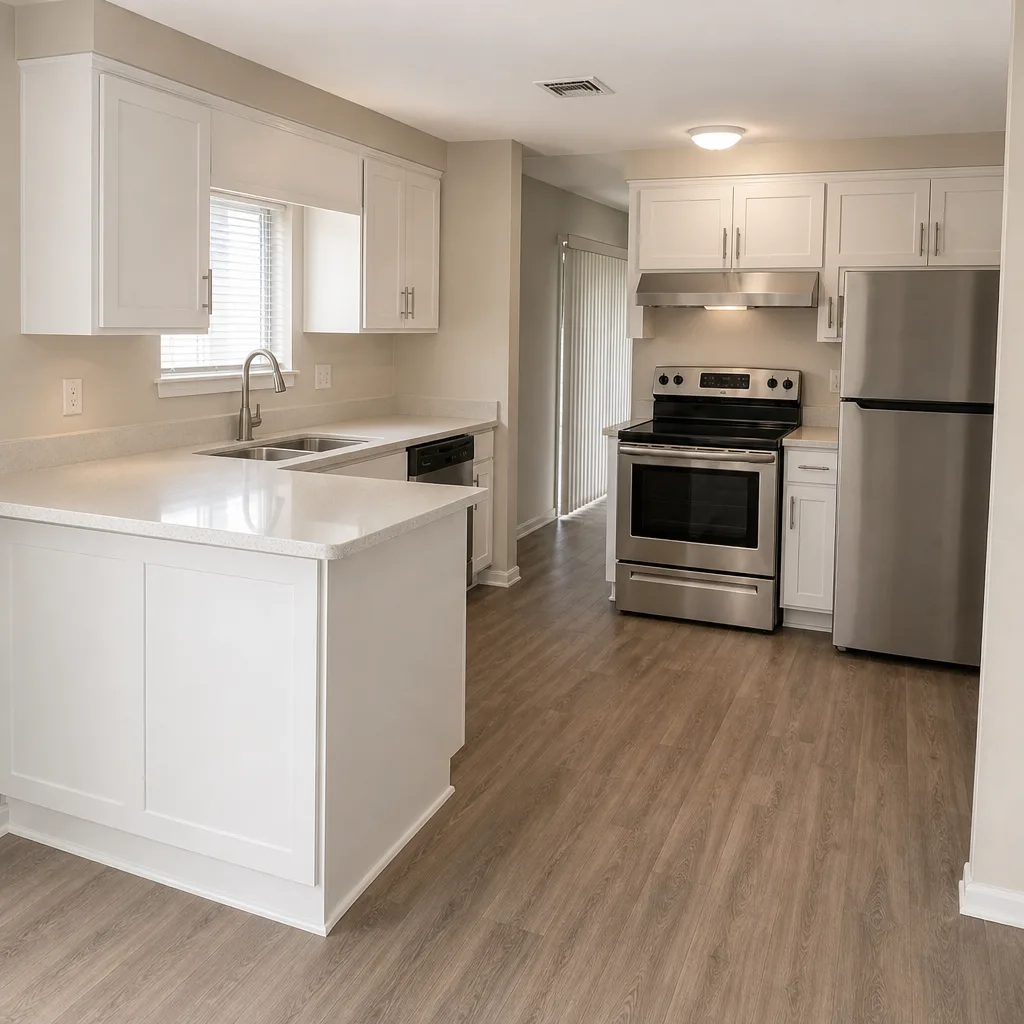 After
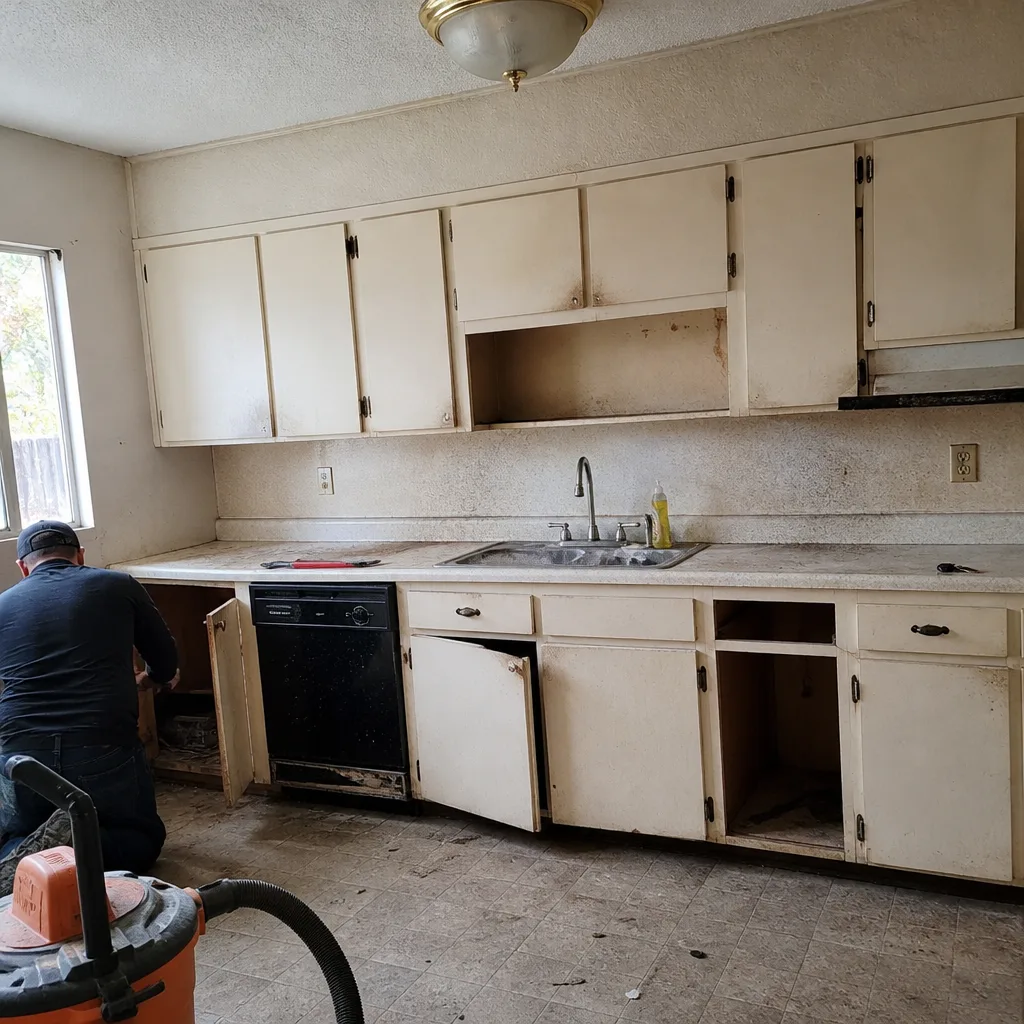 Before
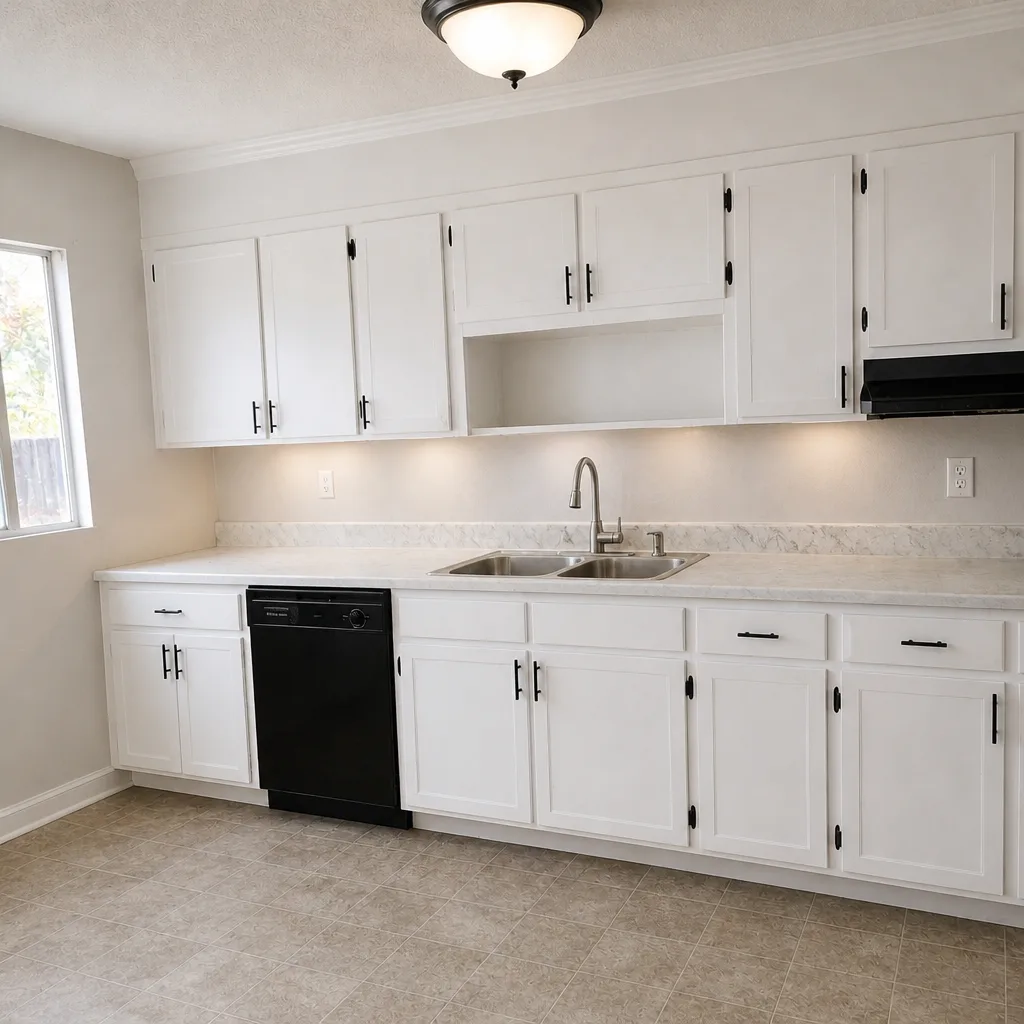 After
When to Call a Professional
Some warning signs you can sort out yourself by asking better questions. Others need a professional on site before you make a decision. Call us if any of these are true: you’ve received a quote you can’t read because it’s missing material specs, the contractor won’t provide his NSCB license number or the bond date, the scope looks narrow enough to be a permit-avoidance move, the upfront payment request is above 15 percent, the work touches structure, roofing, electrical, or plumbing anywhere near the threshold where inspection matters, or you’ve already had work done and the stucco, tile, or driveway is failing sooner than it should. Rowan Construction Group Las Vegas offers free estimates in Las Vegas – call (833) 467-9123. We’ll review a written estimate line by line at no charge, and you’ll leave with the numbers, the spec, and the photo record in hand.
Frequently Asked Questions
A quote that omits material specifications. If the written estimate says “TPO roofing” without a mil spec, or “concrete” without a PSI, or “stucco” without a mix, the contractor has left himself the room to substitute. Substitution after signing is the most common way corners get cut invisibly in Las Vegas, and the fix starts at the quote. Call (833) 467-9123 for a written price that names the spec.
Pull the record on the Nevada State Contractors Board site using the license number, and check four things: license classification (does it match the work?), bond status (is the bond current?), complaint history (is there a pattern?), and any disciplinary actions. Ask for the license number in writing before you call for a quote. A contractor who won’t put it in an email is telling you something.
10 to 15 percent at signing is normal for residential contracts in Nevada. Requests for 40 or 50 percent upfront are a cash-flow signal, not a materials order, and they’re the clearest payment warning sign in the local market. Progress payments should tie to milestones you can see, with a final 5 to 10 percent held until inspection passes.
Because Las Vegas homes turn over quickly, and buyers’ inspectors find unpermitted work almost every time. Unpermitted structural, electrical, or plumbing work becomes a disclosure problem at resale, a financing problem with lenders, and a title problem at closing. The permit number should be on your documentation. Under our practice the permit gets pulled, the inspection passes, and the record stays with you. Call (833) 467-9123 for a written scope that includes the permit.
Cracking along the south or west walls within two years is a contractor problem, not normal wear. It usually traces to a stucco mix without acrylic additive or a missing weep screed at the base. Las Vegas thermal cycling stresses sun-facing walls harder than shaded walls, and a mix spec on the contract protects you. Call (833) 467-9123 if you’ve had stucco failing early.
Not without a signed change order. Under the written-price practice we follow, no work proceeds on a change until the change is signed – a number and a schedule impact on each one. That’s the discipline that keeps a project within a few percent of the agreed price, and it’s why the number on the quote is the number on the invoice. Call (833) 467-9123 for a written estimate.
The Bottom Line
The warning signs in Las Vegas look different from the generic lists, because the market’s failure modes are specific: expired bonds on active licenses, substituted membrane and stucco, scopes worded to dodge Clark County permits, and 40-percent upfront requests on jobs that don’t need them. The counter to all four is the same set of documents – a written price, a written spec, a written warranty, a permit number, and a payment schedule tied to milestones. Ask for them, in writing, before anyone picks up a tool. If the contractor can produce them without hesitating, hire him. If not, call (833) 467-9123 and we’ll show you what the paperwork should look like.
Written by the team at Rowan Construction Group Las Vegas.