
Last updated November 18, 2026


Free written scope consultation - allowances, timeline, and change-order rules on paper before a single trade is scheduled
Bathroom Remodeling Warning Signs Every Homeowner Should Know
Most bathroom remodel disasters are decided before demolition day. They’re settled in the estimate meeting, in the contractor’s bid, in the four or five questions nobody wrote down. Our crews have walked into Las Vegas bathrooms where the tile looked fine and the subfloor flexed under a heel; we’ve also watched homeowners compare three bids and choose the lowest one that never asked a single question about the plumbing geometry. This guide covers both kinds of warning signs: the ones you can see in the bathroom, and the ones hiding in the paperwork. Read it before you sign anything.
Quick Answer
The biggest bathroom remodeling warning signs are physical conditions (soft subfloor, efflorescence on grout, persistent drain odor, cracked caulk lines around the pan) and document gaps (verbal-only pricing, no mention of a permit, no written change order policy, vague scope language like “tile work” with no square footage). A Las Vegas remodeler who doesn’t ask for photos of the subfloor and the existing drain stack is pricing a room they haven’t diagnosed, and that assumption gap is where surprise invoices come from.
Styles & brands we work with
- Kitchen remodeling
- Bathroom remodeling
- Home additions & ADU
- Roofing
- Windows & doors
- Driveway & pavers
- Fence
Table of Contents
- Physical Warning Signs in the Bathroom Itself
- Contractor Warning Signs in the Paperwork
- What Nevada Law Requires in Writing Before Work Starts
- The Five Hidden Conditions We Find Most in Las Vegas Gut Remodels
- How to Read a Bid for Hidden Scope Ambiguity
- Your Pre-Hire Checklist for the Estimate Meeting
- Common Mistakes to Avoid
- When to Call a Professional
Physical Warning Signs in the Bathroom Itself
Walk the room slowly before anyone bids on it. These conditions tell you what’s underneath, and what the number on the contract is going to be built on.
Soft subfloor. Step heel-first across the floor near the toilet flange and along the shower curb. A subfloor that gives, flexes, or sounds hollow means water has been reaching the plywood or the original particleboard for years. In Las Vegas, we see this most often in 1990s and early-2000s builds where the shower pan was originally installed with a single-ply liner and the drain was never re-flashed correctly. A flexing floor often means a full tear-out to the joists, not a cosmetic overlay.
Efflorescence on grout. That white, chalky powder on grout lines isn’t scum. It’s salt drawn to the surface by moisture moving through the mortar bed. If it comes back after a vinegar scrub, water is getting behind the tile, and the wall behind it is likely wet.
Persistent drain odor. A smell that returns a week after you’ve cleaned the drain is a sign of a broken or missing vent, or a dry trap the plumbing was never designed to keep primed. It’s also sometimes the first clue that an old Orangeburg vent line failed under the slab.
Cracked caulk lines and re-grouting patterns. If the caulk at the pan-to-wall joint has been redone three times in five years, the movement isn’t cosmetic. Something under it is shifting.
Fogged grout and loose tile. Tap a few tiles with a screwdriver handle. A hollow sound means the thinset has debonded, which often tracks back to a missing or deteriorated waterproof membrane.
None of these conditions are cosmetic. Each one changes the scope, the schedule, and the price, which is why a contractor who never looks for them is going to discover them mid-job, at your expense.
Contractor Warning Signs in the Paperwork
The documents you receive from a contractor tell you more about the finished bathroom than any photo gallery of a past job. Here’s what to look for in the bid before you sign.
- Verbal-only pricing. A number on the phone is not a price. Under Clause 1 of the Haven Standard, the price is written before anyone starts, and Rowan Construction Group will not put a number on a job without a written scope. If a bidder won’t write it, ask why.
- No mention of a permit. In Nevada, most bathroom gut remodels, electrical changes, and plumbing relocations require a permit and an inspection. A bid that never mentions permits is either pricing work that won’t be inspected, or hiding a fee that will show up later as a change order.
- No written change order policy. Ask directly: “If the scope changes because the subfloor is rotten, do I sign before you proceed?” If the answer is vague, walk. A signed change order before any additional work is the single discipline that keeps a remodel within a few percent of the number on the page.
- No photos requested. A Bathroom Remodeling quote should start with photos of the subfloor, the drain, the plumbing stack, and the electrical panel. No photo request means no diagnosis.
- No written warranty. Ask for a copy. A handshake warranty at the end of a job is worth what it’s written on.
- No named brands on materials. A bid that lists “tile” with no brand or grade is a bid you’ll be renegotiating when the tile you saw in the showroom turns out to be a different spec.
- Pressure to decide. No legitimate contractor discounts a bathroom remodel for a signature before Friday. Urgency theatre in the estimate meeting is a sales system, not a construction one.
What Nevada Law Requires in Writing Before Work Starts
Nevada Revised Statutes Chapter 624 is the state contractor licensing act. Under it, and its related administrative regulations, a licensed contractor is required to hold a valid state license for the scope of work and must disclose specific information in writing before performing it. For a homeowner, that means a real bid should include, at minimum:
- The contractor’s Nevada State Contractors Board license number, printed on the contract and the bid.
- A written description of the work to be performed, itemized so each scope line has a number.
- The total contract price, and the schedule for payments.
- The start date and approximate completion date, or a statement of the basis for them.
- Notice of the homeowner’s right to file a complaint with the Nevada State Contractors Board, and the Board’s contact information.
- Any finance charges or loan terms, if applicable.
Two things that are specific to this market and worth verifying on the state Board’s website before you sign: the license holder’s status (active, expired, or suspended), and whether the license classification matches the work (residential vs. commercial; general vs. specialty). A licensed plumber and a licensed general contractor are not interchangeable for the drain relocation portion of a gut remodel. A general contractor working with a subcontractor should be able to show you the sub’s license too, on request, before the work is scheduled.
Written price, written scope, written warranty. Anything less is not technically a Nevada contract – it’s a conversation.
The Five Hidden Conditions We Find Most in Las Vegas Gut Remodels
Las Vegas has its own roster of surprises. These are the five we find most often when we tear out a bathroom in this city, and the ones we price for explicitly so the change order isn’t a surprise.
1. Orangeburg vent pipe
Orangeburg is a tar-impregnated fiber pipe manufactured from the 1940s through the 1970s. It fails by deforming over decades, and in a Las Vegas attic or under-slab vent run, a cracked Orangeburg section is often the hidden cause of a persistent drain smell that never went away. Replacing it means opening up the wall or the slab, and the bid needs to price that possibility.
2. Asbestos floor mastic in pre-1980 homes
Bathrooms built before about 1980 often had vinyl or linoleum floor covering installed over mastic that contains asbestos. A renovation in a home that still has original flooring needs to have that material tested before demolition, and the bid should include testing and abatement cost, or explicitly exclude it. A remodeler who doesn’t ask for the build year of the house is a remodeler who hasn’t priced this line.
3. Insufficient GFCI placement
Modern code requires ground-fault circuit interrupter protection for outlets in wet locations, generally within six feet of a sink and anywhere the countertop runs. Older Las Vegas homes often have no GFCI at all, or one device covering a circuit that no longer matches the room’s layout. Replacing a vanity without updating the GFCI protection is a code violation that fails inspection, and the electrical scope needs to be priced with the vanity, not discovered during it.
4. Single-ply shower pan membrane
A single sheet of PVC or CPE liner installed without proper pre-slope, corner folds, or a flood test is the most common shower failure we tear out. The tile looks new; the pan under it has been seeping for years. A correct pan is presloped, has a bonded waterproofing membrane or a proper two-stage liner, and passes a 24-hour flood test before tile goes on. Ask the bidder to describe the pan construction by name.
5. Improperly sloped drain
The shower drain needs to sit at the low point of a presloped bed, and the slope must be continuous to the weep holes. A drain that’s off by even half an inch creates standing water at the perimeter and starts the membrane failure cycle in the first year. This is the condition a photo of the tear-out during construction catches before it’s tiled over.
Each of these is a specific reason a bathroom in this market takes longer and costs more than a national average calculator suggests – not because bathroom remodeling in Las Vegas is expensive in general, but because the housing stock here has a distinct set of failure modes.
How to Read a Bid for Hidden Scope Ambiguity
Scope ambiguity is the parent of change order disputes. Two bids can look like the same job and be separated by thousands of dollars of undefined work. Use these markers to read a bid like a line-item auditor.
- Vague line items. “Tile work – $4,200” tells you nothing. A real line reads: “Floor tile, 42 sq ft, Daltile Rittenhouse 3×6, thinset and Schluter membrane, labor and setting materials.” If the bid doesn’t state square footage, product, and setting method, it’s a placeholder.
- Missing demolition and disposal. A bid that prices installation but not tear-out, haul-away, and dumpster fees is going to add those on the back end.
- Unspecified plumbing and electrical. “Plumbing – $1,800” with no statement of what’s being replaced (valves, P-trap, supply lines, drain body) is a number without a scope.
- Missing waterproofing line. If the shower waterproofing isn’t a line item, it’s either not happening or it’s going to be a change order.
- No allowance schedule. Where a bid uses allowances for tile, vanity, or fixtures (“$1,500 allowance for vanity”), it should state what happens when the allowance is exceeded. A scope with no allowance policy is a price with a hole in it.
- Vague “miscellaneous” or “labor” lines. A 10% “misc.” line is a bidder reserving the right to argue later about what’s in scope.
The practical test: cover every dollar figure on the bid and read only the scope. If you can’t tell what brand of vanity, what grade of tile, what waterproofing system, and what permit is being pulled, neither can the contractor – when the argument comes, at the end of the job, it happens at your expense. Rowan Construction Group delivers a flat written price with a written scope before work starts, and no change proceeds without a signed change order; that’s the standard we hold other bids to when a homeowner brings us a competitor’s estimate for a free second opinion. We’ll read it line by line and tell you what’s missing.
Your Pre-Hire Checklist for the Estimate Meeting
Bring this list to every estimate. Ask the questions in order, and write down the answers. A contractor who can answer all twelve in one visit is worth a second visit.
- What is your Nevada State Contractors Board license number, and what is the classification?
- Will the plumber and the electrician working in my bathroom be licensed subcontractors, and can I see those license numbers?
- What permit will you pull, and who will be there when the inspector arrives?
- What is your written change order policy if the subfloor turns out to be rotten?
- What brand and grade of tile, vanity, and fixtures are in this price?
- What waterproofing system is going into the shower, and will you flood-test it?
- What is the brand of the shower pan assembly and membrane?
- What does the warranty cover, and for how long, in writing?
- Will I receive photos of the subfloor, plumbing, and electrical before the walls close?
- What is your payment schedule – and how much is due at signing?
- Who is my single point of contact if something goes wrong?
- Can I see a written scope and price, or is this bid verbal?
Answer #12 is the gate. If the bidder can’t or won’t put the price and scope in writing before the meeting ends, the other eleven answers are decorative.
Common Mistakes to Avoid
- Choosing the lowest bid without comparing scope lines. The cheapest bid is often the shortest scope, not the best price. Line it up against the other bids and see what’s excluded.
- Not asking for photos of the subfloor. In a city with Las Vegas’s hot, dry summers and cool winters, subfloor movement and pan failures show up fast. A bidder who doesn’t request photos is pricing assumptions.
- Skipping the permit. An unpermitted bathroom remodel in Las Vegas can complicate a future sale, and the electrical GFCI work especially will fail a buyer’s inspection later.
- Allowing verbal change orders. Every change, however small, gets a signed change order. That discipline is what keeps a project within a few percent of the agreed cost.
- Buying the tile before the bid is written. If you buy materials the contractor didn’t specify, you own the risk on installation and warranty.
- Not testing pre-1980 flooring for asbestos mastic. This is a cost with a documented cause and a defined test. It is not a surprise; skipping it is.
- Choosing a bidder before you’ve asked about subcontractor licensing. The company that pulls the permit and the crew that shows up with the tools are not always the same entity. Confirm the sub’s Nevada license before the work is scheduled.
When the same bathroom is ready for full replacement instead of repair, the surrounding trades matter too. If the driveway pavers outside that bathroom are heaving, that’s a separate scope worth pricing at the same time – see our Driveway & Pavers in Las Vegas page. If the remodel is part of a larger addition, our Home Additions & ADU in Las Vegas guide walks through how the trades sequence together, and the Fence Installation in Las Vegas page covers the exterior envelope in a way that matters when you’re planning a backyard bathroom or pool-house conversion.
When to Call a Professional
Call a licensed professional before demolition if any of the following is true: the subfloor flexes underfoot, the shower pan has failed a flood test or has never been tested, the drain has an odor that persists after cleaning, the home was built before 1980 and still has original bathroom flooring, or the bid you’ve been handed is verbal, missing a permit line, or missing a written change order policy. Each of these is a condition that gets more expensive with time, not less.
Rowan Construction Group Las Vegas offers free estimates in Las Vegas for full bathroom remodels and for second opinions on any written estimate you’ve already received. We’ll pull the subfloor photos, ask the plumbing stack questions, and give you a flat written price with a written scope before anyone picks up a tool. Call (833) 467-9123 to schedule.
See the difference
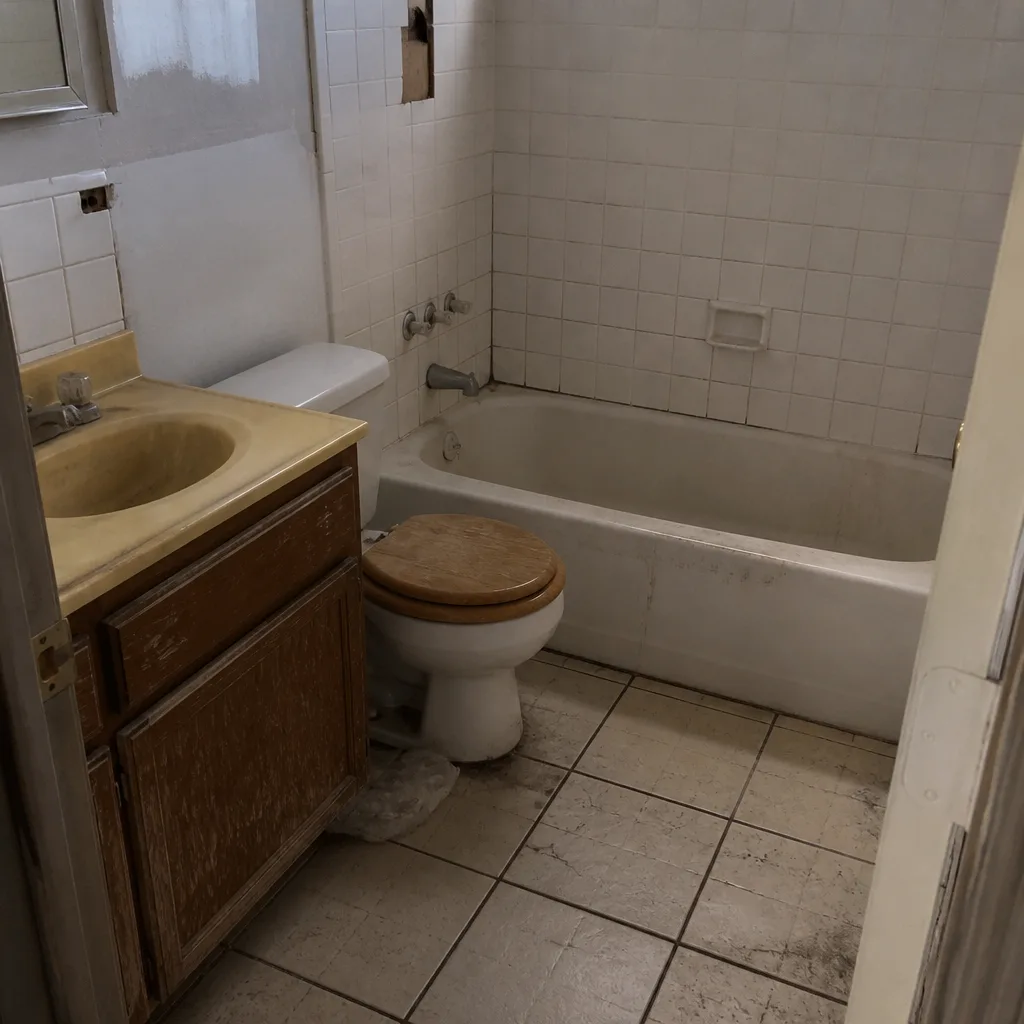 Before
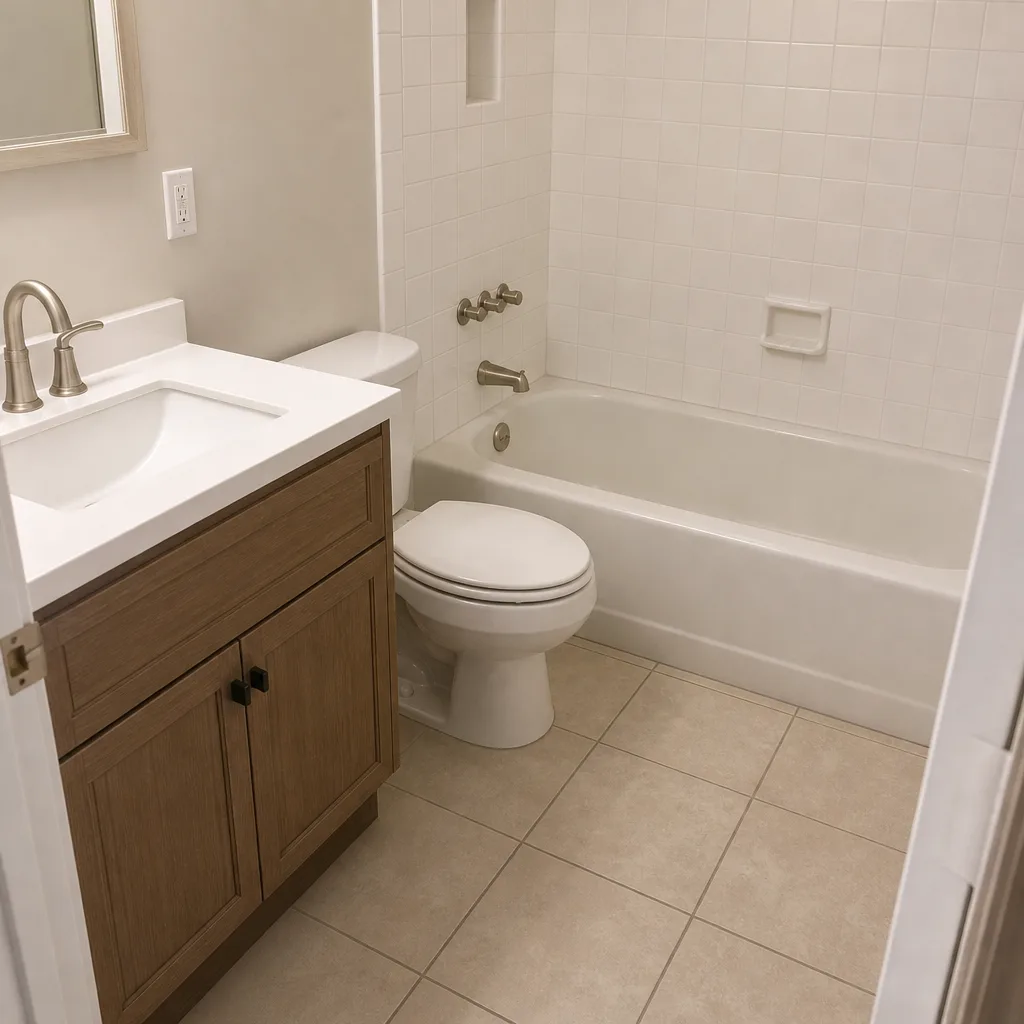 After
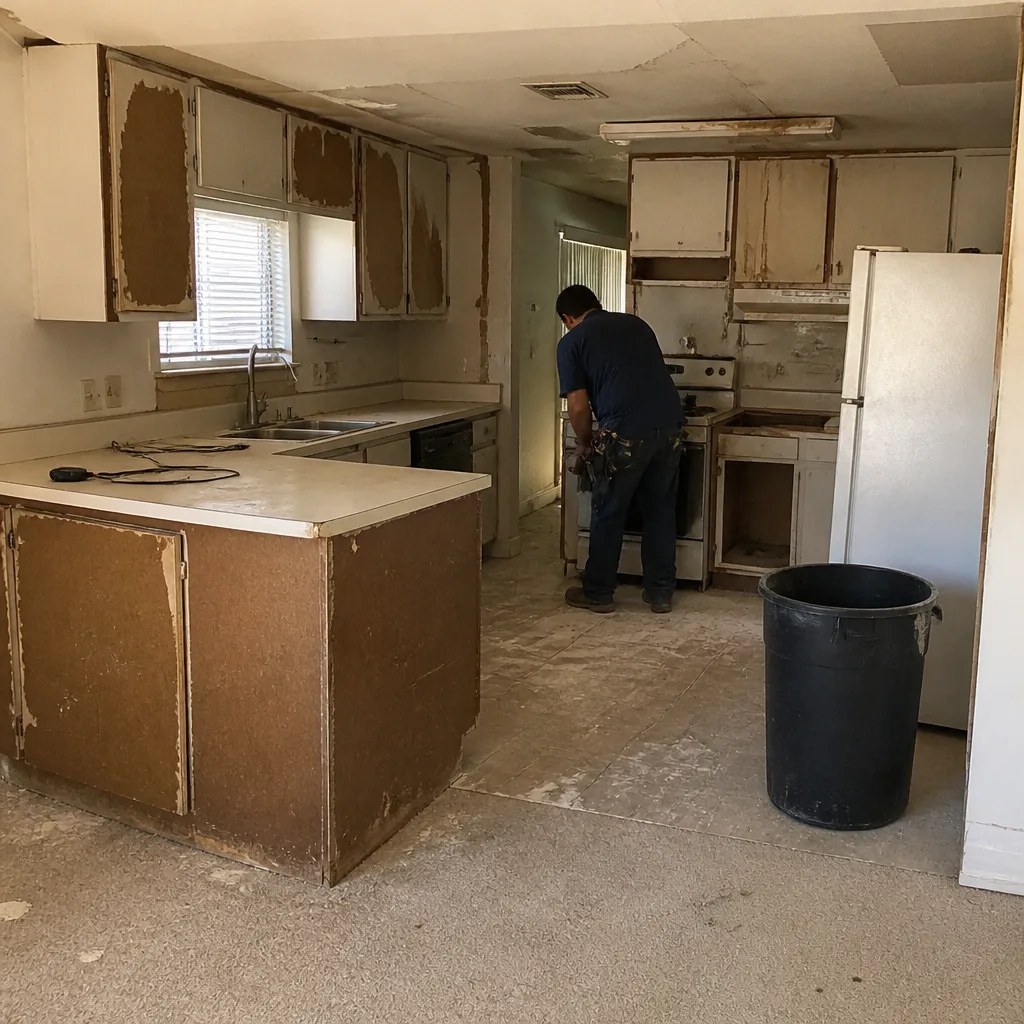 Before
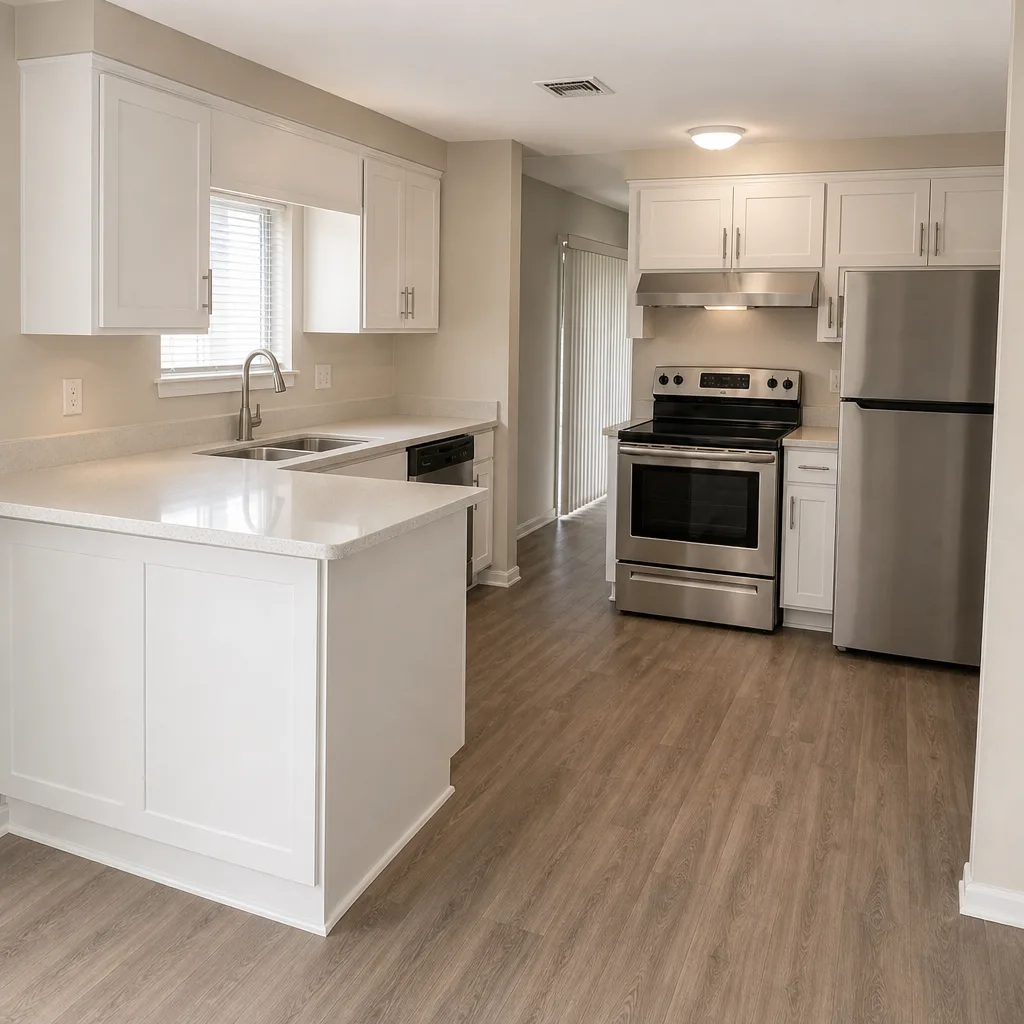 After
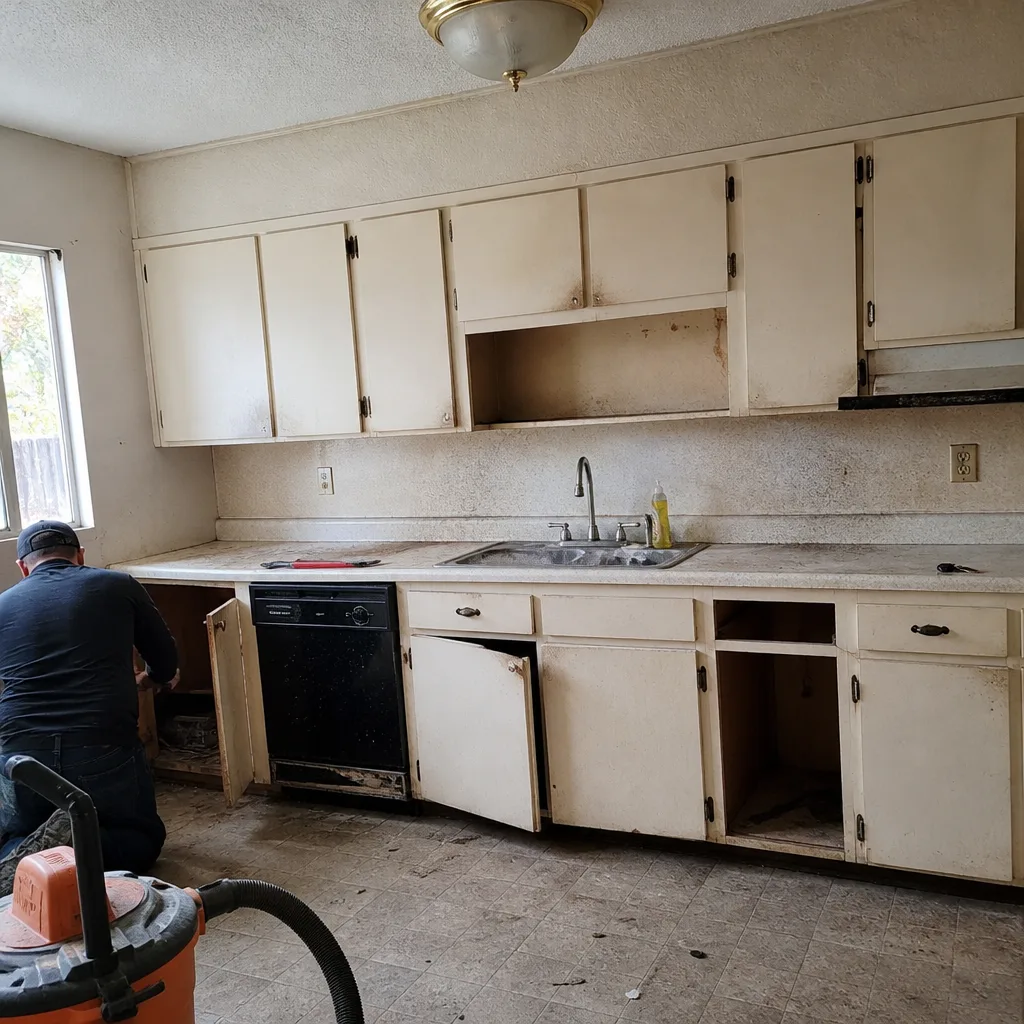 Before
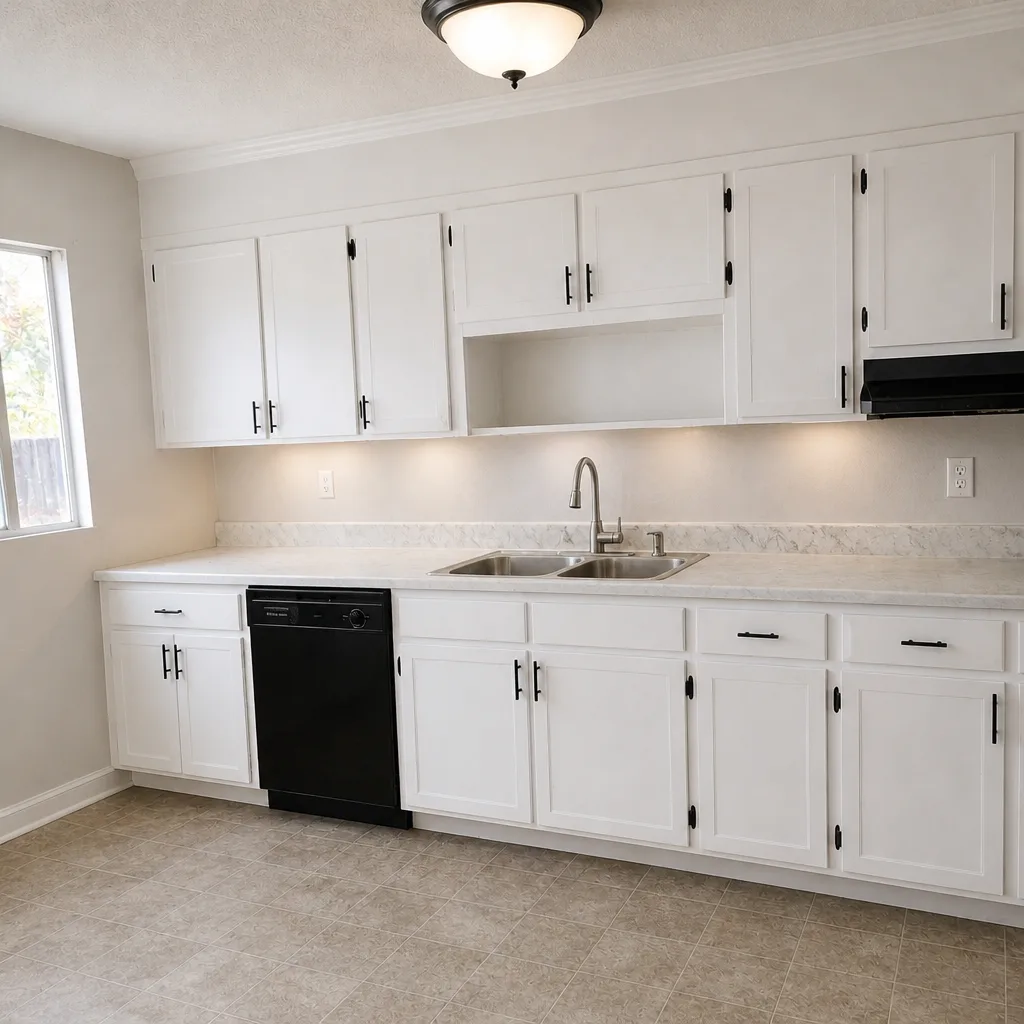 After
Frequently Asked Questions
The single most reliable sign is a bid that never asks for photos of the subfloor and existing plumbing. In our experience, that’s the gap where surprise change orders live. A bidder who asks for photos is doing the diagnosis; one who doesn’t is pricing an assumption. Call (833) 467-9123 for a free written estimate.
Most full bathroom remodels in Las Vegas land somewhere in the mid five figures for a mid-grade gut job, with the range driven by the five hidden conditions in this guide: Orangeburg vent lines, pre-1980 asbestos mastic, GFCI updates, shower pan construction, and drain slope. A cosmetic refresh that reuses the plumbing and electrical can price far lower. The only way to know your number is a written scope with the hidden conditions priced as explicit lines – call (833) 467-9123 for a free written estimate.
Under Nevada Revised Statutes Chapter 624, a licensed contractor must provide a written contract disclosing the license number, a description of the work, the contract price and payment schedule, the dates of performance, and information about the homeowner’s right to file a complaint with the Nevada State Contractors Board. If any of those are missing, you don’t have a Nevada contract. Call (833) 467-9123 for a written price and scope before work starts.
A shower pan is failing if water collects at the perimeter after a shower, if the caulk line at the pan-to-wall joint keeps cracking, or if a faint musty smell persists in the room after cleaning. The definitive test is a 24-hour flood test, which happens before tile is set. Ask your contractor to describe their pan construction and confirm they flood-test it. Call (833) 467-9123 for a free second opinion on any estimate you’ve already received.
No, if the work involves plumbing relocation, electrical changes, or structural alterations, permits and inspections are required in Las Vegas, and unpermitted work is a liability at resale. A bid that never mentions permits is either pricing unpermitted work or hiding a fee. Ask the question directly in the estimate meeting. Call (833) 467-9123 for a free written estimate that includes the permit line.
Not without a signed change order. Under the Haven Standard, no work proceeds on a change until the change order is signed, which is how Rowan’s projects stay within a few percent of the agreed price. If a contractor can’t describe a written change order policy, that’s a contractor warning sign. Call (833) 467-9123 to schedule a free estimate with the policy in writing.
The Bottom Line
The visible sign in the bathroom – soft floor, efflorescence, drain odor – tells you what the room needs. The sign in the paperwork – verbal pricing, no permit, no change order policy, vague line items – tells you whether the contractor will price it honestly. Both warnings matter, and both are answerable before demolition if you ask the right questions. Bring the twelve-question checklist to your next estimate. Demand a written scope and written price. Confirm the license, the subcontractor licenses, the waterproofing system, and the flood test. That’s the difference between a bathroom remodeling project that finishes on budget and one that finishes with a surprise invoice. Rowan Construction Group delivers the written price, the signed change orders, and the photo record on every bathroom we remodel. Call (833) 467-9123 for a free estimate. See also our Rowan Construction Group Las Vegas home page for an overview of every trade we run.
Written by the team at Rowan Construction Group Las Vegas.