Last updated November 18, 2026

Free written scope consultation - allowances, timeline, and change-order rules on paper before a single trade is scheduled
The Complete Bathroom Remodeling Guide for Las Vegas Homeowners
Las Vegas water runs hard – roughly 310 parts per million of dissolved calcium and magnesium – and it leaves evidence fast. Unsealed marble and travertine show etch marks within about 18 months of daily use, and a polished chrome faucet can carry a visible calcium ring in 60 days. Two tiles that look identical under showroom lighting perform nothing alike in a Las Vegas bathroom, and the difference lives in the product spec sheet, not the price tag. This guide walks through a full bathroom remodel in the order the decisions actually get made: materials first, then trade sequencing, waterproofing, ventilation, permits, and cost. Follow it and you won’t pay twice for the same wall.
Quick Answer
A bathroom remodel in Las Vegas typically runs $12,000 to $28,000 for a full gut of a standard 40 to 60 square foot hall bath, and $30,000 to $65,000-plus for a primary suite with a curbless shower and double vanity. The two biggest cost drivers are tile material and whether drain or supply lines move, since any plumbing relocation in Clark County triggers a permit and an inspection. Getting hard-water-resistant materials, correct exhaust sizing, and proper waterproofing right on the front end is what keeps the project from being redone.
Styles & brands we work with
- Kitchen remodeling
- Bathroom remodeling
- Home additions & ADU
- Roofing
- Windows & doors
- Driveway & pavers
- Fence
Table of Contents
- Hard Water and Material Selection
- Trade Sequencing for a Full Gut Remodel
- Waterproofing: Kerdi, RedGard, or Cement Board
- Exhaust Fan Sizing for Las Vegas Bathrooms
- Clark County Permit Requirements
- What a Las Vegas Bathroom Remodel Costs
- How Long a Remodel Takes
- Common Mistakes to Avoid
Hard Water and Material Selection
The single most expensive mistake in a Las Vegas bathroom is buying for appearance and discovering later that the finish can’t survive the water. Southern Nevada’s supply comes largely from the Colorado River, and the mineral load means scale deposits form on any surface that stays wet and unsealed. The fix is choosing finishes and tile that either resist mineral buildup or tolerate routine cleaning without degrading.
Here’s how the common choices sort out under Las Vegas conditions.
- Matte porcelain tile: The most forgiving choice for floors and walls. The matte surface hides water spots, holds up to acidic cleaners, and doesn’t etch. A through-body porcelain is our default recommendation.
- Polished marble and limestone: Beautiful in a showroom and punishing in a Las Vegas shower. Calcium in the water reacts with the calcium carbonate in the stone. Etching appears as dull white spots that no cleaner removes, only re-polishing.
- Textured natural stone: Better than polished stone because texture masks scale, but the porous surface traps mineral deposits in the pits. It needs a penetrating sealer reapplied every 6 to 12 months.
- PVD-coated fixture finishes: Physical vapor deposition coatings (common on matte black and brushed gold faucets) resist scale better than raw brass or lacquered finishes. Polished chrome is the most scale-visible finish but also the easiest to wipe clean.
- Oil-rubbed bronze: The living finish darkens unevenly where hard water sits. In a shower, it can look patchy within a year unless wiped down after each use.
For a shower floor, a small-format matte porcelain with a slight texture gives grip and hides deposits. For the vanity top, quartz or a solid surface holds up better than marble in daily contact with Las Vegas water. We source vanity tops through established brands like Cambria and Caesarstone because the manufacturer’s care guidance and warranty documents are specific and verifiable, which matters when a homeowner is comparing specs.
Trade Sequencing for a Full Gut Remodel
Order of operations is where a bathroom remodel succeeds or fails. Do the trades out of sequence and you’ll be opening a finished wall to fix a supply line. The correct order for a full gut in Las Vegas is fixed, and the inspection hold points are not optional.
Here are the steps in order, with the hold points where work stops until Clark County signs off.
- Demolition and haul-off. Remove tile, drywall, fixtures, and old subfloor to the joists. Bag and dispose of debris.
- Rough plumbing. Move drain and supply lines to their new locations. Pressure-test the supply lines before closing anything up. Hold point: inspection required if lines relocated.
- Rough electrical. Run circuits for GFCI outlets, vanity lighting, and the exhaust fan. Confirm the fan circuit is on a switch or timer. Hold point: rough electrical inspection.
- Framing and blocking. Add blocking for grab bars (even if not installed yet), the vanity, and any niche. Blocking is cheap now and impossible later.
- Waterproofing membrane. Install the shower pan and wall membrane per manufacturer spec. Flood-test the pan for 24 hours if the manufacturer or local code requires it.
- Cement board or tile backer. Where a membrane wraps a backer board, the board goes on before the membrane. On a Kerdi system, the membrane goes directly over the board.
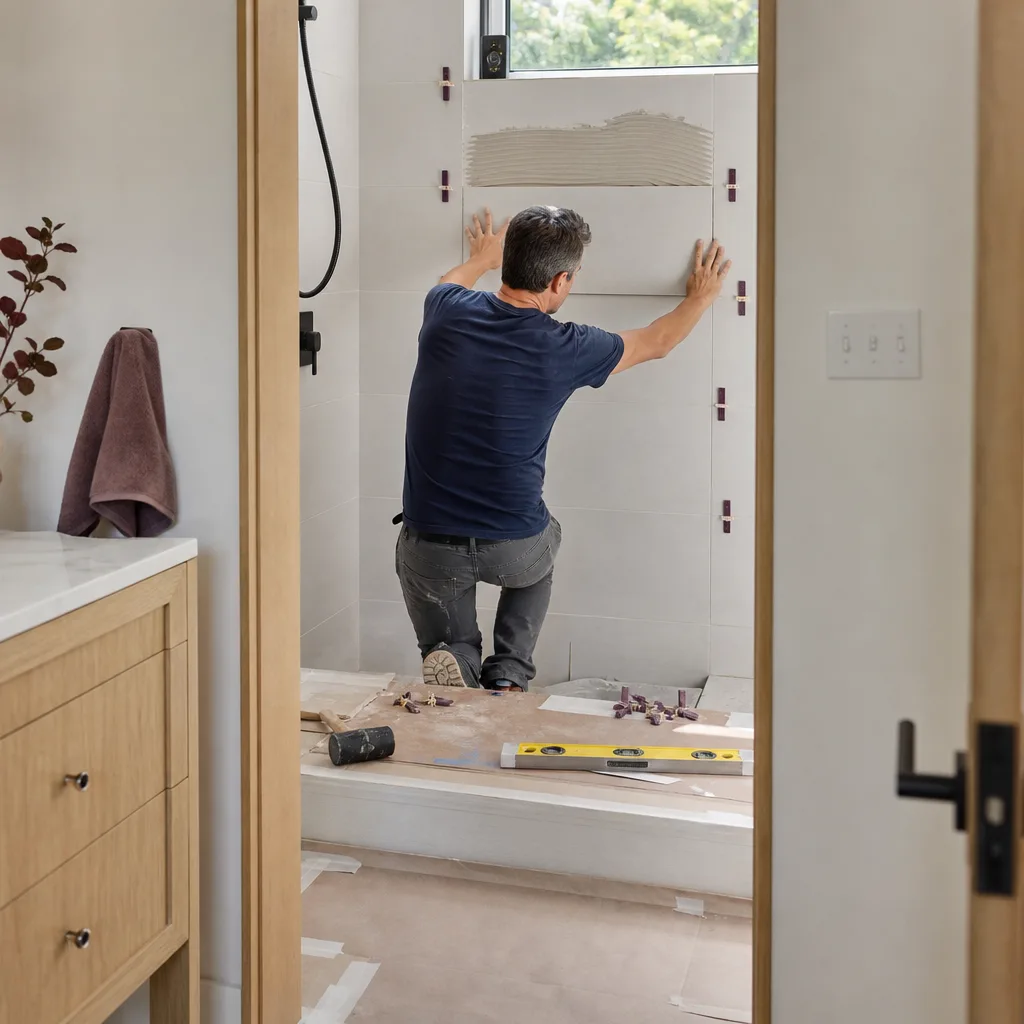
- Tile. Wall tile first, then floors. Grout with a latex-modified grout or an epoxy grout if you want to fight hard-water staining.
- Finish plumbing. Install the shower valve trim, tub spout, and sink faucets.
- Finish electrical. Install vanity lights, GFCI outlets, and the exhaust fan grill.
- Vanity, mirror, and accessories. Set the vanity, mount the mirror, install towel bars and the toilet. This is the last step because everything above it depends on the wall being finished.
Skipping the plumbing and electrical inspections is tempting on a tight schedule. It’s also how homeowners end up with an unpermitted bathroom that complicates a sale. If you’re planning a larger scope that adds square footage, the sequencing shifts and you’re into Home Additions & ADU in Las Vegas territory with foundation and framing inspections on top of the bathroom ones.
Waterproofing: Kerdi, RedGard, or Cement Board
Waterproofing is where the cheapest method is also the most common source of insurance claims. The three approaches you’ll see quoted in Las Vegas differ in cost, warranty, and code compliance, and the difference isn’t subtle.
- Schluter Kerdi: A bonded sheet membrane applied over the cement board or directly to the framing with thinset. It creates a continuous watertight layer from shower floor to ceiling when installed with the matching drain flange. Manufacturer warranty is specific and requires their full system (membrane, drain, banding, and thinset).
- RedGard: A liquid-applied elastomeric membrane rolled or sprayed on in two coats to a specified thickness. Cheaper in material, faster to apply, but thickness is measured in mils and easy to under-apply. It works when the installer uses a wet-film gauge and respects the coverage rate.
- Cement board only: Cement board is not waterproof. It’s water-resistant and vapor-permeable. Used without a membrane behind tile, water gets behind the tile, saturates the board, and the failure shows up as efflorescence, mold, or a soft wall. This is the cheapest method and the one that fails.
Clark County follows the IRC, and the code requires a shower pan that drains and doesn’t leak. A tiled shower without a proper membrane fails that test over time even if it passes the initial inspection. Our standard is a bonded sheet membrane over the entire shower enclosure, including the curb and niche, because the warranty on the finished assembly depends on the system being continuous.
The pan is where a lot of the damage starts. Water that gets behind the tile and under the mortar bed has one place to go: the weep holes at the drain. If the installer fills those weep holes with thinset, the pan holds water and you’re looking at a full rebuild within a few years. Ask your contractor what method they use and what warranty backs the waterproofing, in writing.
Exhaust Fan Sizing for Las Vegas Bathrooms
Exhaust fan sizing sounds like a small detail until you understand Las Vegas’s climate. The code minimum in the IRC is 1 CFM per square foot of bathroom floor area, or 50 CFM for a standard toilet-and-shower room. That’s the floor, not the target. In our climate, an undersized fan allows humidity from a shower to collect at the ceiling because the ambient air is dry and the moisture doesn’t disperse the way it does in a humid climate; it concentrates at the cold surface and damages drywall and paint.
Here’s how to size a fan for a Las Vegas bathroom.
- Measure the floor area. A 5×8 bathroom is 40 square feet, so the code minimum is 50 CFM.
- Add a margin for humidity load. With a shower, size to at least 1.25 to 1.5 CFM per square foot. A 40 square foot room with a shower gets an 80 CFM fan, not a 50.
- Match the duct run. A 4-inch duct moving 80 CFM over a 20-foot run loses capacity. Insulated rigid duct, short runs, and a roof or wall cap with a backdraft damper protect the fan’s actual performance.
- Control the fan. A 20-minute timer or a humidity sensor switch ensures the fan runs long enough after the shower to clear the room. The IRC allows a humidity control, and it’s the more reliable choice in a climate where a homeowner might forget to leave the fan on.
Broan and Panasonic both make fans in the 80 to 110 CFM range with motion or humidity sensors, and the manufacturer’s spec sheet gives a static pressure vs. airflow curve so you can see what the fan will move on your specific duct run. Choose the fan by that curve, not by the marketing CFM on the box.
Clark County Permit Requirements
Whether a bathroom remodel needs a permit in Clark County depends on scope, not on size. Cosmetic work generally doesn’t; anything that touches the systems does. Getting this wrong creates a title problem at resale because a buyer’s inspector will flag an unpermitted bathroom and the lender can require it to be permitted or removed before closing.
Here’s the split, in plain terms.
- Permit-exempt: Fixture-for-fixture replacement in the same location (new toilet on the same flange, new vanity in the same spot with the same supply and drain), paint, tile overlay onto an existing sound substrate, and new hardware or lighting on the existing circuit.
- Permit required: Any relocation of drain or supply lines, adding a shower where there was a tub or vice versa if the drain moves, any electrical panel work or new circuit, any wall removal or addition, and any change to the structural framing or window.
- Inspection hold points: Rough plumbing and rough electrical before the wall closes, waterproofing where the local authority requires it, and a final inspection when the work is done. The final is what clears the permit and documents the scope for resale.
We pull the permits and schedule the inspections on every project where the scope requires it, and we hand the homeowner the final inspection card to keep with the property documents. That card is worth more at resale than any verbal assurance.
What a Las Vegas Bathroom Remodel Costs
Cost varies with scope and materials, but you can plan against a range. The numbers below reflect typical Las Vegas market pricing for standard work in 2025 to 2026.
- Cosmetic refresh (new vanity, paint, fixtures, tile over existing): $6,000 – $12,000
- Full gut, hall bath (40 – 60 sq ft, new tile, plumbing and electrical kept in place): $12,000 – $22,000
- Full gut, primary suite (curbless shower, double vanity, tile to ceiling): $30,000 – $55,000
- Drain or supply relocation (adds permiting and rough plumbing): $2,000 – $5,000
- Waterproofing, full shower system (bonded membrane, drain, banding): $1,500 – $3,500
- Tile (porcelain, 50 – 80 sq ft): $2,500 – $6,000
- Vanity and top (standard sizes, quartz top): $1,200 – $4,000
- Exhaust fan and ducting (80 – 110 CFM, proper venting): $400 – $900
Every project we quote comes with a flat written price and a written scope before any work starts. Under Clause 1 of The Haven Standard, the price is written before anyone picks up a tool, and no change proceeds without a signed change order. That discipline is why our projects finish within a few percent of the agreed cost across more than 4,000 completed jobs.
How Long a Remodel Takes
A full gut bathroom in Las Vegas takes 4 to 6 weeks from demolition to final inspection. A cosmetic refresh can take 1 to 2 weeks. Adding a permit and an inspection hold point adds a week to ten days in the middle of the schedule, and the plumbing and electrical inspections are usually the longest waits.
The schedule has a few hard constraints. Tile adhesive and grout need cure time before a shower is used, and a pan flood test adds a day. If the scope includes any tile to ceiling or a niche, the schedule grows by two or three days. Crews that compress the schedule too far end up installing over uncured thinset or skipping the flood test, and that’s a repair you’ll pay for later.
If the bathroom shares a wall with a closet or hallway you’re also touching, the sequencing gets more involved. Fence and exterior work can run on a separate track, which is often why homeowners pair a bathroom with Fence Installation in Las Vegas in the same season; the projects don’t compete for the same crews.
Common Mistakes to Avoid
- Buying polished marble for a Las Vegas shower. It etches within months and needs re-polishing. Matte porcelain looks nearly identical in a well-lit room and survives the water.
- Sizing the exhaust fan to the code minimum in a shower room. A 50 CFM fan on a 40 square foot room with a shower doesn’t clear the moisture before it reaches the ceiling.
- Using cement board as waterproofing. It’s water-resistant, not waterproof. Water behind the tile saturates the board and the failure shows up as mold or a soft wall a couple of years later.
- Skipping the permit on a drain relocation. It saves a few hundred dollars upfront and creates a resale problem that costs far more to resolve.
- Not blocking for grab bars. Adding two-by-six blocking before tile costs almost nothing. Opening a finished wall to add it later costs a tile repair.
- Choosing fixtures without checking the finish against the water. Oil-rubbed bronze and raw brass darken and patch where hard water sits; PVD-coated or polished chrome hold up better in daily use.
- Letting the price move without a signed change order. Verbal changes are how a $20,000 bathroom becomes a $27,000 bathroom. The cheapest protection is a written price and a written change-order process.
See the difference
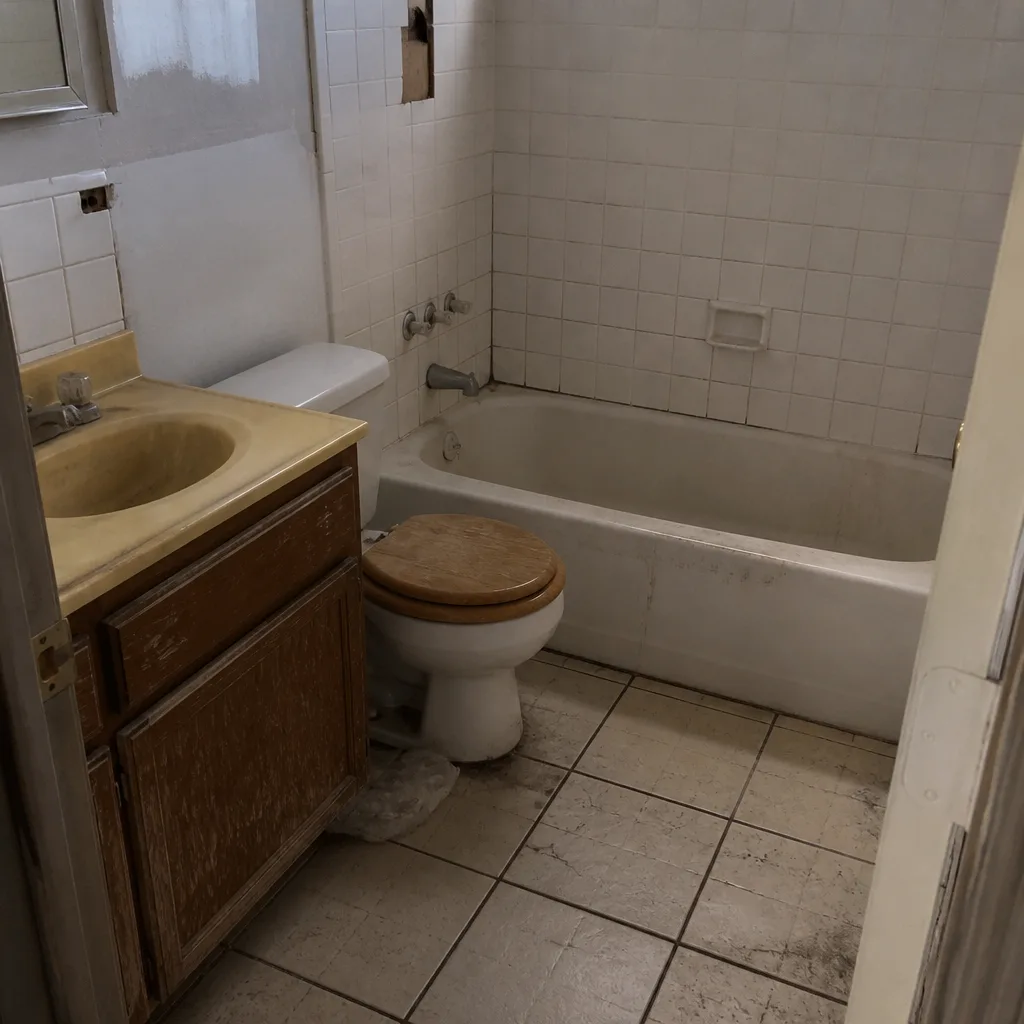 Before
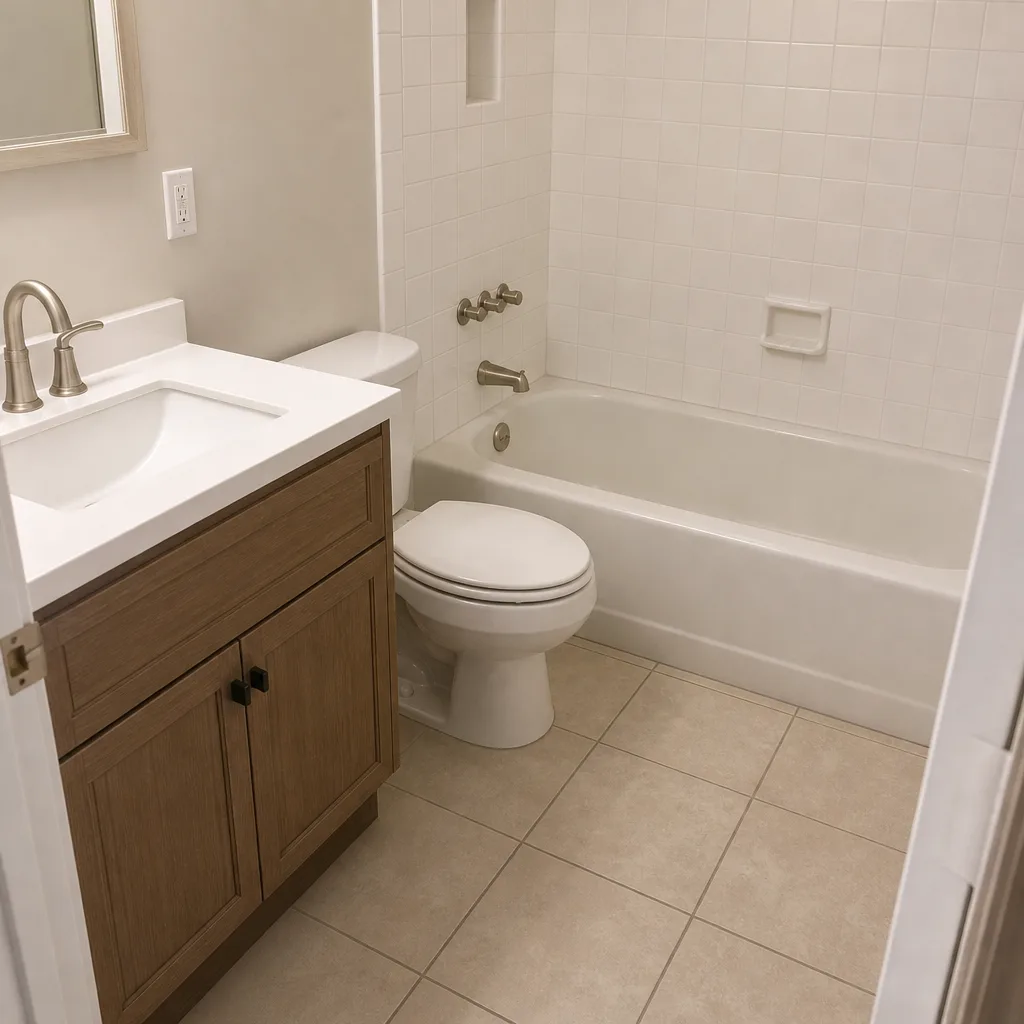 After
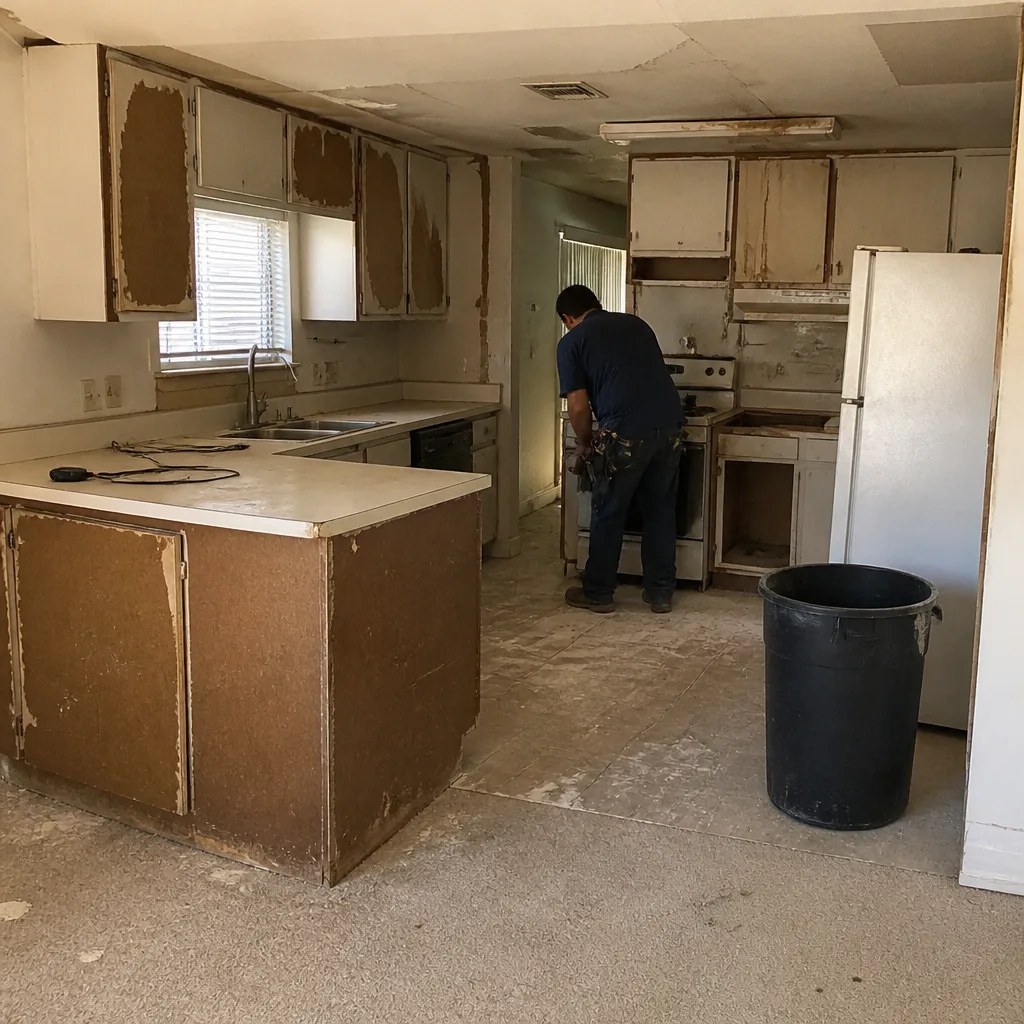 Before
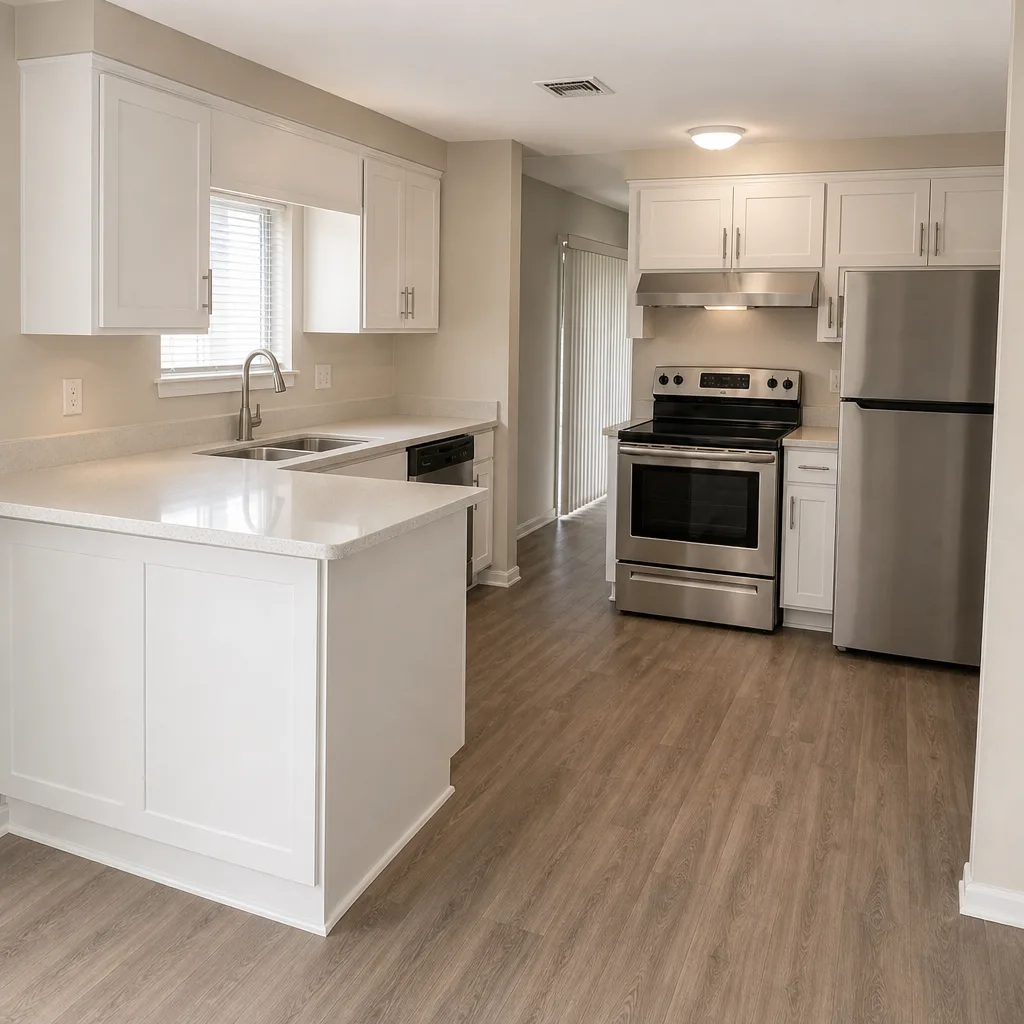 After
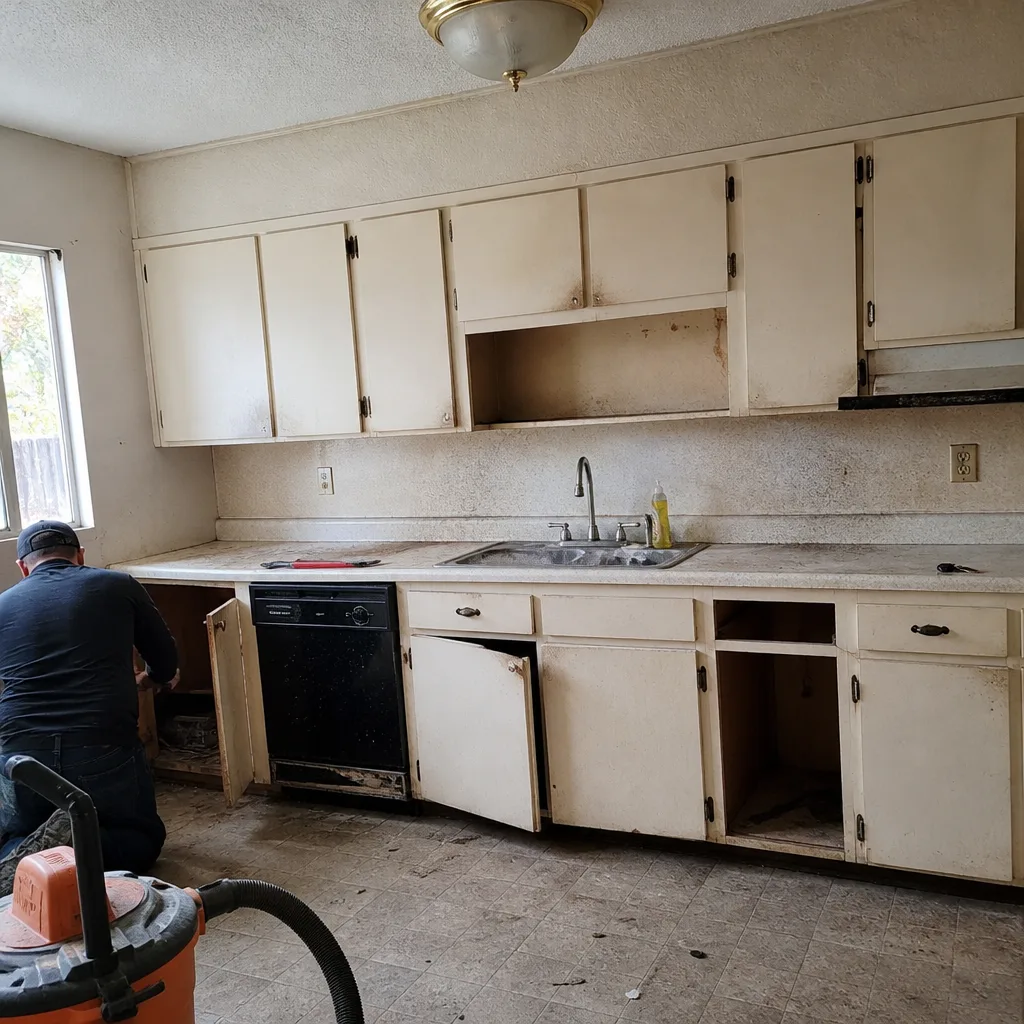 Before
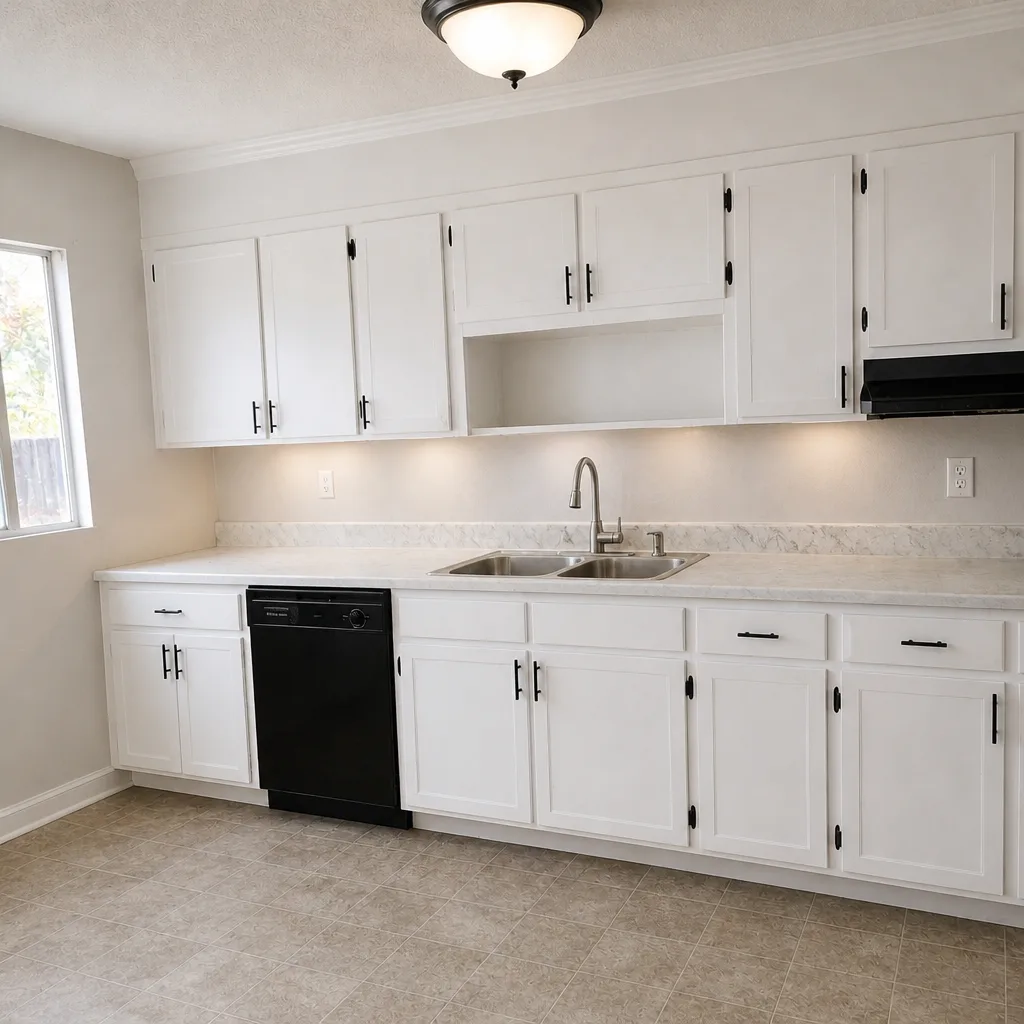 After
When to Call a Professional
Some bathroom work is within reach of a careful homeowner: replacing a vanity top, swapping a faucet, painting. Some work shouldn’t be. Call a professional for anything that moves a drain or supply line, anything that touches the electrical panel or adds a circuit, any full shower rebuild, and any work that requires a permit. The safety stakes are real in each case: wet work near energized circuits, a shower pan that fails silently for years, and a permit history that follows the property. Our technicians have up to 19 years of experience across plumbing, tile, and waterproofing, and every crew member is background-checked and uniformed before they arrive at your door. If you’ve already got a written estimate from another contractor, we’ll review it line by line at no charge under our Free Second Opinion offer. Rowan Construction Group Las Vegas offers free estimates in Las Vegas – call (833) 467-9123 to schedule one.
Frequently Asked Questions
A full gut bathroom in Las Vegas typically costs $12,000 to $28,000 for a standard hall bath and $30,000 to $65,000-plus for a primary suite with a curbless shower and double vanity. A cosmetic refresh runs $6,000 to $12,000. Drain or supply relocation adds $2,000 to $5,000 and a permit. Call (833) 467-9123 for an exact quote – estimates are free and delivered in writing.
You need a permit in Clark County if the scope relocates a drain or supply line, adds or moves an electrical circuit, touches the panel, removes or adds a wall, or changes a window. Fixture-for-fixture replacement in the same location is generally exempt. Getting it wrong creates an unpermitted bathroom that a resale inspection will flag, so confirm the scope before work starts.
Not without a signed change order. We deliver a flat written price and a written scope before any work starts, and nothing proceeds on a change until the change order is signed. That discipline is why our projects finish within a few percent of the agreed cost. Bring a competitor’s quote and we’ll review it line by line at no charge under our Free Second Opinion offer.
Matte porcelain is the most forgiving choice. It hides water spots, resists acidic cleaners, and doesn’t etch. Polished marble and limestone etch within about 18 months of daily use because the calcium in the water reacts with the stone. Textured natural stone works better than polished stone but needs a penetrating sealer reapplied every 6 to 12 months.
A full gut bathroom takes 4 to 6 weeks from demolition to final inspection. A cosmetic refresh takes 1 to 2 weeks. A permit and inspection hold points add a week to ten days, and the plumbing and electrical inspections are usually the longest waits. Compressing the schedule past the cure times for tile and waterproofing is how repairs get baked in.
Size to at least 1.25 to 1.5 CFM per square foot for a bathroom with a shower, which is above the IRC code minimum of 1 CFM per square foot. A 40 square foot bathroom with a shower gets an 80 CFM fan, not a 50. Pair the fan with a 20-minute timer or humidity sensor so it runs long enough after the shower to clear the room.
The Bottom Line
Las Vegas bathrooms fail on the materials and the details, not on the design. Polished marble etches, cement board isn’t waterproof, undersized fans let moisture concentrate at the ceiling, and an unpermitted drain relocation becomes a resale problem. Get the tile, the waterproofing system, the fan sizing, and the permit scope right, and the rest is finish work. Our standard is a written price before any work starts, a signed change order before any change, and a 365-Day Done Right Promise backed by The Haven Standard – if it isn’t done right, we make it right. Start from Rowan Construction Group Las Vegas home or call (833) 467-9123 to schedule a free estimate. If your project touches the driveway or the exterior, we also handle Driveway & Pavers in Las Vegas.
Written by the team at Rowan Construction Group Las Vegas.