Last updated November 18, 2026

Free written scope consultation - allowances, timeline, and change-order rules on paper before a single trade is scheduled
The Complete Windows & Doors Guide for Las Vegas Homeowners
A window rated U-factor 0.30 that holds its seal for twenty years in Denver can lose that seal in four Las Vegas summers. The reason isn’t the glass. It’s the frame. Vinyl expands and contracts at roughly six times the rate of the glass it holds, and in a climate that swings from 45°F nights to 115°F afternoons, that differential works a seal loose year after year. Most installation guides are written for temperate climates and never mention it. This guide starts with the numbers that actually govern performance in Las Vegas: solar heat gain coefficient, frame expansion, and orientation. By the end you’ll know which metrics to demand on a spec sheet, which brands hold up here, and which installation failures we see most often in Las Vegas homes.
Quick Answer
For Las Vegas replacement windows, prioritize Solar Heat Gain Coefficient (SHGC) over U-factor – target an SHGC of 0.25 or lower on west- and south-facing glass, and 0.30 or lower elsewhere. Vinyl is the most common frame here, but fiberglass and aluminum with a thermal break handle desert expansion better on full-sun exposures. Every replacement window and door in Clark County requires a permit, and the installation method matters more than the product label.
Styles & brands we work with
- Kitchen remodeling
- Bathroom remodeling
- Home additions & ADU
- Roofing
- Windows & doors
- Driveway & pavers
- Fence
Table of Contents
- SHGC, U-Factor, and VT: The Three Numbers That Matter in Las Vegas
- How Las Vegas Window Brands Compare on Desert Performance
- Nevada Energy Code and Permits for Window and Door Replacement
- The Three Most Common Las Vegas Installation Failures
- Window and Door Selection by Home Orientation
- Entry and Patio Doors: What’s Different in the Desert
- What Windows and Doors Cost in Las Vegas
- How a Proper Window Replacement Should Go, Step by Step
SHGC, U-Factor, and VT: The Three Numbers That Matter in Las Vegas
Window performance is described by three numbers, and they don’t carry equal weight in a desert climate. Solar Heat Gain Coefficient (SHGC) measures how much of the sun’s heat passes through the glass as a fraction of what hits it. A lower number means less heat enters. U-factor measures how fast heat escapes through the whole assembly – glass, frame, and spacer combined. Visible Transmittance (VT) is simply how much daylight comes through.
In Las Vegas, SHGC is the number that governs your summer electric bill. Cooling dominates the energy load here; heating is a minor cost by comparison. A window optimized for cold climates will boast a low U-factor and a mediocre SHGC, which is exactly backwards for a home in the Mojave. That’s why spec sheets written for national audiences mislead Las Vegas buyers.
Here’s what to demand on a quote, using the metrics named in the NV Energy efficiency guidance for this climate zone:
- SHGC of 0.25 or lower on west and south glass, and 0.30 or lower everywhere else.
- U-factor of 0.40 or lower – useful, but secondary to SHGC afternoons here.
- VT of 0.40 or higher for living spaces so the room doesn’t feel like a cave.
- Low-e coating specified as “solar control” or “south-facing”, not “north-facing” or “cold-climate.” The coating type matters more than the label.
If a salesperson can’t produce a spec sheet listing all three numbers for the exact product configuration, the quote is incomplete. Ask for it in writing before signing anything.
How Las Vegas Window Brands Compare on Desert Performance
The four brands most commonly stocked by Las Vegas distributors – Milgard, Andersen, Pella, and Simonton – all make solid products. What differs is how each configures its glass packages and frames for heat, and which lines are realistically available in Clark County showrooms. Here’s how they compare on the metrics that matter.
- Milgard – Vinyl and fiberglass lines are widely stocked in Las Vegas. The fiberglass (Ultra series) is the stand-out for west- and south-facing windows because fiberglass expands at roughly a third the rate of vinyl in summer heat. Their solar-control low-e packages hit SHGC around 0.23-0.28 on most configurations.
- Andersen – Wood-clad and composite frames hold up well here, and the 100 series vinyl is a common value option. Expect to special-order from a dealer; lead times run longer than Milgard in Las Vegas. Their solar-zone glass packages land SHGC near 0.25.
- Pella – Fiberglass (Impervia) and vinyl (250 series) lines are both sensible for desert use. Pella’s desert-specific glass build is usually specified by dealers rather than sitting in stock; confirm the SHGC on the exact build sheet, not the brochure.
- Simonton – Vinyl only, generally the most economical of the four. Frame expansion under sustained sun is worth watching; Simonton’s stronger lines (Reflections) with reinforced frames are the safer pick for full-sun exposures.
We’ve seen plenty of failures on west-facing walls where a cheap vinyl frame was installed against manufacturer guidance for hot climates. The brand badge on the window is less important than matching the frame material and glass package to the wall’s exposure. That’s what the orientation matrix below is for.
For the door side of the equation, our Rowan Construction Group Las Vegas home covers how we handle both entry and patio doors under the same written-price discipline.
Nevada Energy Code and Permits for Window and Door Replacement
Every window and door replacement in Las Vegas requires a permit from Clark County or the City of Las Vegas – no exceptions, even for a single window. This isn’t a paperwork formality. The permit triggers an inspection of the flashing and installation, which is exactly where most desert failures originate.
On the code side, Nevada’s energy code sets minimum requirements for replacement windows. The current standards for this climate zone require:
- Whole-assembly U-factor of 0.40 or lower for replacement windows.
- SHGC of 0.25 or lower for the window total in most cases.
- Doors with glazing must meet the same SHGC thresholds; solid doors are exempt from glazing rules.
- NFRC labels must remain on the glass until inspection so the inspector can verify the rating.
There’s a practical wrinkle worth knowing: in a permitted replacement, the inspector looks at the flashing, the shim and foam at the rough opening, and the weather barrier transition – not just the label. A window with a great spec sheet and sloppy flashing fails inspection and, more importantly, leaks within a couple of rain seasons. Pulling the permit and passing the inspection is a condition of doing the job right, not a bureaucratic afterthought. When a contractor quotes you and phrases the permit as “we’ll handle the paperwork later,” that’s a red flag.
The Three Most Common Las Vegas Installation Failures
In our experience across Las Vegas homes, window and door installation failures trace back to three specific mistakes. Each is a desert-climate issue, and each is invisible on the day of installation.
- Improper flashing at stucco penetrations. Stucco is the dominant siding material in Las Vegas. When a window is replaced, the flashing at the stucco-to-frame joint has to be integrated with the weather-resistive barrier behind the stucco, not caulked over it. Caulk-over-stucco is fast and wrong; it cracks within two summers and lets monsoon rain into the wall cavity. The fix on a replacement is to remove enough stucco to lap the flashing behind the paper, then patch and re-coat the stucco.
- Wrong foam type in expansion gaps. The rough opening needs space for the frame to move, and that gap needs to be filled with a closed-cell, low-expansion polyurethane foam rated for high temperatures. Standard expanding foam over-expands, bows the frame, and can soften and crumble in attic-level heat on a west wall. We specify a desert-rated foam and confirm the temperature rating on the can before it goes in.
- Unprotected vinyl in west-facing exposures. Vinyl frames on a west wall take hours of direct afternoon sun at 115°F. Over time, unprotected vinyl can warp, yellow, and lose its seal. Fiberglass, aluminum with a thermal break, or wood-clad are safer choices on that wall. If vinyl is the choice, look for a manufacturer whose warranty explicitly covers sustained heat exposure and reinforced frame profiles.
None of these failures show up on installation day. They show up three to five years later. That’s why we document installation with a photo record – so the flashing, the foam, and the frame are on record before the stucco closes up.
Window and Door Selection by Home Orientation
Orientation changes the recommendation. A north-facing window in Las Vegas gets filtered light and very little solar gain; a west-facing window takes the full force of the afternoon sun. Here’s how we’d spec each wall of a typical Las Vegas home.
- North-facing: Minimal solar exposure. Vinyl is fine. Target SHGC up to 0.35; prioritize VT for daylight (0.50+). Standard low-e is adequate.
- South-facing: High solar gain, especially at midday in winter and shoulder months. Target SHGC 0.25 or lower. Vinyl or fiberglass both work; specify solar-control low-e.
- East-facing: Morning sun, less sustained than west. Target SHGC 0.28-0.30. Vinyl acceptable with solar-control glass.
- West-facing: The hardest wall in Las Vegas. Full afternoon sun at 115°F. Specify fiberglass or aluminum with thermal break, solar-control low-e with SHGC 0.25 or lower, and closed-cell desert-rated foam in the gap. Vinyl only with a manufacturer warranty that covers heat exposure.
- Doors: Entry doors with glass need the same SHGC as the adjacent wall. Patio doors on a west exposure should be fiberglass or thermally broken aluminum; sliding vinyl doors on that wall are a known failure point.
This is the kind of matrix a spec sheet won’t give you. It’s also why an installer who knows Las Vegas matters more than a national ad campaign. Our team has up to 19 years of experience installing windows and doors in this climate, and we’ve seen each failure mode reproduce on more than one street. For broader exterior work that includes fence and paving materials, our Fence Installation in Las Vegas page covers those trades in the same detail.
Entry and Patio Doors: What’s Different in the Desert
Doors face some of the same desert challenges as windows, with a few distinct ones. Entry doors take direct sun on some exposures and heat-cycle more aggressively than windows because they’re handled daily. Patio doors seal against the same stucco wall and are prone to the same flashing mistakes.
For entry doors, fiberglass and steel with a thermal break age better than wood in Las Vegas. Wood doors need annual refinishing here; without it, they dry, check, and split within a few summers. Fiberglass doors that look like wood are the practical choice for west-facing entry doors.
Patio doors are where we see the most problems. Sliding glass doors need a properly weepholed sill pan, and the track needs to drain. In a Las Vegas monsoon, a door with a poorly sloped sill will let water into the wall cavity. Multi-point locking hardware on hinged patio doors holds the seal better than a single latch on a west wall, where frame movement over time can break the seal. Our team documents the sill and flashing on every patio door we install, because that’s where the failure starts.
If your project is growing beyond windows and doors into a genuine structural change, our Home Additions & ADU in Las Vegas page covers how additions handle new fenestration and code compliance in one scope.
What Windows and Doors Cost in Las Vegas
Pricing varies with product line, frame material, glass package, window count, and whether the replacement is the same size or requires rough-opening changes. The ranges below are typical for Las Vegas replacement work in 2026, in whole-home and single-unit terms. They’re starting points for comparing quotes, not a substitute for a written price.
- Standard vinyl window, single unit, same-size replacement: $450-$750 per window installed.
- Fiberglass window, west/south exposure: $650-$1,100 per window installed.
- Aluminum with thermal break: $700-$1,200 per window installed.
- Single entry door, fiberglass, no sidelights: $1,200-$2,400 installed.
- Entry door with sidelights or transom: $2,400-$4,500 installed.
- Patio door, sliding, standard size: $1,800-$3,500 installed.
- Whole-home, 10-15 windows, vinyl: $5,500-$11,000 depending on products and exposure requirements.
Two things move a quote up fast: changing the rough opening (a bigger window or door) and adding a requirement to re-stucco a wall section to integrate flashing properly. A quote that doesn’t account for those is the quote that grows. We put the full number in writing, itemized by line, before anything starts, and no change proceeds without a signed change order. That practice – the core of the Haven Standard – is why our projects have finished within a few percent of the agreed price across 4,000-plus jobs.
How a Proper Window Replacement Should Go, Step by Step
A well-run window replacement in Las Vegas follows a defined sequence. If a contractor skips steps or reorders them, quality suffers.
- Measurement and exposure assessment. Measure each opening, and note which wall it’s on. West and south walls get different specs from north and east. This step determines the entire product selection.
- Written price and scope. A flat price with a written scope, product spec (SHGC, U-factor, VT), and warranty. Get it before scheduling.
- Permit application. Pull the permit through Clark County or the City of Las Vegas. This triggers inspection later.
- Demo and rough-opening prep. Remove the old window, inspect the rough opening and framing, and treat any rot or damage before new work.
- Flashing and weather barrier. Integrate flashing with the weather-resistive barrier behind the stucco. (This is the step that most often gets skipped on a cheap install.)
- Set, shim, and foam. Level and shim the frame, then fill the gap with closed-cell, desert-rated low-expansion foam.
- Stucco repair. Patch and re-coat the stucco to close the flashing properly.
- Inspection. The inspector sees the flashing, the labels on the glass, and the installation. This is a quality checkpoint, not a formality.
- Final walkthrough with documentation. Every visit ends with a photo record of the installation. The customer leaves with evidence of what was found and what was done.
Common Mistakes to Avoid
- Buying on U-factor alone. In Las Vegas, a great U-factor with a mediocre SHGC will leave your summer electric bill where it was. Specify SHGC first.
- Letting the installer caulk over stucco instead of flashing behind it. This is the most common desert leak we see. If the plan is “caulk and paint,” walk away.
- Putting vinyl on a west wall with no warranty coverage for heat. The frame can warp and lose its seal. Fiberglass, aluminum with thermal break, or a heat-rated vinyl line are better choices there.
- Skipping the permit. An unpermitted replacement is a resale problem and a sign the installer plans to cut corners. It’s mandatory in Clark County and the City of Las Vegas.
- Accepting a verbal spec instead of a written one. “It’s a low-e window” doesn’t tell you the SHGC. Ask for the NFRC label number and the spec sheet.
- Replacing windows in a room with no shade or landscaping afterthought. In Las Vegas, a shade tree on the west wall reduces solar gain at a fraction of the window cost. Plan the landscape alongside the windows.
- Choosing a door or window with no written warranty. Glass seals, frames, and hardware all have separate warranties. Get the terms in writing, in a phrase you can hold someone to.
See the difference
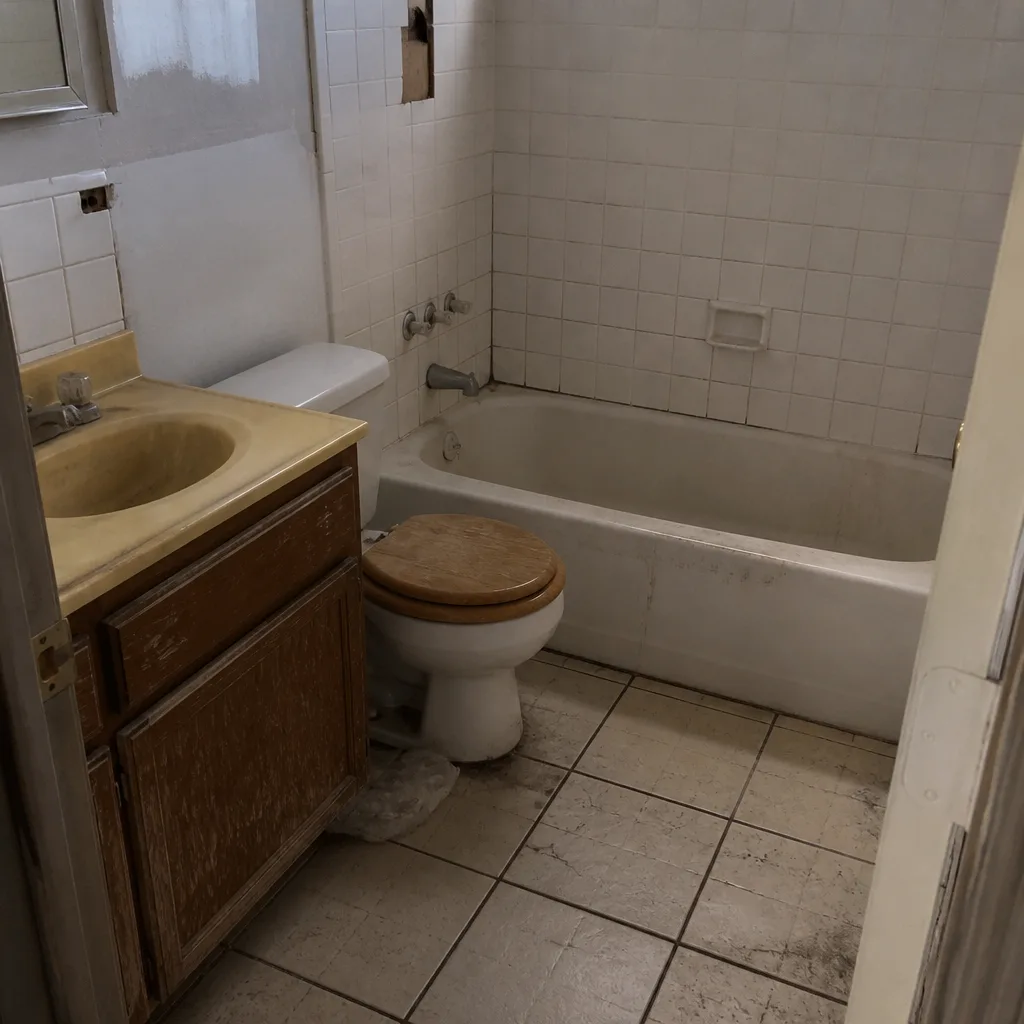 Before
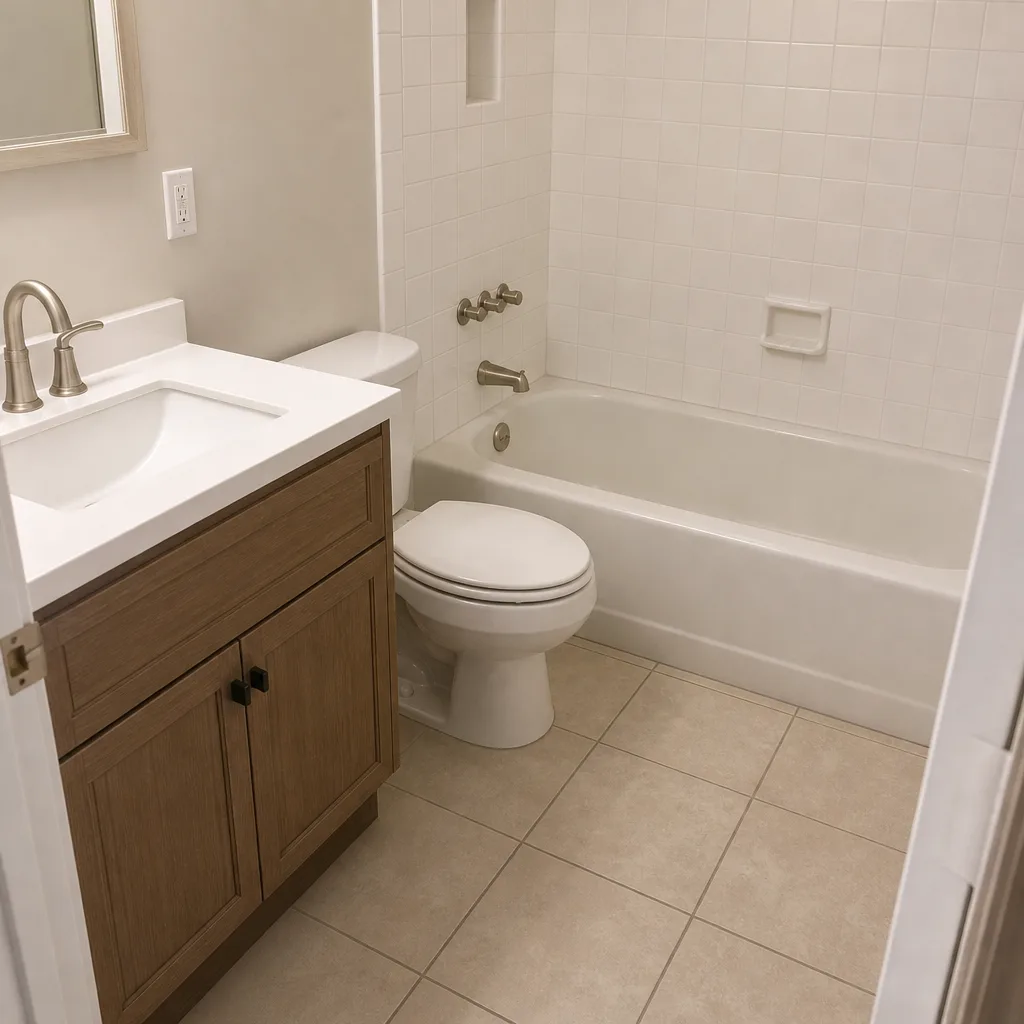 After
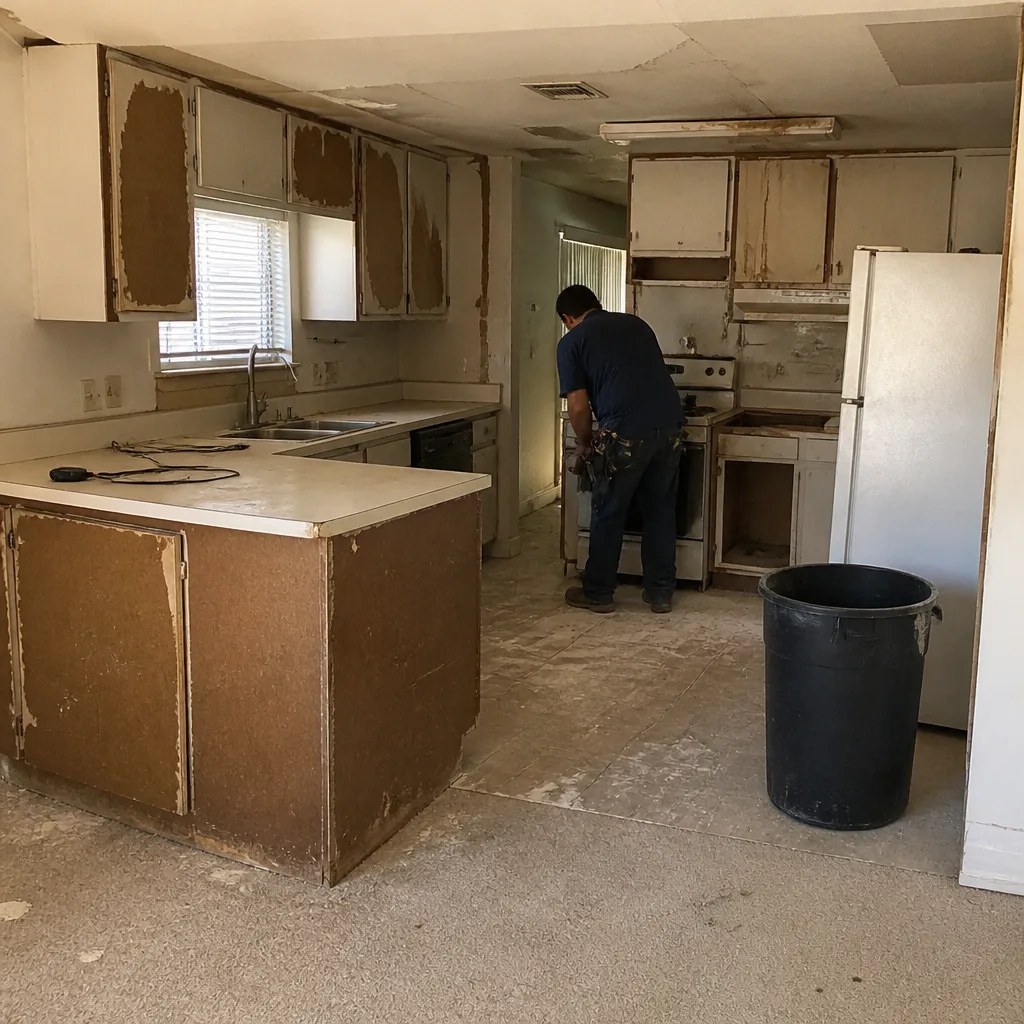 Before
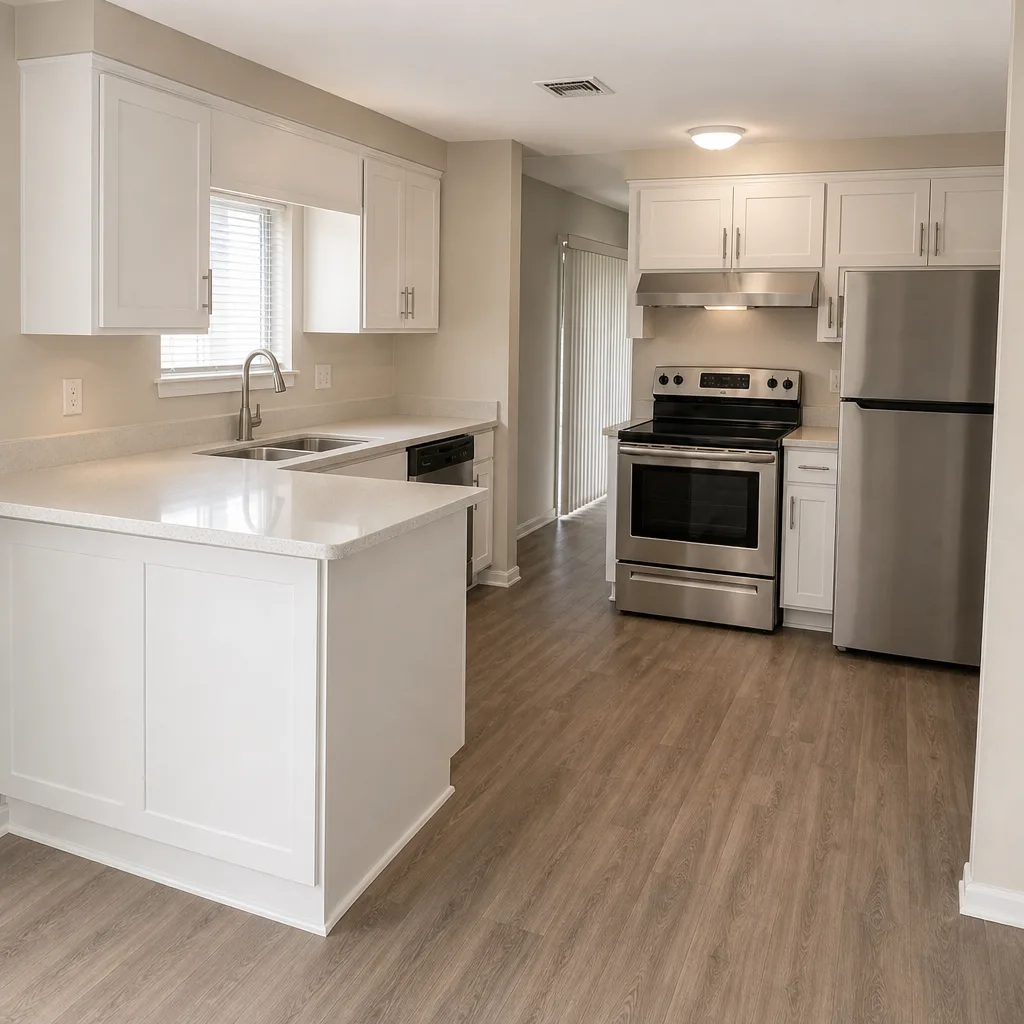 After
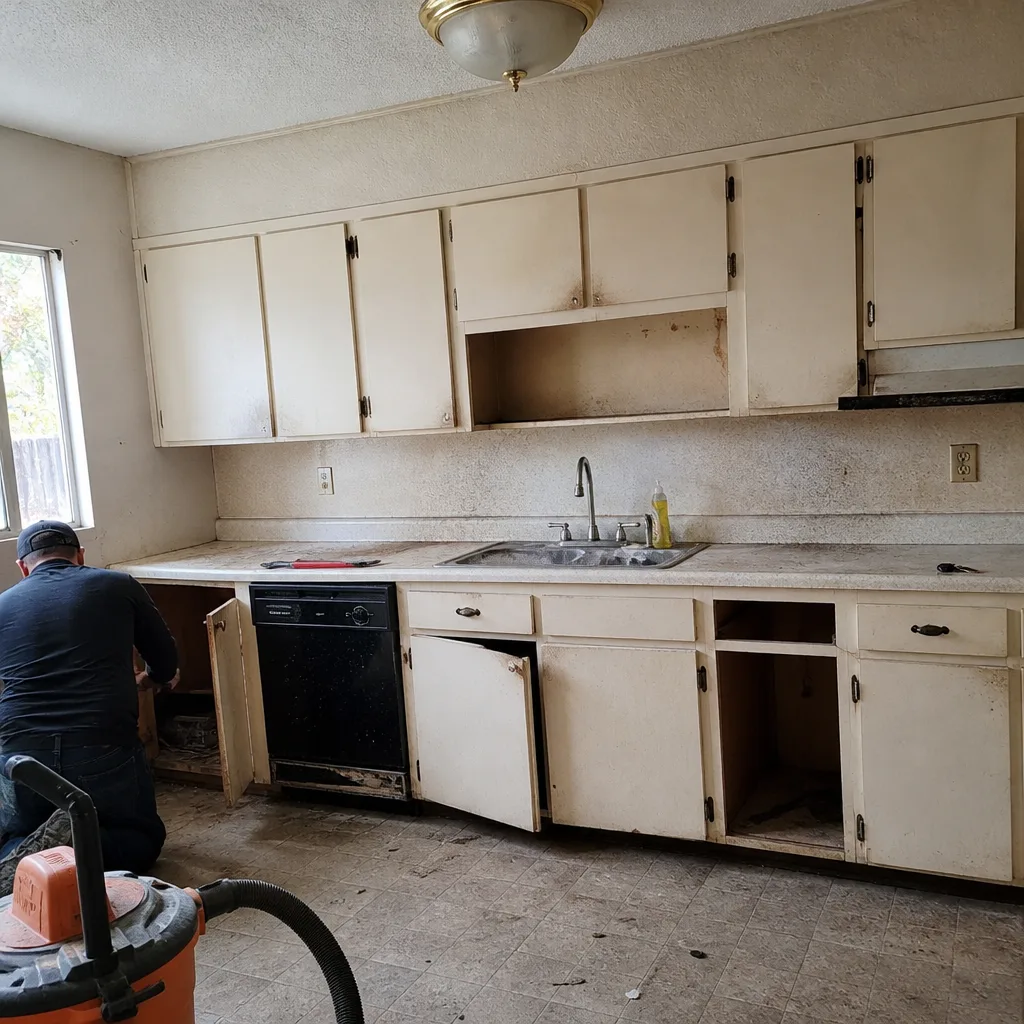 Before
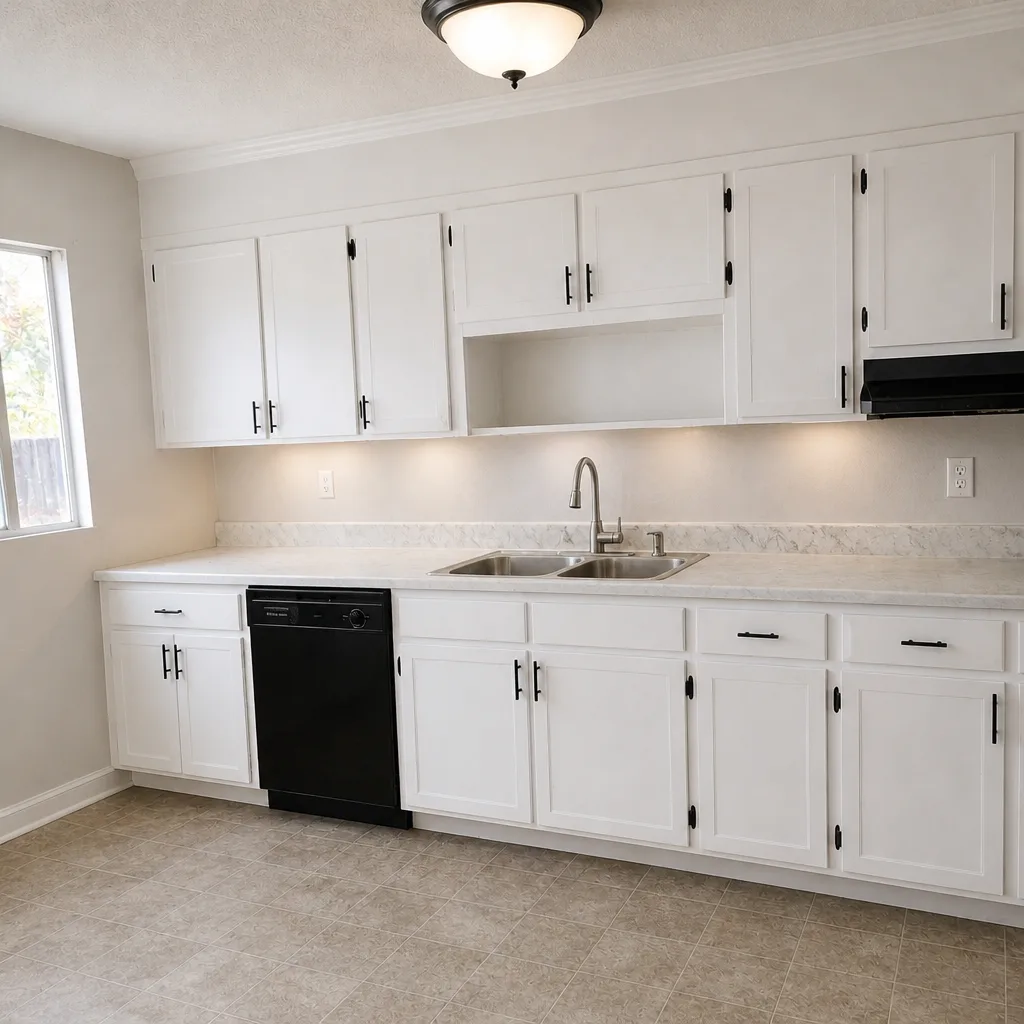 After
When to Call a Professional
Most Las Vegas homeowners should call a professional rather than attempt a window or door replacement themselves. The work involves pulling permits, integrating weather barrier and flashing behind stucco, and safely working at height – and if any of those go wrong, the failure shows up years later, inside the wall. Specific scenarios that call for a professional: fogged or failed glass seals on any window, a door that sticks or no longer seals after the summer, visible water damage at a window or door corner, a renovation that changes a rough opening, or any stucco wall penetration. Rowan Construction Group Las Vegas offers free estimates in Las Vegas – call (833) 467-9123. We’ll bring a spec sheet and a written price, review a competitor’s quote line by line at no charge, and document the installation with photos before the crew leaves. Our technicians have up to 19 years of experience in this climate.
Frequently Asked Questions
Solar Heat Gain Coefficient (SHGC) is the most important metric in Las Vegas. It measures how much of the sun’s heat enters through the glass, and since cooling dominates energy costs here, a low SHGC (0.25 on west and south walls, up to 0.30 elsewhere) has a bigger impact on your bill than a low U-factor. Ask for the SHGC on the spec sheet before buying – call (833) 467-9123 for a free quote review.
Yes. Every window and door replacement in Las Vegas – even a single window – requires a permit from Clark County or the City of Las Vegas. The permit triggers an inspection of the flashing and installation, which is exactly where desert failures originate. If a contractor suggests skipping the permit, that’s a serious red flag – call us for a second opinion.
Fiberglass holds up better on west- and south-facing walls, but quality vinyl is fine on north and east exposures. Vinyl expands and contracts at roughly six times the rate of glass in desert temperature swings, and on a west wall that movement can loosen seals and warp frames over time. Fiberglass and aluminum with a thermal break handle the heat better – ask (833) 467-9123 which is right for your specific walls.
Typical Las Vegas replacement windows run $450-$750 per unit for standard vinyl, and $650-$1,200 per unit for fiberglass or thermally broken aluminum. Whole-home replacements of 10-15 windows generally land between $5,500 and $11,000. Those are ranges – an exact number requires a written quote with a spec sheet. Call (833) 467-9123 for a free estimate.
We don’t recommend it. The work requires a permit, integration of flashing with the weather barrier behind stucco, and safe work at height – and the failures show up years later inside the wall. That’s not a small risk on a home. Have a professional handle it, and ask for the photo record of the installation afterward – call us for a free estimate.
Improper flashing at stucco penetrations is the most common failure we see. Stucco is the dominant siding here, and when a window is replaced, the flashing has to be integrated with the weather-resistive barrier behind the stucco, not caulked over it. Caulk-over-stucco cracks within two summers and lets monsoon rain into the wall – call (833) 467-9123 to talk through your project.
The Bottom Line
Window and door performance in Las Vegas comes down to a handful of numbers and a handful of installation decisions. Prioritize SHGC (0.25 on west and south, up to 0.30 elsewhere) over U-factor. Match frame material to the wall’s exposure – fiberglass or thermally broken aluminum on the west, vinyl on the north and east. Demand a permit and a written spec sheet. Insist that flashing integrates with the weather barrier behind the stucco, and that foam in the expansion gap is closed-cell and desert-rated. Get the whole number in writing before work starts. The rest is scheduling. Rowan Construction Group Las Vegas quotes every window and door project flat, with a written scope and warranty, and offers a free second opinion on any written estimate. For the full scope of our seven trades under one written-price discipline, our Driveway & Pavers in Las Vegas page is a good companion read. Call (833) 467-9123 for a free estimate on your windows and doors project.
Written by the team at Rowan Construction Group Las Vegas.